
Volume 27, Issue 2 (7-2026)
Arch Rehabil 2026, 27(2): 366-377 |
Back to browse issues page



Download citation:
BibTeX | RIS | EndNote | Medlars | ProCite | Reference Manager | RefWorks
Send citation to:


BibTeX | RIS | EndNote | Medlars | ProCite | Reference Manager | RefWorks
Send citation to:
Alem M, Khalkhali Zavieh M, Khademi-Kalantari K, Baghban A A. Effect of Concurrent Transcranial Direct Current Stimulation on the Primary Motor Cortex and Dorsolateral Prefrontal Cortex on Essential Tremor: A Case Report. Arch Rehabil 2026; 27 (2) :366-377
URL: http://rehabilitationj.uswr.ac.ir/article-1-3701-en.html
URL: http://rehabilitationj.uswr.ac.ir/article-1-3701-en.html

1- Department of Physiotherapy, School of Rehabilitation, Shahid Beheshti University of Medical Sciences, Tehran, Iran.
2- Department of Physiotherapy, School of Rehabilitation, Shahid Beheshti University of Medical Sciences, Tehran, Iran. ,m.khalkhali@sbmu.ac.ir
3- Department of Biostatistics, Proteomics Research Center, School of Allied Medical Sciences, Shahid Beheshti University of Medical Sciences, Tehran, Iran.
2- Department of Physiotherapy, School of Rehabilitation, Shahid Beheshti University of Medical Sciences, Tehran, Iran. ,
3- Department of Biostatistics, Proteomics Research Center, School of Allied Medical Sciences, Shahid Beheshti University of Medical Sciences, Tehran, Iran.
Keywords: Transcranial Direct Current Stimulation, Tremor, primary motor cortex, Dorsolateral Prefrontal Cortex.
Full-Text [PDF 1529 kb]
(194 Downloads)
| Abstract (HTML) (1557 Views)
Full-Text: (201 Views)
Introduction
Tremor refers to involuntary uncontrolled movements of one or several parts of the body during various activities. Tremor is classified as rest, postural, kinetic, or action [1]. Risk factors causing tremor include physiologic factors (e.g., fear and anxiety), psychological factors, stroke, Parkinson’s, multiple sclerosis, alcohol abuse, dystonia, muscle fatigue, fever, thyroid disorder, vitamin B12 deficiency, and the use of drugs such as antidepressants, corticosteroids, and antiarrhythmic agents [2]. According to recent studies, tremor is the most common neurodegenerative disorder with a prevalence of 1.3% in the general population and 5.9% in the population above 60 years old [3].
One of the most prevalent tremors is essential tremor (ET), which has a central origin [4] and may be caused by neurodegenerative changes in the cerebellum, disturbance in Gamma-aminobutyric acid (GABA) tone, or in the neural network [5], including the cerebellar-thalamo-cortical network [6]. Treatment of ET is based on trial and error. The treatments recommended in previous studies include using drugs such as gabapentin and beta-blockers and surgeries such as deep brain stimulation. It is recommended to use medication when tremor disrupts patients’ daily activities; if medication does not stop the tremor, surgery is recommended [7]. Considering the side effects of current treatment plans and the prevalence of tremor mostly with unknown origin, the use of non-invasive treatments has become more important [8].
Recently, noninvasive brain stimulation targeting the neural network involved in tremor has been most commonly used for treatment. One of these noninvasive brain stimulation methods targeting the cerebellum is called transcranial magnetic stimulation (TMS). Gironel et al applied TMS to the cerebellum of 10 patients with ET and observed that tremor severity was reduced 5 minutes after the treatment; however, this effect was not sustained an hour later [9]. According to the findings of a systematic review study in 2024, no difference was observed in tremor severity between active repetitive TMS and sham repetitive TMS [10]. Transcranial direct current stimulation (tDCS) is another non-invasive brain stimulation method. This method alters cortical excitability and increases brain neuroplasticity [11]. Of two studies on tDCS, only one showed significant effects in improving tremor [12, 13]. TDCS, compared to TMS, is a more noninvasive treatment and is easier to use, more cost-effective, and has fewer side effects [14]. Also, according to recent studies, stimulating brain areas other than the cerebellum can be effective in reducing tremor [6]. More recent tDCS studies involve the concurrent stimulation of two cortical areas. Simultaneous stimulation of the primary motor cortex (M1) and dorsolateral prefrontal cortex (DLPFC) has a greater effect on increasing cortical excitability and reducing reaction time in patients with stroke [15, 16].
Among studies conducted on the effect of tDCS on tremor, only one brain area, usually the cerebellum, has been stimulated, and despite the greater effects of concurrent stimulation of two cortical areas compared to stimulating a single brain area, no study has examined these simultaneous effects on tremor. It also seems that stimulating M1 before applying other stimulations can enhance their effects. Therefore, this case report aimed to investigate the effect of stimulating M1 in one session, followed by concurrent stimulation of M1 and DLPFC in the second session, on ET and quality of life (QOL). It was hypothesized that concurrent stimulation of M1 and DLPFC with tDCS could affect the central nervous system response by modulating the connection between these regions and, consequently, reduce tremor.
Case presentation
Case
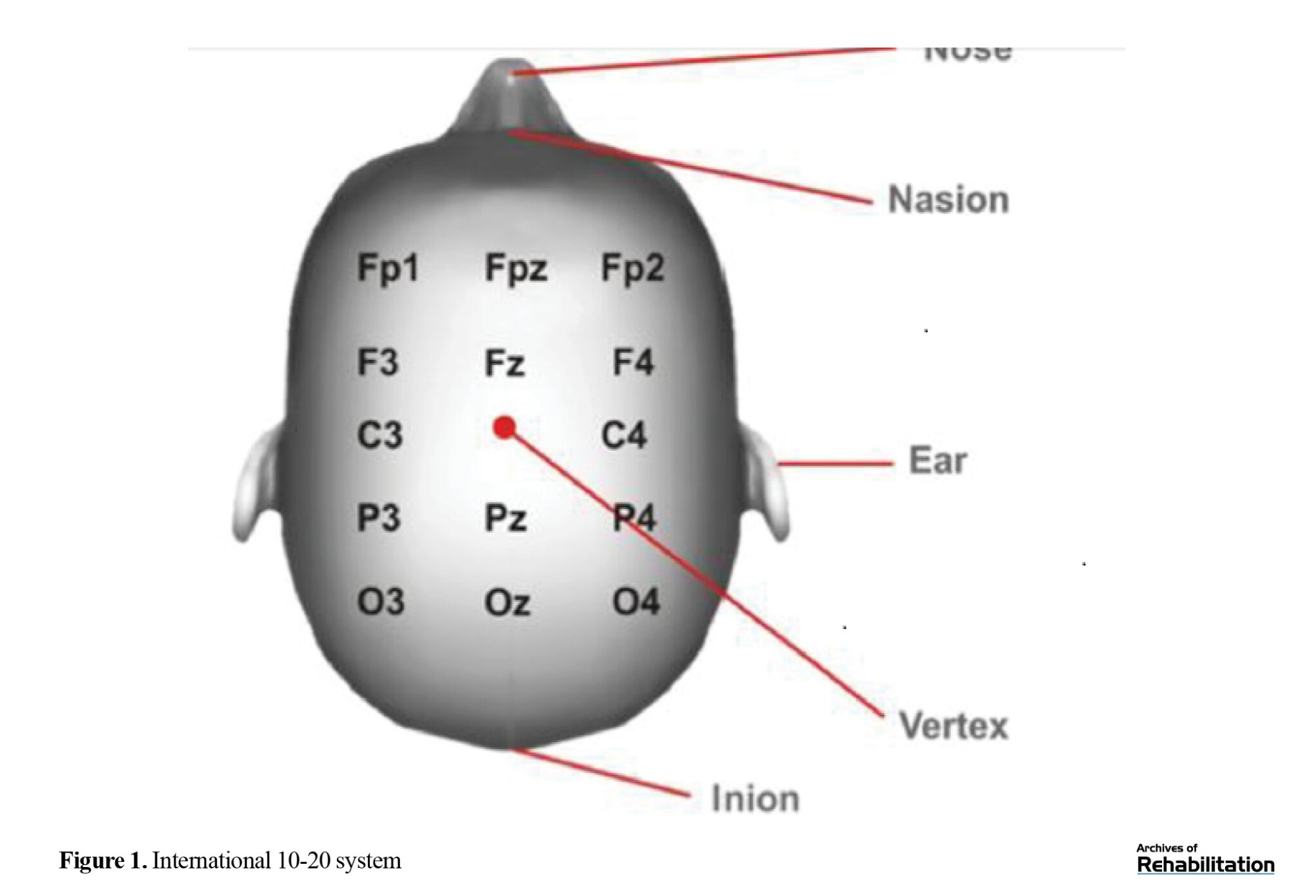
The study was conducted at the Clinic of the School of Rehabilitation, Shahid Beheshti University of Medical Sciences, in 2022. The case was a 75-year-old man with a history of hypertension and heart problems, with the onset of tremor about 4 years ago. His chief complaint was right-hand ET during daily activity (not at rest), and it got worse with anxiety or sadness, and when raising his hand. He had not received treatment for tremor before. The patient received two tDCS treatment sessions in a seated position with a one-week interval. Stimulating areas were identified using the international 10-20 system (Figure 1).
Brain stimulation
In the first session, M1 stimulation was performed. It was placed on the left side of the head (C3 lobe). An anodal electrode was placed at M1, localized by measuring the distance from the junction of the forehead and the nasal bone (nasion) to the prominence point of the occipital bone (inion) with a caliper and marking halfway, followed by measuring the distance between the left and right preauricular regions with a tape measure and marking halfway. The intersection of these two points was Cz. The C3 was positioned by marking the point on the left side at 20% of the distance between the right and left periauricular areas that passes through Cz, in order to place the anodal electrode. The cathodal electrode was placed on the right supraorbital lobe, and both electrodes were fixed on the points using a strap.
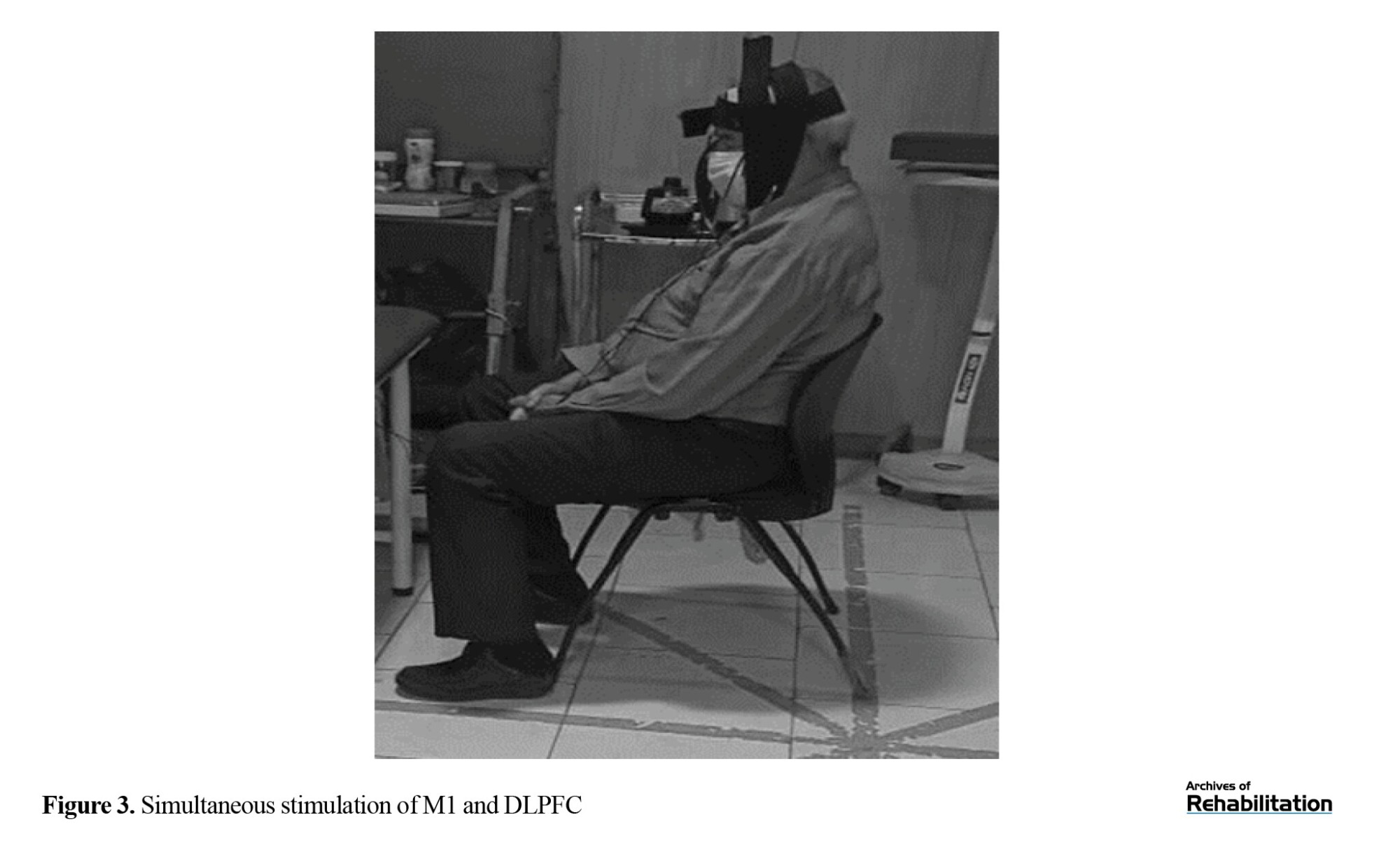
In the second session, two tDCS devices (ActivaDose, Activa Tek, Taiwan) were used simultaneously to stimulate M1 and the DLPFC, both located in the frontal lobe of the brain (Figure 2 and Figure 3). DLPFC corresponds to F3 on the left side of the head. The anodal electrodes were placed in the M1 and DLPFC areas.
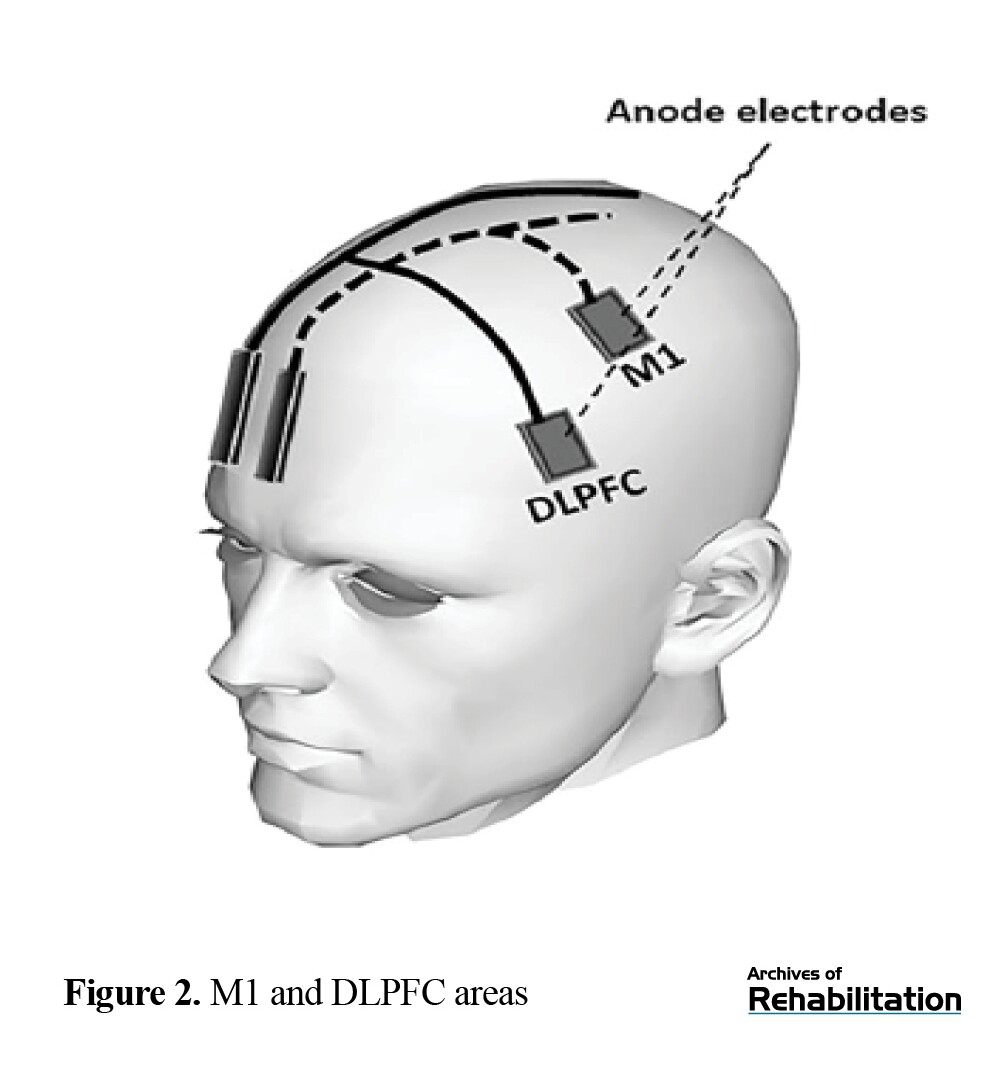
To find the location of DLPFC or F3, a diagonal measurement from the nasion to the inion through the C3 point was taken; 20% of the distance from the nasion to the inion, anterior to C3, was marked. The cathode electrodes were placed in the right supraorbital area. The size of the electrodes was 4× 5 (20 cm2), and they were soaked with saline solution before treatment. Electric stimulation in both treatment sessions was at 2 mA (increased gradually in steps of 0.1 mA) and lasted 20 minutes. The treatment took two weeks, with one session per week. Tremor and QOL were assessed before treatment, after treatment, and at 1 and 3 months after treatment.
Measures
Fahn-Tolosa-Marin rating scale
In the Fahn‐Tolosa‐Marin (FTM) clinical rating scale for tremor, scores are based on a person’s tremor in doing activities (0-144), with higher scores showing higher tremor. It consists of three parts, A, B, and C, each of which can be evaluated independently. In this study, we used part C, which assesses the patient’s functional disability and includes a total score of 28 [17]. The reliability and validity of the Persian version of the FTM scale have been confirmed by Olfati et al. in 2020 [18, 19].
Short form health survey
The short form health survey (SF-12) consists of 12 questions assessing a person’s QOL physically and mentally. Based on the total score, the QOL is categorized as good (37-48), moderate (25-36), and poor (12-24) [20]. The validity and reliability of the Persian SF-12 have been confirmed by Montazeri et al. in 2009 [21].
Results
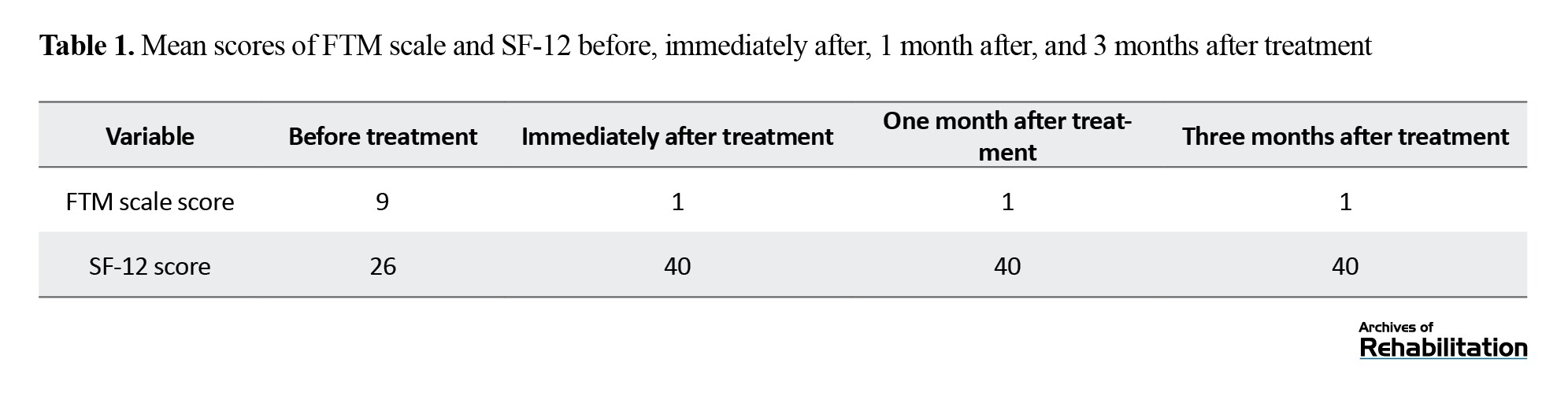
As shown in Table 1, the SF-12 score increased from 26 to 40 after treatment, and the FTM score decreased from 9 to 1.
Discussion
According to the results of this study, it seems that tDCS was effective in alleviating ET, since the patient’s FTM scale score considerably decreased (from 9 to 1). It also increased the patient’s QOL, due to an increase in the SF-12 score (from 26 to 40). Follow-up was conducted one month and three months after the completion of the intervention, and the scores of the two scales were sustained, indicating the stability of the improvement resulting from tDCS.
The innovation of this study was the stimulation of M1 in one session and concurrent stimulation of M1 and DLPFC in another session for improving M1 connection with the premotor area, while previous studies have mainly focused on the stimulation of the cerebellum. The results of our study are similar to the findings of the study by Yilmaz et al. In a case series study on 6 people with ET, they placed anode electrodes with an intensity of 2 mA on the DLPFC at 5 sessions and on the inion at 5 sessions. They observed that tDCS improved daily activities and tremor assessment score immediately after and 50 days after the intervention [12]. The results of our study differ from those of Gironel et al. They applied tDCS with cathode electrodes on both sides of the cerebellar hemispheres and anode electrodes on the prefrontal areas at an intensity of 2 mA in individuals with ET at 10 sessions. They observed no significant effect on tremor severity, daily activities, and motor function immediately after and one month after the intervention [13]. This discrepancy can be due to the differences in the stimulation sites between the two studies.
According to the functional magnetic resonance imaging (fMRI) studies, one of the possible causes of tremor is the reduced connection of M1 with the cerebellum and the premotor cortex [6]. Considering the functional connectivity between M1 and DLPFC, concurrent stimulation of M1 and DLPFC may activate this pathway, resulting in increased connectivity between M1 and the premotor cortex [15]. On the other hand, based on a study examining the effect of M1 stimulation on the pathway between M1 and the cerebellum, the stimulation of M1 can increase the excitability of the pathway between M1 and the cerebellum [22] and result in reduced tremor severity. Therefore, in this study, stimulation of M1 in the first session and concurrent stimulation of M1 and DLPFC in the second session were used for greater and more lasting stimulation effects and tremor improvement.
The main limitation of this study was that, being a case report, its results cannot be easily generalized. Thus, it is recommended to conduct clinical trials with control groups to determine the precise effects of tDCS on ET.
Conclusion
It seems that tDCS on M1 in the first session and on both M1 and DLPFC in the second session can be effective in reducing the severity of ET and improving QOL in older men, and that its positive effects can be sustained for 1 and 2 months. Considering the lack of consensus on the brain areas for placing tDCS electrodes in the treatment of tremor, this study can provide a new approach for future studies.
Ethical Considerations
Compliance with ethical guidelines
This case report study was approved by the Ethics Committee of the School of Rehabilitation Science, Shahid Beheshti University of Medical Sciences (Code: IR.SBMU.RETECH.REC.1400.498) Before starting the treatment, the patient was briefed on the procedure and the goals of the study, and his written informed consent was obtained. He was assured of the confidentiality of his information and had the right to withdraw from the study at any time.
Funding
This research did not receive any specific grant from funding agencies in the public, commercial, or not-for profit sectors.
Authors' contributions
Conceptualization, methodology, and validation: Minoo Khalkhali Zavie, Khosro Khademi-Kalantari; investigation and data analysis: Monire Alem, Alireza Akbarzadeh Baghban; resources, initial draft preparation, visualization: Monire Alem; Editing & review, supervision, and project administration: Minoo Khalkhali Zavie.
Conflict of interest
The authors declare no conflict of interest.
Tremor refers to involuntary uncontrolled movements of one or several parts of the body during various activities. Tremor is classified as rest, postural, kinetic, or action [1]. Risk factors causing tremor include physiologic factors (e.g., fear and anxiety), psychological factors, stroke, Parkinson’s, multiple sclerosis, alcohol abuse, dystonia, muscle fatigue, fever, thyroid disorder, vitamin B12 deficiency, and the use of drugs such as antidepressants, corticosteroids, and antiarrhythmic agents [2]. According to recent studies, tremor is the most common neurodegenerative disorder with a prevalence of 1.3% in the general population and 5.9% in the population above 60 years old [3].
One of the most prevalent tremors is essential tremor (ET), which has a central origin [4] and may be caused by neurodegenerative changes in the cerebellum, disturbance in Gamma-aminobutyric acid (GABA) tone, or in the neural network [5], including the cerebellar-thalamo-cortical network [6]. Treatment of ET is based on trial and error. The treatments recommended in previous studies include using drugs such as gabapentin and beta-blockers and surgeries such as deep brain stimulation. It is recommended to use medication when tremor disrupts patients’ daily activities; if medication does not stop the tremor, surgery is recommended [7]. Considering the side effects of current treatment plans and the prevalence of tremor mostly with unknown origin, the use of non-invasive treatments has become more important [8].
Recently, noninvasive brain stimulation targeting the neural network involved in tremor has been most commonly used for treatment. One of these noninvasive brain stimulation methods targeting the cerebellum is called transcranial magnetic stimulation (TMS). Gironel et al applied TMS to the cerebellum of 10 patients with ET and observed that tremor severity was reduced 5 minutes after the treatment; however, this effect was not sustained an hour later [9]. According to the findings of a systematic review study in 2024, no difference was observed in tremor severity between active repetitive TMS and sham repetitive TMS [10]. Transcranial direct current stimulation (tDCS) is another non-invasive brain stimulation method. This method alters cortical excitability and increases brain neuroplasticity [11]. Of two studies on tDCS, only one showed significant effects in improving tremor [12, 13]. TDCS, compared to TMS, is a more noninvasive treatment and is easier to use, more cost-effective, and has fewer side effects [14]. Also, according to recent studies, stimulating brain areas other than the cerebellum can be effective in reducing tremor [6]. More recent tDCS studies involve the concurrent stimulation of two cortical areas. Simultaneous stimulation of the primary motor cortex (M1) and dorsolateral prefrontal cortex (DLPFC) has a greater effect on increasing cortical excitability and reducing reaction time in patients with stroke [15, 16].
Among studies conducted on the effect of tDCS on tremor, only one brain area, usually the cerebellum, has been stimulated, and despite the greater effects of concurrent stimulation of two cortical areas compared to stimulating a single brain area, no study has examined these simultaneous effects on tremor. It also seems that stimulating M1 before applying other stimulations can enhance their effects. Therefore, this case report aimed to investigate the effect of stimulating M1 in one session, followed by concurrent stimulation of M1 and DLPFC in the second session, on ET and quality of life (QOL). It was hypothesized that concurrent stimulation of M1 and DLPFC with tDCS could affect the central nervous system response by modulating the connection between these regions and, consequently, reduce tremor.
Case presentation
Case
The study was conducted at the Clinic of the School of Rehabilitation, Shahid Beheshti University of Medical Sciences, in 2022. The case was a 75-year-old man with a history of hypertension and heart problems, with the onset of tremor about 4 years ago. His chief complaint was right-hand ET during daily activity (not at rest), and it got worse with anxiety or sadness, and when raising his hand. He had not received treatment for tremor before. The patient received two tDCS treatment sessions in a seated position with a one-week interval. Stimulating areas were identified using the international 10-20 system (Figure 1).
Brain stimulation
In the first session, M1 stimulation was performed. It was placed on the left side of the head (C3 lobe). An anodal electrode was placed at M1, localized by measuring the distance from the junction of the forehead and the nasal bone (nasion) to the prominence point of the occipital bone (inion) with a caliper and marking halfway, followed by measuring the distance between the left and right preauricular regions with a tape measure and marking halfway. The intersection of these two points was Cz. The C3 was positioned by marking the point on the left side at 20% of the distance between the right and left periauricular areas that passes through Cz, in order to place the anodal electrode. The cathodal electrode was placed on the right supraorbital lobe, and both electrodes were fixed on the points using a strap.
In the second session, two tDCS devices (ActivaDose, Activa Tek, Taiwan) were used simultaneously to stimulate M1 and the DLPFC, both located in the frontal lobe of the brain (Figure 2 and Figure 3). DLPFC corresponds to F3 on the left side of the head. The anodal electrodes were placed in the M1 and DLPFC areas.
To find the location of DLPFC or F3, a diagonal measurement from the nasion to the inion through the C3 point was taken; 20% of the distance from the nasion to the inion, anterior to C3, was marked. The cathode electrodes were placed in the right supraorbital area. The size of the electrodes was 4× 5 (20 cm2), and they were soaked with saline solution before treatment. Electric stimulation in both treatment sessions was at 2 mA (increased gradually in steps of 0.1 mA) and lasted 20 minutes. The treatment took two weeks, with one session per week. Tremor and QOL were assessed before treatment, after treatment, and at 1 and 3 months after treatment.
Measures
Fahn-Tolosa-Marin rating scale
In the Fahn‐Tolosa‐Marin (FTM) clinical rating scale for tremor, scores are based on a person’s tremor in doing activities (0-144), with higher scores showing higher tremor. It consists of three parts, A, B, and C, each of which can be evaluated independently. In this study, we used part C, which assesses the patient’s functional disability and includes a total score of 28 [17]. The reliability and validity of the Persian version of the FTM scale have been confirmed by Olfati et al. in 2020 [18, 19].
Short form health survey
The short form health survey (SF-12) consists of 12 questions assessing a person’s QOL physically and mentally. Based on the total score, the QOL is categorized as good (37-48), moderate (25-36), and poor (12-24) [20]. The validity and reliability of the Persian SF-12 have been confirmed by Montazeri et al. in 2009 [21].
Results
As shown in Table 1, the SF-12 score increased from 26 to 40 after treatment, and the FTM score decreased from 9 to 1.
Discussion
According to the results of this study, it seems that tDCS was effective in alleviating ET, since the patient’s FTM scale score considerably decreased (from 9 to 1). It also increased the patient’s QOL, due to an increase in the SF-12 score (from 26 to 40). Follow-up was conducted one month and three months after the completion of the intervention, and the scores of the two scales were sustained, indicating the stability of the improvement resulting from tDCS.
The innovation of this study was the stimulation of M1 in one session and concurrent stimulation of M1 and DLPFC in another session for improving M1 connection with the premotor area, while previous studies have mainly focused on the stimulation of the cerebellum. The results of our study are similar to the findings of the study by Yilmaz et al. In a case series study on 6 people with ET, they placed anode electrodes with an intensity of 2 mA on the DLPFC at 5 sessions and on the inion at 5 sessions. They observed that tDCS improved daily activities and tremor assessment score immediately after and 50 days after the intervention [12]. The results of our study differ from those of Gironel et al. They applied tDCS with cathode electrodes on both sides of the cerebellar hemispheres and anode electrodes on the prefrontal areas at an intensity of 2 mA in individuals with ET at 10 sessions. They observed no significant effect on tremor severity, daily activities, and motor function immediately after and one month after the intervention [13]. This discrepancy can be due to the differences in the stimulation sites between the two studies.
According to the functional magnetic resonance imaging (fMRI) studies, one of the possible causes of tremor is the reduced connection of M1 with the cerebellum and the premotor cortex [6]. Considering the functional connectivity between M1 and DLPFC, concurrent stimulation of M1 and DLPFC may activate this pathway, resulting in increased connectivity between M1 and the premotor cortex [15]. On the other hand, based on a study examining the effect of M1 stimulation on the pathway between M1 and the cerebellum, the stimulation of M1 can increase the excitability of the pathway between M1 and the cerebellum [22] and result in reduced tremor severity. Therefore, in this study, stimulation of M1 in the first session and concurrent stimulation of M1 and DLPFC in the second session were used for greater and more lasting stimulation effects and tremor improvement.
The main limitation of this study was that, being a case report, its results cannot be easily generalized. Thus, it is recommended to conduct clinical trials with control groups to determine the precise effects of tDCS on ET.
Conclusion
It seems that tDCS on M1 in the first session and on both M1 and DLPFC in the second session can be effective in reducing the severity of ET and improving QOL in older men, and that its positive effects can be sustained for 1 and 2 months. Considering the lack of consensus on the brain areas for placing tDCS electrodes in the treatment of tremor, this study can provide a new approach for future studies.
Ethical Considerations
Compliance with ethical guidelines
This case report study was approved by the Ethics Committee of the School of Rehabilitation Science, Shahid Beheshti University of Medical Sciences (Code: IR.SBMU.RETECH.REC.1400.498) Before starting the treatment, the patient was briefed on the procedure and the goals of the study, and his written informed consent was obtained. He was assured of the confidentiality of his information and had the right to withdraw from the study at any time.
Funding
This research did not receive any specific grant from funding agencies in the public, commercial, or not-for profit sectors.
Authors' contributions
Conceptualization, methodology, and validation: Minoo Khalkhali Zavie, Khosro Khademi-Kalantari; investigation and data analysis: Monire Alem, Alireza Akbarzadeh Baghban; resources, initial draft preparation, visualization: Monire Alem; Editing & review, supervision, and project administration: Minoo Khalkhali Zavie.
Conflict of interest
The authors declare no conflict of interest.
References
- Puschmann A, Wszolek ZK. Diagnosis and treatment of common forms of tremor. Seminars in Neurology. 2011; 31(1):65-77. [DOI:10.1055/s-0031-1271312] [PMID]
- Chen W, Hopfner F, Becktepe JS, Deuschl G. Rest tremor revisited: Parkinson’s disease and other disorders. Translational Neurodegeneration. 2017; 6:16. [DOI:10.1186/s40035-017-0086-4] [PMID]
- Louis ED, McCreary M. How common is essential tremor? Update on the worldwide prevalence of essential tremor. Tremor and Other Hyperkinetic Movements. 2021; 11:28. [DOI:10.5334/tohm.632] [PMID]
- Louis ED. Essential tremor. The Lancet Neurology. 2005; 4(2):100-10. [DOI:10.1016/S1474-4422(05)00991-9] [PMID]
- Welton T, Cardoso F, Carr JA, Chan LL, Deuschl G, Jankovic J, et al. Essential tremor. Nature Reviews Disease Primers. 2021; 7(1):83. [DOI:10.1038/s41572-021-00314-w] [PMID]
- Nicoletti V, Cecchi P, Pesaresi I, Frosini D, Cosottini M, Ceravolo R. Cerebello-thalamo-cortical network is intrinsically altered in essential tremor: Evidence from a resting state functional MRI study. Scientific Reports. 2020; 10(1):16661. [DOI:10.1038/s41598-020-73714-9] [PMID]
- Chandra V, Hilliard JD, Foote KD. Deep brain stimulation for the treatment of tremor. Journal of The Neurological Sciences. 2022; 435:120190. [DOI:10.1016/j.jns.2022.120190] [PMID]
- Helvaci Yilmaz N, Polat B, Hanoglu L. Transcranial direct current stimulation in the treatment of essential tremor: An open-label study. The Neurologist. 2016; 21(2):28-9. [DOI:10.1097/NRL.0000000000000070] [PMID]
- Gironell A, Kulisevsky J, Lorenzo J, Barbanoj M, Pascual-Sedano B, Otermin P. Transcranial magnetic stimulation of the cerebellum in essential tremor: A controlled study. Archives of Neurology. 2002; 59(3):413-7. [DOI:10.1001/archneur.59.3.413] [PMID]
- Bishay AAED, Guo A, Desai R, Mushinski S, Au A, Swenson AJ, et al. Limited Potential of Repetitive Transcranial Magnetic Stimulation for Treatment of Essential Tremor: A Systematic Review. NeuroSci. 2024; 5(4):523-33. [DOI:10.3390/neurosci5040038] [PMID]
- Summers JJ, Kang N, Cauraugh JH. Does transcranial direct current stimulation enhance cognitive and motor functions in the ageing brain? A systematic review and meta-analysis. Ageing Research Reviews. 2016; 25:42-54. [DOI:10.1016/j.arr.2015.11.004] [PMID]
- Yilmaz NH, Polat B, Hanoglu L. Transcranial direct current stimulation in the treatment of essential tremor. Parkinsonism & Related Disorders. 2016; 22(Supplement 2):e130. [DOI:10.1016/j.parkreldis.2015.10.311]
- Gironell A, Martínez-Horta S, Aguilar S, Torres V, Pagonabarraga J, Pascual-Sedano B, et al. Transcranial direct current stimulation of the cerebellum in essential tremor: A controlled study. Brain Stimulation. 2014; 7(3):491-2. [DOI:10.1016/j.brs.2014.02.001] [PMID]
- Priori A, Hallett M, Rothwell JC. Repetitive transcranial magnetic stimulation or transcranial direct current stimulation? Brain Stimulation. 2009; 2(4):241-5. [DOI:10.1016/j.brs.2009.02.004] [PMID]
- Vaseghi B, Zoghi M, Jaberzadeh S. The effects of anodal-tDCS on corticospinal excitability enhancement and its after-effects: conventional vs. unihemispheric concurrent dual-site stimulation. Frontiers in Human Neuroscience. 2015; 9:533. [DOI:10.3389/fnhum.2015.00533] [PMID]
- Achacheluee ST, Rahnama L, Karimi N, Abdollahi I, Arslan SA, Jaberzadeh S. The effect of unihemispheric concurrent dual-site transcranial direct current stimulation of primary motor and dorsolateral prefrontal cortices on motor function in patients with sub-acute stroke. Frontiers in Human Neuroscience. 2018; 12:441. [DOI:10.3389/fnhum.2018.00441] [PMID]
- Fahn S, Tolosa E, Marín C. Clinical rating scale for tremor.In: Jankovic J, Tolosa E, editors. Parkinson’s Disease and Movement Disorders. 2nd ed. Baltimore: Williams & Wilkins; 1993. [Link]
- Stacy MA, Elble RJ, Ondo WG, Wu SC, Hulihan J; TRS study group. Assessment of interrater and intrarater reliability of the Fahn-Tolosa-Marin Tremor Rating Scale in essential tremor. Movement Disorders. 2007; 22(6):833-8. [DOI:10.1002/mds.21412] [PMID]
- Olfati N, Shoeibi A, Abdollahian E, Ahmadi H, Hoseini A, Akhlaghi S, et al. Cerebellar repetitive transcranial magnetic stimulation (rTMS) for essential tremor: A double-blind, sham-controlled, crossover, add-on clinical trial. Brain Stimulation. 2020; 13(1):190-6. [DOI:10.1016/j.brs.2019.10.003] [PMID]
- Kontodimopoulos N, Pappa E, Niakas D, Tountas Y. Validity of SF-12 summary scores in a Greek general population. Health and Quality of Life Outcomes. 2007; 5:55. [DOI:10.1186/1477-7525-5-55] [PMID]
- Montazeri A, Vahdaninia M, Mousavi SJ, Omidvari S. The Iranian version of 12-item Short Form Health Survey (SF-12): Factor structure, internal consistency and construct validity. BMC Public Health. 2009; 9:341. [DOI:10.1186/1471-2458-9-341] [PMID]
- Weightman M, Brittain JS, Miall RC, Jenkinson N. Direct and indirect effects of cathodal cerebellar TDCS on visuomotor adaptation of hand and arm movements. Scientific Reports. 2021; 11(1):4464. [DOI:10.1038/s41598-021-83656-5] [PMID]
Type of Study: Case report |
Subject:
Physical Therapy
Send email to the article author
| Rights and permissions | |
 |
This work is licensed under a Creative Commons Attribution-NonCommercial 4.0 International License. |

Copyright © The Author(s);
This is an open access article distributed under the terms of the Creative Commons Attribution-NonCommercial 4.0 (CC-By-NC 4.0), which permits use, distribution, and reproduction in any medium, provided the original work is properly cited and is not used for commercial purposes.
Contact Information
This is an open access article distributed under the terms of the Creative Commons Attribution-NonCommercial 4.0 (CC-By-NC 4.0), which permits use, distribution, and reproduction in any medium, provided the original work is properly cited and is not used for commercial purposes.
Contact Information