
Volume 27, Issue 3 (9-2026)
Arch Rehabil 2026, 27(3): 378-397 |
Back to browse issues page




Download citation:
BibTeX | RIS | EndNote | Medlars | ProCite | Reference Manager | RefWorks
Send citation to:


BibTeX | RIS | EndNote | Medlars | ProCite | Reference Manager | RefWorks
Send citation to:
Qorbani-Vanajemi M, Bahmani B, Azkhosh M, Hejazi E, Azimian M. Meaning in Life in Patients With Multiple Sclerosis: A Systematic Review. , Arch Rehabil. 2026; 27 (3) :378-397
URL: http://rehabilitationj.uswr.ac.ir/article-1-3715-en.html
URL: http://rehabilitationj.uswr.ac.ir/article-1-3715-en.html
Milad Qorbani-Vanajemi1  , Bahman Bahmani *2 , Manouchehr Azkhosh1 , Elaheh Hejazi3 , Mojtaba Azimian4
1- Department of Counseling, Faculty of Behavioral Sciences, University of Social Welfare and Rehabilitation Sciences, Tehran, Iran.
2- Department of Counseling, Faculty of Behavioral Sciences, University of Social Welfare and Rehabilitation Sciences, Tehran, Iran. ,bbahmani43@yahoo.com
3- Department of Educational Psychology and Counseling, Faculty of Psychology and Education, University of Tehran, Tehran, Iran.
4- Department of Clinical Sciences, Faculty of Rehabilitation Sciences, University of Social Welfare and Rehabilitation Sciences, Tehran, Iran.
2- Department of Counseling, Faculty of Behavioral Sciences, University of Social Welfare and Rehabilitation Sciences, Tehran, Iran. ,
3- Department of Educational Psychology and Counseling, Faculty of Psychology and Education, University of Tehran, Tehran, Iran.
4- Department of Clinical Sciences, Faculty of Rehabilitation Sciences, University of Social Welfare and Rehabilitation Sciences, Tehran, Iran.
Full-Text [PDF 3245 kb]
(664 Downloads)
| Abstract (HTML) (1572 Views)
References
Full-Text: (127 Views)
Introduction
Multiple sclerosis (MS) is a chronic neurological disease involving inflammatory activity and demyelination within the central nervous system [1]. It is one of the most common disabling neurological disorders in young adults, usually manifesting between the ages of 20 and 40 years [2]. Clinically, MS manifests with symptoms such as fatigue, numbness, muscle weakness, and impaired balance, and it also affects vision as well as sensorimotor function [3, 4]. This disease can affect patients’ physical, cognitive, social, and psychological functioning [5, 6]. The etiology, pathophysiology, and clinical course of MS are remarkably unclear, which challenges individuals’ understanding of the world as meaningful and predictable, and compels them to inevitably confront questions about the meaning and purpose of life and their existential values [7, 8].
Lexically, multiple definitions have been provided for the term “meaning.” In Persian, meaning is defined as intention, the concept of speech, or subject matter [9], as well as implication or entailment [10]. In the Oxford Dictionary, meaning is defined as the “thing or idea that a sound, word, sign, etc. represents” [11], while the Cambridge Dictionary defines it in terms of the importance or value of something [12]. Although these definitions seem different, they share a common feature: they indicate a thing an individual forms in their mind about a particular object, matter, or phenomenon, encompassing the nature of their relationship with it. In this regard, the meaning of life can be considered a subjective phenomenon that determines an individual’s relationship with their entire life. Under this interpretation, meaning of life (MIL) is one of the most important psychological dimensions that is considerably affected in individuals with life-threatening diseases [13]. The loss of previous stability and the existing losses in life accompanied by a chronic disease can trigger a psychological quest to find meaning in a new existence characterized by uncertainty and the risk of premature death [14]. In such circumstances, finding positive meaning in a life-threatening situation can facilitate the adaptation process and become an essential component in enhancing individuals’ resilience. It can help individuals continue personal growth when facing personal and family crises throughout life, such as the death of loved ones or the decline or loss of physical capabilities, and enable them to maintain the will and ability to go on living [15]. In fact, a sense of MIL helps individuals integrate illness-related experiences into their life meaning systems, thereby fostering a sense of purpose, acceptance of their condition, and better psychological control over their situation [16]. Studies indicate that a sense of MIL significantly influences quality of life (QoL), psychological well-being, and adaptation to chronic illness [17, 18].
Given the significant role of MIL in the psychological wellbeing of patients with MS, collecting and summarizing existing studies and scientific evidence in this field is important. Therefore, this study aimed to provide a comprehensive overview of factors associated with and promoting a sense of MIL among individuals with MS, as well as the psychological interventions conducted in this area. Therefore, the questions that this systematic review sought to answer include: “ What factors influence the sense of MIL in patients with MS? “ What psychological interventions have been used to enhance the sense of MIL among MS patients, and what are their outcomes?
Materials and Methods
This is a systematic review in accordance with the preferred reporting items for systematic reviews and metaanalyses (PRISMA) guidelines. The search for relevant articles was conducted in Google Scholar, Web of Science, ScienceDirect, PubMed, ProQuest, and EBSCO for English-language studies, as well as Magiran, Noormags, the Comprehensive Human Sciences Portal, and Scientific Information Database (SID) for Persian-language studies. In international databases, the keywords “multiple sclerosis,” “meaning in life,” “meaning-making,” “meaning of life,” and “life meaning” were used. In national databases, their equivalent terms in Persian were used. To combine keywords, the Boolean operators were used as follows, for example: (“multiple sclerosis” OR “MS”) AND (“meaning in life” OR “meaning-making” OR “meaning of life” OR “life meaning”). We included studies published from 2000 to December 2025 that directly focused on MIL among people with MS, those written in English or Persian, and those with available full-texts. Studies with non-psychological interventions, without access to full-text, conference proceedings, editorials, letters to the editor, and abstracts were excluded. The researchers initially screened studies for relevance to the study topic by examining abstracts. Then, to determine whether they met the inclusion criteria for the review, full-texts of articles were screened. Any disagreements among researchers were resolved through discussion and consensus.
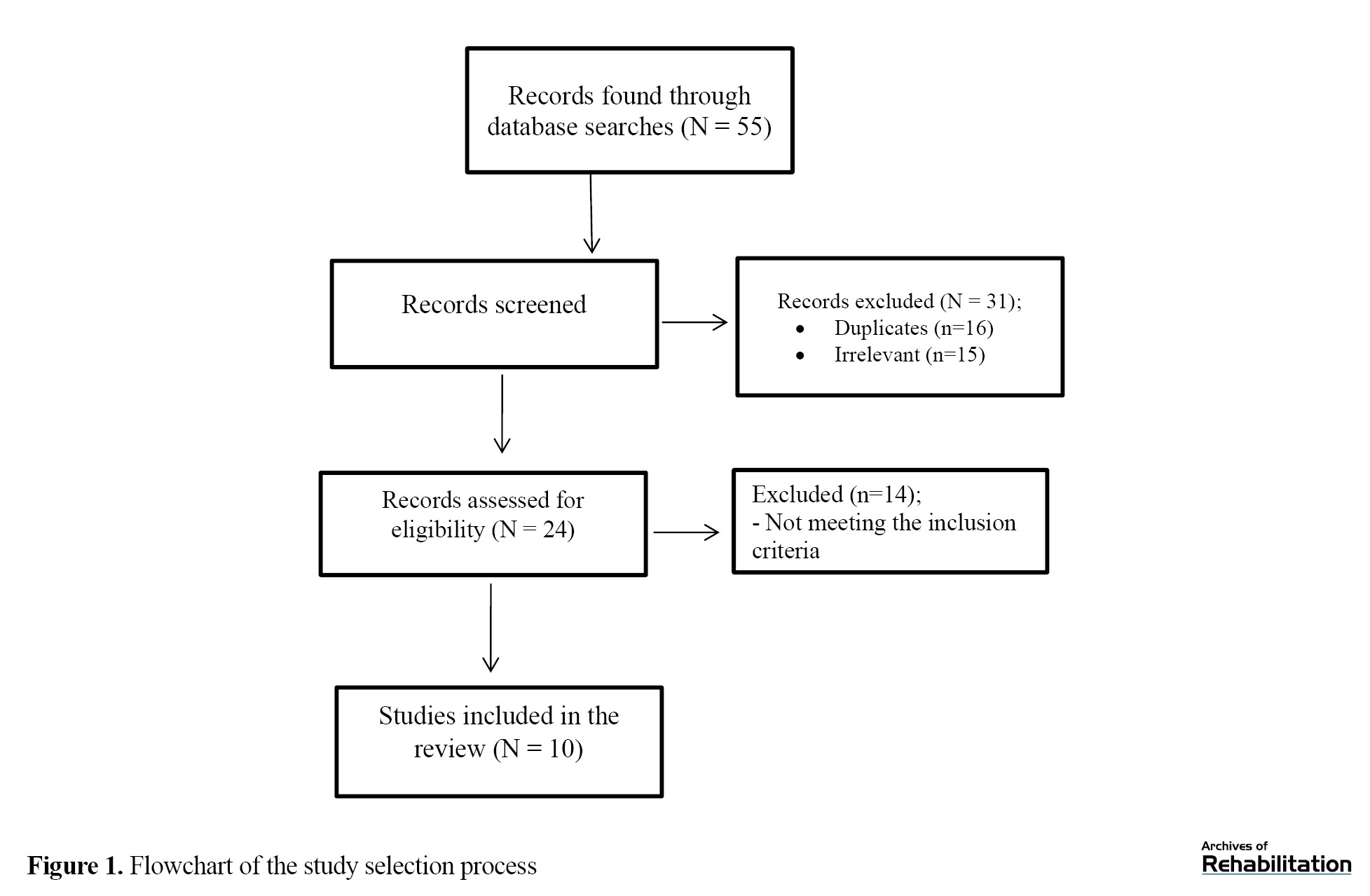
The initial search retrieved 55 articles. After screening titles, abstracts, and full-texts, 10 studies (6 quantitative studies, 2 qualitative studies, and 2 mixed-method studies) that directly addressed MIL in MS patients were included in the final analysis (Figure 1).
The quality of quantitative studies were assessed using the standard quality assessment criteria [19]. Qualitative studies were appraised using the critical appraisal skills programme (CASP) checklist [20]. The mixed methods appraisal tool (MMAT) was used to evaluate mixedmethods studies [21].
Results
According to quality assessment results in Table 1, all included studies demonstrated acceptable methodological quality.
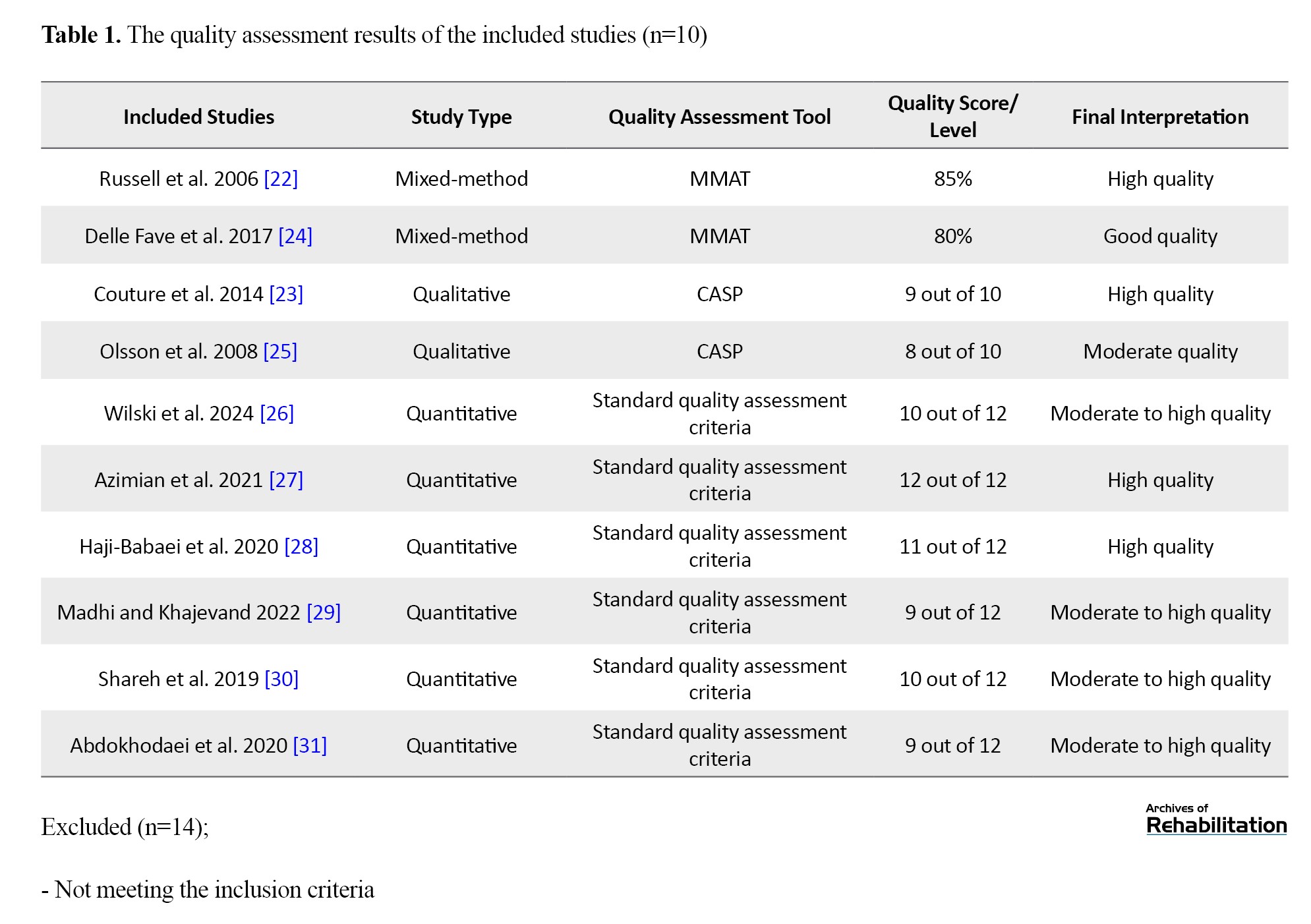
The quality scores of the mixed-method studies were 80% or 85% of the total possible score; the qualitative studies scored 8 or 9 out of 10; and the quantitative studies scored 9-12 out of 12. Overall, most studies were rated as either “high quality” or “moderate to high quality,” and none were excluded due to methodological weaknesses.
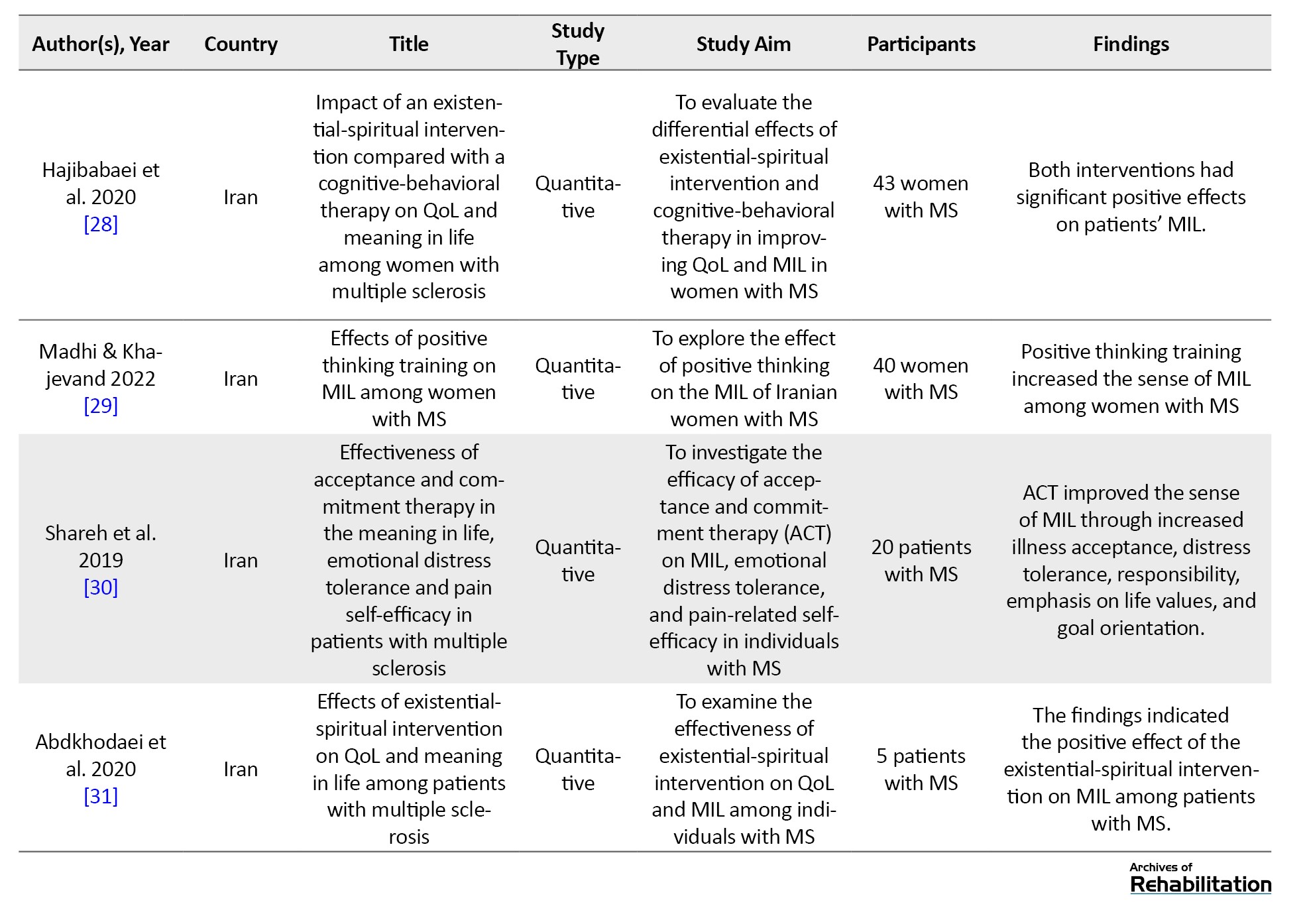
The characteristics of the included studies are summarized in Table 2.
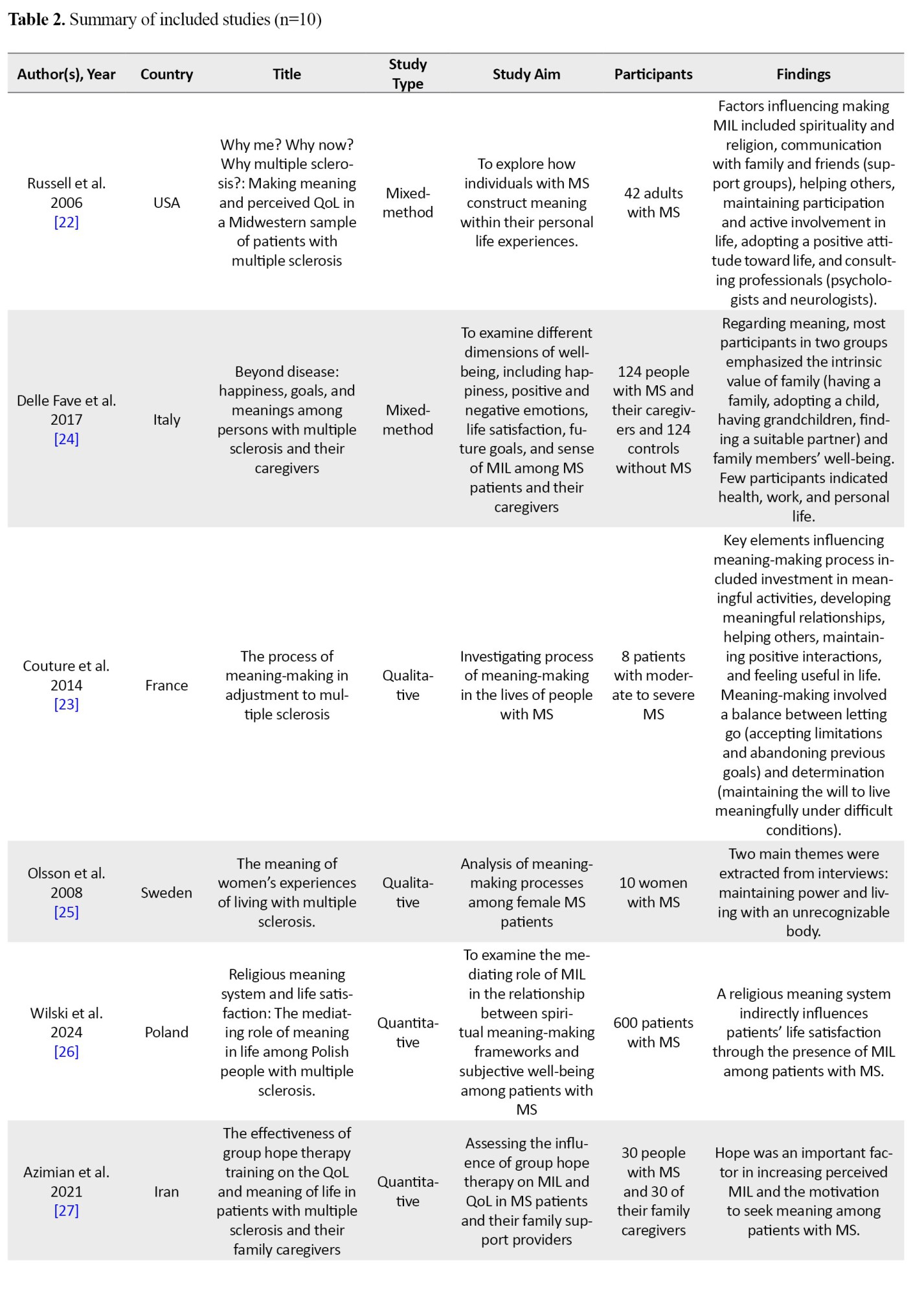
The major findings extracted from the included studies are summarized into two domains: “factors affecting MIL among patients with MS” and “psychological interventions for patients with MS”.
Factors affecting meaning in life among patients with multiple sclerosis
Spirituality and religious beliefs: In the study by Russell et al. [22], spiritual and religious beliefs were reported as important sources of meaning-making and psychological adjustment among patients with MS. Their findings indicated that spirituality acts as a powerful source of comfort and purpose for patients with MS. Many patients found new meaning in their lives through religious beliefs or spiritual interpretations of suffering and illness, and spirituality helped them adapt to the disease and continue living.
Acceptance of illness and active coping: Realistic acceptance of the condition and defining MS as a part of life rather than as an obstacle were identified as key factors in rebuilding MIL among patients. This type of acceptance, along with conscious efforts to adapt to limitations, was associated with increased perceived control, psychological adjustment, and a return to a meaningful life [23].
Social support and interpersonal relationships: Several studies emphasized that support from family members, friends, and even professional caregivers is a key factor in strengthening the sense of MIL and reducing social isolation among patients with MS. Delle Fave et al. [24] highlighted the vital role of family in patients’ MIL. Specifically, the intrinsic value of family, health, well-being, and family members’ self-actualization are important in shaping or enhancing patients’ MIL. Individuals experience life as more meaningful in the presence of others and benefit from the sense of “not being alone” as they reconstruct themselves. Similarly, Russell et al. [22] reported that interpersonal relationships strengthened patients’ sense of MIL and contributed to reducing social isolation.
Engagement in meaningful activities: The studies by Couture et al. [23] and Russell et al. [22] demonstrated that engagement in meaningful activities plays an important role in rebuilding or maintaining MIL among patients with MS. These activities included helping others, maintaining positive interactions, developing meaningful relationships, and experiencing a sense of usefulness in life. Patients perceived these experiences as sources of purpose, connection, and personal value.
Seeking support from professionals: Receiving specialized support from professionals (psychologists, neurologists, and other members of the healthcare team) was also recognized as a significant factor in shaping and reconstructing MIL among patients with MS. The presence of professionals not only helps manage physical symptoms and prevent disease progression but also plays a significant role in enhancing psychological resilience and empowering MS patients to cope with daily challenges [22].
Attempt to maintain power and live with an unrecognizable body: Regarding the experiences of MS individuals, a study reported that the meaning of living with MS in women was understood as an attempt to preserve a sense of power, mastery, and autonomy in life, while their body sometimes hindered their ability [25]. The MIL was understood as living with compromised dignity while simultaneously striving to protect that dignity. Bodily changes are evident; through limiting daily activities, these changes may lead to feelings of worthlessness or violated dignity. However, women with MS strive to sustain their strength and abilities in everyday life in order to protect themselves from harm and preserve their dignity.
Psychological interventions for patients with multiple sclerosis
Among the reviewed studies, five studies examined the effectiveness of various psychological and training programs aimed at influencing the sense of MIL among patients with MS [27-31]. In these studies, researchers employed existential-spiritual intervention, cognitive-behavioral therapy (CBT), positive thinking training, acceptance and commitment therapy (ACT), and group hope therapy to enhance MIL. In all studies, the impact of interventions on patients’ MIL was positive, indicating the beneficial impact of psychological interventions on the sense of MIL among patients with MS.
Some studies focused exclusively on the effectiveness of interventions in improving MIL, while others examined additional variables such as QoL and self-efficacy in addition to MIL. All studies were conducted in Iran; three articles were published in Persian, while two were published in English. The target population of these studies was patients with MS, except for one study in which both patients and their caregivers were examined.
Existential-spiritual intervention: In existential-spiritual intervention, patients were encouraged to search for MIL based on their personal values. Furthermore, addressing spiritual concepts such as death, responsibility, suffering, and hope may have helped strengthen their sense of MIL [28].
Cognitive-behavioral therapy: Hajibabaei et al. used CBT by focusing on increasing awareness and recognition of automatic thoughts and identifying patients’ core beliefs and the functions of these beliefs. They suggested that MS patients experience an enhanced sense of MIL through cognitive restructuring, behavioral changes, and establishing new life goals [28].
Positive thinking training: In the study by Madhi and Khajevand [29], MS patients were engaged in developing positive emotions, emphasizing personal strengths, and working on concepts such as forgiveness, gratitude, optimism, contentment, hope, love, and attachment. In addition, their program focused on getting free from external control and becoming familiar with one’s own and others’ quality worlds, which contributed to a heightened sense of MIL among patients.
Acceptance and commitment therapy: Psychological flexibility is the cornerstone of ACT. In this intervention, instead of struggling with or avoiding unwanted experiences, patients redirect their energy toward their values and MIL. Moreover, through values clarification during ACT, patients define and replace their values with new ones, which facilitates improvement in MIL [30].
Hope therapy: In the study by Azimian et al., group hope therapy enhanced MIL in four ways: returning to goals and reconstructing life orientation; increasing hope through beliefs in one’s abilities and the ability to identify new pathways for achieving goals; cognitive restructuring and modifying negative self-talk, increasing physical competence and effective participation in life; and strengthening social support [27].
Discussion
This systematic review identified factors affecting MIL in MS patients, as well as the psychological interventions used in different studies to improve MIL of these patients.
Effective factors
Studies focusing on spirituality have shown that a spirituality-based meaning system is a source of stability and purpose for many patients with MS [26, 32]. Our findings regarding the factor of spirituality are consistent with previous research on patients with other chronic illnesses, such as cancer, where a sense of spirituality and practices such as daily praying, reading religious texts, and listening to supplications play an important role in coping with chronic disease, providing emotional support, fostering resilience, and promoting overall patient wellbeing [33, 36]. In fact, many patients, when confronted with the physical and psychological limitations caused by a chronic disease, seek support from a higher power by returning to their spiritual and religious beliefs. They interpret their disease experience within a meaningful and tolerable framework and perceive suffering not merely as a negative experience, but rather as an opportunity for inner growth and reconsideration of life values. This finding aligns with Park’s meaning-making model, which proposes that spirituality provides patients with a framework to reconcile the discrepancy between their global meaning system and the situational meaning of living with MS. Consequently, psychological distress is reduced, and psychological adjustment is enhanced [16].
The acceptance of disease was another factor in the meaning-making process among patients with MS. Couture et al. [23] emphasized that acceptance of the illness does not mean surrender; rather, it refers to redefining life within a new framework; e.g. viewing the illness as an opportunity for personal growth or strengthening relationships. This type of acceptance enables individuals to readjust their goals and reassess their values, which serves as a prerequisite for rebuilding MIL. As long as individuals remain engaged in denial or anger, they cannot discover new MIL. In line with the findings of the present study, Arantzamendi et al. [34], in a study involving patients with cancer, found that awareness and acceptance of death lead to focusing on living a good life despite the presence of disease.
Social support and interpersonal relationships also play an important role in the process of finding MIL. Olsson et al. emphasized that the presence of others and interaction with support groups not only reduce feelings of loneliness but also help MS patients interpret their illness experience within a shared human context [25]. This finding aligns with social constructionist theory, which suggests that meaning is formed through the connection between the “self” and the “other,” rather than in isolation [37]. When patients share their experiences with others, they construct new meanings for their illness and life through reciprocal feedback and narratives. Moreover, when others hear and validate their experiences, patients perceive that their MIL has gained social legitimacy.
Engagement in meaningful activities, such as volunteering, charitable activities, helping others, and experiencing a sense of usefulness, also plays a key role in rebuilding the sense of MIL among patients with MS. This finding is consistent with previous studies highlighting the importance of volunteering activities in perceiving life as meaningful [38, 39]. These results also align with Frankl’s theory of meaning [40], which identifies creative and purposeful activities as a primary source of meaning. Accordingly, clinical and rehabilitation programs should offer opportunities for MS patients to participate in activities compatible with their abilities and interests, thereby facilitating meaning-making by strengthening feelings of competence, worth, and belonging.
Another influential factor was support-seeking from psychological and medical professionals [22]. Psychological counseling can help patients redefine their personal identity and discover new sources of meaning, a process also emphasized within the meaning-making model [16]. Therefore, patient care programs should place greater emphasis on the role of counselors and psychologists. At the same time, medical and neurological guidance can help reduce uncertainty and anxiety related to the future course of the disease. This multidimensional interaction between patients and healthcare providers can enable patients to understand their illness experience and place it within a meaningful framework, ultimately improving their QoL and sense of purpose. These findings can also be explained through the biopsychosocial model. According to this model, interactions among patients, physicians, and psychologists create a multidimensional pattern of care that helps patients make sense of their illness experience and integrate it into a meaningful framework, a process that can ultimately enhance patients’ sense of purpose and QoL [41].
Another prominent factor identified from the reviewed studies was the experience of living with an unrecognizable body while trying to maintain a sense of control, power, and dignity in daily life. Physical and functional changes caused by MS, which are often visible and hinder routine activities, may lead to feelings of losing control over the body, reduced self-worth, and violated human dignity. However, when facing these challenges, patients employ active strategies to reconstruct meaning and protect their dignity, including gradual acceptance of limitations, focusing on abilities and positive aspects of life, and redefining roles and priorities in daily living. These findings fit within the theory of adaptation to chronic illness. According to this theory, encountering chronic diseases such as MS is often accompanied by threats to personal identity, feelings of loss of control, and reduced independence. However, individuals gradually move toward psychological adjustment and meaning reconstruction through processes such as accepting limitations, redefining life roles, and focusing on remaining abilities [42]. The findings are also consistent with Chochinov’s dignity-conserving care model, which indicates that when facing illness-related limitations, patients use dignity-preserving strategies such as reconstructing meaning, maintaining a sense of control as much as possible, emphasizing strengths, pursuing valued roles, and striving to preserve a personal identity independent of illness [43].
Psychological interventions
The findings of the present review study indicated that psychological interventions (existential-spiritual intervention, CBT, ACT, positive thinking training, and group hope therapy) have significant effects on improving MIL among patients with MS. The mechanisms underlying these interventions suggest that strengthening meaning is achievable by reassessing values, enhancing psychological flexibility, restructuring cognitions, strengthening emotional resources, and activating personal resources. This positive effect on patients’ MIL, despite differences in techniques and theoretical foundations among these approaches, indicates that MIL is a multidimensional phenomenon that can be enhanced through various pathways. Therapists can utilize different approaches to improve the sense of MIL in patients with MS. This is particularly important, since all reviewed studies that used psychological interventions were conducted in Iran, highlighting the potential for culturally adapting meaning-oriented interventions. Focusing on MIL may also lead to other indirect outcomes, including improved QoL, reduced depression, and enhanced resilience [44-46]. Some studies suggest that finding MIL, as a central psychological construct, plays a mediating role in patients’ overall well-being [17]. However, the limited number of interventional studies from a single country, their relatively small sample sizes, and the lack of investigation into the mechanisms of interventions highlight the need for broader, cross-cultural studies. The overall findings of these interventional studies emphasized the need to incorporate MIL-focused psychological interventions as a complementary part of psychosocial rehabilitation programs for patients with MS. Such interventions can substantially improve patients’ QoL and adjustment by facilitating the reconstruction of MIL.
Conclusion
Overall, the present systematic review demonstrates that MIL is a multidimensional concept within the experience of patients with MS, which can be shaped and enhanced through various resources, including spirituality, acceptance, social relationships, purposeful activities, seeking professional support, and efforts to maintain strength and a sense of mastery. A deeper understanding of these factors and concepts can be considered by therapists and policymakers in the field of rehabilitation for patients with MS and can also serve as a basis for designing psychological interventions aimed at shaping and improving MIL among these patients, thereby promoting greater empowerment in living with the disease.
The primary limitation of this study is that the majority of the studies (particularly effectiveness studies) were conducted in Iran. Therefore, existing differences in the experience of MIL among patients with MS across different countries and cultures may challenge the generalizability of the findings and the overall conclusions of this review. Furthermore, as this review was restricted to English and Persian literature, studies in other languages were excluded from the analysis. In addition, among the studies included in this review, none of the intervention studies explicitly reported standardized effect sizes; rather, most studies were limited to reporting means, standard deviations, and levels of statistical significance. This issue limits the possibility of direct comparisons and quantitative synthesis of findings and indicates a major limitation of the available evidence in this field.
In light of the findings from this review, it is recommended that further qualitative research be conducted with a focus on cultural and social differences in how MIL is constructed among patients with MS. Moreover, meaning-based interventions should be designed based on existing theoretical literature and findings from qualitative studies specific to patients with MS, and their effectiveness should be evaluated. Finally, longitudinal studies are recommended to examine the dynamics of meaning over time and across different stages of the disease.
From an applied perspective, considering the findings of this review, it is recommended that healthcare and rehabilitation systems for patients with multiple sclerosis incorporate MIL as a fundamental dimension of their care programs. Regular assessment of meaning during clinical sessions, training therapists in meaning-oriented components, development of brief intervention packages applicable in healthcare settings, and providing opportunities for patients to participate in purposeful activities may strengthen the process of meaning reconstruction and improve patients’ psychosocial outcomes.
Ethical Considerations
Compliance with ethical guidelines
This is a review study and did not involve human or animal participants. The review protocol was registered by the International PROSPERO International Prospective Register of Systematic Reviews (PROSPERO) (Code: CRD420251229288).
Funding
This article was derived from the PhD dissertation of Milad Qorbani Vanajemi, at the Faculty of Behavioral Sciences, University of Social Welfare and Rehabilitation Sciences, Tehran, Iran. This research did not receive any grant from funding agencies in the public, commercial, or non-profit sectors.
Authors' contributions
Conceptualization and methodology, editing & review: Milad Qorbani Vanajemi and Bahman Bahmani; Validation, investigation, resources, analysis, writing, visualization, supervision: All authors.
Conflict of interest
The authors declared no conflict of interest.
Statement on the use of AI tools
No AI tools were used in the writing or editing of this article.
Results
According to quality assessment results in Table 1, all included studies demonstrated acceptable methodological quality.
The quality scores of the mixed-method studies were 80% or 85% of the total possible score; the qualitative studies scored 8 or 9 out of 10; and the quantitative studies scored 9-12 out of 12. Overall, most studies were rated as either “high quality” or “moderate to high quality,” and none were excluded due to methodological weaknesses.
The characteristics of the included studies are summarized in Table 2.
The major findings extracted from the included studies are summarized into two domains: “factors affecting MIL among patients with MS” and “psychological interventions for patients with MS”.
Factors affecting meaning in life among patients with multiple sclerosis
Spirituality and religious beliefs: In the study by Russell et al. [22], spiritual and religious beliefs were reported as important sources of meaning-making and psychological adjustment among patients with MS. Their findings indicated that spirituality acts as a powerful source of comfort and purpose for patients with MS. Many patients found new meaning in their lives through religious beliefs or spiritual interpretations of suffering and illness, and spirituality helped them adapt to the disease and continue living.
Acceptance of illness and active coping: Realistic acceptance of the condition and defining MS as a part of life rather than as an obstacle were identified as key factors in rebuilding MIL among patients. This type of acceptance, along with conscious efforts to adapt to limitations, was associated with increased perceived control, psychological adjustment, and a return to a meaningful life [23].
Social support and interpersonal relationships: Several studies emphasized that support from family members, friends, and even professional caregivers is a key factor in strengthening the sense of MIL and reducing social isolation among patients with MS. Delle Fave et al. [24] highlighted the vital role of family in patients’ MIL. Specifically, the intrinsic value of family, health, well-being, and family members’ self-actualization are important in shaping or enhancing patients’ MIL. Individuals experience life as more meaningful in the presence of others and benefit from the sense of “not being alone” as they reconstruct themselves. Similarly, Russell et al. [22] reported that interpersonal relationships strengthened patients’ sense of MIL and contributed to reducing social isolation.
Engagement in meaningful activities: The studies by Couture et al. [23] and Russell et al. [22] demonstrated that engagement in meaningful activities plays an important role in rebuilding or maintaining MIL among patients with MS. These activities included helping others, maintaining positive interactions, developing meaningful relationships, and experiencing a sense of usefulness in life. Patients perceived these experiences as sources of purpose, connection, and personal value.
Seeking support from professionals: Receiving specialized support from professionals (psychologists, neurologists, and other members of the healthcare team) was also recognized as a significant factor in shaping and reconstructing MIL among patients with MS. The presence of professionals not only helps manage physical symptoms and prevent disease progression but also plays a significant role in enhancing psychological resilience and empowering MS patients to cope with daily challenges [22].
Attempt to maintain power and live with an unrecognizable body: Regarding the experiences of MS individuals, a study reported that the meaning of living with MS in women was understood as an attempt to preserve a sense of power, mastery, and autonomy in life, while their body sometimes hindered their ability [25]. The MIL was understood as living with compromised dignity while simultaneously striving to protect that dignity. Bodily changes are evident; through limiting daily activities, these changes may lead to feelings of worthlessness or violated dignity. However, women with MS strive to sustain their strength and abilities in everyday life in order to protect themselves from harm and preserve their dignity.
Psychological interventions for patients with multiple sclerosis
Among the reviewed studies, five studies examined the effectiveness of various psychological and training programs aimed at influencing the sense of MIL among patients with MS [27-31]. In these studies, researchers employed existential-spiritual intervention, cognitive-behavioral therapy (CBT), positive thinking training, acceptance and commitment therapy (ACT), and group hope therapy to enhance MIL. In all studies, the impact of interventions on patients’ MIL was positive, indicating the beneficial impact of psychological interventions on the sense of MIL among patients with MS.
Some studies focused exclusively on the effectiveness of interventions in improving MIL, while others examined additional variables such as QoL and self-efficacy in addition to MIL. All studies were conducted in Iran; three articles were published in Persian, while two were published in English. The target population of these studies was patients with MS, except for one study in which both patients and their caregivers were examined.
Existential-spiritual intervention: In existential-spiritual intervention, patients were encouraged to search for MIL based on their personal values. Furthermore, addressing spiritual concepts such as death, responsibility, suffering, and hope may have helped strengthen their sense of MIL [28].
Cognitive-behavioral therapy: Hajibabaei et al. used CBT by focusing on increasing awareness and recognition of automatic thoughts and identifying patients’ core beliefs and the functions of these beliefs. They suggested that MS patients experience an enhanced sense of MIL through cognitive restructuring, behavioral changes, and establishing new life goals [28].
Positive thinking training: In the study by Madhi and Khajevand [29], MS patients were engaged in developing positive emotions, emphasizing personal strengths, and working on concepts such as forgiveness, gratitude, optimism, contentment, hope, love, and attachment. In addition, their program focused on getting free from external control and becoming familiar with one’s own and others’ quality worlds, which contributed to a heightened sense of MIL among patients.
Acceptance and commitment therapy: Psychological flexibility is the cornerstone of ACT. In this intervention, instead of struggling with or avoiding unwanted experiences, patients redirect their energy toward their values and MIL. Moreover, through values clarification during ACT, patients define and replace their values with new ones, which facilitates improvement in MIL [30].
Hope therapy: In the study by Azimian et al., group hope therapy enhanced MIL in four ways: returning to goals and reconstructing life orientation; increasing hope through beliefs in one’s abilities and the ability to identify new pathways for achieving goals; cognitive restructuring and modifying negative self-talk, increasing physical competence and effective participation in life; and strengthening social support [27].
Discussion
This systematic review identified factors affecting MIL in MS patients, as well as the psychological interventions used in different studies to improve MIL of these patients.
Effective factors
Studies focusing on spirituality have shown that a spirituality-based meaning system is a source of stability and purpose for many patients with MS [26, 32]. Our findings regarding the factor of spirituality are consistent with previous research on patients with other chronic illnesses, such as cancer, where a sense of spirituality and practices such as daily praying, reading religious texts, and listening to supplications play an important role in coping with chronic disease, providing emotional support, fostering resilience, and promoting overall patient wellbeing [33, 36]. In fact, many patients, when confronted with the physical and psychological limitations caused by a chronic disease, seek support from a higher power by returning to their spiritual and religious beliefs. They interpret their disease experience within a meaningful and tolerable framework and perceive suffering not merely as a negative experience, but rather as an opportunity for inner growth and reconsideration of life values. This finding aligns with Park’s meaning-making model, which proposes that spirituality provides patients with a framework to reconcile the discrepancy between their global meaning system and the situational meaning of living with MS. Consequently, psychological distress is reduced, and psychological adjustment is enhanced [16].
The acceptance of disease was another factor in the meaning-making process among patients with MS. Couture et al. [23] emphasized that acceptance of the illness does not mean surrender; rather, it refers to redefining life within a new framework; e.g. viewing the illness as an opportunity for personal growth or strengthening relationships. This type of acceptance enables individuals to readjust their goals and reassess their values, which serves as a prerequisite for rebuilding MIL. As long as individuals remain engaged in denial or anger, they cannot discover new MIL. In line with the findings of the present study, Arantzamendi et al. [34], in a study involving patients with cancer, found that awareness and acceptance of death lead to focusing on living a good life despite the presence of disease.
Social support and interpersonal relationships also play an important role in the process of finding MIL. Olsson et al. emphasized that the presence of others and interaction with support groups not only reduce feelings of loneliness but also help MS patients interpret their illness experience within a shared human context [25]. This finding aligns with social constructionist theory, which suggests that meaning is formed through the connection between the “self” and the “other,” rather than in isolation [37]. When patients share their experiences with others, they construct new meanings for their illness and life through reciprocal feedback and narratives. Moreover, when others hear and validate their experiences, patients perceive that their MIL has gained social legitimacy.
Engagement in meaningful activities, such as volunteering, charitable activities, helping others, and experiencing a sense of usefulness, also plays a key role in rebuilding the sense of MIL among patients with MS. This finding is consistent with previous studies highlighting the importance of volunteering activities in perceiving life as meaningful [38, 39]. These results also align with Frankl’s theory of meaning [40], which identifies creative and purposeful activities as a primary source of meaning. Accordingly, clinical and rehabilitation programs should offer opportunities for MS patients to participate in activities compatible with their abilities and interests, thereby facilitating meaning-making by strengthening feelings of competence, worth, and belonging.
Another influential factor was support-seeking from psychological and medical professionals [22]. Psychological counseling can help patients redefine their personal identity and discover new sources of meaning, a process also emphasized within the meaning-making model [16]. Therefore, patient care programs should place greater emphasis on the role of counselors and psychologists. At the same time, medical and neurological guidance can help reduce uncertainty and anxiety related to the future course of the disease. This multidimensional interaction between patients and healthcare providers can enable patients to understand their illness experience and place it within a meaningful framework, ultimately improving their QoL and sense of purpose. These findings can also be explained through the biopsychosocial model. According to this model, interactions among patients, physicians, and psychologists create a multidimensional pattern of care that helps patients make sense of their illness experience and integrate it into a meaningful framework, a process that can ultimately enhance patients’ sense of purpose and QoL [41].
Another prominent factor identified from the reviewed studies was the experience of living with an unrecognizable body while trying to maintain a sense of control, power, and dignity in daily life. Physical and functional changes caused by MS, which are often visible and hinder routine activities, may lead to feelings of losing control over the body, reduced self-worth, and violated human dignity. However, when facing these challenges, patients employ active strategies to reconstruct meaning and protect their dignity, including gradual acceptance of limitations, focusing on abilities and positive aspects of life, and redefining roles and priorities in daily living. These findings fit within the theory of adaptation to chronic illness. According to this theory, encountering chronic diseases such as MS is often accompanied by threats to personal identity, feelings of loss of control, and reduced independence. However, individuals gradually move toward psychological adjustment and meaning reconstruction through processes such as accepting limitations, redefining life roles, and focusing on remaining abilities [42]. The findings are also consistent with Chochinov’s dignity-conserving care model, which indicates that when facing illness-related limitations, patients use dignity-preserving strategies such as reconstructing meaning, maintaining a sense of control as much as possible, emphasizing strengths, pursuing valued roles, and striving to preserve a personal identity independent of illness [43].
Psychological interventions
The findings of the present review study indicated that psychological interventions (existential-spiritual intervention, CBT, ACT, positive thinking training, and group hope therapy) have significant effects on improving MIL among patients with MS. The mechanisms underlying these interventions suggest that strengthening meaning is achievable by reassessing values, enhancing psychological flexibility, restructuring cognitions, strengthening emotional resources, and activating personal resources. This positive effect on patients’ MIL, despite differences in techniques and theoretical foundations among these approaches, indicates that MIL is a multidimensional phenomenon that can be enhanced through various pathways. Therapists can utilize different approaches to improve the sense of MIL in patients with MS. This is particularly important, since all reviewed studies that used psychological interventions were conducted in Iran, highlighting the potential for culturally adapting meaning-oriented interventions. Focusing on MIL may also lead to other indirect outcomes, including improved QoL, reduced depression, and enhanced resilience [44-46]. Some studies suggest that finding MIL, as a central psychological construct, plays a mediating role in patients’ overall well-being [17]. However, the limited number of interventional studies from a single country, their relatively small sample sizes, and the lack of investigation into the mechanisms of interventions highlight the need for broader, cross-cultural studies. The overall findings of these interventional studies emphasized the need to incorporate MIL-focused psychological interventions as a complementary part of psychosocial rehabilitation programs for patients with MS. Such interventions can substantially improve patients’ QoL and adjustment by facilitating the reconstruction of MIL.
Conclusion
Overall, the present systematic review demonstrates that MIL is a multidimensional concept within the experience of patients with MS, which can be shaped and enhanced through various resources, including spirituality, acceptance, social relationships, purposeful activities, seeking professional support, and efforts to maintain strength and a sense of mastery. A deeper understanding of these factors and concepts can be considered by therapists and policymakers in the field of rehabilitation for patients with MS and can also serve as a basis for designing psychological interventions aimed at shaping and improving MIL among these patients, thereby promoting greater empowerment in living with the disease.
The primary limitation of this study is that the majority of the studies (particularly effectiveness studies) were conducted in Iran. Therefore, existing differences in the experience of MIL among patients with MS across different countries and cultures may challenge the generalizability of the findings and the overall conclusions of this review. Furthermore, as this review was restricted to English and Persian literature, studies in other languages were excluded from the analysis. In addition, among the studies included in this review, none of the intervention studies explicitly reported standardized effect sizes; rather, most studies were limited to reporting means, standard deviations, and levels of statistical significance. This issue limits the possibility of direct comparisons and quantitative synthesis of findings and indicates a major limitation of the available evidence in this field.
In light of the findings from this review, it is recommended that further qualitative research be conducted with a focus on cultural and social differences in how MIL is constructed among patients with MS. Moreover, meaning-based interventions should be designed based on existing theoretical literature and findings from qualitative studies specific to patients with MS, and their effectiveness should be evaluated. Finally, longitudinal studies are recommended to examine the dynamics of meaning over time and across different stages of the disease.
From an applied perspective, considering the findings of this review, it is recommended that healthcare and rehabilitation systems for patients with multiple sclerosis incorporate MIL as a fundamental dimension of their care programs. Regular assessment of meaning during clinical sessions, training therapists in meaning-oriented components, development of brief intervention packages applicable in healthcare settings, and providing opportunities for patients to participate in purposeful activities may strengthen the process of meaning reconstruction and improve patients’ psychosocial outcomes.
Ethical Considerations
Compliance with ethical guidelines
This is a review study and did not involve human or animal participants. The review protocol was registered by the International PROSPERO International Prospective Register of Systematic Reviews (PROSPERO) (Code: CRD420251229288).
Funding
This article was derived from the PhD dissertation of Milad Qorbani Vanajemi, at the Faculty of Behavioral Sciences, University of Social Welfare and Rehabilitation Sciences, Tehran, Iran. This research did not receive any grant from funding agencies in the public, commercial, or non-profit sectors.
Authors' contributions
Conceptualization and methodology, editing & review: Milad Qorbani Vanajemi and Bahman Bahmani; Validation, investigation, resources, analysis, writing, visualization, supervision: All authors.
Conflict of interest
The authors declared no conflict of interest.
Statement on the use of AI tools
No AI tools were used in the writing or editing of this article.
References
- Ghadbeigi F, Alipour F, Ghaedamini Harouni G, Arabkari Z. Checking the Validity and Reliability of the Persian Version of the Resilience Assessment Questionnaire in Patients With Multiple Sclerosis. Archives of Rehabilitation. 2024; 25(1):134-57. [DOI:10.32598/RJ.25.1.3721.1]
- Ford H. Clinical presentation and diagnosis of multiple sclerosis. Clinical Medicine. 2020; 20(4):380-3. [DOI:10.7861/clinmed.2020-0292] [PMID]
- Hughes AJ, Patel K, Fitzgerald KC, Brown A, Gromisch ES, Mowry EM. Reliability and validity of the multiple sclerosis resiliency scale (MSRS). Journal of the Neurological Sciences. 2020; 418:116983. [DOI:10.1016/j.jns.2020.116983] [PMID]
- Compston A, Lassmann H, McDonald I. The story of multiple sclerosis. In: Compston A, Confavreux Ch, Wekerle H, editors.McAlpine’s multiple sclerosis. London: Churchill Livingstone; 2006. [DOI:10.1016/B978-0-443-07271-0.50003-3]
- Kumari R, Walia S, Khanna S, Wadhwa G. Efficacy of Otago exercise program on fear of falling and balance impairment in persons with multiple sclerosis. Multiple Sclerosis and Related Disorders. 2025; 99:106451. [DOI:10.1016/j.msard.2025.106451] [PMID]
- Margoni M, Preziosa P, Rocca MA, Filippi M. Depressive symptoms, anxiety and cognitive impairment: emerging evidence in multiple sclerosis. Translational Psychiatry. 2023; 13(1):264. [DOI:10.1038/s41398-023-02555-7] [PMID]
- Naghiyaee M, Bahmani B, Asgari A. The psychometric properties of the meaning in life questionnaire (MLQ) in patients with life-threatening illnesses. The Scientific World Journal. 2020; 2020:8361602. [DOI:10.1155/2020/8361602] [PMID]
- Davis CG, Wortman CB, Lehman DR, Silver RC. Searching for meaning in loss: Are clinical assumptions correct?. Death Studies. 2000; 24(6):497-540. [DOI:10.1080/07481180050121471] [PMID]
- Mo’in M. Farhang-e Farsi-ye Mo’in [Mo’in Persian dictionary]. 5th ed. Tehran: Amir Kabir Publications; 2008. [Link]
- Dehkhoda A. Loghatnameh-ye Dehkhoda [Dehkhoda Dictionary]. 2nd ed. Tehran: University of Tehran Press; 1998. [Link]
- Simpson JA, Weiner ESC. The Oxford English dictionary. 2nd ed. Oxford: Oxford University Press; 1989. [Link]
- McIntosh C. Cambridge Advanced Learner’s Dictionary. 4th ed. Cambridge: Cambridge University Press; 2013. [Link]
- Rodin G, Lo C, Mikulincer M, Donner A, Gagliese L, Zimmermann C. Pathways to distress: the multiple determinants of depression, hopelessness, and the desire for hastened death in metastatic cancer patients. Social Science & Medicine. 2009; 68(3):562-9. [DOI:10.1016/j.socscimed.2008.10.037] [PMID]
- Degner LF, Hack T, O’Neil J, Kristjanson LJ. A new approach to eliciting meaning in the context of breast cancer. Cancer Nursing. 2003; 26(3):169-78. [DOI:10.1097/00002820-200306000-00001] [PMID]
- Gillies J, Neimeyer RA. Loss, grief, and the search for significance: Toward a model of meaning reconstruction in bereavement. Journal of Constructivist Psychology. 2006; 19(1):31-65. [DOI:10.1080/10720530500311182]
- Park CL. Making sense of the meaning literature: An integrative review of meaning making and its effects on adjustment to stressful life events. Psychological Bulletin. 2010; 136(2):257-301. [DOI:10.1037/a0018301] [PMID]
- Purc Stephenson RJ, Edwards R. Finding meaning in chronic illness and its relationship to psychological well being: A mixed methods study. PLOS Mental Health. 2024; 1(4):e0000121. [DOI:10.1371/journal.pmen.0000121] [PMID]
- Sun M, Tian X, Peng Y, Wang Z, Lu Y, Xiao W. Effects of meaning therapy on spirituality, psychological health, and quality of life in patients with cancer: A systematic review and meta-analysis of randomized controlled trials. Asia-Pacific Journal of Oncology Nursing. 2024; 11(4):100388. [DOI:10.1016/j.apjon.2024.100388] [PMID]
- Kmet LM, Lee RC, Cook LS. Standard quality assessment criteria for evaluating primary research papers from a variety of fields (HTA Initiative #13). Alberta: Alberta Heritage Foundation for Medical Research; 2004. [Link]
- Critical Appraisal Skills Programme. CASP qualitative checklist. Oxford: CASP UK; 2018. [Link]
- Hong QN, Pluye P, Fàbregues S, Bartlett G, Boardman F, Cargo M, et al. Mixed Methods Appraisal Tool (MMAT), version 2018: User guide. Montreal: McGill University; 2018. [Link]
- Russell CS, White M, White C. Why me? Why now? Why multiple sclerosis?: Making meaning and perceived quality of life in a Midwestern sample of patients with multiple sclerosis. Families, Systems, & Health. 2006; 24(1):65-81. [DOI:10.1037/1091-7527.24.1.65]
- Couture C, Brassard A, Brault-Labbé A. The process of meaning-making in adjustment to multiple sclerosis. Revue Neurologique. 2014; 170(6-7):416-24. [DOI:10.1016/j.neurol.2013.12.003] [PMID]
- Delle Fave A, Bassi M, Allegri B, Cilia S, Falautano M, Goretti B, et al. Beyond Disease: Happiness, goals, and meanings among persons with multiple sclerosis and their caregivers. Frontiers in Psychology. 2017; 8:2216. [DOI:10.3389/fpsyg.2017.02216] [PMID]
- Olsson M, Lexell J, Söderberg S. The meaning of women’s experiences of living with multiple sclerosis. Health Care for Women International. 2008; 29(4):416-30. [DOI:10.1080/07399330701876646] [PMID]
- Wilski M, Wnuk M, Brola W, Szcześniak M, Żak M, Sobolewski P, et al. Religious meaning system and life satisfaction: The mediating role of meaning in life among Polish people with multiple sclerosis. Frontiers in Psychiatry. 2024; 14:1352021.[DOI:10.3389/fpsyt.2023.1352021] [PMID]
- Azimian M, Arian M, Shojaei SF, Doostian Y, Ebrahimi Barmi B, Khanjani MS. The Effectiveness of Group Hope Therapy Training on the Quality of Life and Meaning of Life in Patients with Multiple Sclerosis and Their Family Caregivers. Iranian Journal of Psychiatry. 2021; 16(3):260-70. [DOI:10.18502/ijps.v16i3.6251] [PMID]
- Hajibabaei M, Kajbaf B, Esmaeili M, Harirchian MH, Montazeri A. Impact of an Existential-Spiritual Intervention Compared with a Cognitive-Behavioral Therapy on Quality of Life and Meaning in Life among Women with Multiple Sclerosis. Iranian Journal of Psychiatry. 2020; 15(4):322-30. [DOI:10.18502/ijps.v15i4.4298] [PMID]
- Madhi A, Khajevand Khoshli A. [The Effectiveness of Educating Positive Thinking on the Meaning of Life Among Women With Multiple Sclerosis (MS), Members of MS Association In Gorgan City, Iran (Persian)]. Middle Eastern Journal of Disability Studies. 2022; 12:120. [Link]
- Shareh H, Dalalmoqaddam F, Haghi E. [Effectiveness of Acceptance and Commitment Therapy in the Meaning in Life, Emotional Distress Tolerance and Pain Self-Efficacy in Patients with Multiple Sclerosis (Persian)]. Clinical Psychology: Research and Practice Innovations. 2019; 11(3):39-50. [DOI:10.22075/jcp.2019.16347.1557]
- Abdkhodaei Z, Shahidi S, Mazaheri MA, Panaghi L, Nejati V. [Effectiveness of an existential analysis–spirituality-based intervention on quality and meaning of life in patients with multiple sclerosis (MS) (Persian)]. Quarterly Journal of Health Psychology. 2020; 9(34):95–120. [DOI:10.30473/hpj.2020.48635.4563]
- Afshar M, Sadat Z, Bagheri M. The Effect of Spiritual Counseling on Hope in Patients with Multiple Sclerosis: A Randomized Clinical Trial. International Journal of Community based Nursing and Midwifery. 2021; 9(4):313-24. [DOI:10.30476/ijcbnm.2021.88605.1523] [PMID]
- Ghazalsaflou M. The role of spirituality in coping with chronic illness. Journal of Personality and Psychosomatic Research. 2023; 1(4):38-45. [DOI:10.61838/kman.jppr.1.4.6]
- Arantzamendi M, García-Rueda N, Carvajal A, Robinson CA. People with advanced cancer: The process of living well with awareness of dying. Qualitative Health Research. 2020; 30(8):1143-55. [DOI:10.1177/1049732318816298] [PMID]
- Ahmadi F, Zandi S, Poblete ML. Religion, culture, and cancer: Insights from a qualitative study on coping experiences of Filipino patients. Frontiers in Psychology. 2024; 15:1457027. [DOI:10.3389/fpsyg.2024.1457027] [PMID]
- Ahmadi F, Khodayarifard M, Rabbani M, Zandi S, Sabzevari M. Existential meaning-making coping in Iran: A qualitative study among patients with cancer. Social Sciences. 2022; 11(2):80. [DOI:10.3390/socsci11020080]
- Gergen KJ. Relational Being: Beyond Self and Community. Oxford: Oxford University Press; 2011. [Link]
- Schnell T, Hoof M. Meaningful commitment: Finding meaning in volunteer work. Journal of Beliefs & Values. 2012; 33(1):35-53. [DOI:10.1080/13617672.2012.650029]
- Rodell JB. Finding meaning through volunteering: Why do employees volunteer and what does it mean for their jobs? Academy of Management Journal. 2013; 56(5):1274-94. [DOI:10.5465/amj.2012.0611]
- Frankl VE. Man’s Search for Meaning: An Introduction to Logotherapy. New York: Simon & Schuster; 1984. [Link]
- Engel GL. The need for a new medical model: A challenge for biomedicine. Science. 1977; 196(4286):129-36. [DOI:10.1126/science.847460] [PMID]
- Livneh H, Antonak RF. Psychosocial adaptation to chronic illness and disability: A primer for counselors. Journal of Counseling & Development. 2005; 83(1):12-20. [DOI:10.1002/j.1556-6678.2005.tb00575.x]
- Chochinov HM. Dignity and the essence of medicine: The A, B, C, and D of dignity conserving care. BMJ. 2007; 335(7612):184-7. [DOI:10.1136/bmj.39244.650926.47] [PMID]
- Bernard M, Berchtold A, Strasser F, Gamondi C, Borasio GD. Meaning in life and quality of life: palliative care patients versus the general population. BMJ Supportive & Palliative Care. 2024; 14(e3):e2537-45. [DOI:10.1136/bmjspcare-2020-002211] [PMID]
- Baquero-Tomás M, Grau MD, Moliner AR, Sanchis-Sanchis A. Meaning in life as a protective factor against depression. Frontiers in Psychology. 2023; 14:1180082. [DOI:10.3389/fpsyg.2023.1180082] [PMID]
- Ostafin BD, Proulx T. Meaning in life and resilience to stressors. Anxiety, Stress, and Coping. 2020; 33(6):603-22. [DOI:10.1080/10615806.2020.1800655] [PMID]
Type of Study: Systematic Review |
Subject:
Rehabilitation Counseling
Send email to the article author
| Rights and permissions | |
 |
This work is licensed under a Creative Commons Attribution-NonCommercial 4.0 International License. |

Copyright © The Author(s);
This is an open access article distributed under the terms of the Creative Commons Attribution-NonCommercial 4.0 (CC-By-NC 4.0), which permits use, distribution, and reproduction in any medium, provided the original work is properly cited and is not used for commercial purposes.
Contact Information
This is an open access article distributed under the terms of the Creative Commons Attribution-NonCommercial 4.0 (CC-By-NC 4.0), which permits use, distribution, and reproduction in any medium, provided the original work is properly cited and is not used for commercial purposes.
Contact Information