
Volume 27, Issue 2 (7-2026)
Arch Rehabil 2026, 27(2): 236-261 |
Back to browse issues page




Download citation:
BibTeX | RIS | EndNote | Medlars | ProCite | Reference Manager | RefWorks
Send citation to:


BibTeX | RIS | EndNote | Medlars | ProCite | Reference Manager | RefWorks
Send citation to:
Giti A, Rashedi V, Golchin M. A Scientometric Analysis and Visualization of the Archives of Rehabilitation Journal Publications Indexed in Web of Science (2005–2025). Arch Rehabil 2026; 27 (2) :236-261
URL: http://rehabilitationj.uswr.ac.ir/article-1-3707-en.html
URL: http://rehabilitationj.uswr.ac.ir/article-1-3707-en.html

1- Department of Public Health, Faculty of Health, Hamadan University of Medical Sciences, Hamadan, Iran., Faculty of Health, Hamadan University of Medical Sciences, Hamadan, Iran
2- Department of Aging, University of Social Welfare and Rehabilitation Sciences, Tehran, Iran., Department of Aging, University of Social Welfare and Rehabilitation Sciences, Tehran
3- Pediatric Neurorehabilitation Research Center, University of Social Welfare and Rehabilitation Sciences, Tehran, Iran. ,golchinlib@yahoo.com
2- Department of Aging, University of Social Welfare and Rehabilitation Sciences, Tehran, Iran., Department of Aging, University of Social Welfare and Rehabilitation Sciences, Tehran
3- Pediatric Neurorehabilitation Research Center, University of Social Welfare and Rehabilitation Sciences, Tehran, Iran. ,
Full-Text [PDF 5345 kb]
(185 Downloads)
| Abstract (HTML) (1655 Views)
Full-Text: (228 Views)
Introduction
Scientometrics means measuring scientific outputs from reputable databases; using a quantitative scientific framework it examines the outputs of a scientific field and guides researchers in that field. It is one of the most common methods for evaluating scientific and research activities in specific topics and areas. Quantitative examination of scientific production, science policy, scholarly communication between researchers, and mapping of science are some of the achievements of this discipline.
The term “scientometrics” is derived from the combination of “sciento-” meaning science and “-metrics” meaning measurement. A simple definition of scientometrics is the science of measuring and analyzing science; it measures the scientific outputs of researchers, universities, and countries using quantitative variables. Scientometric indicators include measures that assess the quantity and quality of researchers’ scientific output, and these indicators can serve as the basis for evaluation, ranking, and academic promotion. One of the most important goals of this field is to establish systems of descriptive metrics for research across scientific communities. The continuous and regular publication of such indicators can be a useful and efficient element for research management and science policy. Scientometrics is founded on the analysis of informational parameters, which include scientific articles, patents, journals, and, more generally, published scientific information [1]. The results of such analyses help determine the structure of scientific documentation flows and their citation processes. Scientometrics deals with various aspects such as production, dissemination, and use of scientific information and does not belong exclusively to a single discipline. Many pioneers in this field introduce scientometrics as the study of processes in scientific research to manage science more effectively.
The origins of this field date back to the 1970s. The starting point and formation of the discipline were in the Soviet :union:, when Dubrovskii and Karnova first used the term scientometrics. They defined scientometrics as the measurement of informatics processes. The first statistical analyses of scientific writings are attributed to Cole, Eyles, and Holm, who used published scientific articles as a basis to compare scientific production among different countries. At the same time, researchers such as Lotka, Bradford, and Zipf proposed theoretical models to study the distribution of publications by authors and journals. Despite considerable work in this area, by 1969 the scope, objectives, and techniques of scientometrics were not yet well established. At that time Nalimov and Mulchenko identified subfields of scientometrics and defined its scope [1].
A scientific map that is drawn based on scientific-research outputs of scholars in a field displays influential authors, thematic clusters that have developed over time, important works and influential items, and introduces them. Scientometrics can be viewed as the quantitative—and where possible qualitative—analysis of the production, distribution, and use of scientific information and the factors that affect them, with the aim of describing, explaining, and forecasting these processes for planning, policy-making, scientific advancement, and foresight at individual, group, organizational, and international levels. In the definition of scientific maps, it is believed that a scientific map is a representation of scientific domains produced by the quantitative analysis of bibliographic information. Elements that form scientific maps are bibliographic outputs of research domains. In these maps, subject areas that have stronger conceptual connections appear closer together, while areas with weaker relations appear further apart [2].
Shiffrin, and Börner [3] They state that the field of mapping the structure of science is an important field for understanding the growth of scientific research, tracking the dynamics of a field, discovering new areas of research, and creating a big picture of the scientific structure and creating competition. The usefulness of a scientific map of a field for specialists is in examining trends and confirming predictions, and for non-specialists, it is an entry point to a field and answering questions specific to that field [4]. The increasing growth of scientific publications in the last few centuries has made the need to examine the trend of scientific growth and development more evident than ever before, and the number of scientific articles produced and the quality of the connections between them in each field reflect the hot topics of that field. In view of this, many studies are being conducted today in the field of evaluating and measuring the function of journals and the trend of their productions and reviewing their activities. In these studies, quantitative measurements are made of scientific productions to determine the frequency of research in each country, institution, scientific field and each individual and what its trend is. What fields do researchers choose for their research and what fields are neglected. Who, what institutions, and where do they conduct research? To what extent is this research funded? What impact does this research have on the scientific community? [5].
One type of such study is the bibliometric study, which is a method of assessing the overall state of research. Bibliometrics is widely used in information science. Bibliometric surveys are useful tools for assessing and understanding the scientific and social importance of a scientific discipline at a particular time. Despite the methodological limitations mentioned for these approaches, they allow for the review of research and the study of its growth and distribution in a particular discipline, and they assess the level of scientific production by a working group, institution, university, or country. In this approach, bibliometric information on the number of publications, the number of citations, the average normalized citation score, the h-index, and interdisciplinary and specialized measures are evaluated and analyzed [6, 7]. The information obtained through it can also be used to draw a science map. A science map is a tool for creating a combination of classification and visualization that displays the relationships between different sciences from different perspectives. In science maps, subject areas that are more closely related are displayed closer together and areas that are less related are displayed further apart [8].
Scientific maps, by graphically depicting a scientific field, facilitate better and more precise recognition of that branch of knowledge and convert an abstract concept into a more tangible representation [9]. Visualization or mapping, using graphical symbols, assists users; through this method—based on the scientific outputs of a discipline—authors, influential works, and so on are identified and introduced. Today, unlike the past, attention is not limited to the raw number of articles by a researcher; more in-depth measures of influence—based on designed indicators, journal quality, and the researcher’s position within the relevant social network—are considered [10].
Scientometrics is also one of the most common methods for evaluating scientific activities and managing research. Quantitative review of scientific outputs, science policy, scholarly communications, and mapping of science are among its topics. In scientometrics, scholarly communications and the modes of producing, disseminating, and utilizing scientific information are assessed indirectly by examining sources and references. International citation indexes such as the citation databases of Clarivate Analytics (e.g., Web of Science [WoS]) and Elsevier’s Scopus, PubMed, etc., compare individuals, institutions, journals, articles, and countries scientifically.
Citation analysis (bibliographic citation study) is one of the most common bibliometric techniques, in which the rules governing the relation between the citing document and the cited document are investigated [11].
Methods of citation analysis include qualitative, quantitative, and computational approaches. Such scientometric studies focus on comparing productivity, organizational ranking, journal ranking with standardized productivity norms, evaluating the impact of top research articles, tracking the development path of a scientific field or technology, and developing indicators for top authors and organizations based on research performance. Horri [12] believes that researchers in scientific fields are nodes in the global science network, each occupying a special topic and position within that network. The number of links a researcher establishes with others indicates their connection to the global science network and their participation in global science, a link that today is evaluated through citations.
Borgohain, et al. (2022) examined India’s scientific outputs on sickle cell anemia during 1958–2020. Their findings showed collaboration among 120 countries and 320 authors; the United States and the United Kingdom had the largest scientific production, and authors Kola Bi Roshin and Gosh Konjeksha had 67 and 55 publications respectively; the most cited authors were Gupta Renu, Basu Swati, and Banerjee Anuradha [13].
Giti, et al. (1402 [2023/2024]) conducted a citation and scientific visualization study of articles published in the Iranian Rehabilitation Journal (IRJ) indexed in Scopus and reported an increasing trend in the number of documents and received citations from the journal’s inception up to 1402. Descriptive analyses used Excel and visualization used VOSviewer. Their findings indicated an initial upward trend in publications and citations followed by a decline—publication counts rose until 1389 (2010) and declined until 1395 (2016) [14].
Giti, et al. (1402 [2023/2024]) analyzed citation patterns of multiple sclerosis publications in the Web of Science and concluded that the growth rate of publications in this topic is increasing worldwide; various research institutions have made significant contributions and international collaboration among researchers in this field is at a reasonable level [15].
Ghafari, et al. (1400 [2021]) evaluated Iran’s scientific outputs in computer engineering in Web of Science (32108 records, 1985–2020). Their findings indicated that Islamic Azad University and Amirkabir University of Technology had the most records; scientific output growth in this field is increasing, and Iran collaborated with 100 countries, the most with the USA [16].
Bahramand, Mahsa (1396 [2017/2018]) conducted a bibliometric analysis of the quarterly Rahyaft. Results showed low female participation (18%) and high male participation (81%) in article production. The University of Tehran had the most collaboration with the quarterly Rahyaft. The average number of articles per issue was 13.1. Citations to Persian and foreign sources were assessed; 760 documents were published containing 5168 Persian sources and 2515 foreign sources. Of the 760 documents, 566 were authored, 114 were translations, 55 were reports, and 25 were book reviews or introductions by 1028 contributors. Fazel Larijani, with 13 authored papers, was the most active author and with eight translated articles was the most active translator. Faculty authors contributed the majority of the documents [17].
WoS is an online scientific citation index originally developed by Thomson Reuters; it enables comprehensive citation searching and provides access to multiple datasets. The purpose of such a platform is to foster communication among researchers and provide easier access to articles and scientific sources. Without a comprehensive and accurate database in which diverse scientific works are discoverable and traceable, science across various domains cannot be properly advanced.
In Iran, the prevalence of conditions requiring rehabilitation is increasing. One study showed that approximately 10% of Iran’s population (about 8.5 million people) require rehabilitation services. The most common conditions include neuromotor disorders (32%), orthopedic disorders (28%), hearing and visual impairments (18%), and psychological disorders (12%). These data emphasize the importance of knowledge production in rehabilitation and the key role of journals such as the Archives of Rehabilitation in responding to these societal needs.
Journal Archives of Rehabilitation (JAR)
The quarterly Archives of Rehabilitation is the scientific–research journal of the University of Social Welfare and Rehabilitation Sciences, and is considered the oldest Persian-language journal in the field of rehabilitation. The journal is published in Persian (ISSN: 2538-6247) and its English title changed in Bahman 1395 (February 2017). The journal was the first specialty rehabilitation journal in the country and received publication permission on 15/9/78 (Persian calendar) (license no. 12558/124) from the Ministry of Culture and Islamic Guidance; since Summer 2003 (1382) it was classified as a scientific–research journal by the Medical Journals Commission of the Ministry of Health, Treatment and Medical Education; this ranking was extended by the 65th session of the Medical Journals Commission on 4/6/85 (26 August 2006) by letter no. 200148.
This journal accepts scientific contributions in allied health sciences and rehabilitation including orthotics & prosthetics, optometry, audiology, speech therapy, occupational therapy, physiotherapy, and special education. Its full thematic scope is rehabilitation. The aim of the present study was a scientometric analysis and visualization of articles published in the Archives of Rehabilitation (the quarterly of the University of Social Welfare and Rehabilitation Sciences) indexed in Web of Science, covering 2005–2025.
Materials & Methods
Since the AR journal is indexed in WoS, bibliographic data were obtained from this database and exported to Excel. To find the articles in WoS, first the AR journal title was searched with Boolean operators using the following strategy: SRC TITLE (archives AND of AND rehabilitation) AND (LIMIT-TO (EXACT SRC TITLE, “Archives of Rehabilitation”) (Archives of Rehabilitation (publication titles))
For classifying document types published in the AR journal, the categorization method provided by the WoS database was used. In this database, each record has a “document type” field. Accordingly, document types were automatically classified into categories such as “article” (research article), “review article,” “editorial material,” and other types.
After data extraction, to ensure classification accuracy, all records were manually checked by two independent researchers. In this stage, the type of each record was confirmed or corrected based on its structure and content (e.g. presence of methods, results, discussion and conclusion sections for research articles; or literature review and critical analysis sections for review articles). Where the two researchers disagreed, it was resolved by a third reviewer. To classify publication language, first the “language” field in the WoS database was used and then abstracts and keywords of each article were checked manually for confirmation. This combined approach (online + manual search) can increase the accuracy and reliability of the analyzed data.
This study determined publication and citation trends, most-cited articles, and the most productive and most cited authors, institutions, and countries in the journal. We used co-authorship, keyword co-occurrence, and co-citation techniques. Co-authorship focuses primarily on authors and their institutional affiliations to discover collaborative networks [18]. Keyword co-occurrence identifies the most important keywords used in documents to map the research domain and help understand underlying patterns in published documents [19].
Bibliometric analyses were performed in Excel, and visualization—a technique that renders the structures and interrelations of thousands of documents comprehensible—was conducted using VOSviewer, a free software specialized for building and visualizing bibliometric networks, creating maps from network data, and exploring those maps.
Results
A total of 861 records were retrieved on 1 October 2025. Two records related to editorials were removed from the analysis, leaving 859 articles and 1,083 citations. The journal had an H-index of 11 and an impact factor of 0.3, with an average citations per document of 1.57. Based on the WoS classification, all documents were related to the “rehabilitation” subject category.
According to Figure 1, the journal’s indexing in the WoS database began in 2005, when there were 35 published documents.
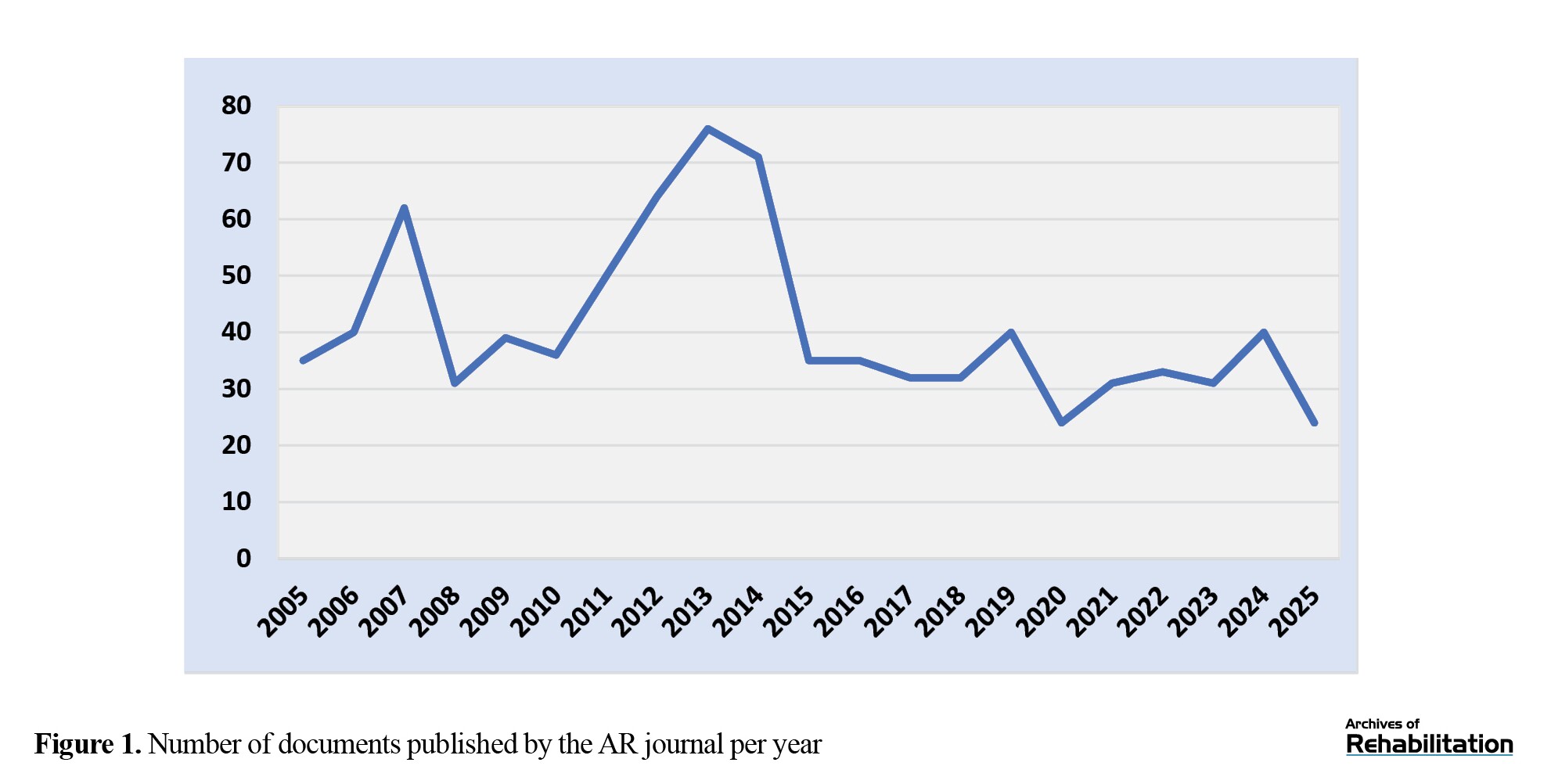
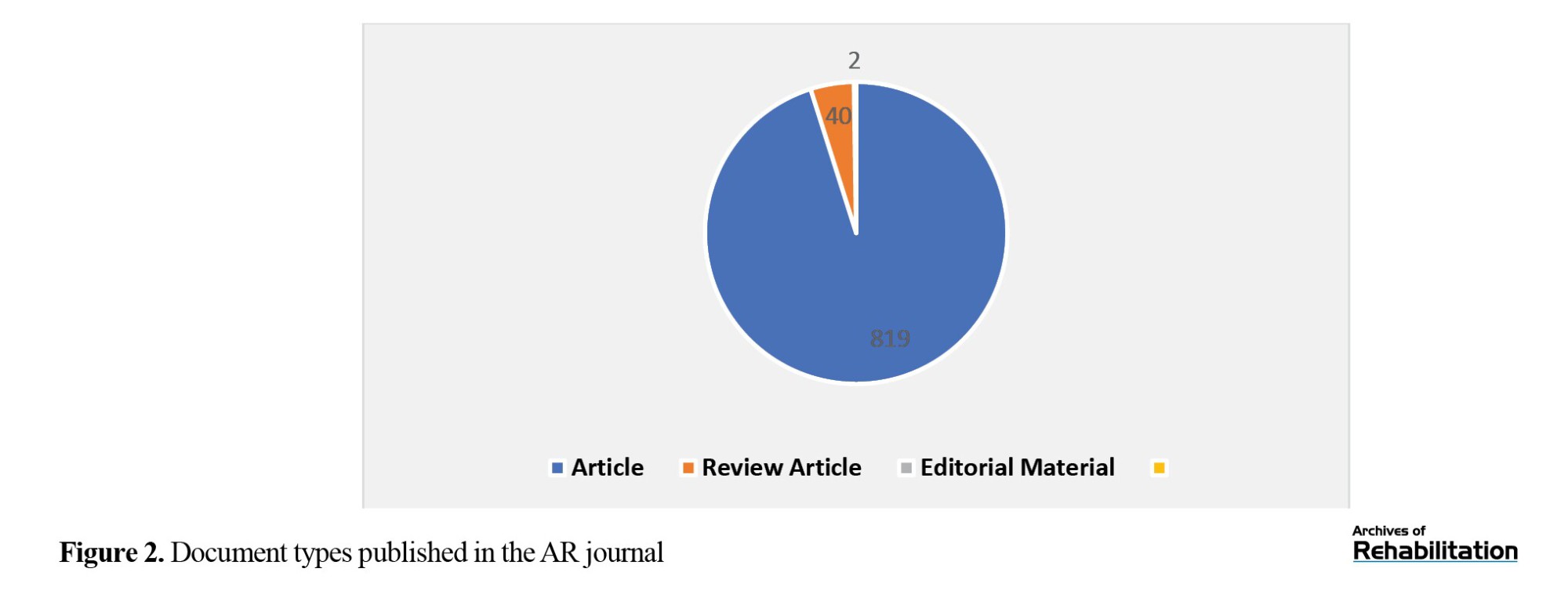
In 2006, it reached 40 documents, indicating a gentle growth slope. The highest publication rate was observed in 2013 and 2014—likely related to a special issue on pediatrics. In subsequent years, the number of documents per issue remained steady, reaching 40 in 2024. As shown in Figure 2, the majority of published documents were research articles (n=819), review articles (n=40), and two editorials, which were excluded from citation analysis.
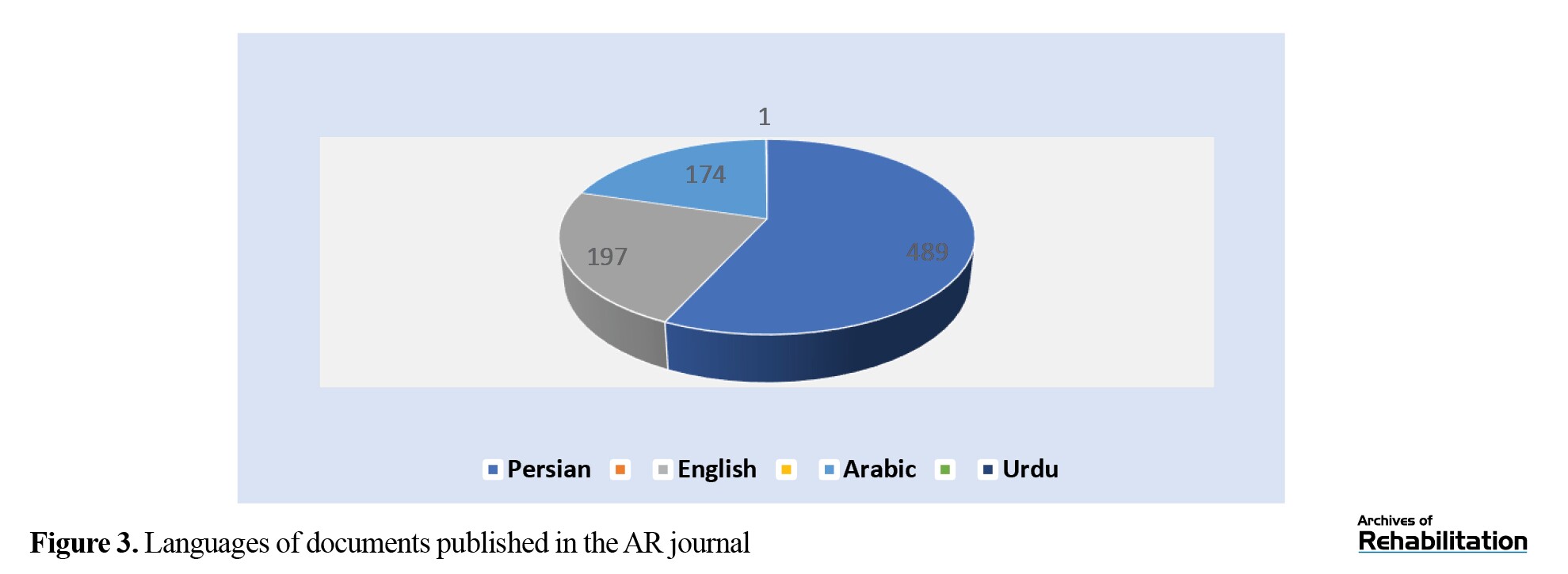
According to Figure 3, most documents were in Persian (n=489), followed by documents in English (n=197), Arabic (n=174), and Urdu (n=1).
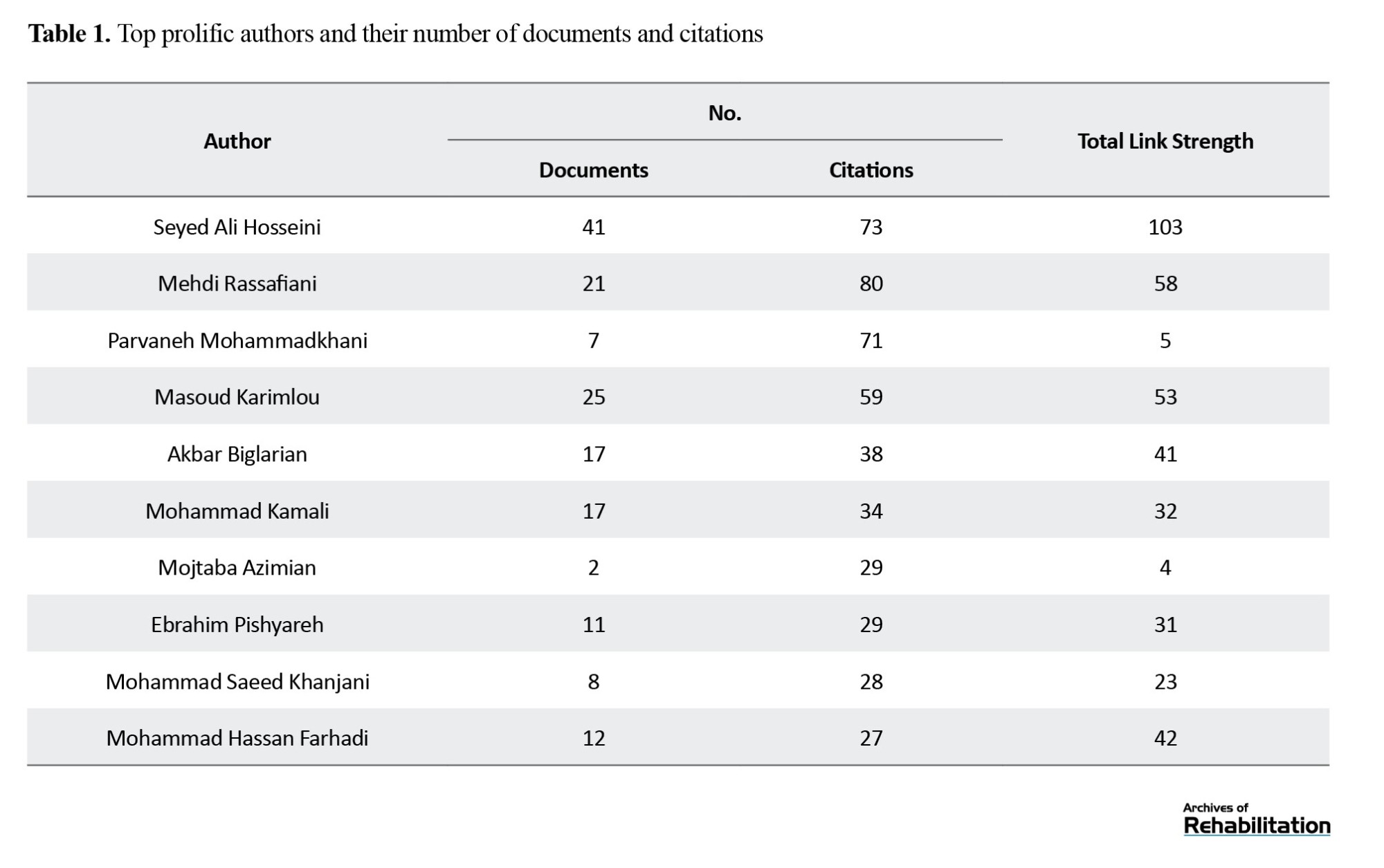
The highest institutional collaboration was from the USWRS (n=341 records), University of Iran (n=68), Tehran University of Medical Sciences (n=64), and Islamic Azad University (n=50). The top ten most prolific and most-cited authors are listed in Table 1. Approximately 2,382 authors had collaborations with the AR journal. The most active and cited author was Seyed Ali Hosseini with 41 documents, 73 citations, and a total link strength of 103, ranking him first among authors.
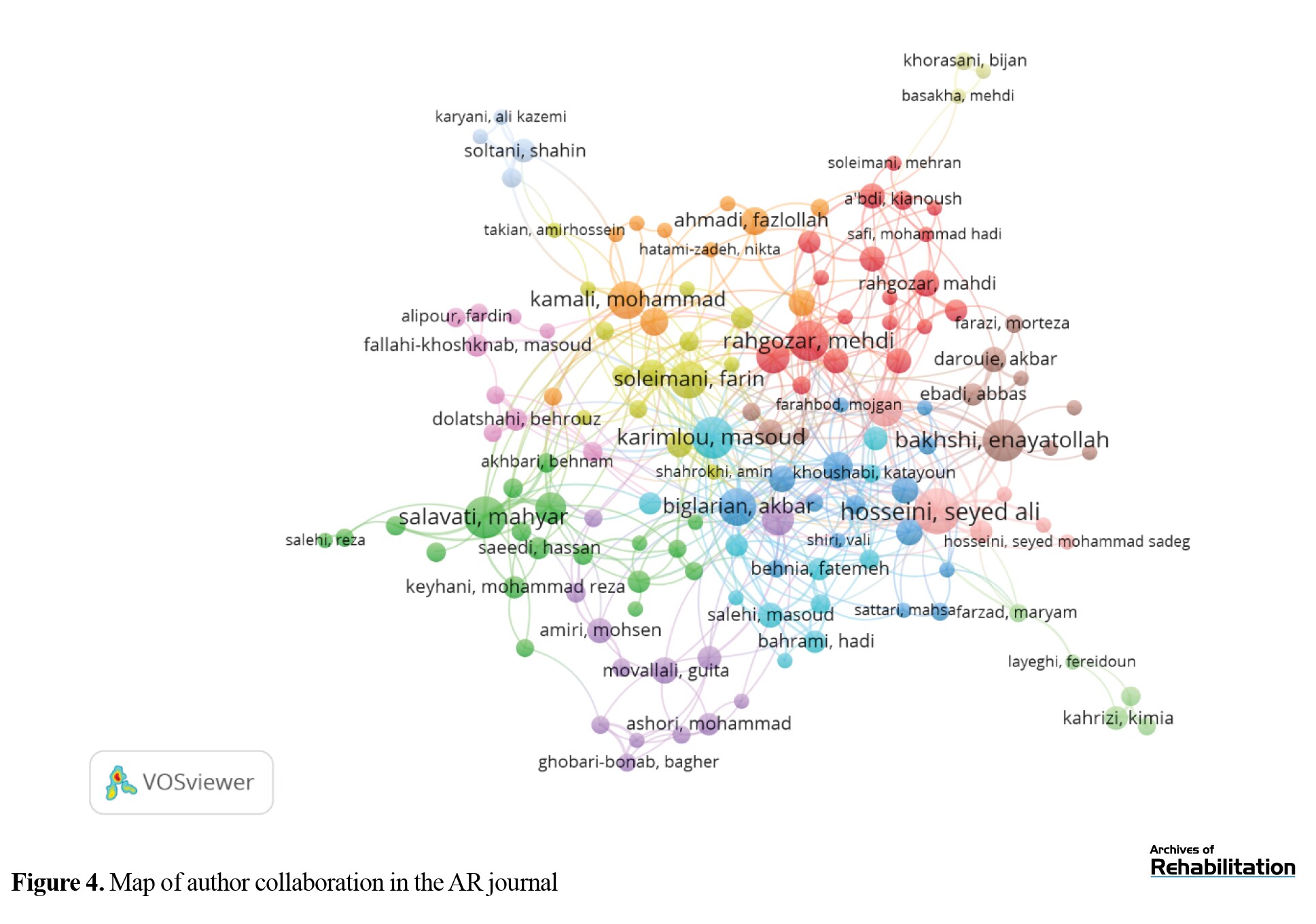
Considering a threshold of one, about 2,382 authors were entered into VOSviewer. The resulting map (Figure 4) contained 141 items, 13 clusters, 448 links, and 633 strong connection in the collaboration network. Each cluster shows authors and the documents associated with them. The items are for authors with higher number of publications. In each cluster, documents are associated with authors who are connected to each other. The links and connections determine the extent of each author’s collaboration.
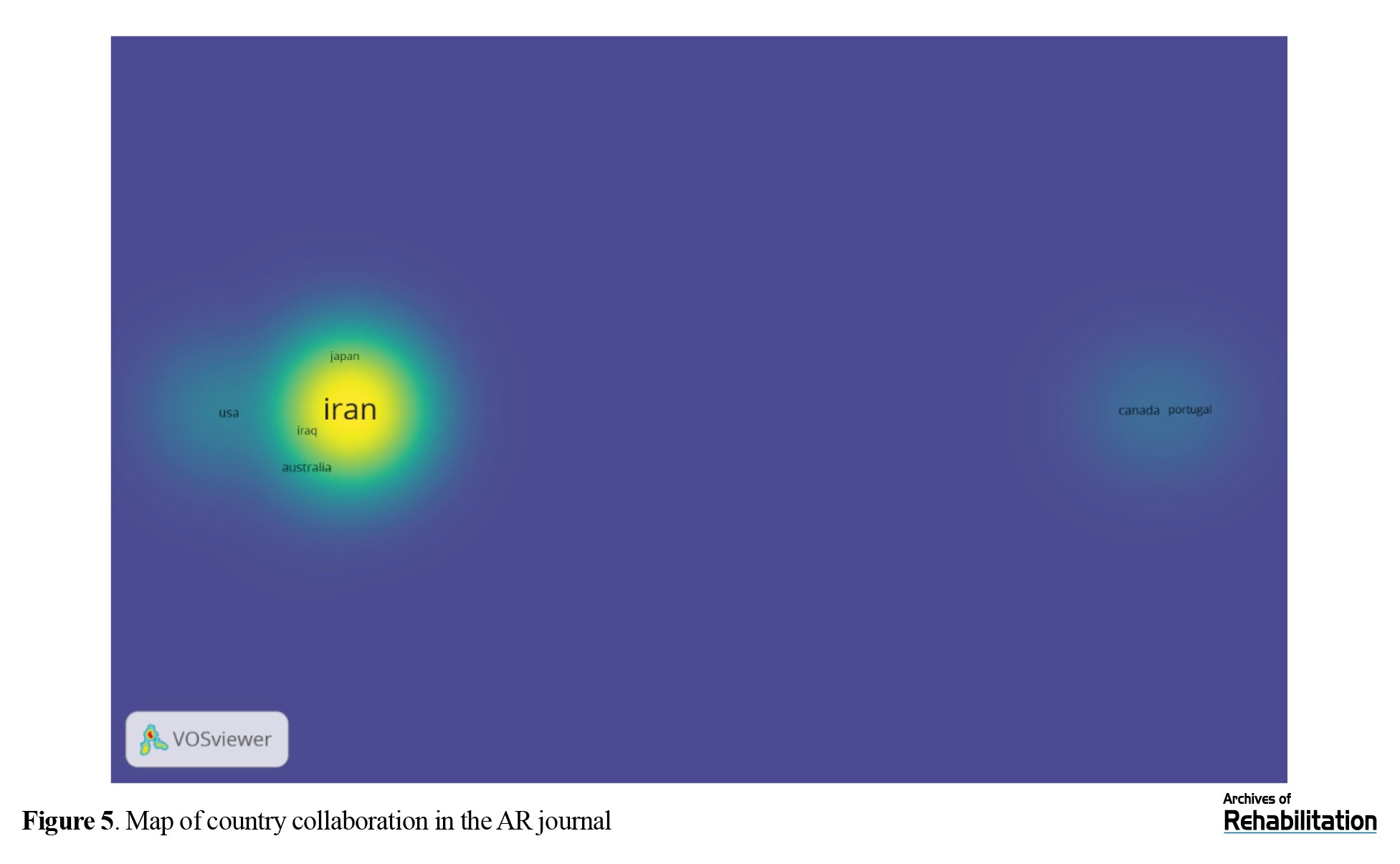
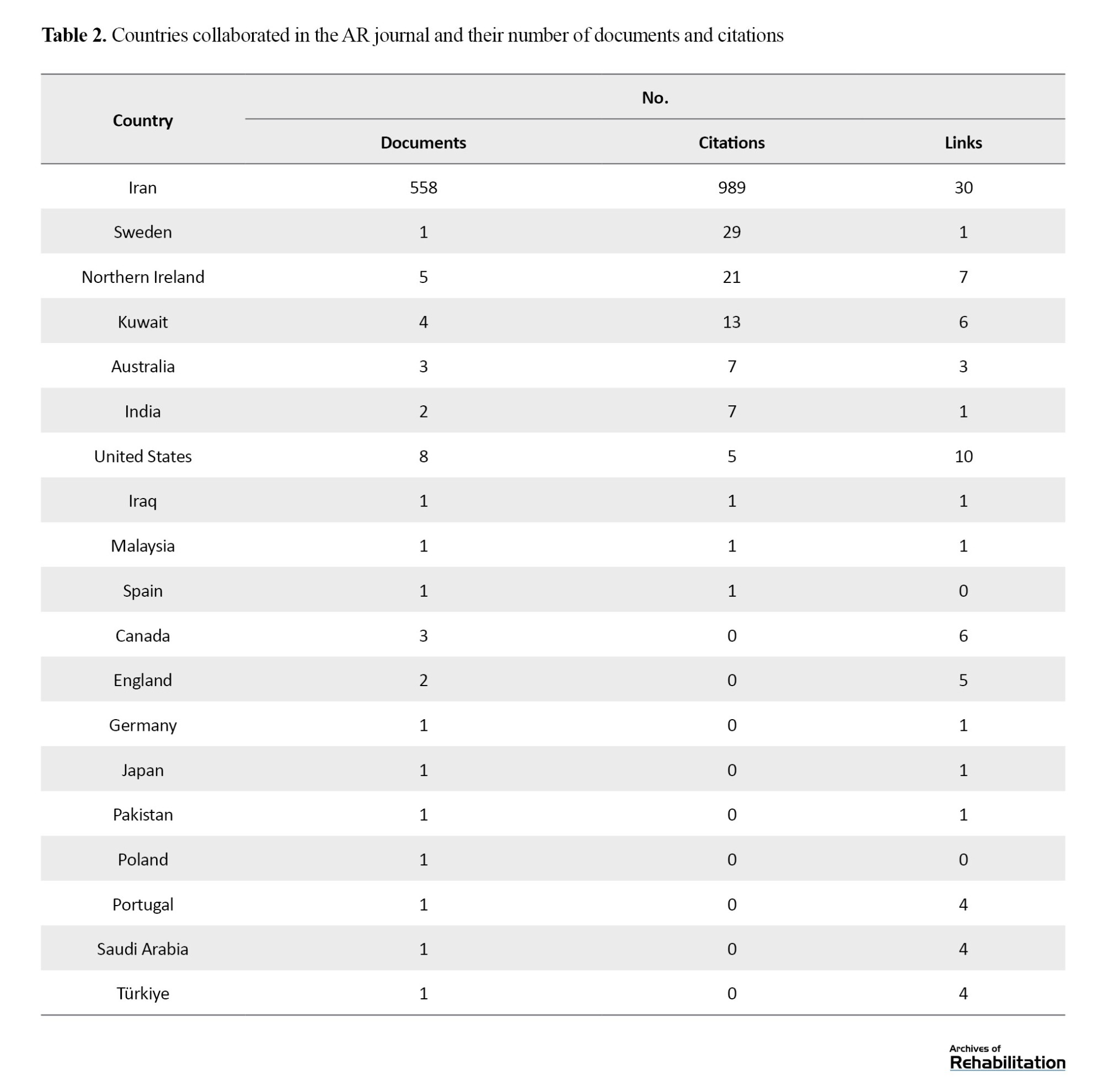
Considering a threshold of one, 19 collaborating countries were entered into VOSviewer. The resulting map (Figure 5) showed that most documents were authored by scholars from Iran (n=558) with 989 citations and 30 links.
Other countries with scholars having the highest citations were Sweden and Northern Ireland (Table 2).
The institutional collaboration map of 224 institutions designed in VOSviewer (Figure 6) had 122 items, 23 clusters, 423 links, and 906 strong connections.
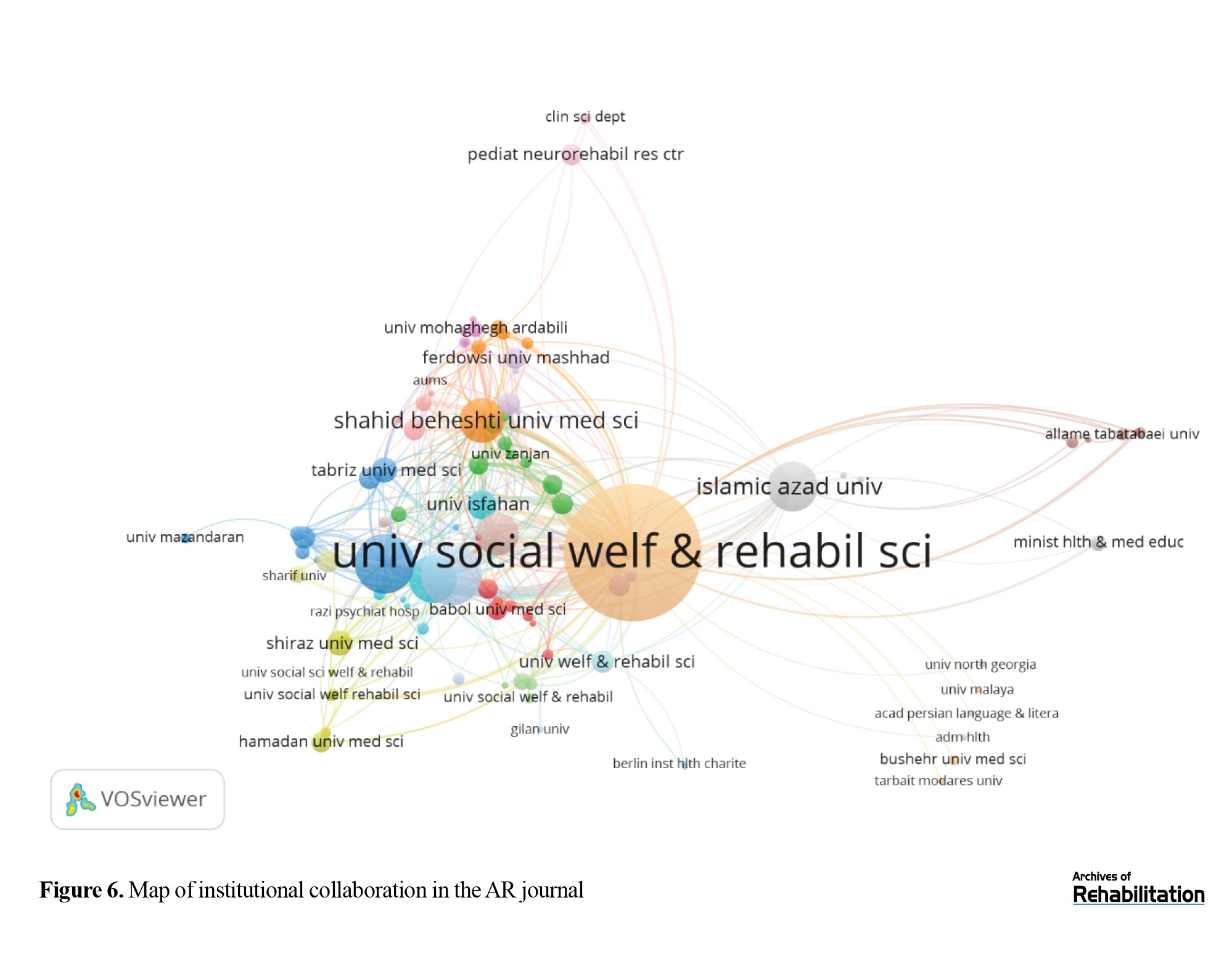
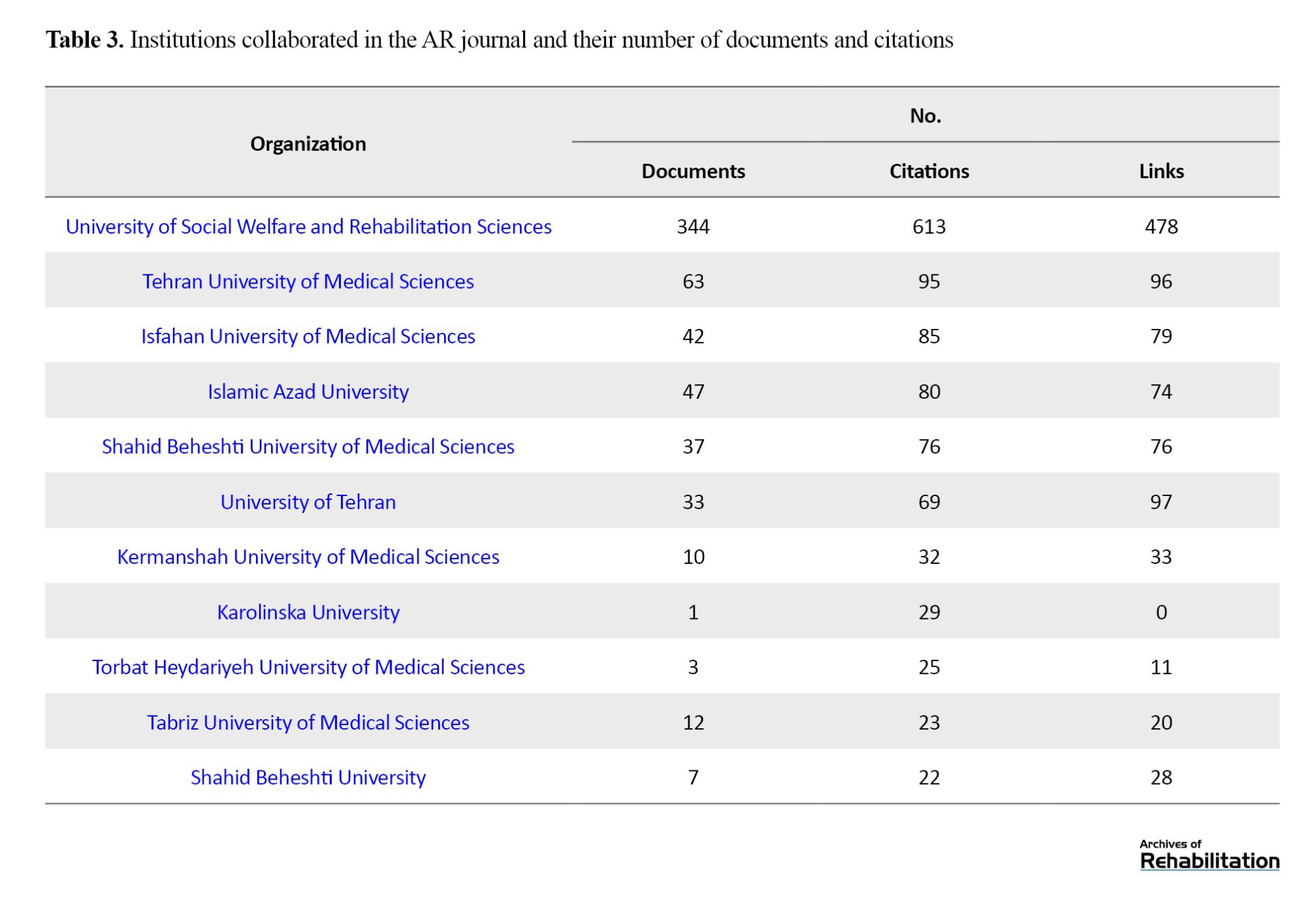
The institution with the greatest collaboration was the USWRS, followed by the University of Iran, Tehran University of Medical Sciences, and Islamic Azad University. Shahid Beheshti University of Medical Sciences and the University of Tehran were in the next ranks. Considering the citation number as the evaluation metric, the highest citation number belonged to the USWRS (n=586), Tehran University of Medical Sciences (n=95), Isfahan University of Medical Sciences (n= 85), and Islamic Azad University (n= 80) (Table 3).
Journal
With a threshold of one, approximately 2,176 keywords were imported into VOSviewer. The keyword co-occurrence map (Figure 7) contained 28 clusters, 10,266 links, and 11,346 strong connections.
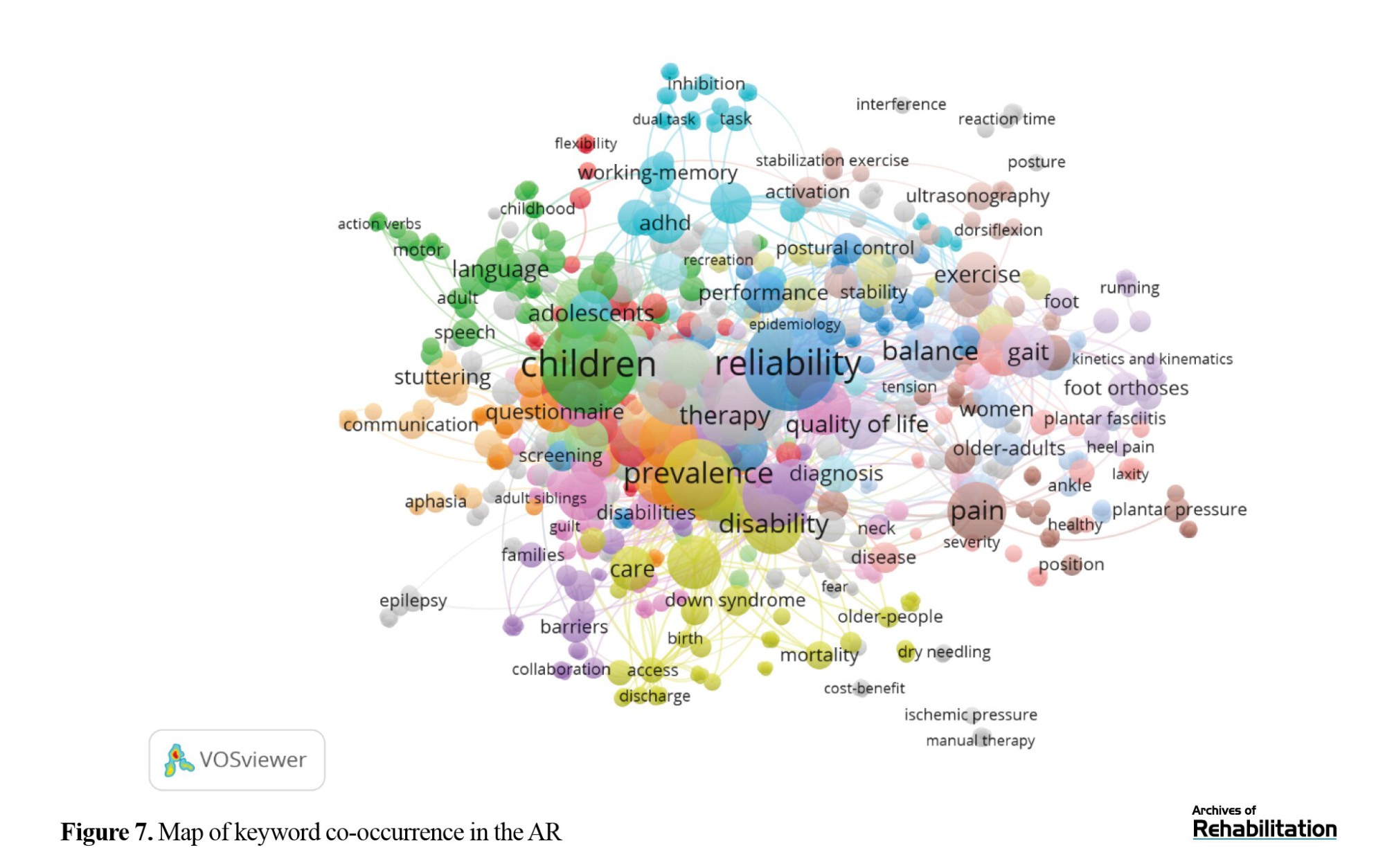
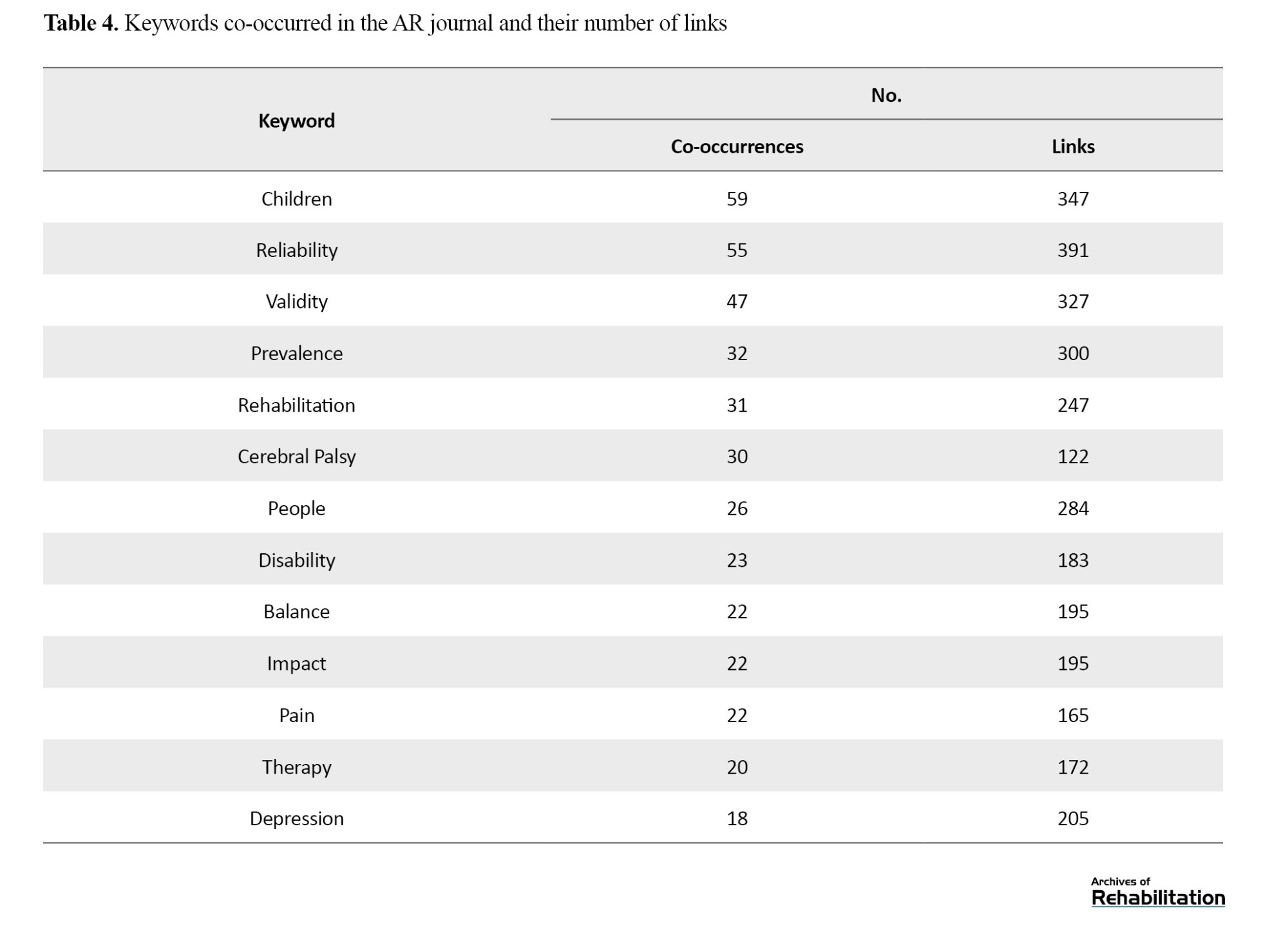
The keyword “children” appears in cluster 2 with 233 links and 59 co-occurrences. “Reliability” appears in cluster 3 with 252 links and 53 co-occurrences. Table 4 lists the keywords co-occurred in the AR journal and their link numbers. As can be seen, the keyword “children” had 59 co-occurrences and 347 links with other keywords, ranking first.
Discussion
Scientometric mapping or information visualization is essential to have a general understanding and representation of the scientific publications related to the study field. The present study conducted a scientometric analysis and visualization of the AR journal owned by the USWRS and indexed in WoS. The study identified the number of publications, authors, institutions, and countries collaborating with the journal. This journal indexed in WoS since 2005 and currently has an H-index of 11. The results demonstrated an upward trends in the number of publications and citations. This increasing trend observed indicate the growing influence of the journal in the rehabilitation field and its increasing attractiveness to scholars. To date, no bibliometric or scientometric study has specifically examined this journal to compare the results. Carey et al., also observed substantial growth in the number of publications, citations, and article downloads in the Journal of Religion and Health over time [20].
The findings also revealed that most of authors and collaborations were from Iran, although researchers from other countries also had collaborations in the AR journal. Despite this international participation, the role of foreign scholars and institutions remain limited. Considering that the journal welcomes papers from around the world, expanding global collaborations and attracting a broader range of international authors can further enhance its scientific impact and visibility. The journal was initially indexed in the WoS database in 2003 with 7 articles and had a total of 861 documents by 2025, all related to rehabilitation sciences. The majority of these documents were original research. Iran was identified as the most contributing country, and most articles were published in Persian. The average citations per document was 1.57, while the USWRS ranked first among contributing institutions. Nandiyanto and Al-Husaeni, in a bibliometric study conducted in Indonesia, identified Indonesia as the most productive country, and “acid” emerged as the most frequently used keyword [21]. In our study, the keyword “children” was the most co-occurred keyword, with 59 co-occurrences and 347 links. This finding is consistent with epidemiological evidence indicating that approximately 18% of rehabilitation-related conditions in Iran are associated with pediatric hearing and visual disorders. Nevertheless, given the high rate of stroke and spinal cord injury among adults, greater research attention to the rehabilitation of these cases is needed.
Strengths and limitations
The strength of this study was a comprehensive 20-year (2005–2025) analysis using advanced bibliometric methods and scientific visualization tools (VOSviewer). This study is also the first scientometric analysis of the AR journal publications. The concurrent use of quantitative indicators (number of articles, citations, H-index) and qualitative network analyses (co-authorship, keyword co-occurrence) provided a comprehensive picture of the journal’s publication status.
Limitations include a focus solely on articles indexed in the WoS database which may not cover some articles indexed in other databases; the predominance of Persian-language articles and international authors’ limited access to full texts of these articles which may negatively affect international citations; the predominance of collaboration from Iranian institutions (Especially the USWRS) and limited international collaboration (only 30 inter-country connectivity) indicating a need to expand international networks; not examining citation patterns (self-citation, preferred citation) or the quality of received citations; and including publications up to mid-2025 may affect some scientometrics.
Conclusion
The findings of this scientometric study demonstrate growth in rehabilitation research and number of citations among the AR journal publications over 20 years, reflecting improvements in research quality and scientific visibility. Although the journal has gained a strong national place, particularly through the participation of Iranian scholars and institutions, expanding international collaborations can further strengthen its global impact. While pediatric rehabilitation is the dominant research focus, increased attention to rehabilitation in adults with conditions such as stroke and spinal cord injury is warranted in response to growing healthcare needs. Overall, this research provides valuable scientometric results of the AR journal publications and offers scholars, policymakers, and faculty members a clearer understanding of research trends, collaborations, and research focus in the rehabilitation field.
Ethical Considerations
Compliance with ethical guidelines
This study was approved by the Research Ethics Committee of the University of Social Welfare and Rehabilitation Sciences, Tehran, Iran. (Code: IR.USWR.REC.1403.111).
Funding
This study was funded by the University of Social Welfare and Rehabilitation Sciences, Tehran, Iran.
Authors' contributions
Conceptualization, methodology, validation: Marzieh Golchin; data collection, data analysis, investigation: Anahita Giti and Marzieh Golchin; editing & review, supervision: Vahid Rashedi and Marzieh Golchin.
Conflict of interest
The authors declared no conflict of interest.
AI tools disclosure statement
In the preparation of this article, no Artificial Intelligence (AI) tools were used.
Acknowledgments
The authors would like to thank Robab Teymouri, for her assistance in the preparation of this article.
Scientometrics means measuring scientific outputs from reputable databases; using a quantitative scientific framework it examines the outputs of a scientific field and guides researchers in that field. It is one of the most common methods for evaluating scientific and research activities in specific topics and areas. Quantitative examination of scientific production, science policy, scholarly communication between researchers, and mapping of science are some of the achievements of this discipline.
The term “scientometrics” is derived from the combination of “sciento-” meaning science and “-metrics” meaning measurement. A simple definition of scientometrics is the science of measuring and analyzing science; it measures the scientific outputs of researchers, universities, and countries using quantitative variables. Scientometric indicators include measures that assess the quantity and quality of researchers’ scientific output, and these indicators can serve as the basis for evaluation, ranking, and academic promotion. One of the most important goals of this field is to establish systems of descriptive metrics for research across scientific communities. The continuous and regular publication of such indicators can be a useful and efficient element for research management and science policy. Scientometrics is founded on the analysis of informational parameters, which include scientific articles, patents, journals, and, more generally, published scientific information [1]. The results of such analyses help determine the structure of scientific documentation flows and their citation processes. Scientometrics deals with various aspects such as production, dissemination, and use of scientific information and does not belong exclusively to a single discipline. Many pioneers in this field introduce scientometrics as the study of processes in scientific research to manage science more effectively.
The origins of this field date back to the 1970s. The starting point and formation of the discipline were in the Soviet :union:, when Dubrovskii and Karnova first used the term scientometrics. They defined scientometrics as the measurement of informatics processes. The first statistical analyses of scientific writings are attributed to Cole, Eyles, and Holm, who used published scientific articles as a basis to compare scientific production among different countries. At the same time, researchers such as Lotka, Bradford, and Zipf proposed theoretical models to study the distribution of publications by authors and journals. Despite considerable work in this area, by 1969 the scope, objectives, and techniques of scientometrics were not yet well established. At that time Nalimov and Mulchenko identified subfields of scientometrics and defined its scope [1].
A scientific map that is drawn based on scientific-research outputs of scholars in a field displays influential authors, thematic clusters that have developed over time, important works and influential items, and introduces them. Scientometrics can be viewed as the quantitative—and where possible qualitative—analysis of the production, distribution, and use of scientific information and the factors that affect them, with the aim of describing, explaining, and forecasting these processes for planning, policy-making, scientific advancement, and foresight at individual, group, organizational, and international levels. In the definition of scientific maps, it is believed that a scientific map is a representation of scientific domains produced by the quantitative analysis of bibliographic information. Elements that form scientific maps are bibliographic outputs of research domains. In these maps, subject areas that have stronger conceptual connections appear closer together, while areas with weaker relations appear further apart [2].
Shiffrin, and Börner [3] They state that the field of mapping the structure of science is an important field for understanding the growth of scientific research, tracking the dynamics of a field, discovering new areas of research, and creating a big picture of the scientific structure and creating competition. The usefulness of a scientific map of a field for specialists is in examining trends and confirming predictions, and for non-specialists, it is an entry point to a field and answering questions specific to that field [4]. The increasing growth of scientific publications in the last few centuries has made the need to examine the trend of scientific growth and development more evident than ever before, and the number of scientific articles produced and the quality of the connections between them in each field reflect the hot topics of that field. In view of this, many studies are being conducted today in the field of evaluating and measuring the function of journals and the trend of their productions and reviewing their activities. In these studies, quantitative measurements are made of scientific productions to determine the frequency of research in each country, institution, scientific field and each individual and what its trend is. What fields do researchers choose for their research and what fields are neglected. Who, what institutions, and where do they conduct research? To what extent is this research funded? What impact does this research have on the scientific community? [5].
One type of such study is the bibliometric study, which is a method of assessing the overall state of research. Bibliometrics is widely used in information science. Bibliometric surveys are useful tools for assessing and understanding the scientific and social importance of a scientific discipline at a particular time. Despite the methodological limitations mentioned for these approaches, they allow for the review of research and the study of its growth and distribution in a particular discipline, and they assess the level of scientific production by a working group, institution, university, or country. In this approach, bibliometric information on the number of publications, the number of citations, the average normalized citation score, the h-index, and interdisciplinary and specialized measures are evaluated and analyzed [6, 7]. The information obtained through it can also be used to draw a science map. A science map is a tool for creating a combination of classification and visualization that displays the relationships between different sciences from different perspectives. In science maps, subject areas that are more closely related are displayed closer together and areas that are less related are displayed further apart [8].
Scientific maps, by graphically depicting a scientific field, facilitate better and more precise recognition of that branch of knowledge and convert an abstract concept into a more tangible representation [9]. Visualization or mapping, using graphical symbols, assists users; through this method—based on the scientific outputs of a discipline—authors, influential works, and so on are identified and introduced. Today, unlike the past, attention is not limited to the raw number of articles by a researcher; more in-depth measures of influence—based on designed indicators, journal quality, and the researcher’s position within the relevant social network—are considered [10].
Scientometrics is also one of the most common methods for evaluating scientific activities and managing research. Quantitative review of scientific outputs, science policy, scholarly communications, and mapping of science are among its topics. In scientometrics, scholarly communications and the modes of producing, disseminating, and utilizing scientific information are assessed indirectly by examining sources and references. International citation indexes such as the citation databases of Clarivate Analytics (e.g., Web of Science [WoS]) and Elsevier’s Scopus, PubMed, etc., compare individuals, institutions, journals, articles, and countries scientifically.
Citation analysis (bibliographic citation study) is one of the most common bibliometric techniques, in which the rules governing the relation between the citing document and the cited document are investigated [11].
Methods of citation analysis include qualitative, quantitative, and computational approaches. Such scientometric studies focus on comparing productivity, organizational ranking, journal ranking with standardized productivity norms, evaluating the impact of top research articles, tracking the development path of a scientific field or technology, and developing indicators for top authors and organizations based on research performance. Horri [12] believes that researchers in scientific fields are nodes in the global science network, each occupying a special topic and position within that network. The number of links a researcher establishes with others indicates their connection to the global science network and their participation in global science, a link that today is evaluated through citations.
Borgohain, et al. (2022) examined India’s scientific outputs on sickle cell anemia during 1958–2020. Their findings showed collaboration among 120 countries and 320 authors; the United States and the United Kingdom had the largest scientific production, and authors Kola Bi Roshin and Gosh Konjeksha had 67 and 55 publications respectively; the most cited authors were Gupta Renu, Basu Swati, and Banerjee Anuradha [13].
Giti, et al. (1402 [2023/2024]) conducted a citation and scientific visualization study of articles published in the Iranian Rehabilitation Journal (IRJ) indexed in Scopus and reported an increasing trend in the number of documents and received citations from the journal’s inception up to 1402. Descriptive analyses used Excel and visualization used VOSviewer. Their findings indicated an initial upward trend in publications and citations followed by a decline—publication counts rose until 1389 (2010) and declined until 1395 (2016) [14].
Giti, et al. (1402 [2023/2024]) analyzed citation patterns of multiple sclerosis publications in the Web of Science and concluded that the growth rate of publications in this topic is increasing worldwide; various research institutions have made significant contributions and international collaboration among researchers in this field is at a reasonable level [15].
Ghafari, et al. (1400 [2021]) evaluated Iran’s scientific outputs in computer engineering in Web of Science (32108 records, 1985–2020). Their findings indicated that Islamic Azad University and Amirkabir University of Technology had the most records; scientific output growth in this field is increasing, and Iran collaborated with 100 countries, the most with the USA [16].
Bahramand, Mahsa (1396 [2017/2018]) conducted a bibliometric analysis of the quarterly Rahyaft. Results showed low female participation (18%) and high male participation (81%) in article production. The University of Tehran had the most collaboration with the quarterly Rahyaft. The average number of articles per issue was 13.1. Citations to Persian and foreign sources were assessed; 760 documents were published containing 5168 Persian sources and 2515 foreign sources. Of the 760 documents, 566 were authored, 114 were translations, 55 were reports, and 25 were book reviews or introductions by 1028 contributors. Fazel Larijani, with 13 authored papers, was the most active author and with eight translated articles was the most active translator. Faculty authors contributed the majority of the documents [17].
WoS is an online scientific citation index originally developed by Thomson Reuters; it enables comprehensive citation searching and provides access to multiple datasets. The purpose of such a platform is to foster communication among researchers and provide easier access to articles and scientific sources. Without a comprehensive and accurate database in which diverse scientific works are discoverable and traceable, science across various domains cannot be properly advanced.
In Iran, the prevalence of conditions requiring rehabilitation is increasing. One study showed that approximately 10% of Iran’s population (about 8.5 million people) require rehabilitation services. The most common conditions include neuromotor disorders (32%), orthopedic disorders (28%), hearing and visual impairments (18%), and psychological disorders (12%). These data emphasize the importance of knowledge production in rehabilitation and the key role of journals such as the Archives of Rehabilitation in responding to these societal needs.
Journal Archives of Rehabilitation (JAR)
The quarterly Archives of Rehabilitation is the scientific–research journal of the University of Social Welfare and Rehabilitation Sciences, and is considered the oldest Persian-language journal in the field of rehabilitation. The journal is published in Persian (ISSN: 2538-6247) and its English title changed in Bahman 1395 (February 2017). The journal was the first specialty rehabilitation journal in the country and received publication permission on 15/9/78 (Persian calendar) (license no. 12558/124) from the Ministry of Culture and Islamic Guidance; since Summer 2003 (1382) it was classified as a scientific–research journal by the Medical Journals Commission of the Ministry of Health, Treatment and Medical Education; this ranking was extended by the 65th session of the Medical Journals Commission on 4/6/85 (26 August 2006) by letter no. 200148.
This journal accepts scientific contributions in allied health sciences and rehabilitation including orthotics & prosthetics, optometry, audiology, speech therapy, occupational therapy, physiotherapy, and special education. Its full thematic scope is rehabilitation. The aim of the present study was a scientometric analysis and visualization of articles published in the Archives of Rehabilitation (the quarterly of the University of Social Welfare and Rehabilitation Sciences) indexed in Web of Science, covering 2005–2025.
Materials & Methods
Since the AR journal is indexed in WoS, bibliographic data were obtained from this database and exported to Excel. To find the articles in WoS, first the AR journal title was searched with Boolean operators using the following strategy: SRC TITLE (archives AND of AND rehabilitation) AND (LIMIT-TO (EXACT SRC TITLE, “Archives of Rehabilitation”) (Archives of Rehabilitation (publication titles))
For classifying document types published in the AR journal, the categorization method provided by the WoS database was used. In this database, each record has a “document type” field. Accordingly, document types were automatically classified into categories such as “article” (research article), “review article,” “editorial material,” and other types.
After data extraction, to ensure classification accuracy, all records were manually checked by two independent researchers. In this stage, the type of each record was confirmed or corrected based on its structure and content (e.g. presence of methods, results, discussion and conclusion sections for research articles; or literature review and critical analysis sections for review articles). Where the two researchers disagreed, it was resolved by a third reviewer. To classify publication language, first the “language” field in the WoS database was used and then abstracts and keywords of each article were checked manually for confirmation. This combined approach (online + manual search) can increase the accuracy and reliability of the analyzed data.
This study determined publication and citation trends, most-cited articles, and the most productive and most cited authors, institutions, and countries in the journal. We used co-authorship, keyword co-occurrence, and co-citation techniques. Co-authorship focuses primarily on authors and their institutional affiliations to discover collaborative networks [18]. Keyword co-occurrence identifies the most important keywords used in documents to map the research domain and help understand underlying patterns in published documents [19].
Bibliometric analyses were performed in Excel, and visualization—a technique that renders the structures and interrelations of thousands of documents comprehensible—was conducted using VOSviewer, a free software specialized for building and visualizing bibliometric networks, creating maps from network data, and exploring those maps.
Results
A total of 861 records were retrieved on 1 October 2025. Two records related to editorials were removed from the analysis, leaving 859 articles and 1,083 citations. The journal had an H-index of 11 and an impact factor of 0.3, with an average citations per document of 1.57. Based on the WoS classification, all documents were related to the “rehabilitation” subject category.
According to Figure 1, the journal’s indexing in the WoS database began in 2005, when there were 35 published documents.
In 2006, it reached 40 documents, indicating a gentle growth slope. The highest publication rate was observed in 2013 and 2014—likely related to a special issue on pediatrics. In subsequent years, the number of documents per issue remained steady, reaching 40 in 2024. As shown in Figure 2, the majority of published documents were research articles (n=819), review articles (n=40), and two editorials, which were excluded from citation analysis.
According to Figure 3, most documents were in Persian (n=489), followed by documents in English (n=197), Arabic (n=174), and Urdu (n=1).
The highest institutional collaboration was from the USWRS (n=341 records), University of Iran (n=68), Tehran University of Medical Sciences (n=64), and Islamic Azad University (n=50). The top ten most prolific and most-cited authors are listed in Table 1. Approximately 2,382 authors had collaborations with the AR journal. The most active and cited author was Seyed Ali Hosseini with 41 documents, 73 citations, and a total link strength of 103, ranking him first among authors.
Considering a threshold of one, about 2,382 authors were entered into VOSviewer. The resulting map (Figure 4) contained 141 items, 13 clusters, 448 links, and 633 strong connection in the collaboration network. Each cluster shows authors and the documents associated with them. The items are for authors with higher number of publications. In each cluster, documents are associated with authors who are connected to each other. The links and connections determine the extent of each author’s collaboration.
Considering a threshold of one, 19 collaborating countries were entered into VOSviewer. The resulting map (Figure 5) showed that most documents were authored by scholars from Iran (n=558) with 989 citations and 30 links.
Other countries with scholars having the highest citations were Sweden and Northern Ireland (Table 2).
The institutional collaboration map of 224 institutions designed in VOSviewer (Figure 6) had 122 items, 23 clusters, 423 links, and 906 strong connections.
The institution with the greatest collaboration was the USWRS, followed by the University of Iran, Tehran University of Medical Sciences, and Islamic Azad University. Shahid Beheshti University of Medical Sciences and the University of Tehran were in the next ranks. Considering the citation number as the evaluation metric, the highest citation number belonged to the USWRS (n=586), Tehran University of Medical Sciences (n=95), Isfahan University of Medical Sciences (n= 85), and Islamic Azad University (n= 80) (Table 3).
Journal
With a threshold of one, approximately 2,176 keywords were imported into VOSviewer. The keyword co-occurrence map (Figure 7) contained 28 clusters, 10,266 links, and 11,346 strong connections.
The keyword “children” appears in cluster 2 with 233 links and 59 co-occurrences. “Reliability” appears in cluster 3 with 252 links and 53 co-occurrences. Table 4 lists the keywords co-occurred in the AR journal and their link numbers. As can be seen, the keyword “children” had 59 co-occurrences and 347 links with other keywords, ranking first.
Discussion
Scientometric mapping or information visualization is essential to have a general understanding and representation of the scientific publications related to the study field. The present study conducted a scientometric analysis and visualization of the AR journal owned by the USWRS and indexed in WoS. The study identified the number of publications, authors, institutions, and countries collaborating with the journal. This journal indexed in WoS since 2005 and currently has an H-index of 11. The results demonstrated an upward trends in the number of publications and citations. This increasing trend observed indicate the growing influence of the journal in the rehabilitation field and its increasing attractiveness to scholars. To date, no bibliometric or scientometric study has specifically examined this journal to compare the results. Carey et al., also observed substantial growth in the number of publications, citations, and article downloads in the Journal of Religion and Health over time [20].
The findings also revealed that most of authors and collaborations were from Iran, although researchers from other countries also had collaborations in the AR journal. Despite this international participation, the role of foreign scholars and institutions remain limited. Considering that the journal welcomes papers from around the world, expanding global collaborations and attracting a broader range of international authors can further enhance its scientific impact and visibility. The journal was initially indexed in the WoS database in 2003 with 7 articles and had a total of 861 documents by 2025, all related to rehabilitation sciences. The majority of these documents were original research. Iran was identified as the most contributing country, and most articles were published in Persian. The average citations per document was 1.57, while the USWRS ranked first among contributing institutions. Nandiyanto and Al-Husaeni, in a bibliometric study conducted in Indonesia, identified Indonesia as the most productive country, and “acid” emerged as the most frequently used keyword [21]. In our study, the keyword “children” was the most co-occurred keyword, with 59 co-occurrences and 347 links. This finding is consistent with epidemiological evidence indicating that approximately 18% of rehabilitation-related conditions in Iran are associated with pediatric hearing and visual disorders. Nevertheless, given the high rate of stroke and spinal cord injury among adults, greater research attention to the rehabilitation of these cases is needed.
Strengths and limitations
The strength of this study was a comprehensive 20-year (2005–2025) analysis using advanced bibliometric methods and scientific visualization tools (VOSviewer). This study is also the first scientometric analysis of the AR journal publications. The concurrent use of quantitative indicators (number of articles, citations, H-index) and qualitative network analyses (co-authorship, keyword co-occurrence) provided a comprehensive picture of the journal’s publication status.
Limitations include a focus solely on articles indexed in the WoS database which may not cover some articles indexed in other databases; the predominance of Persian-language articles and international authors’ limited access to full texts of these articles which may negatively affect international citations; the predominance of collaboration from Iranian institutions (Especially the USWRS) and limited international collaboration (only 30 inter-country connectivity) indicating a need to expand international networks; not examining citation patterns (self-citation, preferred citation) or the quality of received citations; and including publications up to mid-2025 may affect some scientometrics.
Conclusion
The findings of this scientometric study demonstrate growth in rehabilitation research and number of citations among the AR journal publications over 20 years, reflecting improvements in research quality and scientific visibility. Although the journal has gained a strong national place, particularly through the participation of Iranian scholars and institutions, expanding international collaborations can further strengthen its global impact. While pediatric rehabilitation is the dominant research focus, increased attention to rehabilitation in adults with conditions such as stroke and spinal cord injury is warranted in response to growing healthcare needs. Overall, this research provides valuable scientometric results of the AR journal publications and offers scholars, policymakers, and faculty members a clearer understanding of research trends, collaborations, and research focus in the rehabilitation field.
Ethical Considerations
Compliance with ethical guidelines
This study was approved by the Research Ethics Committee of the University of Social Welfare and Rehabilitation Sciences, Tehran, Iran. (Code: IR.USWR.REC.1403.111).
Funding
This study was funded by the University of Social Welfare and Rehabilitation Sciences, Tehran, Iran.
Authors' contributions
Conceptualization, methodology, validation: Marzieh Golchin; data collection, data analysis, investigation: Anahita Giti and Marzieh Golchin; editing & review, supervision: Vahid Rashedi and Marzieh Golchin.
Conflict of interest
The authors declared no conflict of interest.
AI tools disclosure statement
In the preparation of this article, no Artificial Intelligence (AI) tools were used.
Acknowledgments
The authors would like to thank Robab Teymouri, for her assistance in the preparation of this article.
References
- Office of Vice Chancellor for Research and Technology, Hamadan University of Medical Sciences. [About Scientometrics (Persian)]. Hamadan: Hamadan University of Medical Sciences; 2026. [Link]
- Noyons ECM. Bibliometric mapping as a science policy and research management tool. Leiden: DSWO Press; 1999. [Link]
- Shiffrin RM, Börner K. Mapping knowledge domains. Proceedings of the National Academy of Sciences of the United States of America. 2004; 101 Suppl 1(Suppl 1):5183-5. [DOI:10.1073/pnas.0307852100] [PMID] [PMCID]
- Chen C. Mapping the mind. In: Chen Ch, editor. Mapping Scientific Frontiers: The Quest for Knowledge Visualization. London Springer; 2003. [DOI:10.1007/978-1-4471-0051-5_3]
- Sharifi V. [Scientometrics and new cognitive science (Persian)]. Advances in Cognitive Sciences. 2013; 5(2):89-92. [Link]
- Agarwal A, Durairajanayagam D, Tatagari S, Esteves SC, Harlev A, Henkel R, et al. Bibliometrics: Tracking research impact by selecting the appropriate metrics. Asian Journal of Andrology. 2016; 18(2):296-309. [DOI:10.4103/1008-682X.171582] [PMID]
- Rosas SR, Kagan JM, Schouten JT, Slack PA, Trochim WM. Evaluating research and impact: A bibliometric analysis of research by the NIH/NIAID HIV/AIDS clinical trials networks. PLoS One. 2011; 6(3):e17428. [DOI:10.1371/journal.pone.0017428] [PMID]
- Abedi Jafari H, Abooyee Ardakan M, Aghazadeh F, Delbari Ragheb F. [Methodology of drawing the maps of science: A case study on public management science map (Persian)]. Methodology of Social Sciences Humanities. 2011; 17(66):53-69. [Link]
- Akbari M, Delbari Ragheb F, Zolfaghari A, Kalanaki A, Razi S. [Designing knowledge map of entrepreneurship in Iran based on Iran’s Persian scientific researches (Persian)]. Organizational Culture Management. 2016; 13(4):1091-112. [DOI:10.22059/jomc.2016.55429]
- Sweileh WM, Al-Jabi SW, Zyoud SeH, Sawalha AF. Outdoor air pollution and respiratory health: A bibliometric analysis of publications in peer-reviewed journals (1900-2017). Multidisciplinary Respiratory Medicine. 2018; 13:15. [DOI:10.1186/s40248-018-0128-5] [PMID]
- Horri A, Nishat N. [Study of the citation behavior of authors of articles published in the Journal of Psychology and Educational Sciences, University of Tehran, from the beginning to the end of 2000 (Persian)]. Journal of Psychology and Educational Sciences. 2002; 32(2):1-33. [Link]
- Horri A. [The importance and necessity of using foreign resources in national research (Persian)]. Librarianship and Informaion Organization Studies. 1997; 32:7-12. [Link]
- Borgohain DJ, Verma MK, Lund B, Mondal D, Chakrabarti K, Mondal D, et al. Intellectual Structure Mapping of Sickle Cell Anemia Research in India: A Scientometric Analysis. Journal of Scientometric Research. 2022; 11(1):89-99. [DOI:10.5530/jscires.11.1.9]
- Giti A, Rashedi V, Jalilzadeh Afshari P, Golchin M. Citation Review and Scientific Visualization of Articles Published in the Iranian Rehabilitation Journal (IRJ) 2003-2023 in the Scopus Database. Iranian Rehabilitation Journal. 2023; 21(3):399-410. [DOI:10.32598/irj.21.3.327.3]
- Giti A, Golchin M, Babaee T, Fassihi A. [Mapping a Scientific Map of Researchers in the Field of Multiple Sclerosis (MS) Publications (Persian)]. Journal of Modern Medical Information Sciences. 2023; 9(3):278-95. [Link]
- Ghafari S, Qarabaglu V, Rezagholiza-deh Shirvan M. [Scientific Evaluation of Iranian Researchers in the Field of Computer Engineering With Emphasis on Citations (Persian)]. Scientometrics Research Journal. 2021; 7(2):99-114. [DOI:10.22070/rsci.2020.5204.1354]
- Bahremand M. [A Bibliometric Analysis of the Journal of Rahyaft (Persian)]. Rahyaft. 2016; 26(63):77-91. [Link]
- Saberi MK, Farhadi A, Karami S, Mokhtari H. Iranian researchers’ contributions to research on COVID-19: A bibliometric analysis and visualization. Medical Journal of The Islamic Republic of Iran. 2021; 35(1):169-77. [DOI:10.47176/mjiri.35.24]
- Laengle S, Modak NM, Merigó JM, Sotta Cdl. Thirty years of the International Journal of Computer Integrated Manufacturing: A bibliometric analysis. International Journal of Computer Integrated Manufacturing. 2018; 31(12):1247-68. [DOI:10.1080/0951192X.2018.1529434]
- Carey LB, Kumar S, Goyal K, Ali F. A bibliometric analysis of the journal of religion and health: Sixty years of publication (1961-2021). Journal of Religion and Health. 2023; 62(1):8-38.[DOI:10.1007/s10943-022-01704-4] [PMID]
- Nandiyanto AB, Al Husaeni DF. A bibliometric analysis of materials research in Indonesian Journal using VOSviewer. Journal of Engineering Research. 2021. [DOI:10.36909/jer.ASSEEE.16037]
Type of Study: Original |
Subject:
Rehabilitation Counseling
Send email to the article author
| Rights and permissions | |
 |
This work is licensed under a Creative Commons Attribution-NonCommercial 4.0 International License. |

Copyright © The Author(s);
This is an open access article distributed under the terms of the Creative Commons Attribution-NonCommercial 4.0 (CC-By-NC 4.0), which permits use, distribution, and reproduction in any medium, provided the original work is properly cited and is not used for commercial purposes.
Contact Information
This is an open access article distributed under the terms of the Creative Commons Attribution-NonCommercial 4.0 (CC-By-NC 4.0), which permits use, distribution, and reproduction in any medium, provided the original work is properly cited and is not used for commercial purposes.
Contact Information