
Volume 27, Issue 2 (7-2026)
Arch Rehabil 2026, 27(2): 262-285 |
Back to browse issues page




Download citation:
BibTeX | RIS | EndNote | Medlars | ProCite | Reference Manager | RefWorks
Send citation to:


BibTeX | RIS | EndNote | Medlars | ProCite | Reference Manager | RefWorks
Send citation to:
Hassanati F, Ghoreishi Z S, Ashtari A, Golmohammadi G. Pediatric Speech-language Pathology Research in Iran During 2007-2024: Trends, Thematic Areas, and Research Gaps. Arch Rehabil 2026; 27 (2) :262-285
URL: http://rehabilitationj.uswr.ac.ir/article-1-3702-en.html
URL: http://rehabilitationj.uswr.ac.ir/article-1-3702-en.html

1- Department of Speech Therapy, Pediatric Neurorehabilitation Research Center, University of Social Welfare and Rehabilitation Sciences, Tehran, Iran.
2- Department of Speech Therapy, Faculty of Rehabilitation Sciences, University of Social Welfare and Rehabilitation Sciences, Tehran, Iran.
3- Neuromuscular Rehabilitation Research Center, Neuroscience Research Institute, Semnan University of Medical Sciences, Semnan, Iran. ,golmohamadi.golnoosh8@gmail.com
2- Department of Speech Therapy, Faculty of Rehabilitation Sciences, University of Social Welfare and Rehabilitation Sciences, Tehran, Iran.
3- Neuromuscular Rehabilitation Research Center, Neuroscience Research Institute, Semnan University of Medical Sciences, Semnan, Iran. ,
Keywords: Speech therapy, Speech-language pathology (SPL), Children, Iran, Research trends, Communication disorders
Full-Text [PDF 2058 kb]
(254 Downloads)
| Abstract (HTML) (2121 Views)
Full-Text: (208 Views)
Introduction
Speech-language pathology (SLP) is a specialized field that deals with the prevention, assessment, and treatment of speech-language and communication disorders, including swallowing disorders, across the lifespan [1-4]. Scientific research in this field plays a key role in enhancing the quality of clinical care through the development of valid diagnostic tools, design of intervention protocols, and improvement of service delivery models [5-7]. The SLP discipline in Iran began in 1973 with the establishment of the Higher School of Rehabilitation Sciences. Over the following decades, with the expansion of academic programs and the formation of professional structures, it gradually consolidated its scientific and clinical position [8]. Given the linguistic and cultural diversity in Iran, the development of assessment tools and interventions tailored to the linguistic and cultural characteristics of Iranians with speech-language disorders is essential. In recent years, Iranian scholars have taken significant steps toward localizing tools and improving services, including those examining barriers and capacities for tele-rehabilitation and highlighting the importance of equitable access to speech therapy services, particularly in special circumstances [9, 10].
Scientometric and bibliometric studies are systematic and powerful approaches for examining knowledge structures, identifying research trends, and determining future priorities. These studies enable the evaluation of thematic and methodological changes over time, identification of dominant or underexplored areas, and detection of research gaps. Moreover, the results of such studies can provide a basis for scientific policy-making, resource allocation, and strategic planning at national and institutional levels. At the international level, numerous studies have employed this approach. For example, a study on post-stroke speech rehabilitation reported key research trends and hotspots in the United States, highlighting the country’s leading contribution [11]. A study evaluating UK research from 1991 to 2000 showed that the UK accounted for approximately 12% of global production in the SLP field [12]. A study conducted a content analysis of a professional journal in the field of SLP and reported a gradual shift toward more sophisticated methodologies and increased cross-national collaborations [13]. A study conducted in South Korea, using the keyword network analysis, mapped conceptual structures and interdisciplinary thematic relationships [14].
Despite international studies, no comprehensive, systematic analysis has been conducted in Iran to examine the research trends of SLP faculty members at Iranian universities, particularly in pediatric SLP. While bibliometric methods are recognized as valid, reliable, and information-rich tools for evaluating the research performance of universities and academic groups [15], the collective research output and international scientific impact of faculty members in this discipline in Iran have not been systematically documented. Over the past five decades, medical universities in Iran have played a significant role in training SLP specialists and developing educational and research capacities in speech therapy [16]. Identifying research gaps is a primary objective of scientometric studies, and specific frameworks exist to determine these gaps and guide future research agendas [17, 18]. However, thematic trends, methodological developments, and overall research trends in the field of pediatric SLP in Iran have not been analyzed coherently; as a result, research priorities and underexplored areas of pediatric SLP have not been clearly defined. Given the long history of SLP education in Iran and the gradual growth in the volume of scientific production, this gap is considerable. No study has systematically examined the scientific production of Iranian SLP faculty members over the past five decades. Therefore, the present study aims to fill this gap and provide a roadmap for shaping future scientific strategies for pediatric SLP in Iran by systematically analyzing research trends, identifying strengths and barriers, and explaining future opportunities.
Materials and Methods
This descriptive-retrospective study systematically analyzes the scope and trends of pediatric SPL research conducted by faculty members of medical universities in Iran. The analysis focuses on the following aspects: Annual publication trends, areas of clinical practice in SPL, research focus on the clinical field, causes of communication and swallowing disorders studied, research designs (e.g. clinical trials, cross-sectional, etc.), and the indexing status of articles. To be eligible, articles had to meet all of the following criteria: at least one author being a SPL faculty member at a medical university in Iran, being conducted during authors’ employment at one of medical universities Iran, the research focused on pediatric SPL domains including communication, speech, language, and swallowing disorders (encompassing aspects of prevention, screening, diagnosis, assessment, intervention, counseling, and education), being registered in the Scientometric System of the Iranian Ministry of Health and Medical Education (MOHME), relevance to the Iranian context and culture, publication in peer-reviewed journals, publication up to November 2, 2024.
The Scientometric System of the Iranian Ministry of Health and Medical Education (MOHME) was used as the primary source for data collection. This system systematically records and updates the scientific publications of SPL faculty members at Iranian medical universities. The profile of each faculty member was reviewed and the titles and abstracts of their articles were screened to confirm the relevance. The articles with shared authorship were included only once based on the first author’s name in the final analysis.
The article selection process was conducted in multiple systematic phases. First, one research team member accessed the Scientometric System and collected the information of all relevant publications. Duplicates were removed and then independently reviewed and verified by a second evaluator. In the next step, three other research team members conducted initial screening of the remaining records based on title, author name, and abstracts. Finally, articles that successfully passed this stage underwent full-text screening for final confirmation of eligibility. Following systematic screening of 398 articles, 380 articles met all inclusion criteria, of which 18 articles were excluded due to lack of direct relevance to pediatric SPL.
The analysis of articles was done based on seven parameters: year of publication (for annual research trend analysis), clinical domains, thematic subdomains, target population, research focus, research design, and indexing status in international databases. Definitions and classifications for each parameter were extracted based on valid guidelines in the field of SPL [19, 20]. Clinical domains were categorized based on the American Speech-Language-Hearing Association guidelines and included feeding and swallowing, fluency, resonance, voice, cognition, and speech sound production. Research focus was categorized based on normal growth and function, incidence and prevalence studies, screening studies, assessment and diagnostic studies, intervention studies, study of disorder characteristics, and multifaceted studies. Population classification was based on all cases of pediatric SPL, enabling systematic analysis of trends across different clinical populations. The research team together reviewed and analyzed each study based on classifications, and disagreements were resolved through discussion and consensus between at least two team members. A table was used to list the extracted data.
Results
Annual publication trends
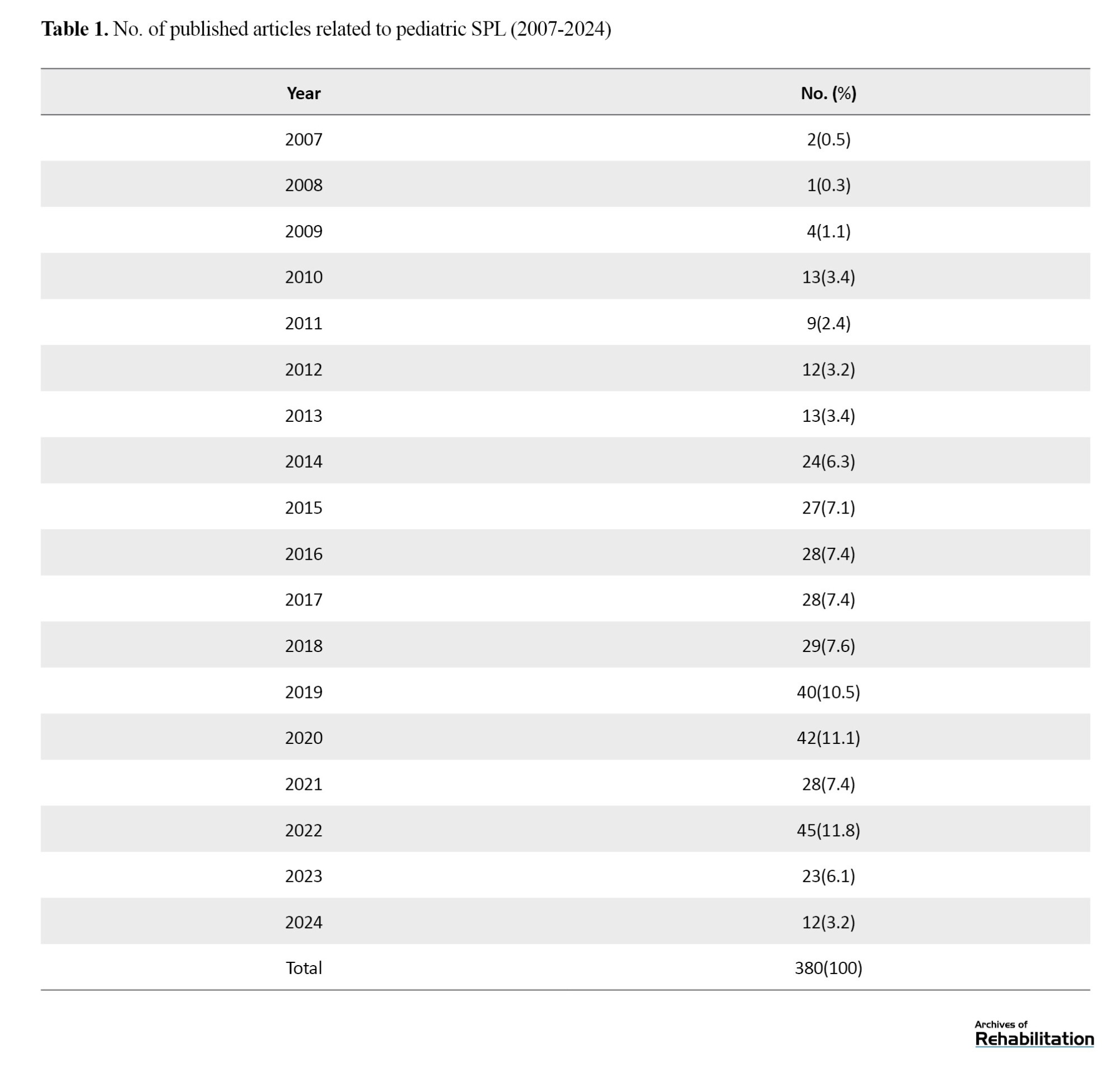
The number of published articles showed substantial growth throughout the study period (Table 1). In the early years, research activity was low (n=2, 0.5% in 2007; n=1, 0.3% in 2008). From 2009 onward, a sustained growth in research publication was observed. A significant increase occurred from 2014 (n=24, 6.3%) to 2018 (n=29, 7.6%). The peak was observed from 2020 (n=42, 11.1%) to 2022 (n=45, 11.8%), with a total number of 115 articles (30.3%). However, it declined in 2023 (n=23, 6.1%) and 2024 (n=12, 3.2%), likely due to incomplete research data records in the system for 2024 during the data collection phase.
Publication trends based on clinical domains
As shown in Table 2, the greatest research domain was receptive/expressive language (n=153, 40.3%). Within this domain, the highest number of studies was related to semantics (n=44, 11.6%), followed by phonology (n=41, 10.8%), prelinguistic communication (n=32, 8.4%), and syntax (n=31, 8.2%), while less research was related to pragmatics (n= 23, 6.1%), literacy (n=13, 3.4%), and morphology (n=5, 1.3%).
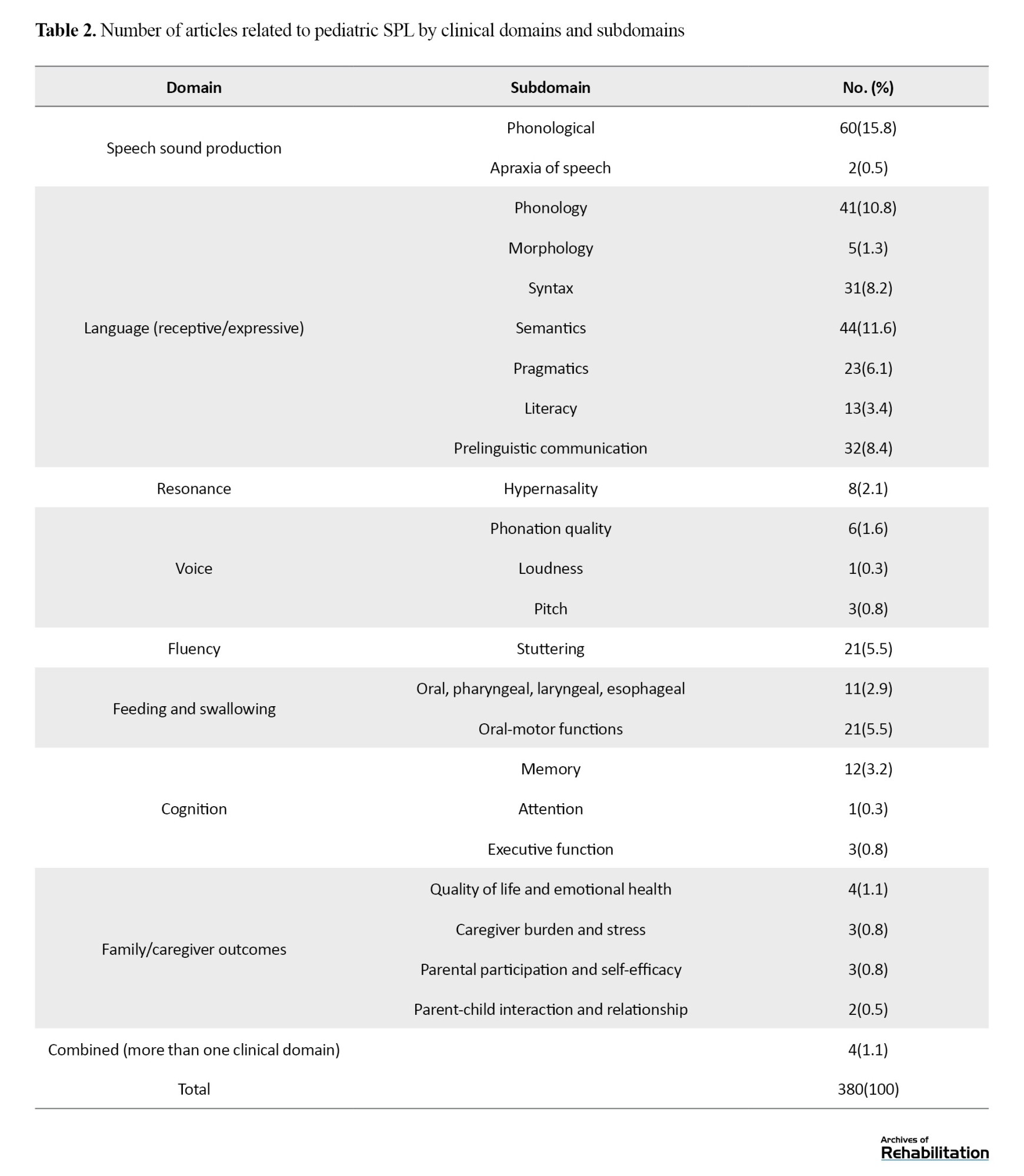
The second most popular domain was speech sound production (n=62, 16.3%), with studies primarily focusing on phonological disorders (n=60, 15.8%). The next domain was feeding/swallowing disorders (n=32, 8.4%), with oral-motor functions being the primary focus (n=21, 5.5%). The fluency domain was investigated in 21 studies (5.5%) that exclusively addressed stuttering. Regarding the cognition domain, 16 studies (4.2%) were found, with memory being the main topic (n=12, 3.2%). Family/caregiver outcomes were examined in 12 studies (3.2%), while the domains of voice (n=10, 2.6%) and resonance (n=8, 2.1%) received the least attention.
Publication trends based on target population
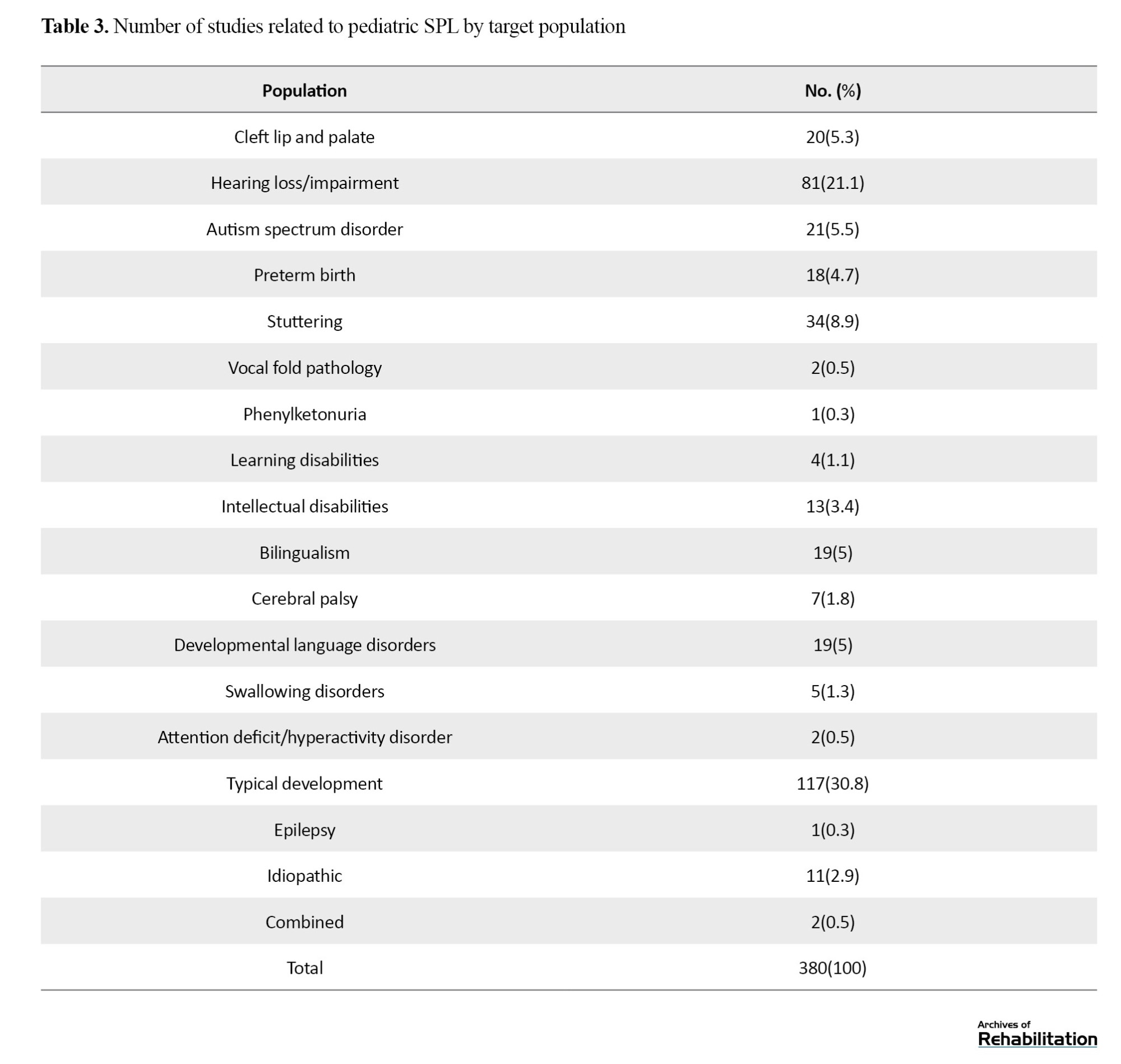
According to the results in Table 3, the studies related to children with normal speech-language development were more prevalent (n=117, 30.8%), followed by the studies on children with hearing loss/impairment (n=81, 21.1%), and stuttering (n=34, 8.9%). The number of studies on children with autism spectrum disorder (ASD; n=21, 5.5%) and developmental language disorders (n=19, 5%) were also considerable. Other popular target populations included those with cleft lip and palate (n=20, 5.3%), bilingualism (n=19, 5%), and preterm birth (n=18, 4.7%). On the other hand, the target populations that received the least attention included children with intellectual/cognitive disabilities (n=13, 3.4%), cerebral palsy (n=7, 1.8%), swallowing disorders (n=5, 1.3%), and learning disabilities (n=4, 1.1%), vocal fold pathology (n=2, 0.5%), attention deficit/hyperactivity disorder (ADHD; n=2, 0.5%), phenylketonuria (n=1, 0.3%), and epilepsy (n=1, 0.3%).
Publication trends based on research focus
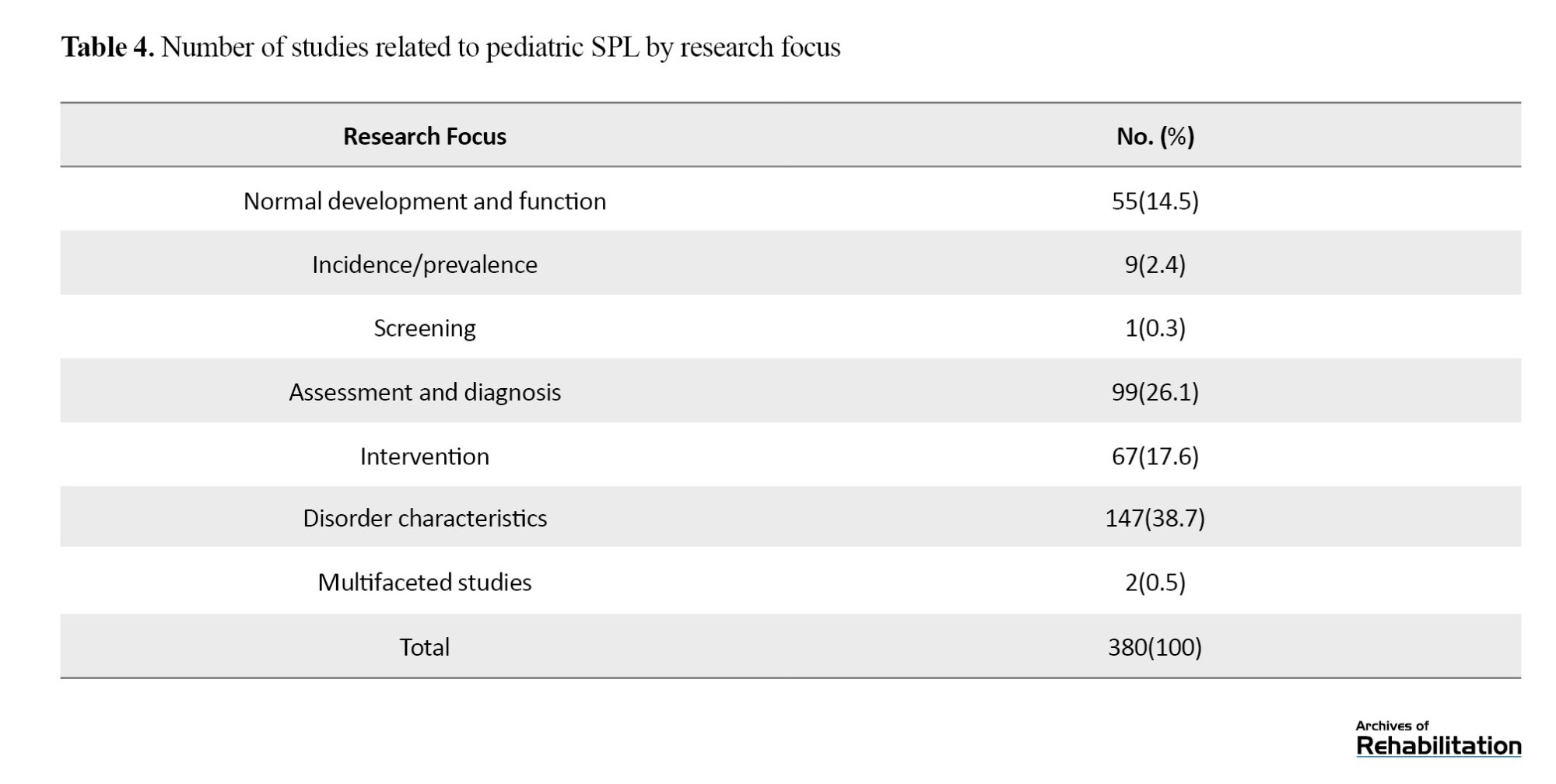
According to the results in Table 4, the predominant research focus was on describing disorder characteristics (n=147, 38.7%), followed by assessment and diagnosis (n=99, 26.1%) and intervention (n=67, 17.6%). The number of studies focused on normal development and function was 55 (14.5%). The number of studies focused on prevalence/incidence evaluation (n=9, 2.4%) and screening (n=1, 0.3%) was low.
Publication trends based on indexing status
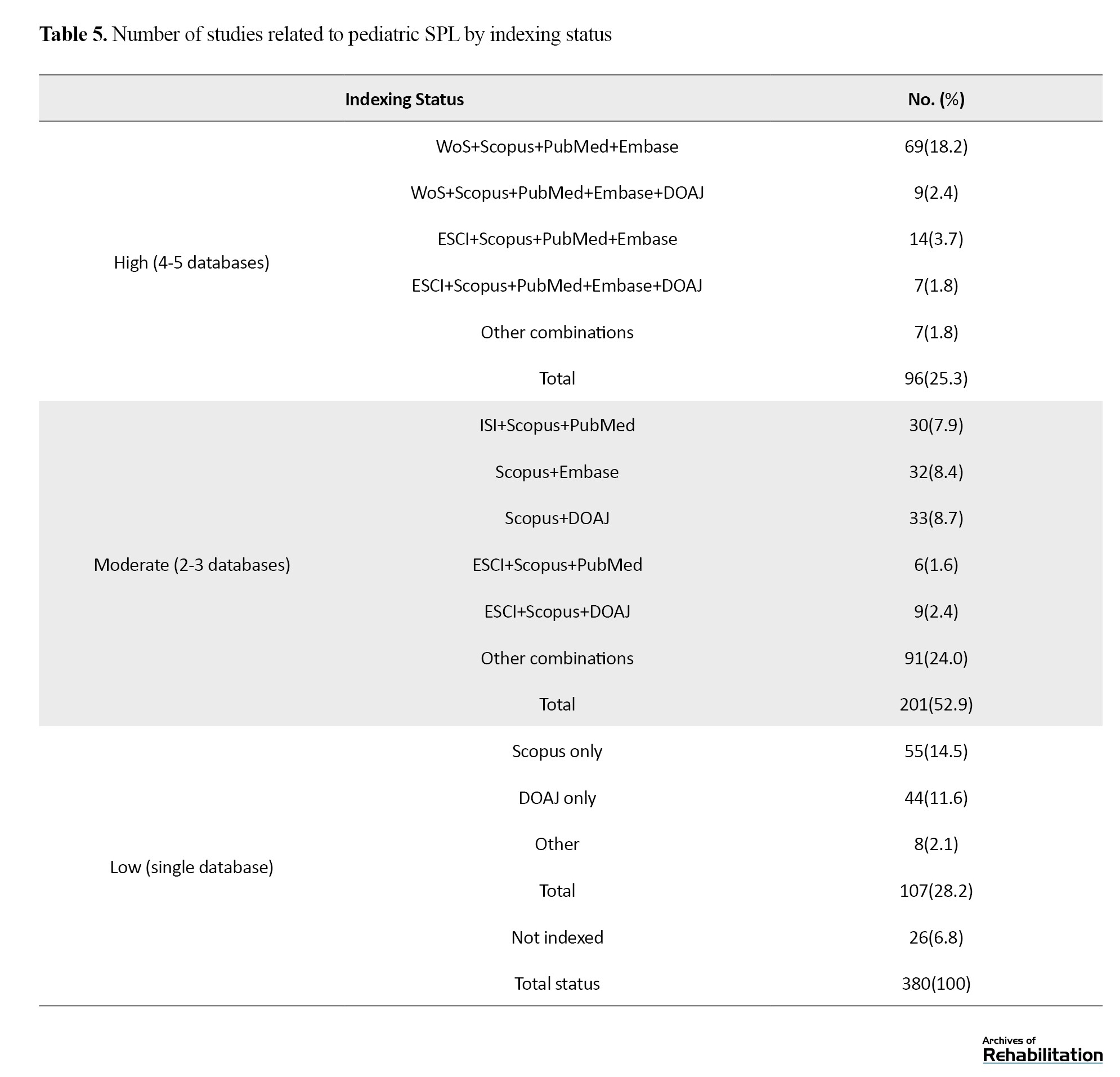
The majority of articles (n=354, 93.2%) were indexed in at least one international database, while 26 studies (6.8%) were not indexed (Table 5). Scopus was the most common indexing database (n=288, 75.8%), followed by Web of Science (n=173, 45.5%), PubMed (n=143, 37.6%), Embase (n=141, 37.1%), and the Directory of Open Access Journals (DOAJ) (n=119, 31.3%). The number of articles with high indexing (in 4-5 databases) was 96 (25.3%), with the Embase/PubMed/Scopus/Web of Science indexing status being the most common (n=69, 18.2%). The number of articles with moderate indexing (in 2-3 databases) was 201(52.9%), while the number of articles with indexing in a single database was 57(15%). Twenty-six articles (6.8%) were not indexed in any database.
Discussion
This study analyzed 380 articles authored by faculty members of SPL departments at Iranian medical universities, published from 2007 to 2024, and recorded in the Scientometric Database of Iranian MOHME.
The predominance of language disorder-related research (40.3%) reflects its clinical importance in pediatric populations. In a similar study in the Philippines, language disorders also had the highest prevalence among the SPL studies (27.6%) [21]. In a study in the United Kingdom, language development was one of the major research areas [12]. This consistency demonstrates that the focus of studies conducted by Iranian speech-language pathologists aligns with international priorities. Within the language domain, the higher emphasis on semantics (11.6%) and phonology (10.8%) subdomains aligns with international research priorities [22], as these components are considered fundamental elements of early language development and show the greatest vulnerability in children with neurodevelopmental conditions [23-25]. Moreover, recent research evidence in Iran emphasizes the importance of complex phonological processing in predicting literacy skills. For example, Imani-Shakibayi and Zarifian showed that the occurrence of atypical speech errors and difficulty in producing multisyllabic words in Iranian preschool children may be associated with risk of future reading problems and phonological awareness [16]. These results highlight the important role of complex speech stimuli in assessing phonological processes in Persian-speaking children and support their use in both research and clinical settings for early identification of children at risk for literacy challenges. Regarding the language subdomain of prelinguistic communication (8.4%), the results demonstrated Iranian scholars’ awareness of the importance of early intervention, consistent with international trends. However, the limited attention to the morphology subdomain (1.3%) represents a significant gap, particularly given its importance in morphologically rich languages such as Persian, which has a complex system of prefixes, suffixes, and pluralization.
The limited research on voice (2.6%) and resonance (2.1%) domains contrasts with the importance of clinical attention to these conditions, particularly in populations with cleft lip and palate (5.3% of studies). This pattern is similar to the results of a Philippine study [21], where voice disorders received limited attention (6%) and little research was devoted to augmentative and alternative communication (1.6%), motor speech disorders (1.2%), fluency (0.8%), and resonance (0.4%). Global scientometric analysis by La et al. on cohesive speech studies (n=395) during 1970-2020 also showed that language development and SPL were dominant globally, while limited attention had been given to voice and resonance disorders [26]. The limited investigation of these subdomains may be due to limited access to specialized equipment or insufficient expertise in acoustic analysis at Iranian institutions, highlighting areas for future development.
The considerable number of studies on children with normal speech-language development (30.8%) and hearing-related disorders (21.1%) represents Iranian scholars’ foundational approaches to understanding communication disorders in children and aligns with international priorities. Determining developmental norms is essential for culturally appropriate assessment and intervention, as language acquisition varies significantly across cultures [27, 28]. In this regard, recent Iranian studies on people with hearing impairment have gone beyond mere descriptions of linguistic characteristics and have addressed the interaction between cognitive and linguistic abilities. For example, Hajgholamrezaee et al. investigated the relationship between theory of mind, comprehension of mental verbs, and mean length of utterance in Persian-speaking children with hearing impairment and found significant correlations between advanced cognitive and linguistic abilities [29]. These findings highlight the importance of more comprehensive interventions beyond mere language instruction. Similarly, La et al. emphasized the global importance of research in normal speech-language development for establishing assessment criteria, particularly in culturally diverse settings [26]. Iranian scholars’ focus on typical speech-language development is particularly significant given the linguistic diversity of Persian and other regional languages, as applying Western standards can lead to misdiagnosis or inappropriate interventions [28]. The considerable attention to children with hearing disorders reflects the clinical importance of these disorders and the existing research infrastructure in this field, which takes on additional significance given the high prevalence of hearing loss in populations with common consanguineous marriages in Iran [30-32]. Mowzoon et al. [33] examined the relationship between linguistic variables and executive functions in Persian-speaking children aged 5-8 years with and without developmental language disorder, and demonstrated a close relationship between language development and executive function development, which is important for designing targeted interventions.
The prevalence of studies conducted by Iranian SPL scholars on children with ASD was 5.5%. Ghovati et al. [34] showed that Persian-speaking children with ASD aged 3-5 years exhibited significant delays across all early communication domains compared to typically developing 12-month-old peers, despite being older. They emphasized the necessity of early screening and targeted intervention programs to support language and communication development. The limited attention of SPL research on children with ADHD (0.5%) and learning disabilities (1.1%) reported in our study is concerning, given their growing recognition and significant impact on communication development. This result contrasts with international trends, where research interest in these children is increasing, driven by greater awareness of the prevalence, complexity, and lifelong impact of these disorders [35]. According to our results, children with cerebral palsy (1.8%) and swallowing disorders (1.3%) also had received very limited attention, despite the relatively high prevalence and significant impact of these disorders on the quality of life.
The higher focus of SPL research on disorder characteristics (38.7%) rather than on interventions (17.6%) indicates the formation of foundational knowledge about communication disorders in Iranian children. This result is consistent with a Philippine study, in which the nature of disorders was the focus of 20.8% of studies, and there were 11.2% intervention studies [21]. The result also aligns with global trends, where descriptive studies dominate SLP research (60%) during 2011-2020, as disorder profiles need to be prepared before developing interventions [26]. However, this narrow focus may impede the translation of research into clinical practice, as intervention studies are vital for developing evidence-based treatments. Globally [36], while randomized controlled trials receive even less attention [37]. The focus of SPL research on assessment and diagnosis (26.1%) reported in our study reflects the clinical priority of accurate diagnosis. Iranian scholars have played an important role in developing and validating indigenous diagnostic tools in Persian. The number of SPL articles focused on screening (0.3%) and epidemiology (2.4%) was low, which restricts evidence-based policy-making, prevention, and early intervention. Similar gaps exist in other developing countries, such as the Philippines [21]. Comprehensive population-based studies are essential for designing effective service delivery models, ensuring early identification, and improving long-term outcomes for children with communication disorders.
The high proportion of SPL studies by Iranian faculty members indexed in international databases (93.2%) demonstrates the quality of research and its global significance. The predominance of Scopus-indexed articles (75.8%) indicates adherence to international standards by Iranian scholars and journals. However, lower indexing in specialized databases such as PubMed (37.6%) may limit accessibility for clinical practitioners who primarily use medical databases to search for resources.
Limitations
It is important to note that this study examined only the articles of SPL faculty members recorded in the Scientometric Database of Iranian MOHME, and there is no information available about the total number of SPL studies conducted in Iran or the ratio of published articles to total research. This limitation hampers the ability to compare publication rates in Iran with those of other countries. The Philippine study by Bondoc et al. [21] attempted to analyze both published and unpublished articles and reported that 93.6% of articles remained unpublished [21]. Such comparisons highlight the different methodological approaches possible in research productivity analysis. As La et al. [26] emphasized, regional research networks play an important role in promoting global publication and knowledge exchange. Although the Scientometric Database of Iranian MOHME is a standardized system for recording faculty members’ publications, it does not encompass all published scientific works in Iran. The information of books, conference papers, master’s and doctoral theses, reports, and articles from local non-indexed journals may be incomplete or completely absent. Also, since the dataset was limited to scientific publications of faculty members, research conducted by clinical practitioners or non-medical faculty members was not included in the analysis. Moreover, inclusion of interdisciplinary research as a research domain may cause overlap or misallocation of domains, even after reaching a consensus. Due to compliance with ethical principles and confidentiality, it was not possible to accurately analyze the contribution of each faculty member or medical university. The present study was a macro-level analysis of thematic domain evolution across time periods, and thus identification of gaps in pediatric SPL research in Iran over the past five decades. Accordingly, identifying or ranking leading scholars and universities was not within its scope. Therefore, citation-based metrics and co-authorship network analysis were not used in the study. These limitations indicate that the findings should be interpreted as reflecting indexed articles published by Iranian faculty members in peer-reviewed journals, not as representative of all SPL research in Iran.
Recommendations
To achieve a more comprehensive analysis of national scientific output, future review studies should include gray literature from university repositories, theses (from the IranDoc database), conference proceedings, and publications in local, non-indexed journals, as well as those indexed in international databases. Also, complementary and targeted scientometric studies are recommended to identify leading scholars and universities in various subdomains of pediatric SPL. Using citation metrics and network analysis, a more precise picture of scientific output and research trends in this field can be provided. Additionally, establishing co-authorship networks among Iranian and international scholars can strengthen methodological rigor and cross-border applicability of findings. Greater attention should be paid to interventional studies and randomized controlled trials in pediatric SPL, using culturally adapted treatments and comparative designs. Furthermore, more epidemiological studies should be conducted to determine the prevalence and burden of communication disorders among Iranian children, particularly in rural and underserved areas. Future screening studies should focus on designing diagnostic tools and protocols for early identification that are culturally and linguistically appropriate for Iranian people. Additionally, expanding the target population to clinical cases (e.g. children with ADHD, learning disabilities, and traumatic brain injuries) can help fill existing research gaps. Using AI-driven assessments and modern intervention tools, including tele-practice and mobile health applications, can be an important step towards increasing access, efficiency, and innovation in the delivery of speech therapy services.
Conclusion
SPL research in Iran has reached a stage of scientific maturity, characterized by strong foundations in language development and hearing disorders, while also offering significant opportunities to expand interventional research, epidemiological studies, and investigations of clinical populations. Iranian faculty members and medical universities, by producing pioneering studies across various SPL domains, have been able to address local needs and gain visibility in international databases. The high indexing status indicates the SPL research’s high potential for global impact, while identified research gaps (low interventional, epidemiological, and screening studies and those on clinical populations) show a clear path for determining future research priorities and developing clinical services. Overall, the findings provide a milestone for understanding the SPL research trends in Iran and a roadmap for strengthening the role of SPL research in promoting the national health system and expanding the frontiers of global knowledge.
Ethical Considerations
Compliance with ethical guidelines
This study was approved by the Ethics Committee of the University of Social Welfare and Rehabilitation Sciences, Tehran, Iran (Code: IR.USWR.REC.1401.093). All procedures were conducted in accordance with research ethics principles, and the confidentiality of authors’ information and data was maintained throughout the process.
Funding
This study was funded by the University of Social Welfare and Rehabilitation Sciences, Tehran, Iran (Grant No.: 2877).
Authors' contributions
Conceptualization, Project management, Funding acquisition: Fatemeh Hassanati; Methodology: Fatemeh Hassanati and Atieh Ashtari; Validation, Analysis, Resources: Fatemeh Hassanati and Golnoosh Golmohammadi; Investigation: Fatemeh Hassanati and Zahra Sadat Ghoreishi; Writing, Visualization: Golnoosh Golmohammadi; review & editing: All authors; Supervision: Atieh Ashtari.
Conflict of interest
The authors declared no conflict of interest.
AI tools disclosure statement
The authors used ChatGPT (OpenAI) solely to improve the readability, language, and overall quality of the manuscript's writing. All authors remain fully responsible for scientific content, interpretation of the findings, and conclusions.
Speech-language pathology (SLP) is a specialized field that deals with the prevention, assessment, and treatment of speech-language and communication disorders, including swallowing disorders, across the lifespan [1-4]. Scientific research in this field plays a key role in enhancing the quality of clinical care through the development of valid diagnostic tools, design of intervention protocols, and improvement of service delivery models [5-7]. The SLP discipline in Iran began in 1973 with the establishment of the Higher School of Rehabilitation Sciences. Over the following decades, with the expansion of academic programs and the formation of professional structures, it gradually consolidated its scientific and clinical position [8]. Given the linguistic and cultural diversity in Iran, the development of assessment tools and interventions tailored to the linguistic and cultural characteristics of Iranians with speech-language disorders is essential. In recent years, Iranian scholars have taken significant steps toward localizing tools and improving services, including those examining barriers and capacities for tele-rehabilitation and highlighting the importance of equitable access to speech therapy services, particularly in special circumstances [9, 10].
Scientometric and bibliometric studies are systematic and powerful approaches for examining knowledge structures, identifying research trends, and determining future priorities. These studies enable the evaluation of thematic and methodological changes over time, identification of dominant or underexplored areas, and detection of research gaps. Moreover, the results of such studies can provide a basis for scientific policy-making, resource allocation, and strategic planning at national and institutional levels. At the international level, numerous studies have employed this approach. For example, a study on post-stroke speech rehabilitation reported key research trends and hotspots in the United States, highlighting the country’s leading contribution [11]. A study evaluating UK research from 1991 to 2000 showed that the UK accounted for approximately 12% of global production in the SLP field [12]. A study conducted a content analysis of a professional journal in the field of SLP and reported a gradual shift toward more sophisticated methodologies and increased cross-national collaborations [13]. A study conducted in South Korea, using the keyword network analysis, mapped conceptual structures and interdisciplinary thematic relationships [14].
Despite international studies, no comprehensive, systematic analysis has been conducted in Iran to examine the research trends of SLP faculty members at Iranian universities, particularly in pediatric SLP. While bibliometric methods are recognized as valid, reliable, and information-rich tools for evaluating the research performance of universities and academic groups [15], the collective research output and international scientific impact of faculty members in this discipline in Iran have not been systematically documented. Over the past five decades, medical universities in Iran have played a significant role in training SLP specialists and developing educational and research capacities in speech therapy [16]. Identifying research gaps is a primary objective of scientometric studies, and specific frameworks exist to determine these gaps and guide future research agendas [17, 18]. However, thematic trends, methodological developments, and overall research trends in the field of pediatric SLP in Iran have not been analyzed coherently; as a result, research priorities and underexplored areas of pediatric SLP have not been clearly defined. Given the long history of SLP education in Iran and the gradual growth in the volume of scientific production, this gap is considerable. No study has systematically examined the scientific production of Iranian SLP faculty members over the past five decades. Therefore, the present study aims to fill this gap and provide a roadmap for shaping future scientific strategies for pediatric SLP in Iran by systematically analyzing research trends, identifying strengths and barriers, and explaining future opportunities.
Materials and Methods
This descriptive-retrospective study systematically analyzes the scope and trends of pediatric SPL research conducted by faculty members of medical universities in Iran. The analysis focuses on the following aspects: Annual publication trends, areas of clinical practice in SPL, research focus on the clinical field, causes of communication and swallowing disorders studied, research designs (e.g. clinical trials, cross-sectional, etc.), and the indexing status of articles. To be eligible, articles had to meet all of the following criteria: at least one author being a SPL faculty member at a medical university in Iran, being conducted during authors’ employment at one of medical universities Iran, the research focused on pediatric SPL domains including communication, speech, language, and swallowing disorders (encompassing aspects of prevention, screening, diagnosis, assessment, intervention, counseling, and education), being registered in the Scientometric System of the Iranian Ministry of Health and Medical Education (MOHME), relevance to the Iranian context and culture, publication in peer-reviewed journals, publication up to November 2, 2024.
The Scientometric System of the Iranian Ministry of Health and Medical Education (MOHME) was used as the primary source for data collection. This system systematically records and updates the scientific publications of SPL faculty members at Iranian medical universities. The profile of each faculty member was reviewed and the titles and abstracts of their articles were screened to confirm the relevance. The articles with shared authorship were included only once based on the first author’s name in the final analysis.
The article selection process was conducted in multiple systematic phases. First, one research team member accessed the Scientometric System and collected the information of all relevant publications. Duplicates were removed and then independently reviewed and verified by a second evaluator. In the next step, three other research team members conducted initial screening of the remaining records based on title, author name, and abstracts. Finally, articles that successfully passed this stage underwent full-text screening for final confirmation of eligibility. Following systematic screening of 398 articles, 380 articles met all inclusion criteria, of which 18 articles were excluded due to lack of direct relevance to pediatric SPL.
The analysis of articles was done based on seven parameters: year of publication (for annual research trend analysis), clinical domains, thematic subdomains, target population, research focus, research design, and indexing status in international databases. Definitions and classifications for each parameter were extracted based on valid guidelines in the field of SPL [19, 20]. Clinical domains were categorized based on the American Speech-Language-Hearing Association guidelines and included feeding and swallowing, fluency, resonance, voice, cognition, and speech sound production. Research focus was categorized based on normal growth and function, incidence and prevalence studies, screening studies, assessment and diagnostic studies, intervention studies, study of disorder characteristics, and multifaceted studies. Population classification was based on all cases of pediatric SPL, enabling systematic analysis of trends across different clinical populations. The research team together reviewed and analyzed each study based on classifications, and disagreements were resolved through discussion and consensus between at least two team members. A table was used to list the extracted data.
Results
Annual publication trends
The number of published articles showed substantial growth throughout the study period (Table 1). In the early years, research activity was low (n=2, 0.5% in 2007; n=1, 0.3% in 2008). From 2009 onward, a sustained growth in research publication was observed. A significant increase occurred from 2014 (n=24, 6.3%) to 2018 (n=29, 7.6%). The peak was observed from 2020 (n=42, 11.1%) to 2022 (n=45, 11.8%), with a total number of 115 articles (30.3%). However, it declined in 2023 (n=23, 6.1%) and 2024 (n=12, 3.2%), likely due to incomplete research data records in the system for 2024 during the data collection phase.
Publication trends based on clinical domains
As shown in Table 2, the greatest research domain was receptive/expressive language (n=153, 40.3%). Within this domain, the highest number of studies was related to semantics (n=44, 11.6%), followed by phonology (n=41, 10.8%), prelinguistic communication (n=32, 8.4%), and syntax (n=31, 8.2%), while less research was related to pragmatics (n= 23, 6.1%), literacy (n=13, 3.4%), and morphology (n=5, 1.3%).
The second most popular domain was speech sound production (n=62, 16.3%), with studies primarily focusing on phonological disorders (n=60, 15.8%). The next domain was feeding/swallowing disorders (n=32, 8.4%), with oral-motor functions being the primary focus (n=21, 5.5%). The fluency domain was investigated in 21 studies (5.5%) that exclusively addressed stuttering. Regarding the cognition domain, 16 studies (4.2%) were found, with memory being the main topic (n=12, 3.2%). Family/caregiver outcomes were examined in 12 studies (3.2%), while the domains of voice (n=10, 2.6%) and resonance (n=8, 2.1%) received the least attention.
Publication trends based on target population
According to the results in Table 3, the studies related to children with normal speech-language development were more prevalent (n=117, 30.8%), followed by the studies on children with hearing loss/impairment (n=81, 21.1%), and stuttering (n=34, 8.9%). The number of studies on children with autism spectrum disorder (ASD; n=21, 5.5%) and developmental language disorders (n=19, 5%) were also considerable. Other popular target populations included those with cleft lip and palate (n=20, 5.3%), bilingualism (n=19, 5%), and preterm birth (n=18, 4.7%). On the other hand, the target populations that received the least attention included children with intellectual/cognitive disabilities (n=13, 3.4%), cerebral palsy (n=7, 1.8%), swallowing disorders (n=5, 1.3%), and learning disabilities (n=4, 1.1%), vocal fold pathology (n=2, 0.5%), attention deficit/hyperactivity disorder (ADHD; n=2, 0.5%), phenylketonuria (n=1, 0.3%), and epilepsy (n=1, 0.3%).
Publication trends based on research focus
According to the results in Table 4, the predominant research focus was on describing disorder characteristics (n=147, 38.7%), followed by assessment and diagnosis (n=99, 26.1%) and intervention (n=67, 17.6%). The number of studies focused on normal development and function was 55 (14.5%). The number of studies focused on prevalence/incidence evaluation (n=9, 2.4%) and screening (n=1, 0.3%) was low.
Publication trends based on indexing status
The majority of articles (n=354, 93.2%) were indexed in at least one international database, while 26 studies (6.8%) were not indexed (Table 5). Scopus was the most common indexing database (n=288, 75.8%), followed by Web of Science (n=173, 45.5%), PubMed (n=143, 37.6%), Embase (n=141, 37.1%), and the Directory of Open Access Journals (DOAJ) (n=119, 31.3%). The number of articles with high indexing (in 4-5 databases) was 96 (25.3%), with the Embase/PubMed/Scopus/Web of Science indexing status being the most common (n=69, 18.2%). The number of articles with moderate indexing (in 2-3 databases) was 201(52.9%), while the number of articles with indexing in a single database was 57(15%). Twenty-six articles (6.8%) were not indexed in any database.
Discussion
This study analyzed 380 articles authored by faculty members of SPL departments at Iranian medical universities, published from 2007 to 2024, and recorded in the Scientometric Database of Iranian MOHME.
The predominance of language disorder-related research (40.3%) reflects its clinical importance in pediatric populations. In a similar study in the Philippines, language disorders also had the highest prevalence among the SPL studies (27.6%) [21]. In a study in the United Kingdom, language development was one of the major research areas [12]. This consistency demonstrates that the focus of studies conducted by Iranian speech-language pathologists aligns with international priorities. Within the language domain, the higher emphasis on semantics (11.6%) and phonology (10.8%) subdomains aligns with international research priorities [22], as these components are considered fundamental elements of early language development and show the greatest vulnerability in children with neurodevelopmental conditions [23-25]. Moreover, recent research evidence in Iran emphasizes the importance of complex phonological processing in predicting literacy skills. For example, Imani-Shakibayi and Zarifian showed that the occurrence of atypical speech errors and difficulty in producing multisyllabic words in Iranian preschool children may be associated with risk of future reading problems and phonological awareness [16]. These results highlight the important role of complex speech stimuli in assessing phonological processes in Persian-speaking children and support their use in both research and clinical settings for early identification of children at risk for literacy challenges. Regarding the language subdomain of prelinguistic communication (8.4%), the results demonstrated Iranian scholars’ awareness of the importance of early intervention, consistent with international trends. However, the limited attention to the morphology subdomain (1.3%) represents a significant gap, particularly given its importance in morphologically rich languages such as Persian, which has a complex system of prefixes, suffixes, and pluralization.
The limited research on voice (2.6%) and resonance (2.1%) domains contrasts with the importance of clinical attention to these conditions, particularly in populations with cleft lip and palate (5.3% of studies). This pattern is similar to the results of a Philippine study [21], where voice disorders received limited attention (6%) and little research was devoted to augmentative and alternative communication (1.6%), motor speech disorders (1.2%), fluency (0.8%), and resonance (0.4%). Global scientometric analysis by La et al. on cohesive speech studies (n=395) during 1970-2020 also showed that language development and SPL were dominant globally, while limited attention had been given to voice and resonance disorders [26]. The limited investigation of these subdomains may be due to limited access to specialized equipment or insufficient expertise in acoustic analysis at Iranian institutions, highlighting areas for future development.
The considerable number of studies on children with normal speech-language development (30.8%) and hearing-related disorders (21.1%) represents Iranian scholars’ foundational approaches to understanding communication disorders in children and aligns with international priorities. Determining developmental norms is essential for culturally appropriate assessment and intervention, as language acquisition varies significantly across cultures [27, 28]. In this regard, recent Iranian studies on people with hearing impairment have gone beyond mere descriptions of linguistic characteristics and have addressed the interaction between cognitive and linguistic abilities. For example, Hajgholamrezaee et al. investigated the relationship between theory of mind, comprehension of mental verbs, and mean length of utterance in Persian-speaking children with hearing impairment and found significant correlations between advanced cognitive and linguistic abilities [29]. These findings highlight the importance of more comprehensive interventions beyond mere language instruction. Similarly, La et al. emphasized the global importance of research in normal speech-language development for establishing assessment criteria, particularly in culturally diverse settings [26]. Iranian scholars’ focus on typical speech-language development is particularly significant given the linguistic diversity of Persian and other regional languages, as applying Western standards can lead to misdiagnosis or inappropriate interventions [28]. The considerable attention to children with hearing disorders reflects the clinical importance of these disorders and the existing research infrastructure in this field, which takes on additional significance given the high prevalence of hearing loss in populations with common consanguineous marriages in Iran [30-32]. Mowzoon et al. [33] examined the relationship between linguistic variables and executive functions in Persian-speaking children aged 5-8 years with and without developmental language disorder, and demonstrated a close relationship between language development and executive function development, which is important for designing targeted interventions.
The prevalence of studies conducted by Iranian SPL scholars on children with ASD was 5.5%. Ghovati et al. [34] showed that Persian-speaking children with ASD aged 3-5 years exhibited significant delays across all early communication domains compared to typically developing 12-month-old peers, despite being older. They emphasized the necessity of early screening and targeted intervention programs to support language and communication development. The limited attention of SPL research on children with ADHD (0.5%) and learning disabilities (1.1%) reported in our study is concerning, given their growing recognition and significant impact on communication development. This result contrasts with international trends, where research interest in these children is increasing, driven by greater awareness of the prevalence, complexity, and lifelong impact of these disorders [35]. According to our results, children with cerebral palsy (1.8%) and swallowing disorders (1.3%) also had received very limited attention, despite the relatively high prevalence and significant impact of these disorders on the quality of life.
The higher focus of SPL research on disorder characteristics (38.7%) rather than on interventions (17.6%) indicates the formation of foundational knowledge about communication disorders in Iranian children. This result is consistent with a Philippine study, in which the nature of disorders was the focus of 20.8% of studies, and there were 11.2% intervention studies [21]. The result also aligns with global trends, where descriptive studies dominate SLP research (60%) during 2011-2020, as disorder profiles need to be prepared before developing interventions [26]. However, this narrow focus may impede the translation of research into clinical practice, as intervention studies are vital for developing evidence-based treatments. Globally [36], while randomized controlled trials receive even less attention [37]. The focus of SPL research on assessment and diagnosis (26.1%) reported in our study reflects the clinical priority of accurate diagnosis. Iranian scholars have played an important role in developing and validating indigenous diagnostic tools in Persian. The number of SPL articles focused on screening (0.3%) and epidemiology (2.4%) was low, which restricts evidence-based policy-making, prevention, and early intervention. Similar gaps exist in other developing countries, such as the Philippines [21]. Comprehensive population-based studies are essential for designing effective service delivery models, ensuring early identification, and improving long-term outcomes for children with communication disorders.
The high proportion of SPL studies by Iranian faculty members indexed in international databases (93.2%) demonstrates the quality of research and its global significance. The predominance of Scopus-indexed articles (75.8%) indicates adherence to international standards by Iranian scholars and journals. However, lower indexing in specialized databases such as PubMed (37.6%) may limit accessibility for clinical practitioners who primarily use medical databases to search for resources.
Limitations
It is important to note that this study examined only the articles of SPL faculty members recorded in the Scientometric Database of Iranian MOHME, and there is no information available about the total number of SPL studies conducted in Iran or the ratio of published articles to total research. This limitation hampers the ability to compare publication rates in Iran with those of other countries. The Philippine study by Bondoc et al. [21] attempted to analyze both published and unpublished articles and reported that 93.6% of articles remained unpublished [21]. Such comparisons highlight the different methodological approaches possible in research productivity analysis. As La et al. [26] emphasized, regional research networks play an important role in promoting global publication and knowledge exchange. Although the Scientometric Database of Iranian MOHME is a standardized system for recording faculty members’ publications, it does not encompass all published scientific works in Iran. The information of books, conference papers, master’s and doctoral theses, reports, and articles from local non-indexed journals may be incomplete or completely absent. Also, since the dataset was limited to scientific publications of faculty members, research conducted by clinical practitioners or non-medical faculty members was not included in the analysis. Moreover, inclusion of interdisciplinary research as a research domain may cause overlap or misallocation of domains, even after reaching a consensus. Due to compliance with ethical principles and confidentiality, it was not possible to accurately analyze the contribution of each faculty member or medical university. The present study was a macro-level analysis of thematic domain evolution across time periods, and thus identification of gaps in pediatric SPL research in Iran over the past five decades. Accordingly, identifying or ranking leading scholars and universities was not within its scope. Therefore, citation-based metrics and co-authorship network analysis were not used in the study. These limitations indicate that the findings should be interpreted as reflecting indexed articles published by Iranian faculty members in peer-reviewed journals, not as representative of all SPL research in Iran.
Recommendations
To achieve a more comprehensive analysis of national scientific output, future review studies should include gray literature from university repositories, theses (from the IranDoc database), conference proceedings, and publications in local, non-indexed journals, as well as those indexed in international databases. Also, complementary and targeted scientometric studies are recommended to identify leading scholars and universities in various subdomains of pediatric SPL. Using citation metrics and network analysis, a more precise picture of scientific output and research trends in this field can be provided. Additionally, establishing co-authorship networks among Iranian and international scholars can strengthen methodological rigor and cross-border applicability of findings. Greater attention should be paid to interventional studies and randomized controlled trials in pediatric SPL, using culturally adapted treatments and comparative designs. Furthermore, more epidemiological studies should be conducted to determine the prevalence and burden of communication disorders among Iranian children, particularly in rural and underserved areas. Future screening studies should focus on designing diagnostic tools and protocols for early identification that are culturally and linguistically appropriate for Iranian people. Additionally, expanding the target population to clinical cases (e.g. children with ADHD, learning disabilities, and traumatic brain injuries) can help fill existing research gaps. Using AI-driven assessments and modern intervention tools, including tele-practice and mobile health applications, can be an important step towards increasing access, efficiency, and innovation in the delivery of speech therapy services.
Conclusion
SPL research in Iran has reached a stage of scientific maturity, characterized by strong foundations in language development and hearing disorders, while also offering significant opportunities to expand interventional research, epidemiological studies, and investigations of clinical populations. Iranian faculty members and medical universities, by producing pioneering studies across various SPL domains, have been able to address local needs and gain visibility in international databases. The high indexing status indicates the SPL research’s high potential for global impact, while identified research gaps (low interventional, epidemiological, and screening studies and those on clinical populations) show a clear path for determining future research priorities and developing clinical services. Overall, the findings provide a milestone for understanding the SPL research trends in Iran and a roadmap for strengthening the role of SPL research in promoting the national health system and expanding the frontiers of global knowledge.
Ethical Considerations
Compliance with ethical guidelines
This study was approved by the Ethics Committee of the University of Social Welfare and Rehabilitation Sciences, Tehran, Iran (Code: IR.USWR.REC.1401.093). All procedures were conducted in accordance with research ethics principles, and the confidentiality of authors’ information and data was maintained throughout the process.
Funding
This study was funded by the University of Social Welfare and Rehabilitation Sciences, Tehran, Iran (Grant No.: 2877).
Authors' contributions
Conceptualization, Project management, Funding acquisition: Fatemeh Hassanati; Methodology: Fatemeh Hassanati and Atieh Ashtari; Validation, Analysis, Resources: Fatemeh Hassanati and Golnoosh Golmohammadi; Investigation: Fatemeh Hassanati and Zahra Sadat Ghoreishi; Writing, Visualization: Golnoosh Golmohammadi; review & editing: All authors; Supervision: Atieh Ashtari.
Conflict of interest
The authors declared no conflict of interest.
AI tools disclosure statement
The authors used ChatGPT (OpenAI) solely to improve the readability, language, and overall quality of the manuscript's writing. All authors remain fully responsible for scientific content, interpretation of the findings, and conclusions.
References
- Lopez LC. Integrating Speech-Language Pathologists Into Primary Care to Improve Early Identification of Developmental Concerns: A Brief Report. Perspectives of the ASHA Special Interest Groups. 2024; 9(4):995-1002. [DOI:10.1044/2024_PERSP-23-00287]
- Wankoff LS. Warning signs in the development of speech, language, and communication: When to refer to a speech-language pathologist. Journal of Child and Adolescent Psychiatric Nursing. 2011; 24(3):175-84. [DOI:10.1111/j.1744-6171.2011.00292.x] [PMID]
- Barton EE, Moore HW, Squires JK. Preparing speech language pathology students to work in early childhood. Topics in Early Childhood Special Education. 2012; 32(1):4-13. [DOI:10.1177/0271121411434567]
- Wilcox MJ, Woods J. Participation as a basis for developing early intervention outcomes. Language, Speech, and Hearing Services in Schools. 2011; 42(3):365-78. [DOI:10.1044/0161-1461(2011/10-0014)] [PMID]
- ZipoliJr RP, Kennedy M. Evidence-based practice among speech-language pathologists: attitudes, utilization, and barriers. American Journal of Speech-Language Pathology. 2005;1 4(3):208-20. [DOI:10.1044/1058-0360(2005/021)] [PMID]
- Dodd B. Evidence-based practice and speech-language pathology: Strengths, weaknesses, opportunities and threats. Folia Phoniatrica et Logopaedica. 2007; 59(3):118-29. [DOI:10.1159/000101770] [PMID]
- Ratner NB. Evidence-based practice: An examination of its ramifications for the practice of speech-language pathology. Language, Speech, and Hearing Services in Schools. 2006; 37(4):257-67. [DOI:10.1044/0161-1461(2006/029)] [PMID]
- Nilipour R. Emerging issues in speech therapy in Iran. Folia Phoniatrica et Logopaedica. 2002; 54(2):65-8. [DOI:10.1159/000057916] [PMID]
- Ensafi Z, Kamali M, Bahadorizadeh L, Amiri Shavaki Y. The Lived Experiences of Speech-language Pathologists Regarding the Use of Telepractice During the COVID-19 Pandemic in Iran. Health in Emergencies and Disasters Quarterly. 2024; 10(1):67-76. [DOI:10.32598/hdq.10.1.573.1]
- Rabanifar N, Hoseini MA, Abdi K. Exploring Barriers to Implementing Telerehabilitation from experiences of managers, policymakers, and providers of rehabilitation services in Iran: A Qualitative Study. Medical Journal of the Islamic Republic of Iran. 2022; 36:157. [DOI:10.47176/mjiri.36.157] [PMID]
- Huang N, Zou K, Liu F, Su Z, Chen L, Zhong Y, et al. Research trends and hotspots in post-stroke speech rehabilitation: A bibliometric analysis. Acta Psychologica. 2025; 254:104781. [DOI:10.1016/j.actpsy.2025.104781] [PMID]
- Lewison G, Carding P. Evaluating UK research in speech and language therapy. International Journal of Language & Communication Disorders. 2003; 38(1):65-84. [DOI:10.1080/13682820304815] [PMID]
- Armstrong L, Stansfield J, Bloch S. Content analysis of the professional journal of the Royal College of Speech and Language Therapists, III: 1966-2015-into the 21st century. International Journal of Language & Communication Disorders. 2017; 52(6):681-8. [DOI:10.1111/1460-6984.12313] [PMID]
- Cho SJ, Kim TG. A Study on Research Trends in [Audiology and Speech Research] Using Keyword Network Analysis. Audiology and Speech Research. 2023; 19(1):28-42. [DOI:10.21848/asr.220085]
- Manoj Kumar L, George RJ, P SA. Bibliometric Analysis for Medical Research. Indian Journal of Psychological Medicine. 2023; 45(3):277-82. [DOI:10.1177/02537176221103617] [PMID]
- Imani-Shakibayi M, Zarifian T. Investigating the Relationship Between Misarticulation of Polysyllabic Words and Predicting Later Reading Difficulties in Children With Speech Sound Disorder: A Narrative Review. Archives of Rehabilitation. 2025; 26(1):2-23. [DOI:10.32598/RJ.26.1.3057.2]
- Robinson KA, Saldanha IJ, McKoy NA. Frameworks for Determining Research Gaps During Systematic Reviews. Rockville (MD): Agency for Healthcare Research and Quality (US); 2011. [Link]
- Robinson KA, Akinyede O, Dutta T, Sawin VI, Li T, Spencer MR, et al. Framework for Determining Research Gaps During Systematic Review: Evaluation. Rockville (MD): Agency for Healthcare Research and Quality (US); 2013. [Link]
- American Speech-Language-Hearing Association. Scope of practice in speech-language pathology. 2016. [Link]
- Snow PC. Speech-language pathology and the youth offender: Epidemiological overview and roadmap for future speech-language pathology research and scope of practice. Language, Speech, and Hearing Services in Schools. 2019; 50(2):324-39. [DOI:10.1044/2018_LSHSS-CCJS-18-0027] [PMID]
- Bondoc IP, Mabag V, Dacanay CA, Macapagal ND. Speech-language pathology research in the Philippines in retrospect: Perspectives from a developing country. International Journal of Speech-Language Pathology. 2017; 19(6):628-36. [DOI:10.1080/17549507.2016.1226954] [PMID]
- Toppelberg CO, Shapiro T. Language disorders: A 10-year research update review. Journal of the American Academy of Child & Adolescent Psychiatry. 2000; 39(2):143-52. [DOI:10.1097/00004583-200002000-00011] [PMID]
- Fourtassi A, Bian Y, Frank MC. The growth of children’s semantic and phonological networks: Insight from 10 languages. Cognitive Science. 2020; 44(7):e12847. [DOI:10.1111/cogs.12847] [PMID]
- Lee N, Weikum W, Ip A. 47 Prevalence of and Factors Associated with Language Impairment in Canadian Children with ASD. Paediatrics & Child Health. 2022; 27(Suppl 3):e22-3. [DOI:10.1093/pch/pxac100.046] [PMCID]
- Zhang DL, Chen SZ, Liu XM. Recent perspectives of pediatric neurodevelopmental disorders. European Review for Medical & Pharmacological Sciences. 2017; 21(4 Suppl):65-9. [PMID]
- La LTB, Nguyen NTT, Truong ATT. A Bibliometric analysis of cohesive speech research of preschoolers from 1970 to 2020. Problems of Education in the 21st Century. 2021;79(4):611. [DOI:10.33225/pec/21.79.611]
- Carter JA, Lees JA, Murira GM, Gona J, Neville BG, Newton CR. Issues in the development of cross-cultural assessments of speech and language for children. International Journal of Language & Communication Disorders. 2005; 40(4):385-401. [DOI:10.1080/13682820500057301] [PMID]
- Losardo A, Notari-Syverson A, Coleman T, Botts DC. Cross-cultural assessment of young children’s language and literacy development. Perspectives on School-Based Issues. 2008; 9(2):71-8. [DOI:10.1044/sbi9.2.71]
- Hajgholamrezaee Z, Hassanati F, Hajgholamrezaee P, Darouie A. The Relationship Among Theory of Mind, Comprehensionof Mental Verbs State and Mean Length of Utterance in Children With Hearing Impairment. Archives of Rehabilitation. 2024; 25(S3):664-81. [DOI:10.32598/RJ.25.specialissue.3529.1]
- Ajallouyan M, Radfar S, Nouhi S, Tavallaie SA, Amirsalari S, Yousefi J, et al. Consanguinity among parents of Iranian deaf children. Iranian Red Crescent Medical Journal. 2016; 18(11):e22038. [DOI:10.5812/ircmj.22038] [PMID]
- M Al Sudani Z, Khosravi T, Oladnabi M. Hearing loss among families with 2 and more affected members in golestan province, Iran: A cross-sectional study of 320 families. The Journal of International Advanced Otology. 2024; 20(1):44-9. [DOI:10.5152/iao.2024.231214] [PMID]
- Bitarafan F, Seyedena SY, Mahmoudi M, Garshasbi M. Identification of novel variants in Iranian consanguineous pedigrees with nonsyndromic hearing loss by next-generation sequencing. Journal of Clinical Laboratory Analysis. 2020; 34(12):e23544. [DOI:10.1002/jcla.23544] [PMID]
- Mowzoon H, Hassanati F, Nilipour R, Mohammadzamani MR, Ghoreishi ZS. Investigating the Relationship Between Linguistic Variables and Executive Functions in Persian-speaking Children Aged 5-8 Years With and Without Developmental Language Disorder. Archives of Rehabilitation. 2024; 25(S3):726-45. [DOI:10.32598/RJ.25.specialissue.3837.1]
- Ghovati F, Ashtari A, Soleimani F, Zarifian T, Vahedi M, Goshtai SM. An Investigation and Comparison of Early Communication Skills in Persian-speaking Children with Autism Spectrum Disorder Using Communication Skills Checklist (CSC). Archives of Rehabilitation. 2025; 26(3):422-45. [DOI:10.32598/RJ.26.3.4052.1]
- Bailey NM, Andrews TM. Diagnostic Criteria for Psychiatric Disorders for Use with Adults with Learning Disabilities/Mental Retardation (DC-LD) and the diagnosis of anxiety disorders: A review. Journal of Intellectual Disability Research : JIDR. 2003; 47 (Suppl 1):50-61. [DOI:10.1046/j.1365-2788.47.s1.25.x] [PMID]
- Segura-Pujol H, Briones-Rojas C. Treatment intensity for developmental language disorder: A systematic review. International Journal of Speech-Language Pathology. 2021; 23(5):465-74. [DOI:10.1080/17549507.2020.1856412]
- Frizelle P, Tolonen AK, Tulip J, Murphy CA, Saldana D, McKean C. The influence of quantitative intervention dosage on oral language outcomes for children with developmental language disorder: A systematic review and narrative synthesis. Language, Speech, and Hearing Services in Schools. 2021; 52(2):738-54. [DOI:10.1044/2020_lshss-20-00058] [PMID]
Type of Study: Original |
Subject:
Speech & Language Pathology
Send email to the article author
| Rights and permissions | |
 |
This work is licensed under a Creative Commons Attribution-NonCommercial 4.0 International License. |

Copyright © The Author(s);
This is an open access article distributed under the terms of the Creative Commons Attribution-NonCommercial 4.0 (CC-By-NC 4.0), which permits use, distribution, and reproduction in any medium, provided the original work is properly cited and is not used for commercial purposes.
Contact Information
This is an open access article distributed under the terms of the Creative Commons Attribution-NonCommercial 4.0 (CC-By-NC 4.0), which permits use, distribution, and reproduction in any medium, provided the original work is properly cited and is not used for commercial purposes.
Contact Information