

Volume 27, Issue 1 (5-2026)
Arch Rehabil 2026, 27(1): 34-57 |
Back to browse issues page




Download citation:
BibTeX | RIS | EndNote | Medlars | ProCite | Reference Manager | RefWorks
Send citation to:


BibTeX | RIS | EndNote | Medlars | ProCite | Reference Manager | RefWorks
Send citation to:
Sadria G, Rahmani N, Abdollahi I, Javaherian M, Azarsa M H, Mosallanezhad Z et al . The Effects of Neurofeedback Training on Pain, Disability, and Psychological Factors in Patients With Chronic Low Back Pain: A Systematic Review and Meta-analysis. Arch Rehabil 2026; 27 (1) :34-57
URL: http://rehabilitationj.uswr.ac.ir/article-1-3714-en.html
URL: http://rehabilitationj.uswr.ac.ir/article-1-3714-en.html
Golnaz Sadria1  , Nahid Rahmani1 , Iraj Abdollahi *2 , Mohammad Javaherian1 , Mohammad Hassan Azarsa1 , Zahra Mosallanezhad1 , Enayatollah Bakhshi3
, Nahid Rahmani1 , Iraj Abdollahi *2 , Mohammad Javaherian1 , Mohammad Hassan Azarsa1 , Zahra Mosallanezhad1 , Enayatollah Bakhshi3
1- Neuromusculoskeletal Rehabilitation Research Center, University of Social Welfare and Rehabilitation Sciences, Tehran, Iran.
2- Neuromusculoskeletal Rehabilitation Research Center, University of Social Welfare and Rehabilitation Sciences, Tehran, Iran. ,Ir.abdollahi@uswr.ac.ir
3- Department of Biostatistics and Epidemiology, School of Social Health, University of Social Welfare and Rehabilitation Sciences, Tehran, Iran.
2- Neuromusculoskeletal Rehabilitation Research Center, University of Social Welfare and Rehabilitation Sciences, Tehran, Iran. ,
3- Department of Biostatistics and Epidemiology, School of Social Health, University of Social Welfare and Rehabilitation Sciences, Tehran, Iran.
Full-Text [PDF 3723 kb]
(331 Downloads)
| Abstract (HTML) (1226 Views)
Full-Text: (200 Views)
Introduction
Low back pain (LBP) is one of the most prevalent and disabling musculoskeletal conditions, typically presenting as pain or discomfort in the region from the lower costal margin to the gluteal area. From a clinical perspective, LBP is commonly categorized by symptom duration (acute versus chronic) and etiology (specific versus nonspecific) [1, 2]. Of particular concern is the growing burden of chronic nonspecific low back pain (CLBP), which accounts for a substantial proportion of LBP cases across different populations worldwide [3, 4]. Epidemiological data indicate that more than half of individuals experience LBP at some point during their lifetime, while point and period prevalence estimates in the general population range from approximately 15% to 45% [5]. In addition to its physical consequences, LBP imposes high socioeconomic costs by reducing occupational performance and overall productivity [2].
Although LBP was historically viewed as a localized biomechanical disorder, accumulating evidence suggests that chronic forms of the condition are associated with widespread alterations within the central nervous system (CNS). Neuroimaging studies have consistently demonstrated functional and structural brain reorganization in individuals with persistent pain states [6], including reductions in regional gray matter volume [7]. These changes involve multiple brain areas implicated in sensory integration, affective processing, and motor control, such as the primary and secondary somatosensory cortices, motor cortex, paracentral lobule, supplementary motor area, anterior cingulate cortex (ACC), amygdala, insula, and thalamus [8–10].
Such CNS alterations are believed to arise from disturbances in endogenous pain modulation mechanisms, particularly an imbalance between ascending nociceptive signaling and descending inhibitory pathways [11, 12]. This maladaptive regulation contributes to enhanced pain sensitivity, a hallmark feature frequently observed in individuals with CLBP [13, 14]. In parallel, chronic pain is accompanied by measurable changes in cortical oscillatory activity. The thalamocortical dysrhythmia model proposes that diminished inhibitory output from the thalamus may result in increased theta-band activity (4–8 Hz) [15], while heightened engagement of cortical pain networks may promote excessive delta activity (1–4 Hz) [16]. Furthermore, impaired descending inhibition has been associated with elevations in beta-band oscillations (12–30 Hz), potentially reflecting compensatory mechanisms, whereas greater pain intensity has been linked to suppression of alpha activity (8–12 Hz) [15, 17–19]. Beyond neurophysiological alterations, chronic pain and functional limitation often lead to reduced physical activity, increased psychological stress, and vulnerability to depressive symptoms, thereby reinforcing a self-perpetuating cycle of pain and disability in individuals with chronic musculoskeletal conditions [20].
Identifying and characterizing these neurophysiological patterns is essential for developing targeted therapeutic interventions for CLBP. Neurofeedback training (NFT) has emerged as a neuromodulatory technique that enables individuals to observe and voluntarily regulate their brain activity through real-time feedback mechanisms [21]. Over the past decade, multiple systematic reviews have examined the application of neurofeedback in various psychological and neuropsychiatric conditions, including depression [22], mood disturbances [23], and attentiondeficit/hyperactivity disorder (ADHD) [24]. Additionally, evidence syntheses have explored its role in certain musculoskeletal disorders with prominent psychosomatic components, such as fibromyalgia [25]. Nevertheless, despite the multidimensional nature of CLBP—encompassing pain, functional impairment, and psychological distress—there is currently no comprehensive systematic review or meta-analysis specifically addressing the effects of neurofeedback interventions in this population. Accordingly, the present study aims to systematically review and quantitatively synthesize available evidence regarding the impact of neurofeedback training on pain intensity, functional disability, and psychological outcomes in individuals with CLBP.
Materials and Methods:
Literature search strategy
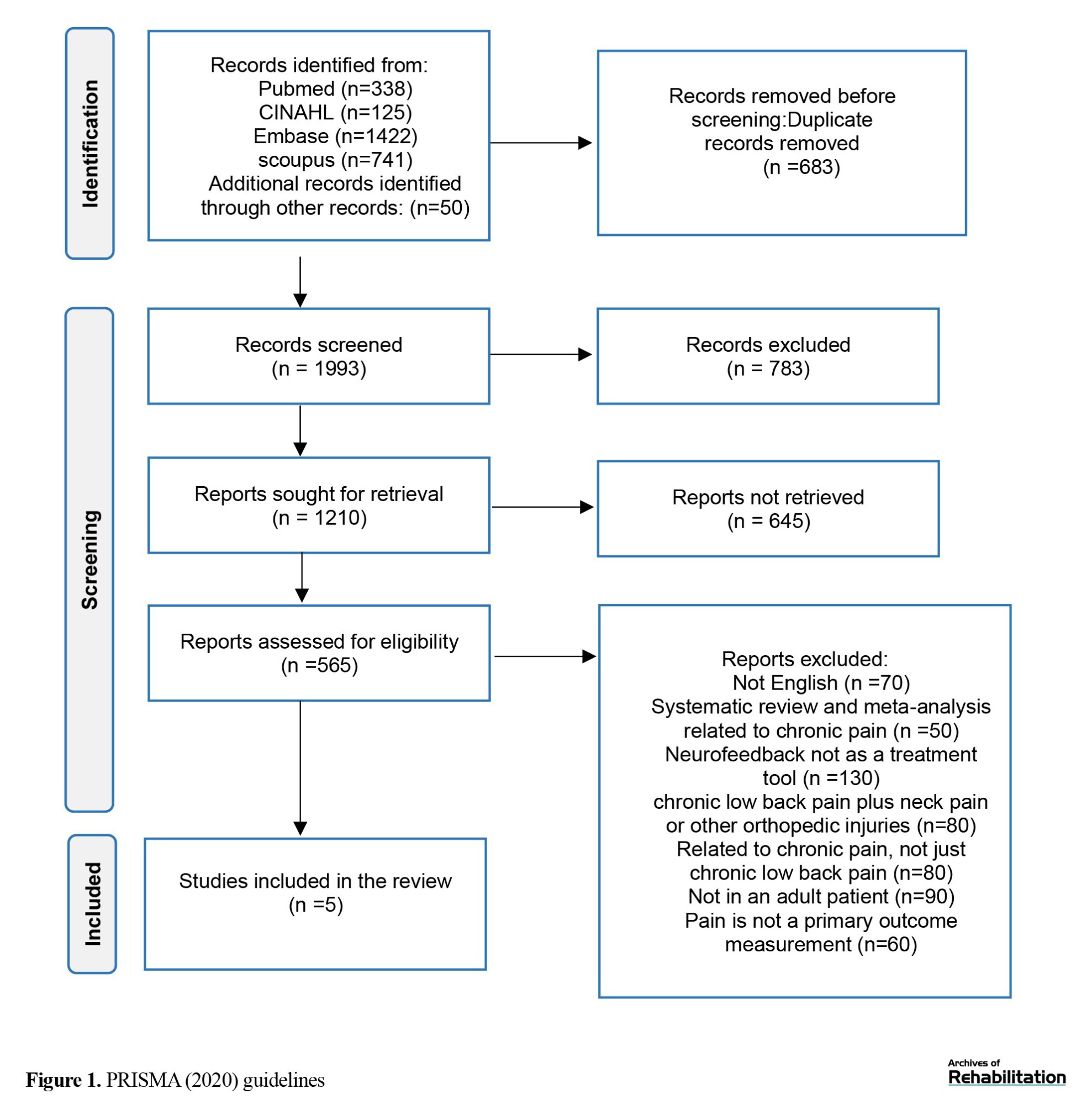
An electronic search was performed in Web of Science, PubMed, Scopus, CINAHL, and EMBASE to identify studies published between January 2000 and February 2025. The search and study selection processes followed the PRISMA 2020 guidelines [26], as illustrated in Figure 1.
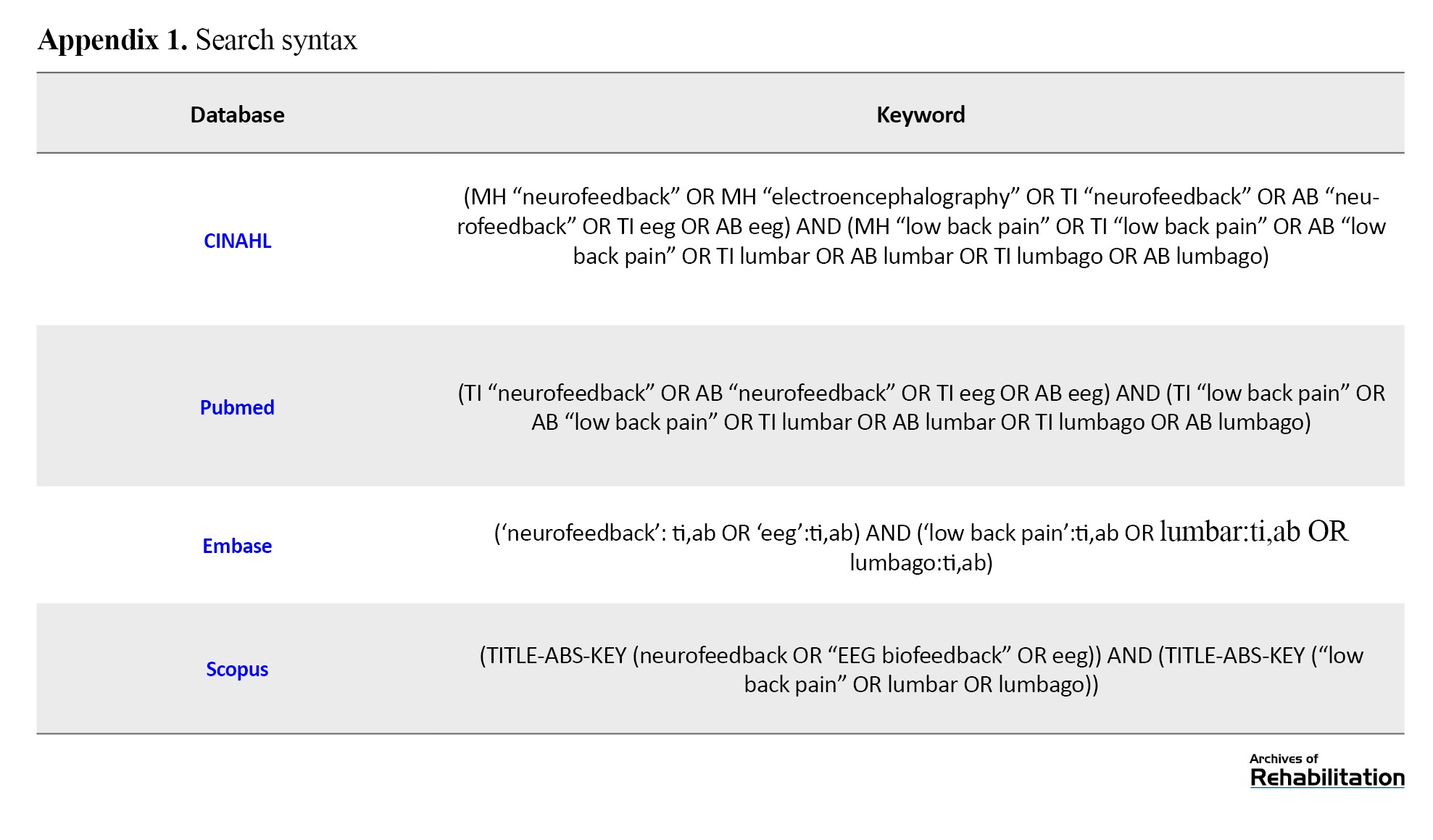
 Medical Subject Headings (MeSH) combined with relevant freetext keywords and synonyms were used to develop databasespecific search strategies (Appendix 1).
Reference lists of included articles were additionally screened to capture potentially missed studies. All retrieved records were managed in EndNote (version 21; Clarivate Analytics), and duplicates were removed prior to screening.
Study selection process
This review considered randomized controlled trials (RCTs) and case series (CSs) published in English that examined the impact of neurofeedback interventions on brain activity in adult patients with CLBP. Studies involving children, narrowly defined LBP subgroups, conference abstracts, or interventions unrelated to biofeedback or neurofeedback were excluded.
A total of 1,993 records were screened at the title and abstract level by two independent reviewers (GS and NR). Articles deemed potentially eligible underwent full-text assessment. Discrepancies during the selection process were resolved by discussion with a third reviewer (MJ).
Eligibility criteria (PICO framework)
Eligibility criteria were established using the PICO (population, intervention, comparison, and outcome) framework. The population consisted of adults with CLBP. Eligible interventions included neurofeedback training (NFT), while comparison groups comprised exercise therapy, cognitive behavioral therapy (CBT), physical therapy (PT), or mindfulnessbased approaches. Outcomes of interest were pain severity, functional disability, and psychological measures, and eligible study designs were randomized controlled trials and case series.
Methodological quality and risk of bias assessment
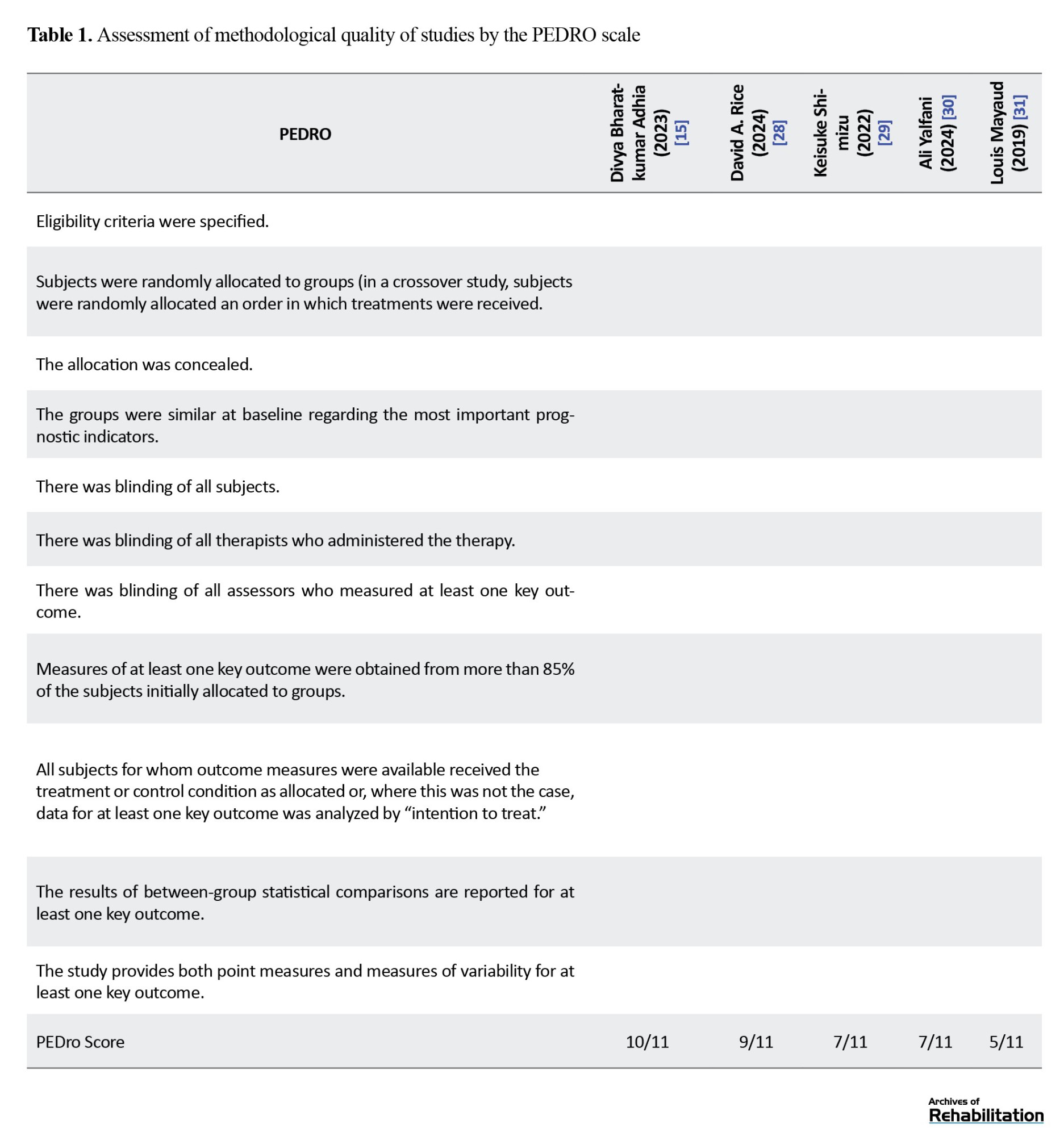
The methodological quality of the studies was evaluated using the 11item PEDro scale, assessing internal validity and reporting accuracy in randomized trials. Ten items contributed to the score, while the first assessed external validity alone. Studies were rated as excellent (>8), good (6–8), fair (4–5), or poor (<4) [28]. Two studies [15, 28] were excellent, 2 [29, 30] good, and 1 [31] fair (Table 1).
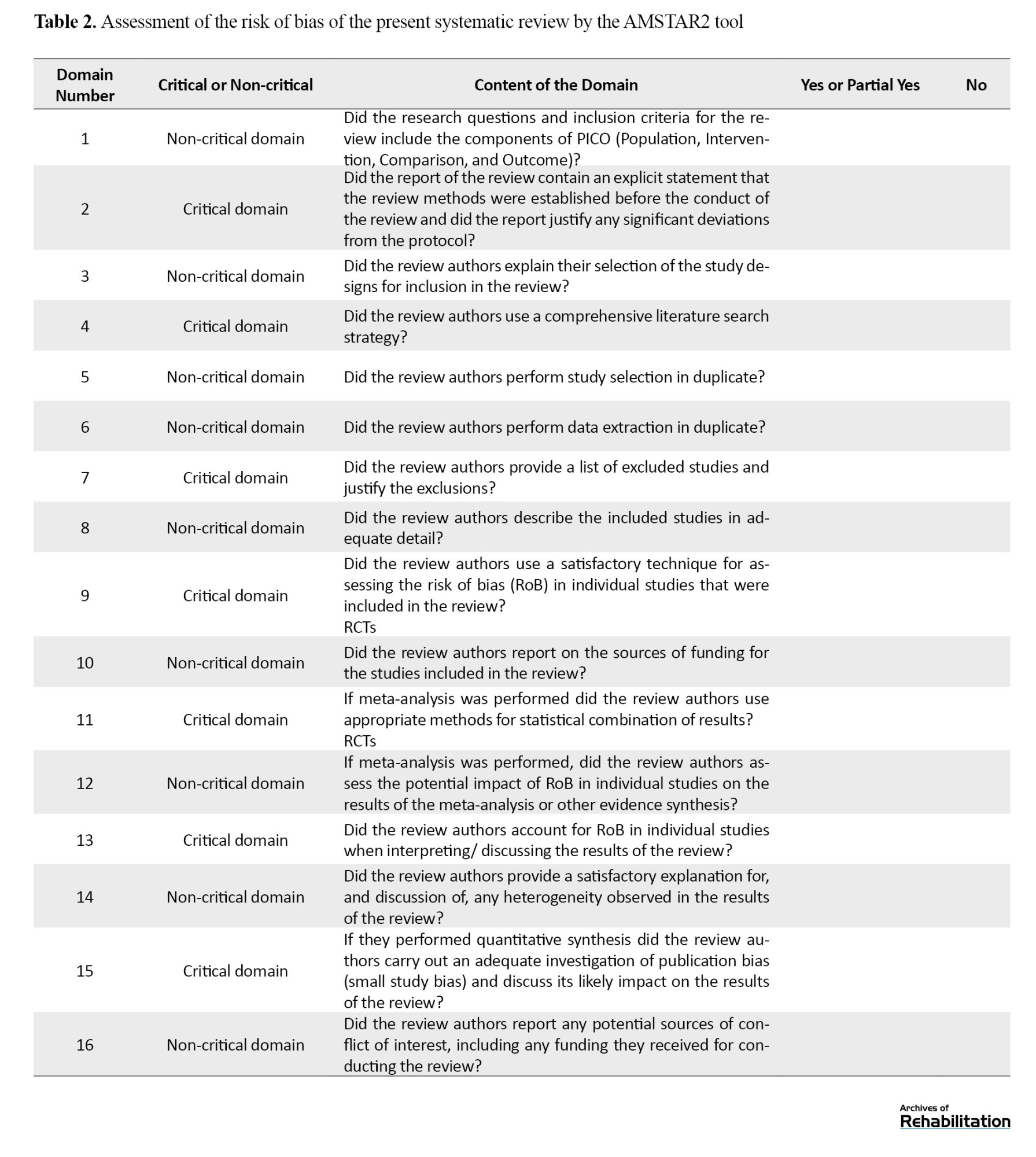
Reviewlevel bias was examined with the Measurement Tool to Assess systematic Reviews (AMSTAR 2) tool, covering 16 domains rated as “yes,” “partial yes,” or “no.” Unmet criteria indicated methodological weaknesses. Overall confidence, per AMSTAR 2, was graded as high, moderate, low, or critically low (Table 2) [32].
The review was preregistered in PROSPERO (The International Prospective Register of Systematic Reviews) (ID: 1056299; May 19, 2025).
Data extraction and management
Following study selection, a standardized extraction form was used to collect essential study information, including design, sample size, intervention characteristics, neurofeedback protocol details, targeted brain regions, and outcome measures. Data were independently extracted by two reviewers (GS and NR) and verified by a third reviewer (MJ). NonEnglish articles were translated using AIbased tools, after which numerical data were crosschecked against original tables and figures by two reviewers. Discrepancies were resolved through consensus.
Effect size calculation and statistical analysis
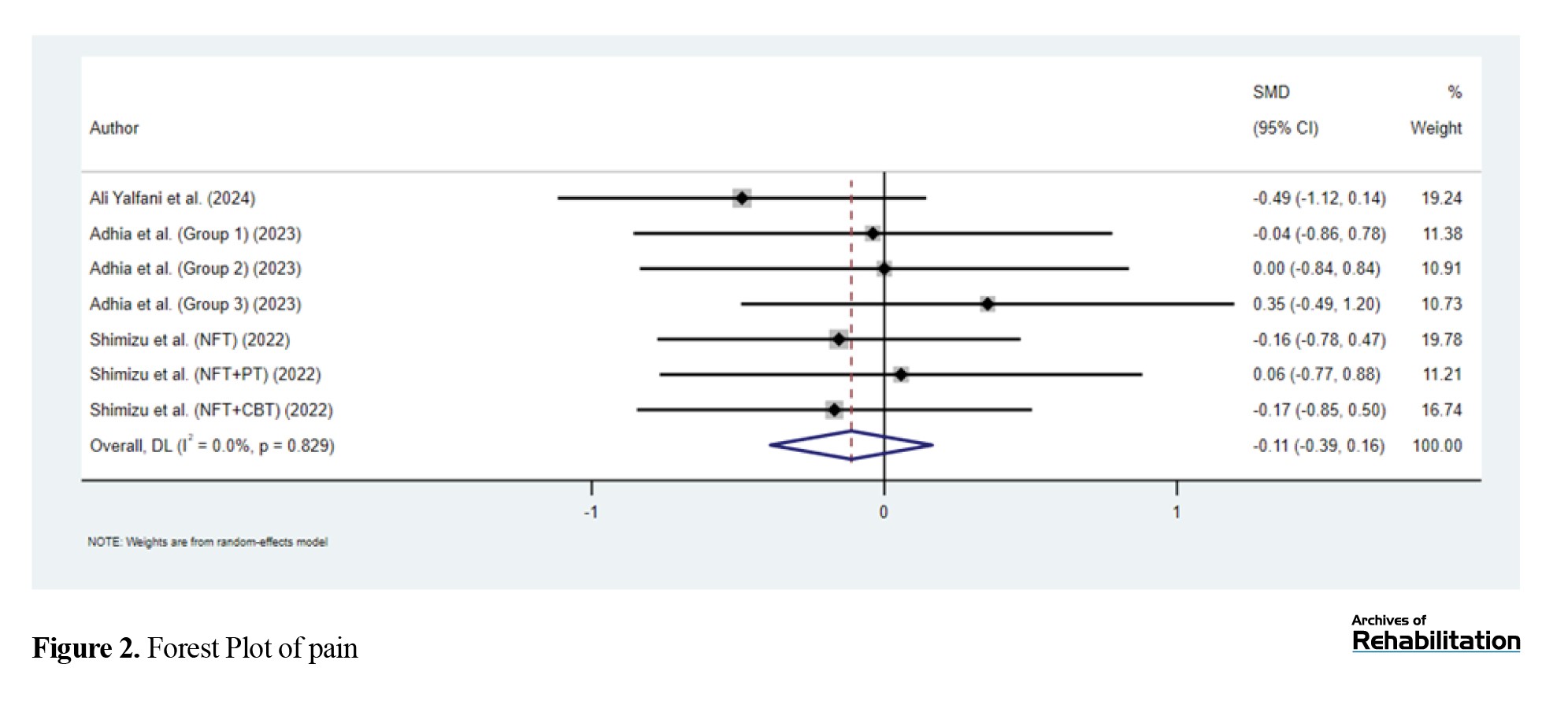
Only RCTs were included in the meta-analysis. Post-intervention pain scores were converted to a 0–10 scale and summarized as standardized mean differences (SMDs, 95% CI) based on Cohen’s d. The earliest post-treatment measure from each study was used. Given expected heterogeneity, pooled estimates were generated using a random-effects model with REML. Negative SMDs indicated greater pain reduction with neurofeedback. Effect sizes were considered small (0.20–0.49), moderate (0.50–0.79), large (0.80–1.19), or very large (>1.20). Between-study variance was assessed with the I² statistic. Due to the small number of trials, publication bias was not tested. All analyses were performed in Stata 14.2 using metan (P<0.05) [33].
Results
The database search yielded 2,676 records, of which 683 duplicates were removed, leaving 1,993 articles for screening. Following title and abstract review, 1,428 records were excluded, and 565 additional studies were eliminated after full-text evaluation. Ultimately, five eligible studies (RCTs and CS) were included in the qualitative synthesis and meta-analysis. Figure 1 shows the studies selection workflow and exclusion details. Overall, the included evidence was assessed as having moderate methodological quality.
Characteristics of included studies
Among the 5 included investigations, 4 were RCTs [15, 28–30], and 1 was a CS [31]. All studies were conducted in populations diagnosed with CLBP and evaluated outcomes at baseline and following the intervention period.
Participant characteristics
With the exception of one study [30], all investigations enrolled both male and female participants. The included studies were published between 2019 and 2024 and primarily examined NFT protocols aimed at modulating alpha or sensorimotor rhythm (SMR) activity in individuals with CLBP. In most trials, control groups received sham neurofeedback without electroencephalographic (EEG) feedback, whereas one study compared NFT with active comparator interventions, including PT and CBT. Core outcomes across studies encompassed pain intensity, functional disability, and psychological variables. A comprehensive summary of study characteristics is presented in Table 3.
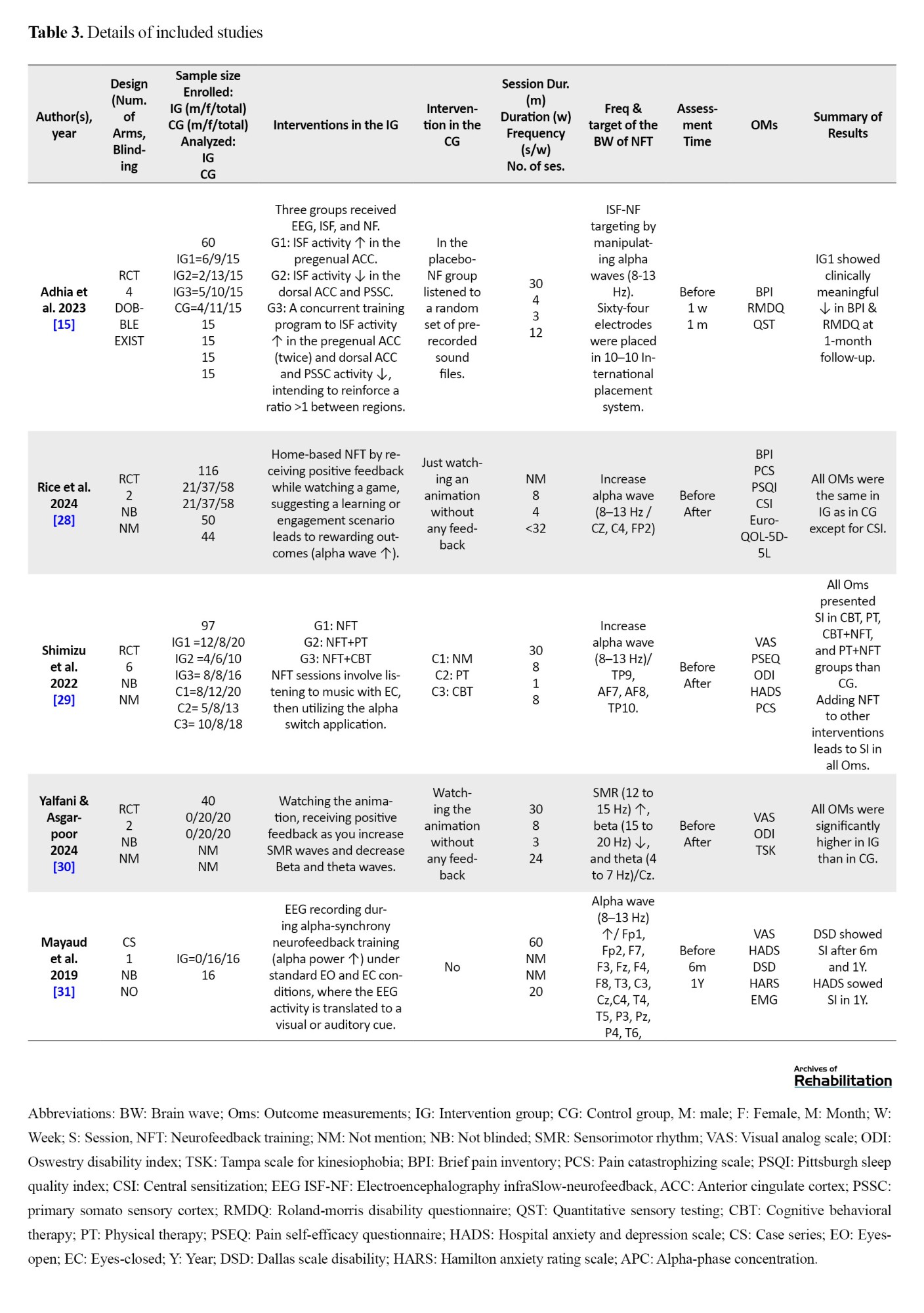
In general, the findings tended to favor NFT, particularly when applied as an adjunctive intervention alongside conventional therapies.
Intervention protocols
Three studies [15, 30, 31] implemented real-time neurofeedback protocols that targeted specific brainwave patterns during treatment sessions. One trial [15] specifically examined changes in the relative power of alpha activity across two cortical regions prior to therapeutic application. Another study [28] directly contrasted active neurofeedback with sham neurofeedback conditions. Additionally, one RCT [29] evaluated the combined effect of alpha-based neurofeedback together with PT and CBT, comparing it with neurofeedback delivered as a standalone intervention.
Outcome measures and meta-analytic findings
All included studies evaluated pain intensity, functional disability, and psychological outcomes, although disability measures were not reported in one trial [28]. Meta-analysis showed no significant difference in pain intensity between neurofeedback and control groups (SMD=−0.11; 95% CI, −0.39%, 0.16%; P=0.83), with no observed heterogeneity (I²=0%). While qualitative findings indicated possible improvements in disability and certain psychological outcomes, quantitative synthesis was not feasible due to heterogeneity in assessment tools. Consequently, despite favorable trends, the robustness and generalizability of these secondary findings remain limited (Figure 2).
Discussion
Although previous evidence has suggested that neurofeedback may represent a promising therapeutic approach for managing symptoms of CLBP, including pain reduction, improvement in functional disability, and modulation of psychological factors, the findings of the present systematic review and meta-analysis failed to reach a definitive statistical consensus. The absence of a significant effect in the quantitative assessment of pain, as previously reported, substantially limited the ability to clearly estimate the final pooled effect size and to accurately determine the true extent of between-study heterogeneity. Taken together, these findings indicate that, based on the current limited body of evidence, there is insufficient support to firmly establish neurofeedback as a standard intervention within clinical protocols for CLBP.
In the study by Yalfani et al. [30], a neurofeedback protocol based on upregulation of the SMR and downregulation of beta and theta waves resulted in significant improvements in pain intensity, functional disability, and fear of movement compared with sham neurofeedback. However, these positive findings were not consistently replicated across other RCTs. In contrast, Rice et al. [28], who employed a home-based neurofeedback intervention targeting increased alpha wave activity in a larger sample, reported no significant between-group differences in pain intensity or most secondary outcomes, with improvement observed only in the central sensitization index. This finding suggests that neurofeedback may exert a greater influence on central pain processing mechanisms rather than producing a direct reduction in perceived pain intensity.
Similarly, Adhia et al. [15] investigated an infraslow-based neurofeedback protocol targeting key pain-related brain regions, including the ACC and the primary somatosensory cortex, and reported heterogeneous outcomes. Although one intervention arm demonstrated a clinically meaningful reduction in pain and disability at the one-month follow-up, this effect was not consistently observed across all treatment arms. Consequently, when these findings were incorporated into the pooled analysis, no overall significant effect of neurofeedback on pain outcomes was identified.
Role of combined interventions
The findings reported by Shimizu et al. [29] further highlight the importance of distinguishing the effects of neurofeedback from those of established therapeutic interventions. In their study, significant improvements across all outcome measures were predominantly observed in groups receiving CBT or PT. The addition of neurofeedback to these interventions did not yield a clear additive benefit, suggesting that the observed therapeutic effects were more likely attributable to standard treatments rather than to neurofeedback as a standalone modality.
Methodological and clinical heterogeneity
One of the primary explanations for the lack of a significant pooled effect in the present meta-analysis is the substantial methodological and clinical heterogeneity among the included studies. This heterogeneity encompassed variations in neurofeedback protocols (e.g. SMR-, alpha-, beta-, theta-, and infraslow-based training; types of neural oscillations targeted; electrode placement; session frequency and duration), as well as differences in control conditions (sham neurofeedback, usual care, or active interventions). Such diversity complicates direct comparisons between studies and hampers the extraction of a stable and generalizable overall effect.
Conclusion
The severe methodological heterogeneity between neurofeedback protocols and the outcome measurement tools for secondary endpoints prevented a reliable quantitative synthesis in the meta-analysis. Consequently, despite the observed clinical improvements in individual studies, the definitive impact of the investigated method could not be proven. These limitations reiterate the necessity for future research to employ larger sample sizes and more standardized intervention protocols.
Ethical Considerations
Compliance with ethical guidelines
All ethical principles were considered in this study. This is a systematic review study. No experiments were conducted on human or animal samples. Accordingly, there was no need for an ethical code.
Funding
This study was extracted from the PhD dissertation of Golnaz Sadria, Approved by the University of Social Welfare and Rehabilitation Sciences, Tehran, Iran. This study was Funded by the University of Social Welfare and Rehabilitation Sciences.
Authors' contributions
Conceptualization and methodology: Golnaz Sadria and Nahid Rahmani; Data analysis: Golnaz Sadria, Nahid Rahmani, Mohammad Javaherian, and Enayatollah Bakhshi; Writing the original draft: Iraj Abdollahi and Golnaz Sadria; Review and editing: Zahra Mosallanezhad and Mohammad Hassan Azarsa; Final approval: Golnaz Sadria, Iraj Abdollahi, Nahid Rahmani, and Mohammad Javaherian.
Conflict of interest
The authors declared no conflict of interest.
Acknowledgments
The authors would like to express their sincere gratitude to the Department of Physical Therapy at the University of Social Welfare and Rehabilitation Sciences for their support and cooperation in this research.
References
Low back pain (LBP) is one of the most prevalent and disabling musculoskeletal conditions, typically presenting as pain or discomfort in the region from the lower costal margin to the gluteal area. From a clinical perspective, LBP is commonly categorized by symptom duration (acute versus chronic) and etiology (specific versus nonspecific) [1, 2]. Of particular concern is the growing burden of chronic nonspecific low back pain (CLBP), which accounts for a substantial proportion of LBP cases across different populations worldwide [3, 4]. Epidemiological data indicate that more than half of individuals experience LBP at some point during their lifetime, while point and period prevalence estimates in the general population range from approximately 15% to 45% [5]. In addition to its physical consequences, LBP imposes high socioeconomic costs by reducing occupational performance and overall productivity [2].
Although LBP was historically viewed as a localized biomechanical disorder, accumulating evidence suggests that chronic forms of the condition are associated with widespread alterations within the central nervous system (CNS). Neuroimaging studies have consistently demonstrated functional and structural brain reorganization in individuals with persistent pain states [6], including reductions in regional gray matter volume [7]. These changes involve multiple brain areas implicated in sensory integration, affective processing, and motor control, such as the primary and secondary somatosensory cortices, motor cortex, paracentral lobule, supplementary motor area, anterior cingulate cortex (ACC), amygdala, insula, and thalamus [8–10].
Such CNS alterations are believed to arise from disturbances in endogenous pain modulation mechanisms, particularly an imbalance between ascending nociceptive signaling and descending inhibitory pathways [11, 12]. This maladaptive regulation contributes to enhanced pain sensitivity, a hallmark feature frequently observed in individuals with CLBP [13, 14]. In parallel, chronic pain is accompanied by measurable changes in cortical oscillatory activity. The thalamocortical dysrhythmia model proposes that diminished inhibitory output from the thalamus may result in increased theta-band activity (4–8 Hz) [15], while heightened engagement of cortical pain networks may promote excessive delta activity (1–4 Hz) [16]. Furthermore, impaired descending inhibition has been associated with elevations in beta-band oscillations (12–30 Hz), potentially reflecting compensatory mechanisms, whereas greater pain intensity has been linked to suppression of alpha activity (8–12 Hz) [15, 17–19]. Beyond neurophysiological alterations, chronic pain and functional limitation often lead to reduced physical activity, increased psychological stress, and vulnerability to depressive symptoms, thereby reinforcing a self-perpetuating cycle of pain and disability in individuals with chronic musculoskeletal conditions [20].
Identifying and characterizing these neurophysiological patterns is essential for developing targeted therapeutic interventions for CLBP. Neurofeedback training (NFT) has emerged as a neuromodulatory technique that enables individuals to observe and voluntarily regulate their brain activity through real-time feedback mechanisms [21]. Over the past decade, multiple systematic reviews have examined the application of neurofeedback in various psychological and neuropsychiatric conditions, including depression [22], mood disturbances [23], and attentiondeficit/hyperactivity disorder (ADHD) [24]. Additionally, evidence syntheses have explored its role in certain musculoskeletal disorders with prominent psychosomatic components, such as fibromyalgia [25]. Nevertheless, despite the multidimensional nature of CLBP—encompassing pain, functional impairment, and psychological distress—there is currently no comprehensive systematic review or meta-analysis specifically addressing the effects of neurofeedback interventions in this population. Accordingly, the present study aims to systematically review and quantitatively synthesize available evidence regarding the impact of neurofeedback training on pain intensity, functional disability, and psychological outcomes in individuals with CLBP.
Materials and Methods:
Literature search strategy
An electronic search was performed in Web of Science, PubMed, Scopus, CINAHL, and EMBASE to identify studies published between January 2000 and February 2025. The search and study selection processes followed the PRISMA 2020 guidelines [26], as illustrated in Figure 1.
Reference lists of included articles were additionally screened to capture potentially missed studies. All retrieved records were managed in EndNote (version 21; Clarivate Analytics), and duplicates were removed prior to screening.
Study selection process
This review considered randomized controlled trials (RCTs) and case series (CSs) published in English that examined the impact of neurofeedback interventions on brain activity in adult patients with CLBP. Studies involving children, narrowly defined LBP subgroups, conference abstracts, or interventions unrelated to biofeedback or neurofeedback were excluded.
A total of 1,993 records were screened at the title and abstract level by two independent reviewers (GS and NR). Articles deemed potentially eligible underwent full-text assessment. Discrepancies during the selection process were resolved by discussion with a third reviewer (MJ).
Eligibility criteria (PICO framework)
Eligibility criteria were established using the PICO (population, intervention, comparison, and outcome) framework. The population consisted of adults with CLBP. Eligible interventions included neurofeedback training (NFT), while comparison groups comprised exercise therapy, cognitive behavioral therapy (CBT), physical therapy (PT), or mindfulnessbased approaches. Outcomes of interest were pain severity, functional disability, and psychological measures, and eligible study designs were randomized controlled trials and case series.
Methodological quality and risk of bias assessment
The methodological quality of the studies was evaluated using the 11item PEDro scale, assessing internal validity and reporting accuracy in randomized trials. Ten items contributed to the score, while the first assessed external validity alone. Studies were rated as excellent (>8), good (6–8), fair (4–5), or poor (<4) [28]. Two studies [15, 28] were excellent, 2 [29, 30] good, and 1 [31] fair (Table 1).
Reviewlevel bias was examined with the Measurement Tool to Assess systematic Reviews (AMSTAR 2) tool, covering 16 domains rated as “yes,” “partial yes,” or “no.” Unmet criteria indicated methodological weaknesses. Overall confidence, per AMSTAR 2, was graded as high, moderate, low, or critically low (Table 2) [32].
The review was preregistered in PROSPERO (The International Prospective Register of Systematic Reviews) (ID: 1056299; May 19, 2025).
Data extraction and management
Following study selection, a standardized extraction form was used to collect essential study information, including design, sample size, intervention characteristics, neurofeedback protocol details, targeted brain regions, and outcome measures. Data were independently extracted by two reviewers (GS and NR) and verified by a third reviewer (MJ). NonEnglish articles were translated using AIbased tools, after which numerical data were crosschecked against original tables and figures by two reviewers. Discrepancies were resolved through consensus.
Effect size calculation and statistical analysis
Only RCTs were included in the meta-analysis. Post-intervention pain scores were converted to a 0–10 scale and summarized as standardized mean differences (SMDs, 95% CI) based on Cohen’s d. The earliest post-treatment measure from each study was used. Given expected heterogeneity, pooled estimates were generated using a random-effects model with REML. Negative SMDs indicated greater pain reduction with neurofeedback. Effect sizes were considered small (0.20–0.49), moderate (0.50–0.79), large (0.80–1.19), or very large (>1.20). Between-study variance was assessed with the I² statistic. Due to the small number of trials, publication bias was not tested. All analyses were performed in Stata 14.2 using metan (P<0.05) [33].
Results
The database search yielded 2,676 records, of which 683 duplicates were removed, leaving 1,993 articles for screening. Following title and abstract review, 1,428 records were excluded, and 565 additional studies were eliminated after full-text evaluation. Ultimately, five eligible studies (RCTs and CS) were included in the qualitative synthesis and meta-analysis. Figure 1 shows the studies selection workflow and exclusion details. Overall, the included evidence was assessed as having moderate methodological quality.
Characteristics of included studies
Among the 5 included investigations, 4 were RCTs [15, 28–30], and 1 was a CS [31]. All studies were conducted in populations diagnosed with CLBP and evaluated outcomes at baseline and following the intervention period.
Participant characteristics
With the exception of one study [30], all investigations enrolled both male and female participants. The included studies were published between 2019 and 2024 and primarily examined NFT protocols aimed at modulating alpha or sensorimotor rhythm (SMR) activity in individuals with CLBP. In most trials, control groups received sham neurofeedback without electroencephalographic (EEG) feedback, whereas one study compared NFT with active comparator interventions, including PT and CBT. Core outcomes across studies encompassed pain intensity, functional disability, and psychological variables. A comprehensive summary of study characteristics is presented in Table 3.
In general, the findings tended to favor NFT, particularly when applied as an adjunctive intervention alongside conventional therapies.
Intervention protocols
Three studies [15, 30, 31] implemented real-time neurofeedback protocols that targeted specific brainwave patterns during treatment sessions. One trial [15] specifically examined changes in the relative power of alpha activity across two cortical regions prior to therapeutic application. Another study [28] directly contrasted active neurofeedback with sham neurofeedback conditions. Additionally, one RCT [29] evaluated the combined effect of alpha-based neurofeedback together with PT and CBT, comparing it with neurofeedback delivered as a standalone intervention.
Outcome measures and meta-analytic findings
All included studies evaluated pain intensity, functional disability, and psychological outcomes, although disability measures were not reported in one trial [28]. Meta-analysis showed no significant difference in pain intensity between neurofeedback and control groups (SMD=−0.11; 95% CI, −0.39%, 0.16%; P=0.83), with no observed heterogeneity (I²=0%). While qualitative findings indicated possible improvements in disability and certain psychological outcomes, quantitative synthesis was not feasible due to heterogeneity in assessment tools. Consequently, despite favorable trends, the robustness and generalizability of these secondary findings remain limited (Figure 2).
Discussion
Although previous evidence has suggested that neurofeedback may represent a promising therapeutic approach for managing symptoms of CLBP, including pain reduction, improvement in functional disability, and modulation of psychological factors, the findings of the present systematic review and meta-analysis failed to reach a definitive statistical consensus. The absence of a significant effect in the quantitative assessment of pain, as previously reported, substantially limited the ability to clearly estimate the final pooled effect size and to accurately determine the true extent of between-study heterogeneity. Taken together, these findings indicate that, based on the current limited body of evidence, there is insufficient support to firmly establish neurofeedback as a standard intervention within clinical protocols for CLBP.
In the study by Yalfani et al. [30], a neurofeedback protocol based on upregulation of the SMR and downregulation of beta and theta waves resulted in significant improvements in pain intensity, functional disability, and fear of movement compared with sham neurofeedback. However, these positive findings were not consistently replicated across other RCTs. In contrast, Rice et al. [28], who employed a home-based neurofeedback intervention targeting increased alpha wave activity in a larger sample, reported no significant between-group differences in pain intensity or most secondary outcomes, with improvement observed only in the central sensitization index. This finding suggests that neurofeedback may exert a greater influence on central pain processing mechanisms rather than producing a direct reduction in perceived pain intensity.
Similarly, Adhia et al. [15] investigated an infraslow-based neurofeedback protocol targeting key pain-related brain regions, including the ACC and the primary somatosensory cortex, and reported heterogeneous outcomes. Although one intervention arm demonstrated a clinically meaningful reduction in pain and disability at the one-month follow-up, this effect was not consistently observed across all treatment arms. Consequently, when these findings were incorporated into the pooled analysis, no overall significant effect of neurofeedback on pain outcomes was identified.
Role of combined interventions
The findings reported by Shimizu et al. [29] further highlight the importance of distinguishing the effects of neurofeedback from those of established therapeutic interventions. In their study, significant improvements across all outcome measures were predominantly observed in groups receiving CBT or PT. The addition of neurofeedback to these interventions did not yield a clear additive benefit, suggesting that the observed therapeutic effects were more likely attributable to standard treatments rather than to neurofeedback as a standalone modality.
Methodological and clinical heterogeneity
One of the primary explanations for the lack of a significant pooled effect in the present meta-analysis is the substantial methodological and clinical heterogeneity among the included studies. This heterogeneity encompassed variations in neurofeedback protocols (e.g. SMR-, alpha-, beta-, theta-, and infraslow-based training; types of neural oscillations targeted; electrode placement; session frequency and duration), as well as differences in control conditions (sham neurofeedback, usual care, or active interventions). Such diversity complicates direct comparisons between studies and hampers the extraction of a stable and generalizable overall effect.
Conclusion
The severe methodological heterogeneity between neurofeedback protocols and the outcome measurement tools for secondary endpoints prevented a reliable quantitative synthesis in the meta-analysis. Consequently, despite the observed clinical improvements in individual studies, the definitive impact of the investigated method could not be proven. These limitations reiterate the necessity for future research to employ larger sample sizes and more standardized intervention protocols.
Ethical Considerations
Compliance with ethical guidelines
All ethical principles were considered in this study. This is a systematic review study. No experiments were conducted on human or animal samples. Accordingly, there was no need for an ethical code.
Funding
This study was extracted from the PhD dissertation of Golnaz Sadria, Approved by the University of Social Welfare and Rehabilitation Sciences, Tehran, Iran. This study was Funded by the University of Social Welfare and Rehabilitation Sciences.
Authors' contributions
Conceptualization and methodology: Golnaz Sadria and Nahid Rahmani; Data analysis: Golnaz Sadria, Nahid Rahmani, Mohammad Javaherian, and Enayatollah Bakhshi; Writing the original draft: Iraj Abdollahi and Golnaz Sadria; Review and editing: Zahra Mosallanezhad and Mohammad Hassan Azarsa; Final approval: Golnaz Sadria, Iraj Abdollahi, Nahid Rahmani, and Mohammad Javaherian.
Conflict of interest
The authors declared no conflict of interest.
Acknowledgments
The authors would like to express their sincere gratitude to the Department of Physical Therapy at the University of Social Welfare and Rehabilitation Sciences for their support and cooperation in this research.
References
- Hauser RA, Matias D, Woznica D, Rawlings B, Woldin BA. Lumbar instability as an etiology of low back pain and its treatment by prolotherapy: A review. Journal of Back and Musculoskeletal Rehabilitation. 2022; 35(4):701-12. [DOI:10.3233/BMR-210097] [PMID]
- Hartvigsen J, Hancock MJ, Kongsted A, Louw Q, Ferreira ML, Genevay S, et al. What low back pain is and why we need to pay attention. The Lancet. 2018; 391(10137):2356-67. [DOI:10.1016/S0140-6736(18)30480-X] [PMID]
- Bagheri R, Parhampour B, Pourahmadi M, Fazeli SH, Takamjani IE, Akbari M, et al. The effect of core stabilization exercises on trunk-pelvis three-dimensional kinematics during gait in non-specific chronic low back pain. Spine. 2019; 44(13):927-36. [DOI:10.1097/BRS.0000000000002981] [PMID]
- McCaskey MA, Wirth B, Schuster-Amft C, de Bruin ED. Postural sensorimotor training versus sham exercise in physiotherapy of patients with chronic non-specific low back pain: An exploratory randomised controlled trial. PloS one. 2018; 13(3):e0193358. [DOI:10.1371/journal.pone.0193358] [PMID]
- Fayzi R, Karimi A, Fereidouni A, Salavatian A, Imani B, Tavakkol R. Prevalence and clinical characteristics of low back pain among operating room personnel: A cross-sectional study in south of Iran. Frontiers in Surgery. 2022; 9:841339. [DOI:10.3389/fsurg.2022.841339] [PMID]
- Chen Y, Yang Y, Gong Z, Kang Y, Zhang Y, Chen H, et al. Altered effective connectivity from cerebellum to motor cortex in chronic low back pain: A multivariate pattern analysis and spectral dynamic causal modeling study. Brain Research Bulletin. 2023; 204:110794. [DOI:10.1016/j.brainresbull.2023.110794] [PMID]
- Kashanian A, Tsolaki E, Pouratian N, Bari AA. Deep brain stimulation of the subgenual cingulate cortex for the treatment of chronic low back pain. Neuromodulation. 2022; 25(2):202-10. [DOI:10.1111/ner.13388] [PMID]
- Ng SK, Urquhart DM, Fitzgerald PB, Cicuttini FM, Hussain SM, Fitzgibbon BM. The relationship between structural and functional brain changes and altered emotion and cognition in chronic low back pain brain changes: A systematic review of MRI and fMRI studies. The Clinical Journal of Pain. 2018; 34(3):237-61. [DOI:10.1097/AJP.0000000000000534] [PMID]
- Fritz HC, McAuley JH, Wittfeld K, Hegenscheid K, Schmidt CO, Langner S, et al. Chronic back pain is associated with decreased prefrontal and anterior insular gray matter: Results from a population-based cohort study. The Journal of Pain. 2016; 17(1):111-8. [DOI:10.1016/j.jpain.2015.10.003] [PMID]
- Ruscheweyh R, Deppe M, Lohmann H, Stehling C, Flöel A, Ringelstein BE, et al. Pain is associated with regional grey matter reduction in the general population. Pain. 2011; 152(4):904-11. [DOI:10.1016/j.pain.2011.01.013] [PMID]
- De Ridder D, Adhia D, Vanneste S. The anatomy of pain and suffering in the brain and its clinical implications. Neuroscience and Biobehavioral Reviews. 2021; 130:125-46. [DOI:10.1016/j.neubiorev.2021.08.013] [PMID]
- Vanneste S, De Ridder D. Chronic pain as a brain imbalance between pain input and pain suppression. Brain Communications. 2021; 3(1):fcab014. [DOI:10.1093/braincomms/fcab014] [PMID]
- Crombez G, Veirman E, Van Ryckeghem D, Scott W, De Paepe A. The effect of psychological factors on pain outcomes: lessons learned for the next generation of research. Pain Reports. 2023; 8(6):e1112. [DOI:10.1097/PR9.0000000000001112] [PMID]
- Bemani S, Dehkordi SN, Sarrafzadeh J, Talebian S, Salehi R, Zarei J. Efficacy of a multidimensional versus usual care physiotherapy on pain and electroencephalography (EEG) spectrum in chronic nonspecific low back pain: Study protocol for a randomized controlled trial. Trials. 2021; 22(1):679. [DOI:10.1186/s13063-021-05580-3] [PMID]
- Adhia DB, Mani R, Turner PR, Vanneste S, De Ridder D. Infraslow neurofeedback training alters effective connectivity in individuals with chronic low back pain: A secondary analysis of a pilot randomized placebo-controlled study. Brain sciences. 2022; 12(11):1514. [DOI:10.3390/brainsci12111514] [PMID]
- Goudman L, Laton J, Brouns R, Nagels G, Huysmans E, Buyl R, et al. Cortical mapping of painful electrical stimulation by quantitative electroencephalography: unraveling the time-frequency-channel domain. Journal of Pain Research. 2017; 10:2675-85. [DOI:10.2147/JPR.S145783] [PMID]
- Teixeira PEP, Pacheco-Barrios K, Uygur-Kucukseymen E, Machado RM, Balbuena-Pareja A, Giannoni-Luza S, et al. Electroencephalography signatures for conditioned pain modulation and pain perception in nonspecific chronic low back Pain-an exploratory study. Pain medicine. 2022; 23(3):558-70. [DOI:10.1093/pm/pnab293] [PMID]
- Feng L, Li H, Cui H, Xie X, Xu S, Hu Y. Low back pain assessment based on Alpha oscillation changes in spontaneous electroencephalogram (EEG). Neural plasticity. 2021; 2021:8537437. [DOI:10.1155/2021/8537437] [PMID]
- Ahn S, Prim JH, Alexander ML, McCulloch KL, Fröhlich F. Identifying and engaging neuronal oscillations by transcranial alternating current stimulation in patients with chronic low back pain: A randomized, crossover, double-blind, sham-controlled pilot study. The Journal of Pain. 2019; 20(3):277.e1-11. [DOI:10.1016/j.jpain.2018.09.004] [PMID]
- Wang S, Yu M, Huang W, Wang T, Liu K, Xiang B. Longitudinal association between ADL disability and depression in middle-aged and elderly: national cohort study. The Journal of nutrition, Health and Aging. 2025; 29(2):100450. [DOI:10.1016/j.jnha.2024.100450] [PMID]
- Yeh WH, Hsueh JJ, Shaw FZ. Neurofeedback of Alpha activity on memory in healthy participants: A systematic review and meta-analysis. Frontiers in Human Neuroscience. 2021; 14:562360. [DOI:10.3389/fnhum.2020.562360] [PMID]
- Hong J, Park JH. Efficacy of neuro-feedback training for PTSD symptoms: A systematic review and meta-analysis. International Journal of Environmental Research and Public Health. 2022; 19(20):13096. [DOI:10.3390/ijerph192013096] [PMID]
- Barreiros AR, Almeida I, Baía BC, Castelo-Branco M. Amygdala modulation during emotion regulation training with fMRI-based neurofeedback. Frontiers in human neuroscience. 2019; 13:89. [DOI:10.3389/fnhum.2019.00089] [PMID]
- Scholz L, Werle J, Philipsen A, Schulze M, Collonges J, Gensichen J. Effects and feasibility of psychological interventions to reduce inattention symptoms in adults with ADHD: A systematic review. Journal of Mental Health. 2023; 32(1):307-20. [DOI:10.1080/09638237.2020.1818189] [PMID]
- Torres CB, Barona EJ, Molina MG, Sanchez ME, Manso JM. A systematic review of EEG neurofeedback in fibromyalgia to treat psychological variables, chronic pain and general health. European Archives of Psychiatry and Clinical Neuroscience. 2024; 274(4):981-99. [DOI:10.1007/s00406-023-01612-y] [PMID]
- Page MJ, McKenzie JE, Bossuyt PM, Boutron I, Hoffmann TC, Mulrow CD, et al. The PRISMA 2020 statement: An updated guideline for reporting systematic reviews. BMJ. 2021; 372:n71. [DOI:10.1136/bmj.n160] [PMID]
- Maher CG, Sherrington C, Herbert RD, Moseley AM, Elkins M. Reliability of the PEDro scale for rating quality of randomized controlled trials. Physical therapy. 2003; 83(8):713-21. [DOI:10.1093/ptj/83.8.713] [PMID]
- Rice DA, Ozolins C, Biswas R, Almesfer F, Zeng I, Parikh A, et al. Home-based EEG neurofeedback for the treatment of chronic pain: A randomized controlled clinical trial. The Journal of Pain. 2024; 25(11):104651. [DOI:10.1016/j.jpain.2024.104651] [PMID]
- Shimizu K, Inage K, Morita M, Kuroiwa R, Chikubu H, Hasegawa T, et al. New treatment strategy for chronic low back pain with alpha wave neurofeedback. Scientific Reports. 2022; 12(1):14532. [DOI:10.1038/s41598-022-18931-0] [PMID]
- Yalfani A, Asgarpoor A. [Investigating the effects of neurofeedback training on psychological variables in women with non-specific chronic back pain: A randomized controlled trial (Persian)]. Journal of Guilan University of Medical Sciences. 2024; 33(2):228-39. [DOI:10.32598/JGUMS.33.2.2212.1]
- Mayaud L, Wu H, Barthélemy Q, Favennec P, Delpierre Y, Congedo M, et al. Alpha-phase synchrony EEG training for multi-resistant chronic low back pain patients: An open-label pilot study. European Spine Journal. 2019; 28(11):2487-501. [DOI:10.1007/s00586-019-06051-9] [PMID]
- Li L, Asemota I, Liu B, Gomez-Valencia J, Lin L, Arif AW, et al. AMSTAR 2 appraisal of systematic reviews and meta-analyses in the field of heart failure from high-impact journals. Systematic reviews. 2022 23; 11(1):147. [DOI:10.1186/s13643-022-02029-9] [PMID]
- Haidich AB. Meta-analysis in medical research. Hippokratia. 2010; 14(S 1):29-37. [PMID]
Type of Study: Systematic Review |
Subject:
Physical Therapy
Send email to the article author
| Rights and permissions | |
 |
This work is licensed under a Creative Commons Attribution-NonCommercial 4.0 International License. |

Copyright © The Author(s);
This is an open access article distributed under the terms of the Creative Commons Attribution-NonCommercial 4.0 (CC-By-NC 4.0), which permits use, distribution, and reproduction in any medium, provided the original work is properly cited and is not used for commercial purposes.
Contact Information
This is an open access article distributed under the terms of the Creative Commons Attribution-NonCommercial 4.0 (CC-By-NC 4.0), which permits use, distribution, and reproduction in any medium, provided the original work is properly cited and is not used for commercial purposes.
Contact Information