

Volume 27, Issue 1 (5-2026)
Arch Rehabil 2026, 27(1): 16-33 |
Back to browse issues page




Download citation:
BibTeX | RIS | EndNote | Medlars | ProCite | Reference Manager | RefWorks
Send citation to:


BibTeX | RIS | EndNote | Medlars | ProCite | Reference Manager | RefWorks
Send citation to:
Saburi L, Piri E. The Role of Artificial Intelligence in Human Gait Biomechanics: A Systematic Review. Arch Rehabil 2026; 27 (1) :16-33
URL: http://rehabilitationj.uswr.ac.ir/article-1-3711-en.html
URL: http://rehabilitationj.uswr.ac.ir/article-1-3711-en.html

1- Department of Sports Biomechanics, Faculty of Sports Sciences, Shahid Bahonar University of Kerman, Kerman, Iran.
2- Department of Sports Biomechanics, Faculty of Educational Sciences and Psychology, University of Mohaghegh Ardabili, Ardabil, Iran. & Department of Molecular Medicine and Surgery, Karolinska Institutet, Solna, Sweden. ,ebrahimm.piri@gmail.com
2- Department of Sports Biomechanics, Faculty of Educational Sciences and Psychology, University of Mohaghegh Ardabili, Ardabil, Iran. & Department of Molecular Medicine and Surgery, Karolinska Institutet, Solna, Sweden. ,
Full-Text [PDF 3440 kb]
(414 Downloads)
| Abstract (HTML) (2460 Views)
Full-Text: (267 Views)
Introduction
Gait is one of the most fundamental human motor activities that plays a decisive role in neuromuscular health, balance, functional independence, and quality of life (QoL). Any change in gait patterns can indicate the occurrence or progression of motor disorders, increased risk of falls, and decreased ability to perform daily activities. Therefore, accurate and quantitative gait analysis is considered one of the key tools in assessing motor function, diagnosing neuroskeletal disorders, and monitoring the effectiveness of therapeutic and rehabilitation interventions [1-3]. Despite its clinical importance, traditional gait analysis methods are mainly limited to laboratory environments and rely on complex optical systems, expensive equipment, and time-consuming analyses that require specialized personnel to perform, limiting their generalizability and widespread use in real-world settings [4].
In recent years, significant advances in the field of artificial intelligence (AI) have had a significant impact on human movement analysis and sports biomechanics. The development of advanced computational methods and the reduction of data processing costs have made computer-based analyses more technically and economically feasible [5]. AI is increasingly being used in the fields of sport and movement sciences for performance analysis, movement pattern recognition, decision-making optimization, and prediction of movement behavior, and has revolutionized traditional approaches to evaluation and analysis. This technology has increased the accuracy of movement analysis, scoring, and prediction of athlete performance and even fan behavior, opening new horizons in understanding the complexity of human movement [6].
However, many existing studies have taken a largely descriptive approach, focusing more on demonstrating the general capabilities of AI than critically analyzing its role in specific problems such as human gait dynamics [7]. Along with the development of artificial intelligence, technological advances in small and lightweight wearable sensors, especially inertial measurement units, have enabled the recording of movement data over long periods of time and in natural conditions of daily life. These sensors have created new opportunities for researchers and clinicians to study gait outside of controlled laboratory environments and in real-world contexts. In contrast to classical gait indices, such as speed, stride length, and stride time, accelerometric and gyroscopic data allow the extraction of a wide range of advanced dynamic indices that describe features such as variability, regularity, synchronization, symmetry, smoothness of movement, postural stability, and predictability of gait [8, 9]. In this regard, recent studies have shown that combining data from wearable sensors with artificial intelligence algorithms can be used as a digital biomarker for screening and early diagnosis of neurological diseases. In particular, changes in gait patterns have been proposed as a non-invasive and cost-effective indicator for identifying diseases such as dementia. The development of these digital biomarkers is expected to follow the development of clinical biomarkers; however, challenges, such as clinical validation, interpretation of results, and reliability of models remain [7].
On the other hand, machine learning (ML) and deep learning algorithms have been recognized as powerful tools for analyzing complex human movement data. Convolutional neural networks in processing image and video motion data, and recurrent neural networks (Recurrent neural network [RNN] and long short‐term memory [LSTM]) in analyzing time-serial data, have enabled more accurate identification of gait patterns [10]. These models are able to extract subtle features such as step incoordination, postural imbalances, and body dynamic deviations from sensory or image data, thus playing an important role in the early diagnosis of neuroskeletal disorders [11]. In addition, the integration of multi-source data from wearable sensors and machine vision systems has enabled more comprehensive modeling of gait biomechanics, paving the way for continuous monitoring of gait status and prediction of the risk of falls or muscle injuries.
Despite the significant growth of studies on the application of AI in gait analysis, previous reviews have often examined algorithms or data types separately, with little attention paid to systematic and critical comparisons of different approaches, methodological limitations, challenges of clinical implementation, and the reliability of results. Therefore, the main research gap lies in the lack of a comprehensive and critical review that can comprehensively examine the application of AI algorithms in the biomechanical analysis of human gait and analyze the differences, advantages, and shortcomings of approaches based on wearable sensors and machine vision. The innovation of the present study lies in responding to this need; so that this study goes beyond a mere description of the technologies to critically evaluate the accuracy, reliability, and clinical applicability of AI-based methods and outlines future research directions and potential applications in sports medicine, rehabilitation, and movement sciences. Accordingly, the aim of the present study is a comprehensive and critical review of artificial intelligence approaches in the biomechanical analysis of human gait.
Materials and Methods
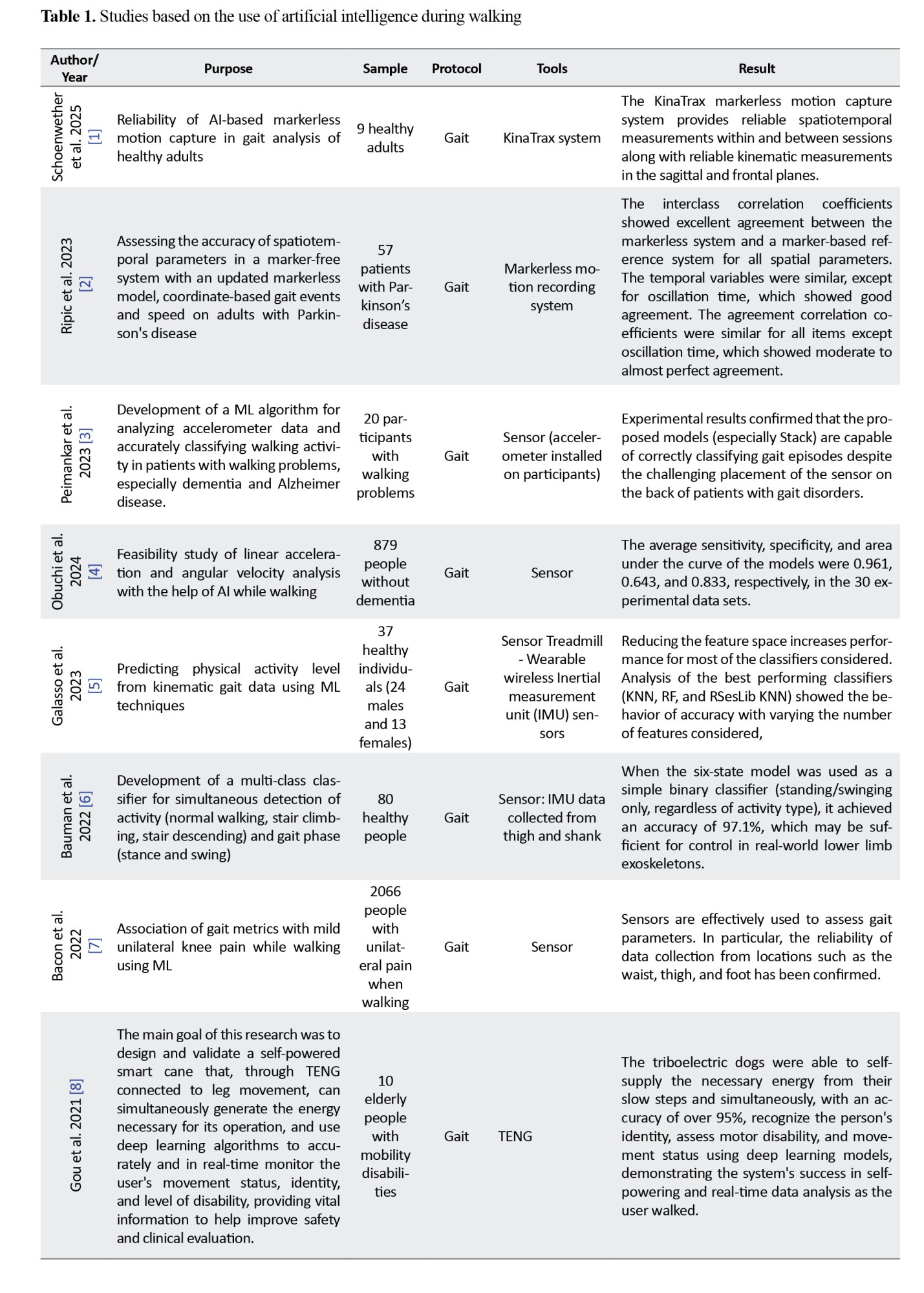
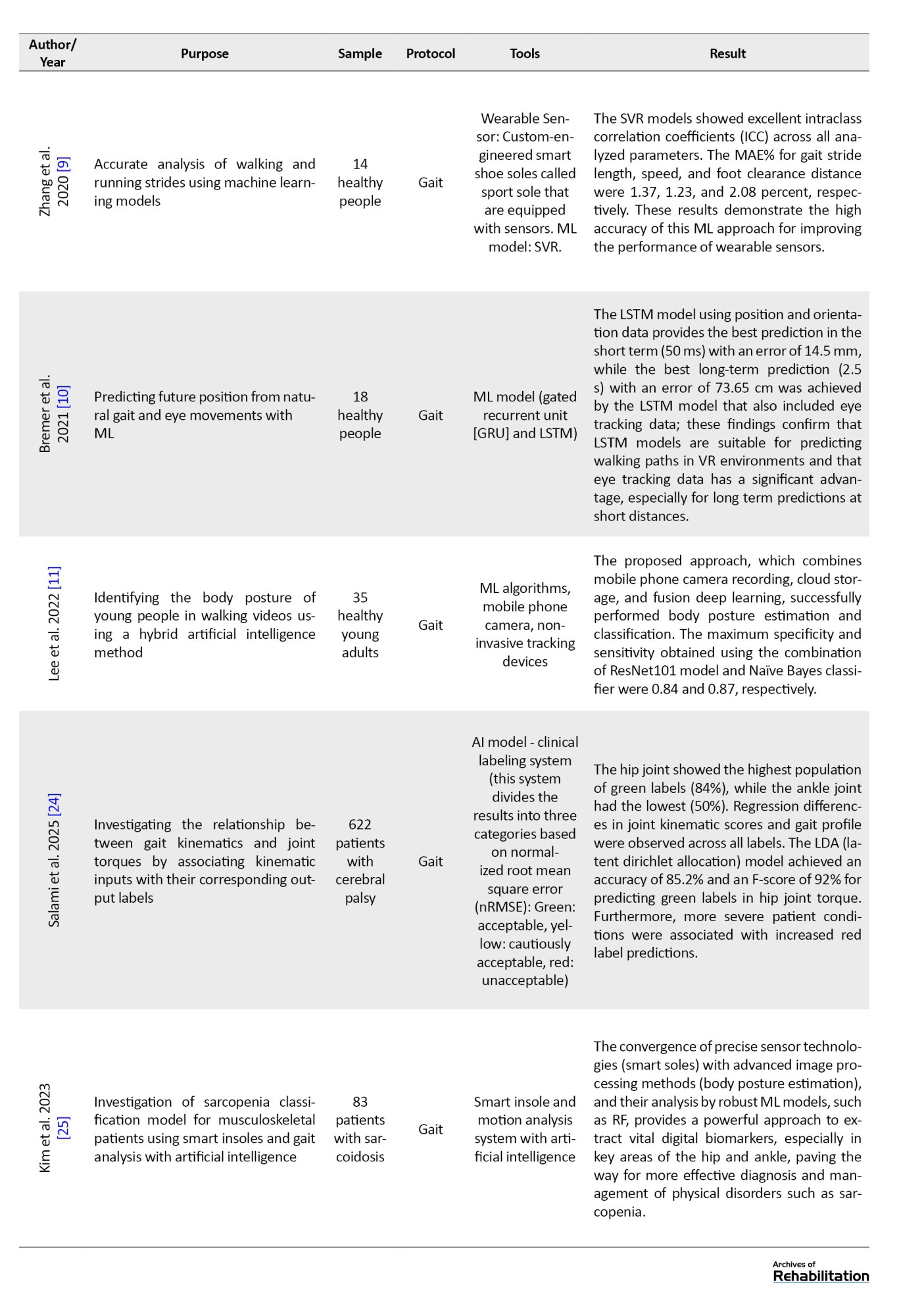
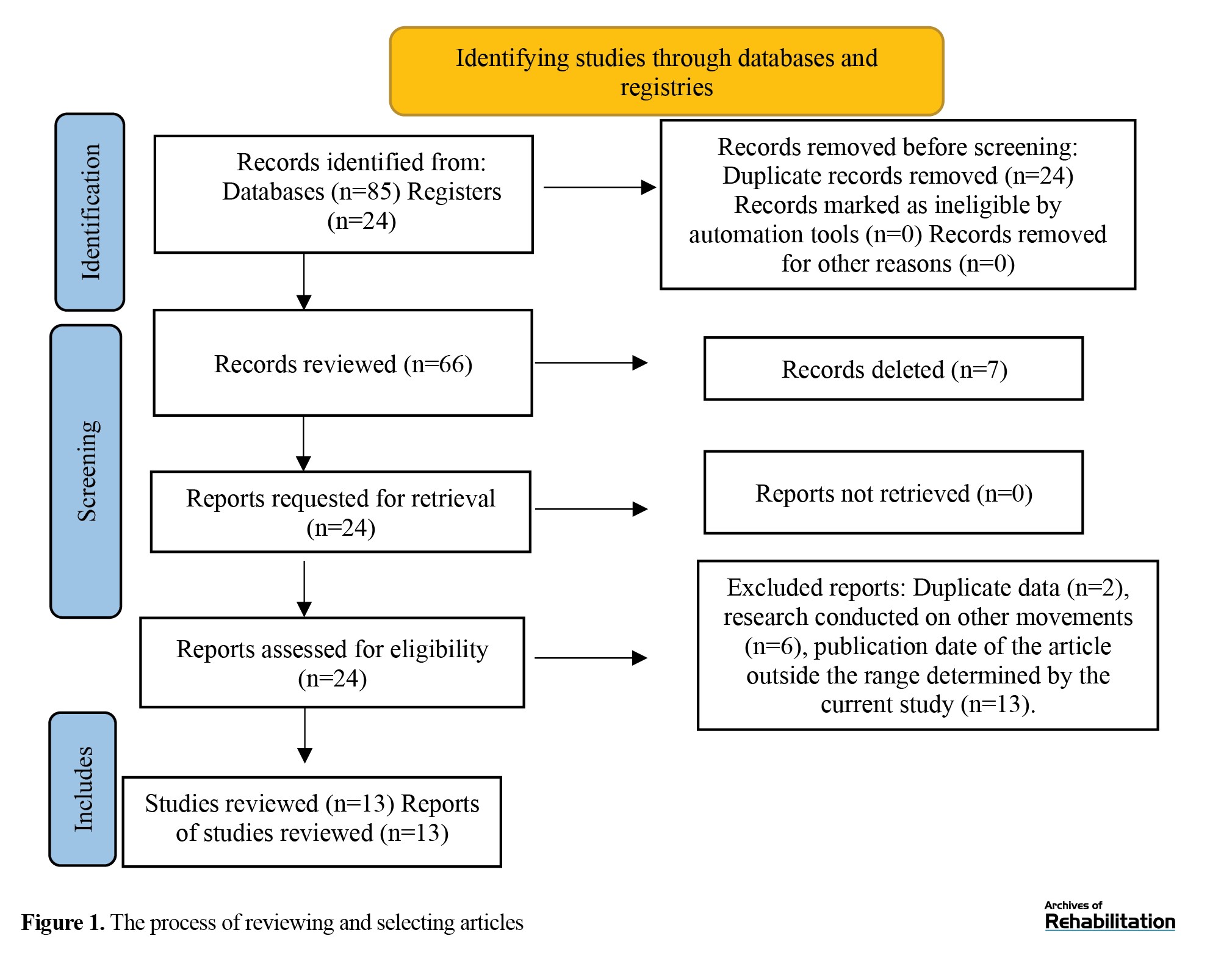
This study was a systematic review. A search for articles between 2020 and 2025 was conducted in the Web of Science citation databases, the Center for Scientific Information and Academic Jihad (SID), Magiran, Scopus, the Islamic World Science Citation Database, PubMed, and Google Scholar in both Persian and English. The search strategy included keywords related to artificial intelligence, machine learning, deep learning, walking, gait analysis, biomechanics, kinetics, and kinematics, and combined them with “AND” and “OR” operators. The inclusion criteria included experimental or applied studies using artificial intelligence in gait analysis, using real-world data from human populations (healthy individuals or neurological, muscular, or musculoskeletal patients), providing performance indicators of models (such as accuracy, sensitivity, specificity) or measurable biomechanical parameters, focusing on human gait with direct data recording or wearable/imaging sensors, and publication in Persian or English. Study designs included cross-sectional, algorithm validation, and clinical prediction/diagnostic studies. The exclusion criteria included theoretical studies or literature reviews without data, editorials, case reports, animal studies or simulations without real human data, use of classical statistical methods without AI, articles with incomplete or duplicate access, conference proceedings, and studies with low methodological quality. As a result, of the total 85 identified articles, 53 articles were excluded due to lack of focus on walking or duplication, 19 articles were excluded due to review or lack of use of AI, and finally 13 articles were selected for the final analysis (Table 1) (Figure 1).
 The quality of the articles was assessed using the Dunn and Black questionnaire [23]. In case of any discrepancy in the scoring between the authors, the items in question were reviewed individually, and disagreements were resolved through group consultation and discussion to minimize the possibility of errors in the evaluation process. Based on the results obtained, the average quality score of the articles reviewed in this study, according to the Dunn and Black questionnaire, was 20.67%. It is worth noting that the following relationship was used to calculate the percentage of quality of the articles in the relevant column: 100*(31 / total score)=article quality (in percentage). According to Table 2, the quality of the articles was assessed using the Dunn and Black questionnaire [23].
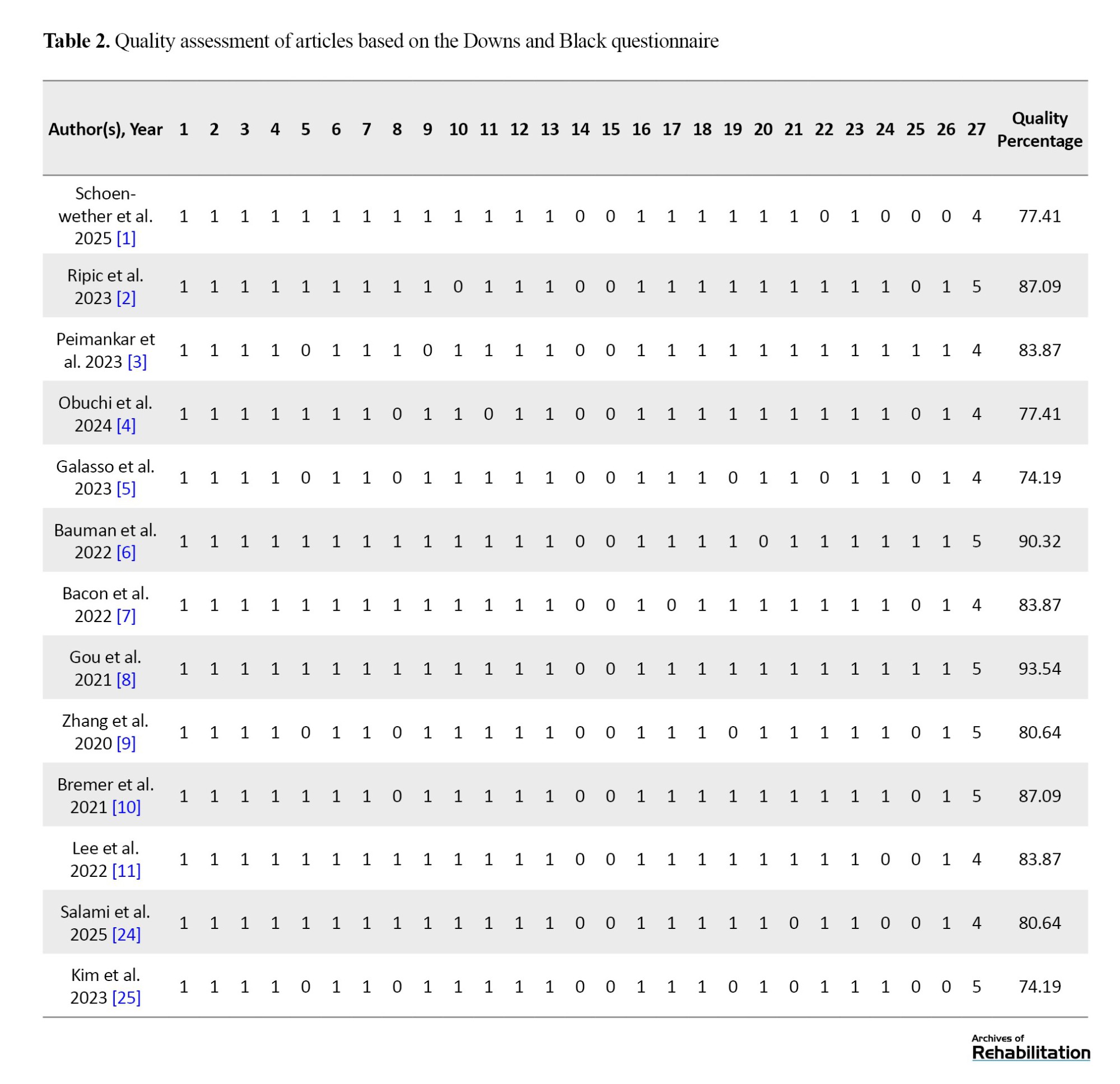
This questionnaire consists of 27 questions, each question being scored between 0 and 1; with the exception of question 5, which is scored 0, 1, and 2 points, such that the number “1” indicates approval and the number “0” indicates rejection or absence of that feature in the article. It should be noted that only in question number 27, a score in the range of 0 to 5 is assigned. A score of 5 or close to it indicates a high statistical power of the article, and on the contrary, lower scores indicate a weaker statistical power of the article in the same field. To prevent the inclusion of duplicate studies, all articles identified in the screening stages were carefully reviewed in terms of the names of the authors, year of publication, place of study, population studied, and study period. In cases where similarities were observed between the articles, their full texts were carefully compared to examine the possibility of using common data or population. Finally, it was determined that none of the articles included in the final review were duplicates and each study dealt with independent data or analyses.
Results
Based on the studies on the AI approach to walking, 13 articles were obtained according to the keywords and inclusion and exclusion criteria. In the field of using artificial intelligence during walking on healthy adults, 7 studies were obtained, and the number of participants in these studies was 1072 healthy individuals in general [1, 4-6, 9-11]. The studies that used artificial intelligence in adults with diseases were 6 studies, including patients with cerebral palsy [24], elderly people without dementia [4], people with Parkinson disease [2], people with walking problems [3], patients with sarcopenia [25], people with unilateral pain when walking [7], and people with motor disabilities. The statistical sample size of these studies was 3737 people. In these studies, 15.4% of the articles used a markerless motion recording system [1, 2], 53.8% of the articles used wearable sensors [3–9], 23.1% used ML [9–11], and 10% used a motion analysis system [25]. Studies using a markerless motion capture system concluded that the KinaTrax markerless motion capture system provided reliable spatiotemporal measurements within and between sessions, along with reliable kinematics in the sagittal and frontal planes; validation showed that intraclass correlation coefficients confirmed excellent agreement for all spatial parameters with the marker-based reference system, while temporal variables also showed good agreement, with the exception of oscillation time, where agreement was reported as moderate to almost perfect [1, 2].
Also, studies using wearable sensors concluded that the proposed AI models, especially the stack architecture, demonstrated a high ability to correctly classify gait episodes (mean sensitivity=0.961 and AUC=0.833), despite the challenges posed by the sensor placement on the back of patients with gait disorders. Furthermore, the reduction of the feature space helped improve the performance of most classifiers; also, the SVR models demonstrated excellent accuracy in parameter analysis with very low mean absolute errors (MAE%) (less than 1.2%) for key parameters such as speed and stride length. On the other hand, triboelectric sensors (TENG), with an accuracy of more than 95% in recognizing the identity of the person, assessing the motor disability and the movement status, were not only able to harvest the energy they needed from slow movements, but also enabled real-time analysis of the data, which, in general, comprehensively confirms the reliability and efficiency of the sensors for evaluating the walking parameters [3-9].
Studies on ML during walking also showed that approaches based on ML and deep learning showed high efficiency in assessing the movement status and predicting the walking path. In the field of body posture estimation and classification, a combined approach, including mobile phone video recording, cloud storage, and fusion deep learning achieved strong results; so that the combination of the ResNet101 model and the Naïve Bayes classifier achieved a sensitivity of 0.87 and a specificity of 0.84. Furthermore, in predicting walking path, LSTM models proved their superiority in virtual reality (VR) environments. The LSTM model based on position and orientation data provided the best short-term prediction (50 ms) with an error of 14.5 mm, while the integration of eye-tracking data into long-term predictions (2.5 s) with an error of 73.65 cm showed a significant advantage in this time interval [9-11]. A study using a motion capture system also concluded that by combining smart insole data and estimating body posture by an RF (random forest) ML model, studies show that important digital biomarkers can be extracted with high accuracy by analyzing variables such as hip and ankle motion, which has significant potential for the development of more advanced diagnostic and therapeutic interventions, especially for the management of diseases such as sarcopenia [25].
Discussion
The present study aimed to review artificial intelligence approaches in human gait biomechanics. The results showed that wearable sensors achieved a sensitivity of 0.961 and an area under the receiver operating characteristic curve of 0.833, and support vector regression (SVR) models showed an average absolute percentage error of less than 1.2% for parameters such as speed and stride length; TENG also provided an accuracy of over 95% in recognizing individuals. In this study, the findings of researchers who used a marker-free gait recording system during gait showed that the markerless gait recording system can provide spatiotemporal and kinematic measurements in the sagittal and frontal planes, and its correlation coefficients for spatial parameters showed relatively good agreement with the reference system. However, only the oscillation time parameter in measuring temporal variables showed moderate to almost perfect agreement with the reference system, indicating its limitations compared to reference systems [1, 2].
The advantages of these studies include the use of patients with gait disorders, but the sample sizes of some studies were limited. Studies on marker less motion recording systems have shown that this markerless motion tracking system provides reliable spatial measurements, but its direct clinical application still requires further validation. Studies using gait sensors have shown that wearable sensors, especially TENG, when combined with advanced ML methods, can analyze gait parameters, classify activities, and detect the movement status of individuals [3-9]. These systems have shown acceptable performance in laboratory conditions, but results may vary in real-world settings and with different patients. The main advantages include the accuracy of parameter estimation with relatively low errors, the self-sufficiency of energy of TENG, and the high performance in identifying and detecting movement disabilities.
Disadvantages and limitations include fluctuations in feature performance under difficult mounting conditions (such as on the patient’s back, which reached 0.643) and dependence on careful optimization of the ML model and feature selection, which requires tuning for each specific application scenario. Studies using ML have shown that combining video recording with a mobile phone camera, cloud storage, and deep learning fusion allow for body pose estimation and classification, and have achieved relatively successful results. The combination of a deep convolutional neural network model and a naive Bayes classifier has shown acceptable performance in hand classification; long-term memory models have also been suitable for predicting walking paths in a virtual reality environment. In short-term predictions (50 ms), the error was 14.5 mm, and in longer-term predictions (2.5 s), the error was reduced to 73.65 cm [9-11]. The advantages of this approach include the ease of data collection with a mobile phone camera and the use of cloud storage; however, the disadvantages include potential delays in data transfer and heavy processing of deep learning models and the dependence on image quality in different environments.
Limitations of the present study include the limited number of existing studies on the use of AI in gait analysis, the lack of examination of athletic and elderly populations, the focus of some studies on small samples or specific groups, and the lack of standardization in methods. Therefore, generalizations of the findings should be made with caution, and direct clinical application of these technologies still requires larger and more comprehensive studies. Future studies should be conducted with larger and more diverse clinical populations and evaluate the performance of AI algorithms in real-world settings. Also, the development of standardized frameworks for data collection and model interpretation could improve the clinical application of these technologies.
Conclusion
The findings of this review show that the use of artificial intelligence and ML methods plays an effective role in improving the accuracy, reliability, and interpretability of data obtained from wearable sensors and markerless motion recording systems in human gait analysis. The results indicate that these approaches can largely compensate for the inherent limitations of traditional sensors and methods and enable the extraction of reliable spatiotemporal and kinematic parameters. Despite promising performance in laboratory conditions and some clinical populations, the available evidence suggests that studies with larger sample sizes, standardized designs, and evaluation in real-world settings are necessary for the generalizability of the results and widespread clinical application.
Ethical Considerations
Compliance with ethical guidelines
All ethical principles were considered in this study. This is a systematic review study. No experiments were conducted on human or animal samples. Accordingly, there was no need for an ethical code.
Funding
This research did not receive any grant from funding agencies in the public, commercial, or non-profit sectors.
Authors' contributions
Conceptualization, methodology, writing the original draft: Leila Sabouri and Ebrahim Piri; Validation and visualization: Ebrahim Piri; Research and analysis: Leila Sabouri; Sources for writing the draft: Leila Sabouri and Ebrahim Piri; Review, editing and final approval: All authors.
Conflict of interest
The authors declared no conflict of interest.
References
Gait is one of the most fundamental human motor activities that plays a decisive role in neuromuscular health, balance, functional independence, and quality of life (QoL). Any change in gait patterns can indicate the occurrence or progression of motor disorders, increased risk of falls, and decreased ability to perform daily activities. Therefore, accurate and quantitative gait analysis is considered one of the key tools in assessing motor function, diagnosing neuroskeletal disorders, and monitoring the effectiveness of therapeutic and rehabilitation interventions [1-3]. Despite its clinical importance, traditional gait analysis methods are mainly limited to laboratory environments and rely on complex optical systems, expensive equipment, and time-consuming analyses that require specialized personnel to perform, limiting their generalizability and widespread use in real-world settings [4].
In recent years, significant advances in the field of artificial intelligence (AI) have had a significant impact on human movement analysis and sports biomechanics. The development of advanced computational methods and the reduction of data processing costs have made computer-based analyses more technically and economically feasible [5]. AI is increasingly being used in the fields of sport and movement sciences for performance analysis, movement pattern recognition, decision-making optimization, and prediction of movement behavior, and has revolutionized traditional approaches to evaluation and analysis. This technology has increased the accuracy of movement analysis, scoring, and prediction of athlete performance and even fan behavior, opening new horizons in understanding the complexity of human movement [6].
However, many existing studies have taken a largely descriptive approach, focusing more on demonstrating the general capabilities of AI than critically analyzing its role in specific problems such as human gait dynamics [7]. Along with the development of artificial intelligence, technological advances in small and lightweight wearable sensors, especially inertial measurement units, have enabled the recording of movement data over long periods of time and in natural conditions of daily life. These sensors have created new opportunities for researchers and clinicians to study gait outside of controlled laboratory environments and in real-world contexts. In contrast to classical gait indices, such as speed, stride length, and stride time, accelerometric and gyroscopic data allow the extraction of a wide range of advanced dynamic indices that describe features such as variability, regularity, synchronization, symmetry, smoothness of movement, postural stability, and predictability of gait [8, 9]. In this regard, recent studies have shown that combining data from wearable sensors with artificial intelligence algorithms can be used as a digital biomarker for screening and early diagnosis of neurological diseases. In particular, changes in gait patterns have been proposed as a non-invasive and cost-effective indicator for identifying diseases such as dementia. The development of these digital biomarkers is expected to follow the development of clinical biomarkers; however, challenges, such as clinical validation, interpretation of results, and reliability of models remain [7].
On the other hand, machine learning (ML) and deep learning algorithms have been recognized as powerful tools for analyzing complex human movement data. Convolutional neural networks in processing image and video motion data, and recurrent neural networks (Recurrent neural network [RNN] and long short‐term memory [LSTM]) in analyzing time-serial data, have enabled more accurate identification of gait patterns [10]. These models are able to extract subtle features such as step incoordination, postural imbalances, and body dynamic deviations from sensory or image data, thus playing an important role in the early diagnosis of neuroskeletal disorders [11]. In addition, the integration of multi-source data from wearable sensors and machine vision systems has enabled more comprehensive modeling of gait biomechanics, paving the way for continuous monitoring of gait status and prediction of the risk of falls or muscle injuries.
Despite the significant growth of studies on the application of AI in gait analysis, previous reviews have often examined algorithms or data types separately, with little attention paid to systematic and critical comparisons of different approaches, methodological limitations, challenges of clinical implementation, and the reliability of results. Therefore, the main research gap lies in the lack of a comprehensive and critical review that can comprehensively examine the application of AI algorithms in the biomechanical analysis of human gait and analyze the differences, advantages, and shortcomings of approaches based on wearable sensors and machine vision. The innovation of the present study lies in responding to this need; so that this study goes beyond a mere description of the technologies to critically evaluate the accuracy, reliability, and clinical applicability of AI-based methods and outlines future research directions and potential applications in sports medicine, rehabilitation, and movement sciences. Accordingly, the aim of the present study is a comprehensive and critical review of artificial intelligence approaches in the biomechanical analysis of human gait.
Materials and Methods
This study was a systematic review. A search for articles between 2020 and 2025 was conducted in the Web of Science citation databases, the Center for Scientific Information and Academic Jihad (SID), Magiran, Scopus, the Islamic World Science Citation Database, PubMed, and Google Scholar in both Persian and English. The search strategy included keywords related to artificial intelligence, machine learning, deep learning, walking, gait analysis, biomechanics, kinetics, and kinematics, and combined them with “AND” and “OR” operators. The inclusion criteria included experimental or applied studies using artificial intelligence in gait analysis, using real-world data from human populations (healthy individuals or neurological, muscular, or musculoskeletal patients), providing performance indicators of models (such as accuracy, sensitivity, specificity) or measurable biomechanical parameters, focusing on human gait with direct data recording or wearable/imaging sensors, and publication in Persian or English. Study designs included cross-sectional, algorithm validation, and clinical prediction/diagnostic studies. The exclusion criteria included theoretical studies or literature reviews without data, editorials, case reports, animal studies or simulations without real human data, use of classical statistical methods without AI, articles with incomplete or duplicate access, conference proceedings, and studies with low methodological quality. As a result, of the total 85 identified articles, 53 articles were excluded due to lack of focus on walking or duplication, 19 articles were excluded due to review or lack of use of AI, and finally 13 articles were selected for the final analysis (Table 1) (Figure 1).
This questionnaire consists of 27 questions, each question being scored between 0 and 1; with the exception of question 5, which is scored 0, 1, and 2 points, such that the number “1” indicates approval and the number “0” indicates rejection or absence of that feature in the article. It should be noted that only in question number 27, a score in the range of 0 to 5 is assigned. A score of 5 or close to it indicates a high statistical power of the article, and on the contrary, lower scores indicate a weaker statistical power of the article in the same field. To prevent the inclusion of duplicate studies, all articles identified in the screening stages were carefully reviewed in terms of the names of the authors, year of publication, place of study, population studied, and study period. In cases where similarities were observed between the articles, their full texts were carefully compared to examine the possibility of using common data or population. Finally, it was determined that none of the articles included in the final review were duplicates and each study dealt with independent data or analyses.
Results
Based on the studies on the AI approach to walking, 13 articles were obtained according to the keywords and inclusion and exclusion criteria. In the field of using artificial intelligence during walking on healthy adults, 7 studies were obtained, and the number of participants in these studies was 1072 healthy individuals in general [1, 4-6, 9-11]. The studies that used artificial intelligence in adults with diseases were 6 studies, including patients with cerebral palsy [24], elderly people without dementia [4], people with Parkinson disease [2], people with walking problems [3], patients with sarcopenia [25], people with unilateral pain when walking [7], and people with motor disabilities. The statistical sample size of these studies was 3737 people. In these studies, 15.4% of the articles used a markerless motion recording system [1, 2], 53.8% of the articles used wearable sensors [3–9], 23.1% used ML [9–11], and 10% used a motion analysis system [25]. Studies using a markerless motion capture system concluded that the KinaTrax markerless motion capture system provided reliable spatiotemporal measurements within and between sessions, along with reliable kinematics in the sagittal and frontal planes; validation showed that intraclass correlation coefficients confirmed excellent agreement for all spatial parameters with the marker-based reference system, while temporal variables also showed good agreement, with the exception of oscillation time, where agreement was reported as moderate to almost perfect [1, 2].
Also, studies using wearable sensors concluded that the proposed AI models, especially the stack architecture, demonstrated a high ability to correctly classify gait episodes (mean sensitivity=0.961 and AUC=0.833), despite the challenges posed by the sensor placement on the back of patients with gait disorders. Furthermore, the reduction of the feature space helped improve the performance of most classifiers; also, the SVR models demonstrated excellent accuracy in parameter analysis with very low mean absolute errors (MAE%) (less than 1.2%) for key parameters such as speed and stride length. On the other hand, triboelectric sensors (TENG), with an accuracy of more than 95% in recognizing the identity of the person, assessing the motor disability and the movement status, were not only able to harvest the energy they needed from slow movements, but also enabled real-time analysis of the data, which, in general, comprehensively confirms the reliability and efficiency of the sensors for evaluating the walking parameters [3-9].
Studies on ML during walking also showed that approaches based on ML and deep learning showed high efficiency in assessing the movement status and predicting the walking path. In the field of body posture estimation and classification, a combined approach, including mobile phone video recording, cloud storage, and fusion deep learning achieved strong results; so that the combination of the ResNet101 model and the Naïve Bayes classifier achieved a sensitivity of 0.87 and a specificity of 0.84. Furthermore, in predicting walking path, LSTM models proved their superiority in virtual reality (VR) environments. The LSTM model based on position and orientation data provided the best short-term prediction (50 ms) with an error of 14.5 mm, while the integration of eye-tracking data into long-term predictions (2.5 s) with an error of 73.65 cm showed a significant advantage in this time interval [9-11]. A study using a motion capture system also concluded that by combining smart insole data and estimating body posture by an RF (random forest) ML model, studies show that important digital biomarkers can be extracted with high accuracy by analyzing variables such as hip and ankle motion, which has significant potential for the development of more advanced diagnostic and therapeutic interventions, especially for the management of diseases such as sarcopenia [25].
Discussion
The present study aimed to review artificial intelligence approaches in human gait biomechanics. The results showed that wearable sensors achieved a sensitivity of 0.961 and an area under the receiver operating characteristic curve of 0.833, and support vector regression (SVR) models showed an average absolute percentage error of less than 1.2% for parameters such as speed and stride length; TENG also provided an accuracy of over 95% in recognizing individuals. In this study, the findings of researchers who used a marker-free gait recording system during gait showed that the markerless gait recording system can provide spatiotemporal and kinematic measurements in the sagittal and frontal planes, and its correlation coefficients for spatial parameters showed relatively good agreement with the reference system. However, only the oscillation time parameter in measuring temporal variables showed moderate to almost perfect agreement with the reference system, indicating its limitations compared to reference systems [1, 2].
The advantages of these studies include the use of patients with gait disorders, but the sample sizes of some studies were limited. Studies on marker less motion recording systems have shown that this markerless motion tracking system provides reliable spatial measurements, but its direct clinical application still requires further validation. Studies using gait sensors have shown that wearable sensors, especially TENG, when combined with advanced ML methods, can analyze gait parameters, classify activities, and detect the movement status of individuals [3-9]. These systems have shown acceptable performance in laboratory conditions, but results may vary in real-world settings and with different patients. The main advantages include the accuracy of parameter estimation with relatively low errors, the self-sufficiency of energy of TENG, and the high performance in identifying and detecting movement disabilities.
Disadvantages and limitations include fluctuations in feature performance under difficult mounting conditions (such as on the patient’s back, which reached 0.643) and dependence on careful optimization of the ML model and feature selection, which requires tuning for each specific application scenario. Studies using ML have shown that combining video recording with a mobile phone camera, cloud storage, and deep learning fusion allow for body pose estimation and classification, and have achieved relatively successful results. The combination of a deep convolutional neural network model and a naive Bayes classifier has shown acceptable performance in hand classification; long-term memory models have also been suitable for predicting walking paths in a virtual reality environment. In short-term predictions (50 ms), the error was 14.5 mm, and in longer-term predictions (2.5 s), the error was reduced to 73.65 cm [9-11]. The advantages of this approach include the ease of data collection with a mobile phone camera and the use of cloud storage; however, the disadvantages include potential delays in data transfer and heavy processing of deep learning models and the dependence on image quality in different environments.
Limitations of the present study include the limited number of existing studies on the use of AI in gait analysis, the lack of examination of athletic and elderly populations, the focus of some studies on small samples or specific groups, and the lack of standardization in methods. Therefore, generalizations of the findings should be made with caution, and direct clinical application of these technologies still requires larger and more comprehensive studies. Future studies should be conducted with larger and more diverse clinical populations and evaluate the performance of AI algorithms in real-world settings. Also, the development of standardized frameworks for data collection and model interpretation could improve the clinical application of these technologies.
Conclusion
The findings of this review show that the use of artificial intelligence and ML methods plays an effective role in improving the accuracy, reliability, and interpretability of data obtained from wearable sensors and markerless motion recording systems in human gait analysis. The results indicate that these approaches can largely compensate for the inherent limitations of traditional sensors and methods and enable the extraction of reliable spatiotemporal and kinematic parameters. Despite promising performance in laboratory conditions and some clinical populations, the available evidence suggests that studies with larger sample sizes, standardized designs, and evaluation in real-world settings are necessary for the generalizability of the results and widespread clinical application.
Ethical Considerations
Compliance with ethical guidelines
All ethical principles were considered in this study. This is a systematic review study. No experiments were conducted on human or animal samples. Accordingly, there was no need for an ethical code.
Funding
This research did not receive any grant from funding agencies in the public, commercial, or non-profit sectors.
Authors' contributions
Conceptualization, methodology, writing the original draft: Leila Sabouri and Ebrahim Piri; Validation and visualization: Ebrahim Piri; Research and analysis: Leila Sabouri; Sources for writing the draft: Leila Sabouri and Ebrahim Piri; Review, editing and final approval: All authors.
Conflict of interest
The authors declared no conflict of interest.
References
- Schoenwether B, Ripic Z, Nienhuis M, Signorile JF, Best TM, Eltoukhy M. Reliability of artificial intelligence-driven markerless motion capture in gait analyses of healthy adults. PloS One. 2025; 20(1):e0316119. [DOI:10.1371/journal.pone.0316119] [PMID] [PMCID]
- Ripic Z, Signorile JF, Best TM, Jacobs KA, Nienhuis M, Whitelaw C, et al. Validity of artificial intelligence-based markerless motion capture system for clinical gait analysis: Spatiotemporal results in healthy adults and adults with Parkinson’s disease. Journal of Biomechanics. 2023; 155:111645. [DOI:10.1016/j.jbiomech.2023.111645] [PMID]
- Peeimankar A, Winther TS, Ebrahimi A, Wiil UK. A machine learning approach for walking classification in elderly people with gait disorders. Sensors. 2023; 23(2):679. [DOI:10.3390/s23020679] [PMID] [PMCID]
- Obuchi SP, Kojima M, Suzuki H, Garbalosa JC, Imamura K, Ihara K, et al. Artificial intelligence detection of cognitive impairment in older adults during walking. Alzheimer’s & dementia. 2024; 16(3):e70012. [DOI:10.1002/dad2.70012] [PMID] [PMCID]
- Galasso S, Baptista R, Molinara M, Pizzocaro S, Calabrò RS, De Nunzio AM. Predicting physical activity levels from kinematic gait data using machine learning techniques. Engineering Applications of Artificial Intelligence. 2023; 123:106487. [DOI:10.1016/j.engappai.2023.106487]
- Bauman VV, Brandon SCE. Gait phase detection in walking and stairs using machine learning. Journal of Biomechanical Engineering. 2022; 144(12):121007. [PMID] [DOI:10.1115/1.4055504] [PMID]
- Bacon KL, Felson DT, Jafarzadeh SR, Kolachalama VB, Hausdorff JM, Gazit E, et al. Relation of gait measures with mild unilateral knee pain during walking using machine learning. Scientific Reports. 2022; 12(1):22200. [DOI:10.1038/s41598-022-21142-2] [PMID] [PMCID]
- Guo X, He T, Zhang Z, Luo A, Wang F, Ng EJ, et al. Artificial intelligence-enabled caregiving walking stick powered by ultra-low-frequency human motion. ACS Nano. 2021; 15(12):19054-69. [DOI:10.1021/acsnano.1c04464] [PMID]
- Zhang H, Guo Y, Zanotto D. Accurate ambulatory gait analysis in walking and running using machine learning models. IEEE Transactions on Neural Systems and Rehabilitation Engineering. 2019; 28(1):191-202. [DOI:10.1109/TNSRE.2019.2958679] [PMID]
- Bremer G, Stein N, Lappe M. Predicting future position from natural walking and eye movements with machine learning. paper presented: international conference on artificial intelligence and virtual reality (AIVR). 15 Nov 2021; Taichung, Taiwan. [DOI:10.1109/AIVR52153.2021.00013]
- Lee P, Chen TB, Liu CH, Wang CY, Huang GH, Lu NH. Identifying the posture of young adults in walking videos by using a fusion artificial intelligent method. Biosensors. 2022; 12(5):295. [DOI:10.3390/bios12050295] [PMID] [PMCID]
- Grosboillot N, Gallou-Guyot M, Lamontagne A, Bonnyaud C, Perrot A, Allali G, et al. Towards a comprehensive framework for complex walking tasks: Characterization, behavioral adaptations, and clinical implications in ageing and neurological populations. Ageing Research Reviews. 2024; 101:102458. [DOI:10.1016/j.arr.2024.102458] [PMID]
- Piri E, Barghamadi M, Farzizade R. [Comparison of the effects of immediate and long-term water and thera band exercises on loading rate, impulse, and free moment in people with pronate foot during walking: A clinical trial (Persian)]. Journal of Gorgan University of Medical Sciences. 2022; 24(4):10-19. [Link]
- Barghamadi M, Piri E, Behboodi Z, Allahverdidost H, Nosratihashi A, Imani F. [Effects of the immediate and long-term water and thera band exercises on ground reaction forces in people with pronate foot during walking (Persian)]. Journal of Paramedical Sciences & Rehabilitation. 2023: 12(1):7-19. [DOI:10.22038/jpsr.2023.68577.2440]
- Semaan MB, Wallard L, Ruiz V, Gillet C, Leteneur S, Simoneau-Buessinger E. Is treadmill walking biomechanically comparable to overground walking? A systematic review. Gait & posture. 2022; 92:249-57. [DOI:10.1016/j.gaitpost.2021.11.009] [PMID]
- Molavian R, Fatahi A, Abbasi H, Khezri D. Artificial intelligence approach in biomechanics of gait and sport: A systematic literature review. Journal of Biomedical Physics & Engineering. 2023; 13(5):383-402. [DOI:10.31661/jbpe.v0i0.2305-1621]
- Nadikattu RR. Implementation of new ways of artificial intelligence in sports. Journal of Xidian University. 2020; 14(5):5983-97. [DOI:10.37896/jxu14.5/649]
- Zhou H, Park C, Shahbazi M, York MK, Kunik ME, Naik AD, et al. Digital biomarkers of cognitive frailty: The value of detailed gait assessment beyond gait speed. Gerontology. 2022; 68(2):224-33. [DOI:10.1159/000515939] [PMID] [PMCID]
- Zhou Y, Romijnders R, Hansen C, Campen Jv, Maetzler W, Hortobágyi T, et al. The detection of age groups by dynamic gait outcomes using machine learning approaches. Scientific Reports. 2020; 10(1):4426. [DOI:10.1038/s41598-020-61423-2] [PMID] [PMCID]
- Kosse NM, Vuillerme N, Hortobágyi T, Lamoth CJ. Multiple gait parameters derived from iPod accelerometry predict age-related gait changes. Gait & posture. 2016; 46:112-7. [DOI:10.1016/j.gaitpost.2016.02.022] [PMID]
- Harris EJ, Khoo IH, Demircan E. A survey of human gait-based artificial intelligence applications. Frontiers in Robotics and AI. 2022; 8:749274. [DOI:10.3389/frobt.2021.749274] [PMID] [PMCID]
- Mondal S, Das S, Vrana VG. How to bell the cat? A theoretical review of generative artificial intelligence towards digital disruption in all walks of life. Technologies. 2023; 11(2):44. [DOI:10.3390/technologies11020044]
- Downs SH, Black N. The feasibility of creating a checklist for the assessment of the methodological quality both of randomised and non-randomised studies of health care interventions. Journal of Epidemiology & Community Health. 1998; 52(6):377-84. [DOI:10.1136/jech.52.6.377] [PMID] [PMCID]
- Salami F, Ozates ME, Arslan YZ, Wolf SI. Can we use lower extremity joint moments predicted by the artificial intelligence model during walking in patients with cerebral palsy in the clinical gait analysis? PloS one. 2025; 20(4):e0320793. [DOI:10.1371/journal.pone.0320793] [PMID] [PMCID]
- Kim S, Kim HS, Yoo JI. Sarcopenia classification model for musculoskeletal patients using smart insole and artificial intelligence gait analysis. Journal of Cachexia, Sarcopenia and Muscle. 2023; 14(6):2793-803. [DOI:10.1002/jcsm.13356] [PMID] [PMCID]
Type of Study: Systematic Review |
Subject:
Sport Pathology and Corrective Movements
Send email to the article author
| Rights and permissions | |
 |
This work is licensed under a Creative Commons Attribution-NonCommercial 4.0 International License. |

Copyright © The Author(s);
This is an open access article distributed under the terms of the Creative Commons Attribution-NonCommercial 4.0 (CC-By-NC 4.0), which permits use, distribution, and reproduction in any medium, provided the original work is properly cited and is not used for commercial purposes.
Contact Information
This is an open access article distributed under the terms of the Creative Commons Attribution-NonCommercial 4.0 (CC-By-NC 4.0), which permits use, distribution, and reproduction in any medium, provided the original work is properly cited and is not used for commercial purposes.
Contact Information