
Volume 27, Issue 1 (5-2026)
Arch Rehabil 2026, 27(1): 58-87 |
Back to browse issues page


Ethics code: IR.USWR.REC.1401.174


Download citation:
BibTeX | RIS | EndNote | Medlars | ProCite | Reference Manager | RefWorks
Send citation to:


BibTeX | RIS | EndNote | Medlars | ProCite | Reference Manager | RefWorks
Send citation to:
Norouzali S, Bahmani B, Azkhosh M, Abdi K, Khanjani M S, Najafizadeh K et al . Explanation of Psychological Consequences of Contact Between Organ Donor Families and Organ Recipients. Arch Rehabil 2026; 27 (1) :58-87
URL: http://rehabilitationj.uswr.ac.ir/article-1-3653-en.html
URL: http://rehabilitationj.uswr.ac.ir/article-1-3653-en.html
Shadi Norouzali1  , Bahman Bahmani *2 , Manouchehr Azkhosh1 , Kianoush Abdi3 , Mohammad Saeed Khanjani1 , Katayoun Najafizadeh4 , Amir Abbas Taheri1
, Bahman Bahmani *2 , Manouchehr Azkhosh1 , Kianoush Abdi3 , Mohammad Saeed Khanjani1 , Katayoun Najafizadeh4 , Amir Abbas Taheri1
1- Department of Counseling, Faculty of Behavioral Sciences, University of Social Welfare and Rehabilitation Sciences, Tehran, Iran.
2- Department of Counseling, Faculty of Behavioral Sciences, University of Social Welfare and Rehabilitation Sciences, Tehran, Iran. & Social Welfare Management Research Center, Social Health Research Institute, University of Social Welfare and Rehabilitation Sciences, Tehran, Iran. ,ba.bahmani@uswr.ac.ir
3- Department of Rehabilitation Management, Faculty of Rehabilitation Sciences, University of Social Welfare and Rehabilitation Sciences, Tehran, Iran. & Psychosis Research Center, University of Social Welfare and Rehabilitation Sciences, Tehran, Iran.
4- Iranian Research Center of Organ Donation, Tehran, Iran. & Department of Medicine, Taleghani Hospital, Shahid Beheshti University of Medical Sciences, Tehran, Iran.
2- Department of Counseling, Faculty of Behavioral Sciences, University of Social Welfare and Rehabilitation Sciences, Tehran, Iran. & Social Welfare Management Research Center, Social Health Research Institute, University of Social Welfare and Rehabilitation Sciences, Tehran, Iran. ,
3- Department of Rehabilitation Management, Faculty of Rehabilitation Sciences, University of Social Welfare and Rehabilitation Sciences, Tehran, Iran. & Psychosis Research Center, University of Social Welfare and Rehabilitation Sciences, Tehran, Iran.
4- Iranian Research Center of Organ Donation, Tehran, Iran. & Department of Medicine, Taleghani Hospital, Shahid Beheshti University of Medical Sciences, Tehran, Iran.
Full-Text [PDF 2479 kb]
(671 Downloads)
| Abstract (HTML) (2390 Views)
Full-Text: (242 Views)
Introduction
Organ transplantation is one of the medical treatment methods that are performed to save the life or improve the physical condition of the patient. During this procedure, a healthy organ is removed from the body of a living person, a person with brain death or cardiac death, and transplanted into the body of a sick person who has organ failure [1-6]. Some organs or tissues such as the kidney, part of the liver, skin, and bone marrow can also be received from a living donor. Others such as cartilage and tendons can be taken from the body of a person with cardiac death. However, the most important source of organ supply for transplantation is brain-death organs [4, 7-9].
In cases where this treatment is performed following brain death or cardiac death, organ donation should be done with the consent of the family of the brain-dead person [3-5]. Reports have shown that After organ donation, the donor’s family or recipient may have a desire to contact and even remain in contact with each other. Although various forms of contact may include face-to-face meetings, telephone communication, online interactions, message transmission through an intermediary, and correspondence via letters or email, in the present study the term “contact” is operationally defined as direct, in-person face-to-face meetings.
This treatment is being performed in many countries around the world [3-6], including Iran, and the demand for it is rapidly increasing. This contact has different dimensions and can provoke different and sometimes harmful reactions on both sides [6-13]. World Health Organization( WHO), In its “Guiding principles on human cell, tissue, and organ transplantation,” has stated that organizations must ensure that the personal identity and privacy of donors and recipients are always protected [14, 15]. Consistent with ongoing societal transformations and shifts in priorities, expectations, and contextual demands, numerous organ donation–related teams and institutions emphasize that organizations must remain responsive to societal change and actively adapt their practices in order to align with, and where feasible, meet the evolving needs and preferences of the communities they serve [16].
In most parts of the world, the process of contact between donor families and organ recipients remains unclear and inadequately regulated, and organ donation teams differ in their views regarding whether such contact should occur and how it should be conducted [10-15]. In general, most countries have banned the contact of donor and recipient families [16]. However, in practice, some families manage to find each other and establish contact [13-15, 17, 18]. In Iran, although some transplant teams, and Iranian Society of Organ Donation, have reported experiencing pressures related to repeated requests for contact from donor and recipient families, available information from organ donation associations and two relevant studies suggests that clear and formally implemented regulatory guidelines in this area have not yet been established by the responsible authorities [14, 18], Nevertheless, each relevant organization, has put in place operational procedures to prevent identification and contact, which sometimes differ considerably across institutions. Some countries have made such meetings possible by implementing specific safeguards [2, 19]. In Iran, field evidence—including content from expert meetings with members of the Iranian Society of Organ Donation, transplant teams, and hospital transplant staff—indicates that, despite recommendations discouraging meetings between donor families and organ recipients, such contact occasionally occurs. Furthermore, in many of these meetings, safeguards—such as maintaining confidentiality, limiting the number and depth of interactions, and supervising the conduct of meetings—are often not observed [14, 18]. These contacts, may increase the risk of traumatic psychological consequences, and ethical challenges for both parties, highlighting the need for clearer guidelines and structured support to protect the well-being of donor families and recipients while addressing the complex ethical considerations inherent in these encounters.
To date, only two studies on «meetings between donor families and organ recipients» have been published in Iran. The first examined the experiences of families of brain-dead donors [14], while the second investigated the psychological experiences of organ recipients following organ transplantation [18]. However, in addition to certain Methodological flaws in these studies, no scientific report has yet addressed the psychological consequences of contact between donor families and organ recipients. Therefore, the present study was conducted with the aim of explanation of psychological consequences of contact between organ donor families and organ recipients.
Materials and Methods
This study is a qualitative study of conventional content analysis that aims to explain the psychological consequences of contact between organ donor families and organ recipients. The semi-structured interview technique was used to collect data. In semi-structured interviews, although the researcher pre-prepares the topics that are necessary to cover the information, not all questions are pre-prepared, and the interview process relies largely on questions that arise spontaneously in the interaction between the interviewer and the interviewee [20].
First, the interview guide was designed. The interview guide consisted of semi-structured questions, inclusion criteria, exclusion Criteria, duration of the interview, how to contact, and obtain informed consent, according to previous studies and the experience of members of The Iranian Society of Organ Donation, and consultation with supervisors and consultants.
Inclusion criteria:
- Family members of deceased organ donors who had engaged in direct contact with the organ recipient (s), including parents (mother and father), siblings (sisters and brothers), and spouses.
- Organ recipients who had engaged in direct contact with the donor’s family.
- Members of the Iranian Society of Organ Donation, or transplant teams who possessed relevant professional experience related to the research topic through their interactions with donor families and organ recipients
Exclusion criteria:
- Individuals who, at the time of the interview, were unable to participate in meaningful verbal communication or sustained interpersonal engagement for any reason.
- Individuals with documented psychiatric conditions that were judged to interfere with their capacity to provide reliable and credible interview data, based on available psychiatric records.
- Individuals exhibiting acute, transient, or reactive experiences of delusions or hallucinations during the interview process, which could undermine the trustworthiness of the interview data.
- Individuals for whom fewer than six months had elapsed since the death of their loved one, as they were considered likely to be in an early and emotionally intense phase of bereavement that could affect interview participation and data credibility.
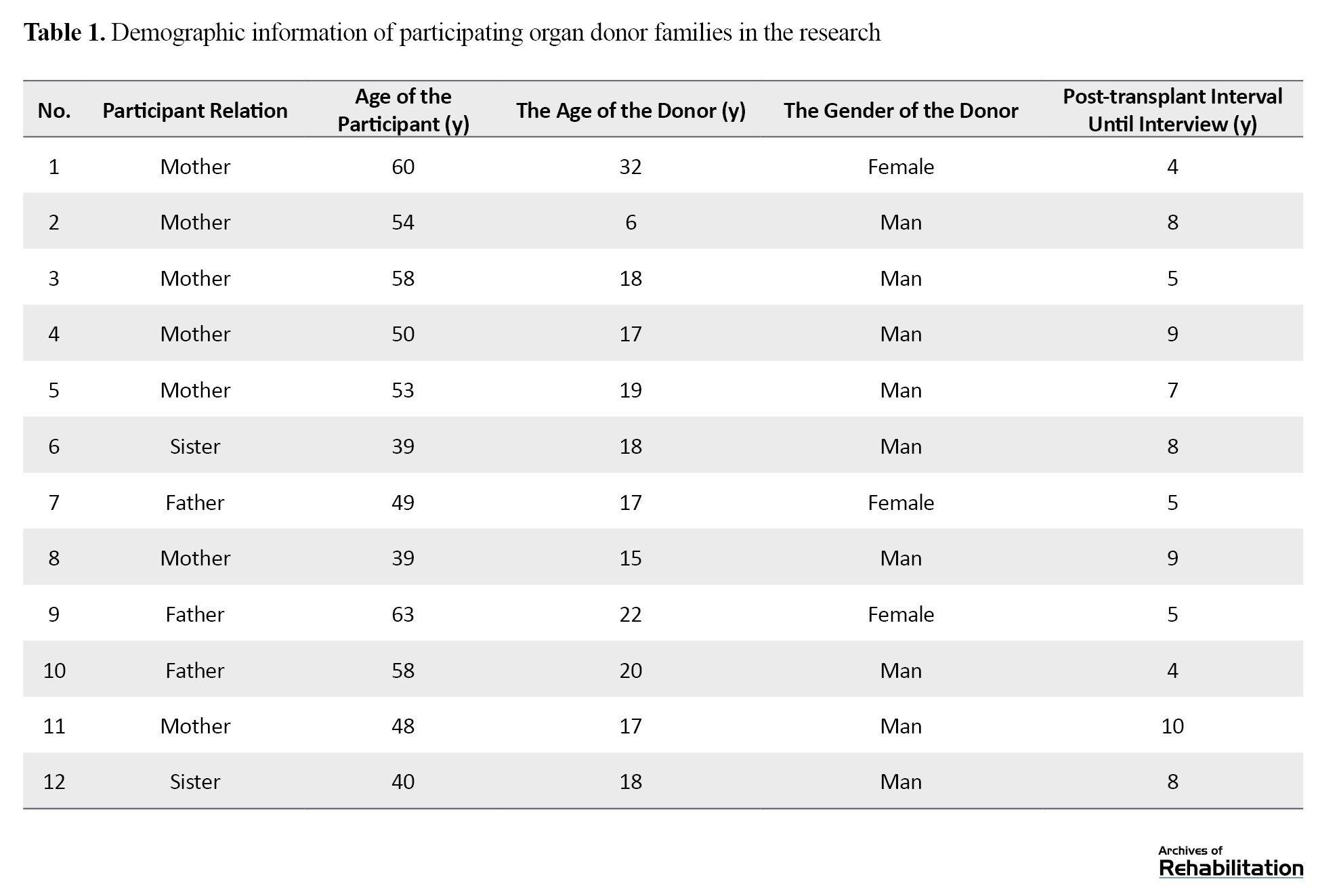
Sample characteristics: A total of 23 interviews were conducted. Twelve participants were members of donor families, including seven mothers, three fathers, and two sisters. The mean age of donor family participants was 50.91 years. The mean age of the deceased donors was 18.25 years, and the mean interval between transplantation and the first interview was 6.83 years (Table 1).
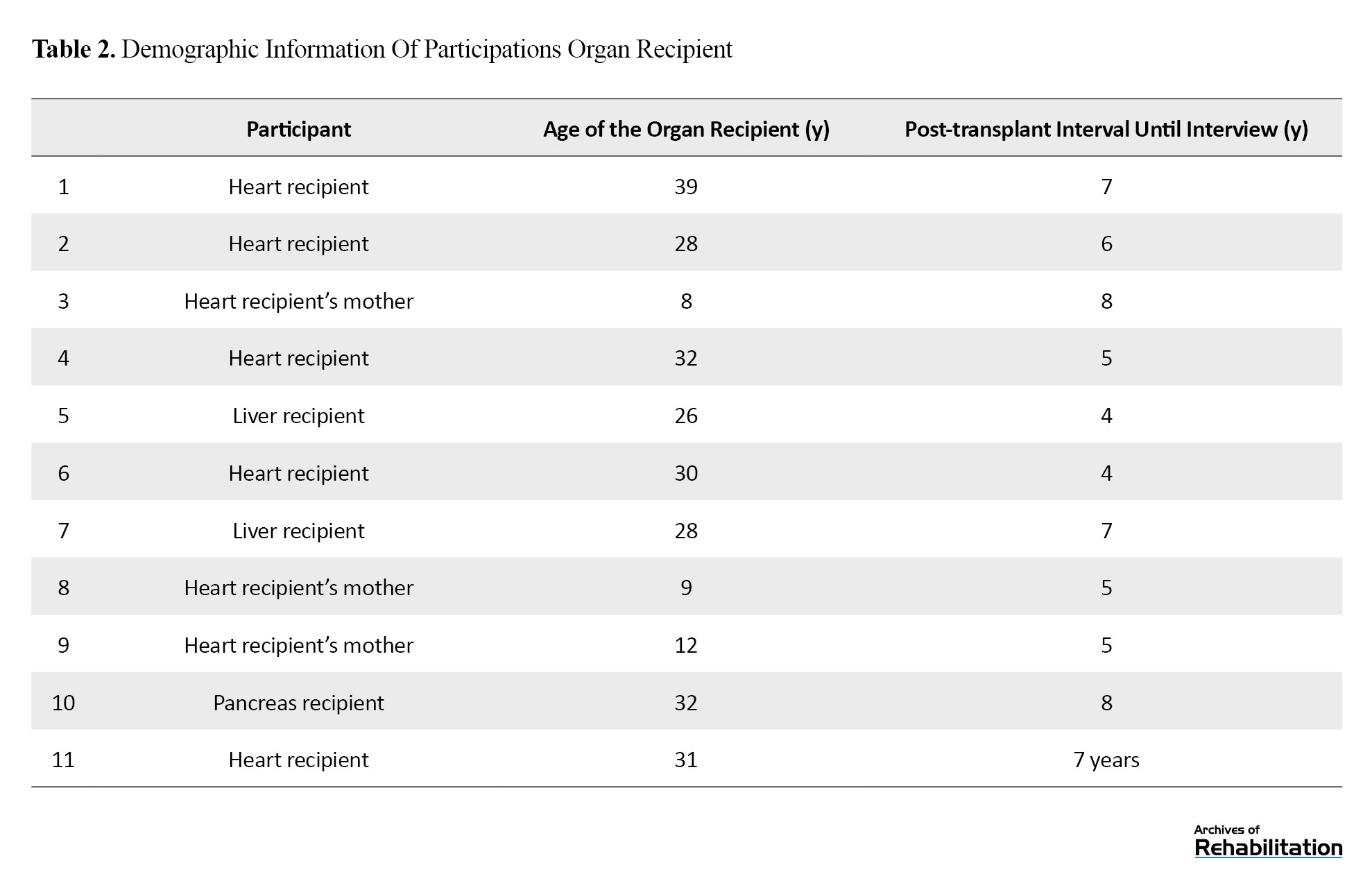
Eleven organ recipients participated in the study, including eight heart transplant recipients, two liver transplant recipients, and one pancreas transplant recipient. The mean time elapsed between transplantation and the first interview among organ recipients was six years (Table 2).
Then, interviews were conducted using the interview guide. To select the participants, a purposive sampling method with maximum variation was used to reach theoretical saturation. Participants were selected from organ donor families and organ recipients who had engaged in at least one post-donation meeting and whose demographic and contact information were recorded in the registry of the Iranian Society of Organ Donation. Individuals who had not passed away for more than 6 months did not enter the study due to controlling the effects of the very exciting stages of early death of their relatives. In the initial calls to obtain consent to participate in the interview, 2 organ donor families and 3 of the organ recipients did not want to cooperate for an interview, and 1 of the organ recipients had passed away. Finally, 23 interviews including 12 interviews with the organ donor families and 11 interviews with the recipient and their family were conducted until the theoretical saturation stage. (In one case, where the organ recipient was a child, the psychological consequences experienced by the recipient’s parents were examined).
Prior to study initiation, the purpose and procedures of the research, participants’ rights, data confidentiality, and the right to withdraw from the study at any time were clearly explained to all participants, and written informed consent was obtained. All participant information was kept confidential and anonymized, and the data were used solely for the purposes of the present study.
After creating an appropriate space for conversation, interviews began using guided interview questions. The method for conducting these interviews in this research was such that initial questions were designed as interview guides, allowing for open-ended and interpretive responses, which guided the continuation of the interview process.
The interviews were conducted individually in a calm environment and at an appropriate time and place where participants felt comfortable. The interviews were conducted in cases where it was feasible at the Iranian Organ Donation Society, and in situations where participants were present in other cities and face-to-face interviews were not possible, interviews were conducted over the phone. The average time spent on each interview ranged from 30 to 60 minutes. Interviews began with general open-ended questions, allowing participants to describe their experiences and perceptions regarding their current conditions.
Examples of the questions asked of the participants included the following:
● Sample interview questions for donor families who met the organ recipient:
- How did you feel following your meeting with the organ recipient?
- Are you satisfied with having had this meeting, or do you regret it? Please describe the reasons for your satisfaction or regret.
- Did the meeting result in any changes in your emotions or in your personal and family life? Please describe in detail.
● Sample interview questions for organ recipient who met the donor families:
- How did you feel following your meeting with the donor families?
- After your initial meeting with the donor family, would you have chosen to maintain further contact with them?
- Would you advise other families in similar circumstances to have such a meeting? Please explain your reasoning.
Interviews are recorded in audio format with the participants’ consentand, and then transcribed word by word by researchers. The researcher cross-references the transcribed texts with the recorded audio. After transcribing the interviewee’s text, the entire text is read multiple times. Repeated readings of the entire text lead to a general understanding. In the next step, the text is read word by word to extract analysis units from the words of the participants and the researcher’s interpretations in the form of initial coding or open codes. Then, the analysis units are labeled. Afterward, the interview texts and the extracted codes are reviewed by the research team’s experts. Through repeated review of the initial extracted codes, similar interviews are integrated and categorized into specific classes. Subsequently, the created categories are examined and compared, and those categories that are similar in themes of content are further classified into specific subcategories, thus revealing the main categories.
Interviews analysis method
In this study, qualitative data were analyzed using Graneheim’s conventional (inductive) content analysis approach. This approach consists of three stages: preparation, organization, and reporting [20]. In the preparation stage, the analysis unit, which could be a word, a phrase, or a sentence, select. The organization stage includes three steps: open coding, categorization, and Abstraction. During the organization, predefined categories and classes are not used; instead, the researcher immerses themselves in the data, aiming to develop new perspectives and create novel categories based on the collected data. For these new groupings, new names are chosen that encapsulate the themes of each group. The summarization stage involves formulating the research title through category generation. Each category is labeled using specific content-related terms. Subcategories with similarities are grouped, and similar categories are further organized into primary classifications. The final step in the content analysis approach is reporting the findings. In this stage, examples are provided for each code and category [20-22].
It should be noted that data analysis in this study was conducted concurrently with data collection. During the preparation stages, the transcripts were read word by word to identify units of analysis, which included participants’ words, sentences, expressions, and the researcher’s interpretations. In the organizing stages, open coding was first performed, whereby the units of analysis were labeled and assigned initial or open codes. The process of code extraction and labeling was carried out continuously. Following completion of the coding process, during the categorization stages, the codes were reviewed several times and grouped into specific categories based on similarities and differences in themes. In the summarization step, the initial codes were repeatedly reviewed, merged, or refined to form clearly defined categories. New labels were then assigned to these categories to reflect their underlying themes. Subsequent interviews were analyzed using the same procedure. Finally, in the reporting stage, illustrative examples were provided for each code and category.
To strengthen the data, the data were validated based on the four criteria of Guba and Lincoln, including credibility, dependability, transferability, and confirmability [20, 21].
To enhance the credibility of the study, the following four strategies were employed:
- Triangulation: multiple sources, methods, and researchers were utilized.
- Member checking: following the analysis of each interview, the findings were shared with the participants to review and provide feedback on the accuracy of the interpretations.
- Prolonged engagement: the researcher spent sufficient time in the research field to gain an in-depth understanding of the socio-cultural context of the phenomenon and to observe interactions and the underlying meanings behind behaviors.
- Continuous observation: the researcher maintained a focused and ongoing attention to the critical aspects of the phenomenon, disregarding irrelevant data and concentrating on the important features of the phenomenon.
To enhance dependability, the themes were reviewed by other members of the research team and by faculty familiar with qualitative approaches. The researchers practiced bracketing of their preconceptions during theme extraction from participants’ descriptions, thereby strengthening the confirmability of the study and ensuring that the research process was logical, traceable, and replicable.
To strengthen transferability, the researchers provided detailed descriptions of the study procedures, including sampling, data collection, and analysis, as well as comparisons of the data. Participants were selected to achieve maximum variation to ensure that the findings could be applicable to similar contexts, individuals, or settings.
To enhance confirmability, the researcher documented personal experiences, feelings, and potential biases, explaining how efforts were made to minimize their influence. Coding was reviewed, themes were examined, and the analytic process was checked to ensure that the findings emerged from the data rather than from preconceptions or researcher bias.
Results
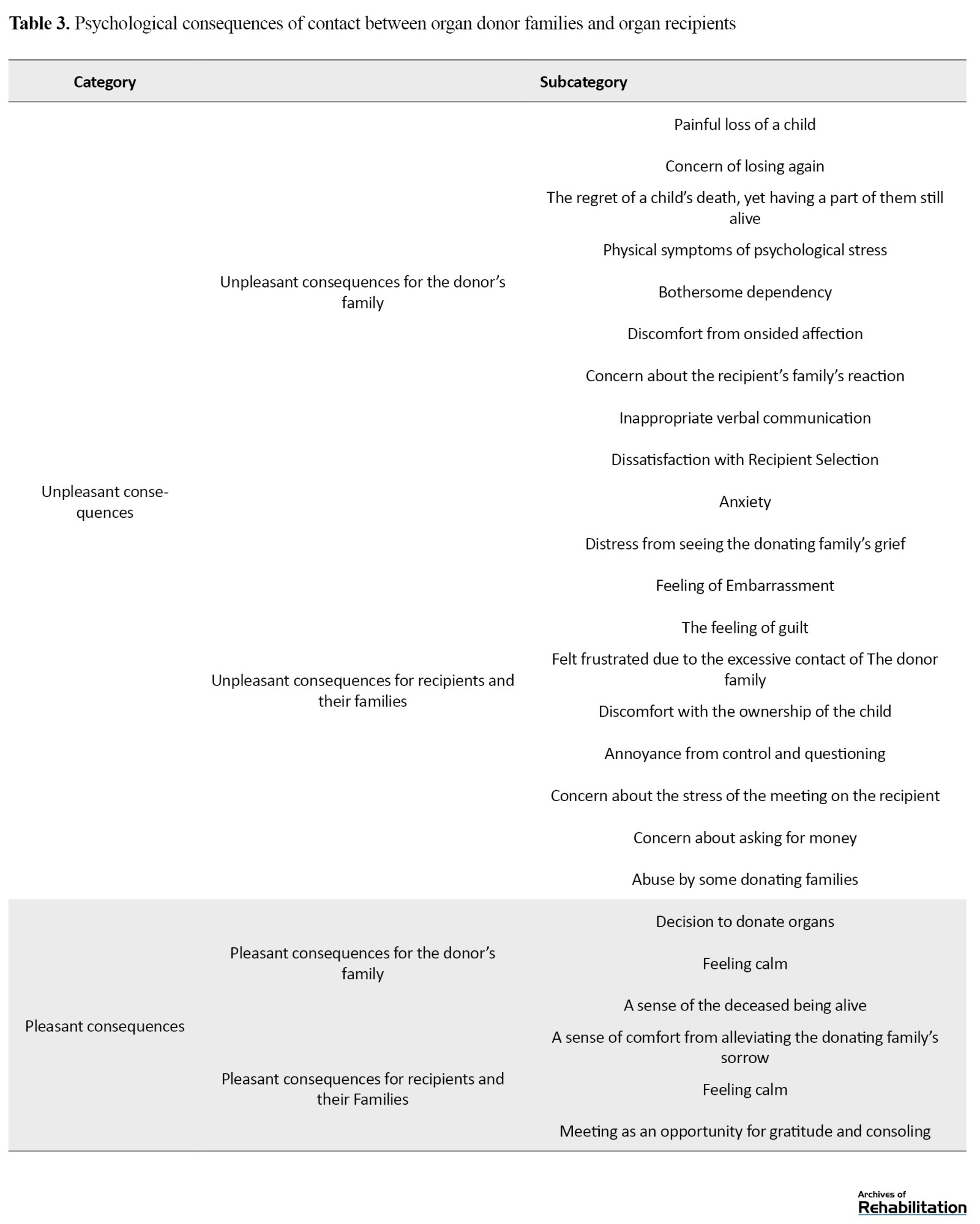
Out of a total of 23 interviews conducted, 237 codes were extracted.The findings indicated that psychological outcomes included two categories: “unpleasant consequences” and “pleasant consequences” (Table 3).
In the quotations presented, “D” refers to a “donor family”, and “R” refers to an “organ recipient”.
Unpleasant consequences
This main category consists of two subcategories:
Unpleasant consequences for the organ donor families
Some organ donor families had experienced unpleasant consequences due to the contact, including the following:
Painful loss of a child remains fresh: Two participants mentioned that meetings trigger painful reminders and fresh grief over losing a child, and this is heart-wrenching.
“Having my child grief fresh is painful. Seeing them reminds me my daughter” (Participant [P] D3)
Concern of losing again: A frequent anxiety seen in many organ donor families was the fear of the recipient’s loss and reliving their grief.
“When recipients become ill, I unconsciously become anxious.” (P D3)
“Every time I heard that one of them was unwell or hospitalized it would trigger my distress all over again.”(P D2)
The regret of a child’s death, yet having a part of them still alive: Some participants expressed discomfort with the difficulty of accepting the child’s non-survival, despite having a living part of their body. One participant stated:
“When I had felt that a piece of my daughter’s body was inside someone else, maybe initially I didn’t want to accept it.” (P D1)
Physical symptoms of psychological stress: Two participants reported experiencing physiological symptoms and feeling unwell during their initial encounters. One described an elevated heart rate, while another mentioned bodily tremors and overall discomfort.
“When I saw her, I felt bad. It was as if my heart rate had reached 1000,”(P D9)
Bothersome dependency: Some participants reported feeling dependent to the recipient after having interactions with them. For instance, in cases where the recipient or their family did not reach out for a few days, they would take the initiative to make contact themselves and express a desire to meet with the recipient on a regular basis.
“For a while, when I didn’t hear from them, I would call to check on their well-being. I had become strangely dependent,” (P D3)
‹Honestly, during the first two years, I was strangely dependent to them. I would call them regularly” (P D4)
Discomfort from onsided affection: One of the donating mothers expressed that after a while, I felt that my affection for the recipient was one-sided, and I was the only one who loved them so much. But the recipient didn’t have the same feelings for me. It’s worth noting that at the time of our first meeting, the recipient was 5 years old.
“But she wasn’t my child. And I felt that this affection was more from my side. And it was a bit difficult. I didn’t know if the feeling I had for them, they also had for me” (P D8)
Concern about the recipient’s family’s reaction: One participant recalled being anxious at the beginning of their meeting, fearing that the recipient’s family might become upset and respond negatively towards them or behaving badly towards them.
“I was worried that they might feel uncomfortable during the meeting and treat us badly.”(P D2)
Inappropriate verbal communication: Some donating families reported feeling uncomfortable with the recipient’s family’s verbal communication, citing instances of harsh tone, hurtful language, and inappropriate conversation after meeting requests.
“ One recipient’s daughter told me, ‘My mom can’t talk about it.’ The daughter’s tone was somewhat abrasive, and her words were unsettling.” (P D10)
Dissatisfaction with recipient selection: A number of donating families, after learning the recipient’s identity, were unhappy with the recipient chosen by the organ donation association. One donor, for instance, felt that the recipient’s old age and pre-existing respiratory problems made them a poor match, and wished that the organ had been given to a younger, healthier individual instead. Another donating mother was unhappy that her daughter’s heart was given to a man.
“ At first, both I and those around me would ask, ‘Why did they have to give my young daughter’s heart to someone who had sick lungs and was older, and then they died? I wish they had given it to a younger and healthier person.” (P D12)
Unpleasant consequences for recipients and their families:
Contact had unpleasant consequences for some organ recipient or their families, including the following:
Anxiety: The majority of recipients and some of their families reported feeling significant anxiety both before and during the meeting. This anxiety was largely attributed to uncertainty about how to communicate with the donating family and how to conduct themselves in the encounter.
“I had anxiety, because I didn’t know what to say.” (P R3)
Distress from seeing the donating family’s grief: many recipients confessed that observing the donating family’s grief was a distressing experience for them.
“I had a strong desire to meet them and express my gratitude, but the encounter ended up being overwhelming. Particularly when I visited their home and saw the photo of their son on the wall, I felt a deep sense of sorrow. Seeing that photo was like a crushing weight, as if the ceiling had come crashing down on me.” (P R4)
Feeling of embarrassment: Many recipients experienced feelings of embarrassment because they were alive with the organ of someone who had passed away, while the donor’s family had lost a loved one.
“I couldn’t help but think that they might have wished their own son was still alive, with his heart beating in his own chest, not in mine. This thought filled me with a sense of shame.” (P R5)
The feeling of guilt: A large number of recipients, after meeting with the donating family, felt guilty about the family’s grief and feeling as though they were alive at the expense of the donor’s loved one. They mentioned that they felt ashamed of being alive instead of the donor. Even one of the cases mentioned that after seeing the donating family, they wished to die instead of the donor. “When I saw that a family had lost their young son, I felt like I was alive instead of him. And this was hard. I felt guilty. (P R4)
Felt frustrated due to the excessive contact of the donor family: One of the recipient’s families mentioned that they felt annoyed because the donating family would contact them frequently under various pretexts to meet. In the early stages, they would receive two or three calls a week from the donating family, eager to meet with the recipient. One donating mother even acknowledged that she had been overly intrusive, constantly seeking to visit the recipient, which she realized had caused undue stress and annoyance to the recipient’s family.
“We would arrange meetings every week or two, and I would see them. And this would become a source of frustration for them.” (P D2)
Discomfort with the ownership of the child: One participant shared concerns about the recipient’s family feeling uneasy due to the donating family’s perceived sense of ownership over the child. The recipient, a 6-year-old boy, had received a heart transplant. The child’s aunt had conveyed this concern to the donating mother, who also mentioned that initially, she had allowed the child to call her “mother”, and she felt that this sense of ownership was disturbing to them.
“The aunt of the heart recipient mentioned multiple times that they felt I was acting like the boy was my own son, and this was unsettling for the mother.” (P D2)
Annoyance from control and questioning: One participant expressed frustration with the donating mother’s frequent calls and advice on how to maintain their health, often accompanied by reminders that the heart was “entrusted” to them. This controlling behavior would escalate into annoyance when they were ill.
“I’m meticulous about my health, but sometimes things are beyond my control. If I catch a cold, it’s not my fault. I felt like I was being held accountable for something that wasn’t even within my power to prevent.” (P R2)
“Understandably, she’s a mother who’s been through a lot. I acknowledge the difficulty of losing a child and the significance of her donation. However, I resented the sense of dependency and control that came with it. It felt like I didn’t have autonomy over my own heart, which was unsettling.” (P R3)
Concern about the stress of the meeting on the recipient: Some heart recipient families expressed concerns that the initial meetings could be a source of stress for the recipient, potentially compromising their health or even leading to rejection of the transplanted heart.
“I was initially apprehensive that the meeting might trigger stress for my son, which could have a detrimental effect on his health and wellbeing.” (P R3)
Concern about asking for money: Some of the recipient families mentioned in the interviews that they were initially worried that the donating family would ask for money or other favors. Some donating families also mentioned this issue, acknowledging the recipient’s concern about being asked for financial compensation.
“At first, they thought I was contacting them to ask for money” (P D2)
Abuse by some donating families: Some recipients and their families expressed discomfort with certain abuses, such as being asked for money by some donating families, interference in the recipient’s life, frequent requests for meetings, and being taken advantage of due to the organ donation.
“Some donating families, who were not well-off financially, would take money from the recipients” (P D12)
2- Pleasant consequences
This main category consists of two subcategories as well as the previous category:
Pleasant consequences for the donor’s family
Decision to donate organs:
Following the initial contact, some organ donor families reported a shift in their perspective on organ donation, which motivated them to take concrete steps. They obtained a donor card for themselves and encouraged their family members to give their consent for organ donation in the event of brain death.
“After connecting with the recipient, I personally went on to obtain a donor card just three days later.” (P D7)
Feeling calm: Most organ donor families mentioned feeling a sense of peace after donating, which was due to various reasons (for example feeling peace from hearing the heart beating, feeling that their child’s memory was alive in the world, reviving the memory of their child through contact, imagining their child was alive when hearing the heart beating, not feeling lonely when seeing the recipient)
“When I see the recipient, I feel that a part of my daughter is still in this world, and this brings me peace.” (P D7)
A sense of the deceased being alive: Many recipients felt a sense of satisfaction and comfort when they saw that their meeting was helping to ease the grief of the donating family, who had lost a loved one.
“The sound of his heart beating is like as if my son is still with me.” (P D2)
“Ever since I met him, I’ve felt a sense of my son’s presence, as if he’s still alive and vibrant” (P D11)
b. Pleasant consequences for recipients and their families
A sense of comfort from alleviating the donating family’s sorrow: Many recipients felt a sense of satisfaction and comfort when they saw that their meeting was helping to ease the grief of the donating family, who had lost a loved one.
“I felt a sense of relief during the meeting, as I could see that her mother’s sorrow was gradually lifting.” (P R5)
Feeling calm: A significant number of recipients reported feeling calm when seeing the organ donor families.
«I felt calm and happiness during the meeting. I found peace.” (P R7)
Meeting as an opportunity for gratitude and consoling: Many recipients and their families mentioned that meeting the donor’s family provided an opportunity to express appreciation and gratitude. This positive feeling was present for them.
« I felt a sense of satisfaction during the meeting because I was able to express my gratitude to them.” (P R1)
“I felt that I could finally thank them, express my appreciation, and offer some comfort. And that was a wonderful feeling.” (P R8)
Based on the findings reported, the psychological consequences of contact can be divided into two main categories: pleasant consequences and unpleasant consequences. However, some interviewees mentioned that they experienced both pleasant and unpleasant consequences simultaneously, in a dualistic manner. For example, they reported feeling both sadness and happiness during the meeting, or experiencing both good and bad aspects of the meeting, or feeling annoyed by the contact while also wanting to contact the donating family.
“On the one hand, the donating mother’s controlling behavior annoys me, but on the other hand, when we don’t have contact for a while, I feel like I have a duty to call her.” (P R5)
“I was both happy and sad on the day of the meeting.” (P R3)
Discussion
The aim of this study was to explain the psychological consequences of contact between donor families and organ recipients, using a qualitative design with a conventional content analysis approach based on semi-structured interviews. The findings led to the identification of two main themes: positive consequences and negative consequences. Previous studies indicated that organ donor families may desire to establish a connection the recipient and be informed about the fate of the donated organs [10, 11, 14, 17]. Recipients, too, might sometimes wish to contact with the brain-dead donor’s family and express gratitude for their sacrifice and generosity [11, 14, 16, 18, 19]. However, these studies do not present a unified perspective regarding the permissibility of such contact. A review of studies from different countries reveals considerable variability in perspectives regarding meetings between donor families and organ recipients. On the one hand, some transplant team professionals advise against meetings between donor families and organ recipients, emphasizing concerns about potential psychological harm, emotional burden, or misuse. On the other hand, transplant teams frequently encounter requests from donor families and transplant recipients seeking to meet and establish contact with one another [4]. Consequently, donation teams are faced with the challenge of determining whether contact between donor families and organ recipients facilitates psychological adjustment and coping processes or, conversely, impedes them [10, 11, 23].
The findings of the present study indicate that contact between organ donor families and organ recipients entails diverse psychological consequences. The analysis led to the identification of two overarching themes: pleasant consequences and unpleasant consequences.
While the results corroborate findings from previous studies, they also yield novel insights into the psychological outcomes of such interactions. Within the category of pleasant consequences for donor families, “The decision to donate” emerged as a salient subtheme. Furthermore, unpleasant consequences for donor families included “bothersome dependency”, “discomfort from onsided affection”, and “dissatisfaction with recipient selection”.
Additionally, an unpleasant consequence identified among recipients and their families was “Felt frustrated due to the excessive contact of The donor family”, a finding that has not been previously reported in the existing literature.
At the same time, the findings of this study indicated that the unpleasant consequences of contact for donor families and organ recipients could be broadly classified into two categories:
1. Unstable and non-harmful consequences: These include experiences of anxiety during the encounter, as well as signs of sympathetic system activation such as increased heart rate, shortness of breath, sweating, and feelings of weakness or apprehension. These effects are transient and only observed during the moment of interaction.
2. Persistent and harmful consequences: These include concerns about losing the recipient again, feeling burdened by dependency (among donor›s families), feelings of shame and guilt, distress due to excessive communication, discomfort related to child ownership, discomfort related to control and demands, concerns about the impact of encounter-related stress on the recipient, and long-term emotional harm resulting from misuse by some organ donor families (among organ recipients).
In explaining the findings of the present study, it can be suggested that the desire for contact in these cases represents a common phenomenon. This inclination may be influenced by several psychological processes. First, individuals typically maintain a cognitive preoccupation with the memory of a loved one who has been lost and may draw upon such memories to re-experience or restore pleasant emotional states [24, 25]. Second, recalling a beloved person or object can alleviate the emotional pain and distress associated with the loss [25, 26]. Indeed, in some instances, reminiscence and structured memory-reflection techniques are employed as therapeutic interventions to reduce the distress related to bereavement [24-26].
Finally, it should be noted that grief resulting from organ donation differs from grief associated with other types of loss. Specifically, bereaved donor families may experience unique aspects of mourning due to the common feelings of guilt associated with their role in authorizing the donation of organs from the deceased [10, 11, 27]. In addition, uncertainty regarding the outcomes of the donated organs — including the recipient’s physical health and the fairness and ethical suitability of the allocation process — may contribute to a sense of incomplete mourning. Consequently, donor families may feel compelled to seek information about the fate of the donated organs and the well-being of the recipients in any way possible [10, 11].
It can be argued that the extent to which contact meets the aforementioned needs, or conversely, leads to frustration, distress, and additional suffering, may serve as a criterion for decision-making regarding the authorization of contact and the assessment of its outcomes. According to the perspectives of the researchers involved in this study, in instances where contact is likely to produce enduring adverse consequences, the potential benefits may not outweigh the harms, and such contact should be avoided. This underscores the need to design a structured and efficient model for addressing these needs. Education is required for both donor and recipient families following organ donation. Donor families should be informed that recipients have an independent identity and cannot replace the deceased loved one. Overly controlling behaviors and repeated attempts at contact may cause distress for the recipient.
It is noteworthy that grief following organ donation differs in some respects from grief associated with other types of loss. Many donor families perceive that, at the final moments, they made a decision that ended the life of their loved one, even though medical science confirms that brain death is irreversible and death occurs within hours or days, and the decision to donate is ethically and clinically justified. Nevertheless, witnessing the apparent life signs of a brain-dead individual can create a sense of hope for recovery. As a result, donor families may experience a form of incomplete grief and require professional support to cope with this unique type of loss.
Furthermore, it is a human tendency that the loss of a valued person or object increases attachment to any reminders or mementos, which naturally motivates a desire for contact. In many cases, following the decision to donate, transplant teams and especially the media emphasize the human aspects of the decision, acknowledging the courage and timely action of donor families. However, the emotional and cognitive experiences of these families, such as incomplete grief, the need for emotional support, or feelings of loneliness, are often under-recognized by mental health professionals and transplant teams. Provision of professional counseling and psychological services may prevent many potential adverse outcomes for donor families and, in some cases, reduce the desire to initiate contact.
For recipients, overly controlling behaviors by donor families can also be distressing. Recipients prefer to maintain autonomy and not be held accountable for their own health or for the donated organ. Interviews conducted in this study revealed that excessive monitoring or repeated inquiries by donor families — for example, regarding the recipient’s health or the condition of the donated organ — can cause significant distress and threaten recipients’ independence, privacy, and personal identity. This study also corroborates previous reports indicating that many donor families wish to be informed about the fate of the donated organs, while a considerable number of recipients wish to establish some form of contact with donor families to express gratitude. Nevertheless, there are donor and recipient families who prefer no contact.
Therefore, there is a clear need for a flexible model based on confidentiality, autonomy, and informed choice that aims to maximize positive outcomes while minimizing or preventing adverse consequences. When one party requests contact, they should be asked to respect the conditions set by the other party. Both groups should also receive education about potential negative outcomes.
This study and its findings are based on a qualitative content analysis of interviews with donor families and recipients who had experienced contact or meetings. Considering that one of the objectives of this study is to propose a model for contact, the development of a guideline ultimately requires the inclusion of experiences from donor families and recipients who have not had contact.
One limitation of this study was the heterogeneity of interviewees. First, most donor family participants were mothers of brain-dead individuals. Second, most recipients and donor families were involved in heart donations. The predominance of mothers among donor family participants can be explained by two factors: mothers were the primary applicants for contact and had registered their contact information with the Iranian Society of Organ Donation, and other family members were often unwilling to be interviewed and, in some cases, opposed contact with recipients. The predominance of heart donations among participants may be related to the symbolic and emotional significance of the heart, as hearing the heartbeat and feeling a connection to the deceased can be particularly meaningful. Previous studies have also confirmed similar patterns
Limitations of the study
This study has several limitations. First, access to some potential participants was restricted, as certain donor or recipient family members were either unwilling to participate, unavailable, or deceased. Second, the unavoidable consequences of using purposive sampling must be acknowledged, as participants were recruited based on the lists of donors and recipients available through the Iranian Society of Organ Donation.
Third, in Iran, due to the absence of formal legal regulations for introducing donor family members to recipients, interactions between these groups typically occur through hospital transplant units during preparation, consent procedures, or post-donation care, as well as at annual gatherings such as the “Nafas Festival” or via media coverage. Consequently, some meetings may not have been recorded by the Iranian Society of Organ Donation, and therefore were not included in the reference lists used for participant recruitment in this study.
With prior awareness of this phenomenon within the study population, the researchers employed the principle of maximum variation in participant selection and continued recruitment until theoretical saturation was achieved, thereby enhancing the transferability of the findings.
Suggestions
The findings of this study indicate that contact between donor families and organ recipients can have multiple positive and negative consequences. For some donor families, meeting the recipients serves as a reminder of the deceased loved one, which can rekindle their grief. In other cases, donor families may perceive the recipient as a replacement for the deceased, potentially developing a strong sense of attachment or dependency, or experiencing anxiety about loss and secondary grief. Consequently, even families who initially requested contact with recipients may later regret having done so.
Considering that the unstable unpleasant consequences of contact are not traumatic, But the persistent unpleasant consequences related to contact between donor and recipient families can be traumatic, the following are suggested:
- Whenever possible, they should avoid direct contact, and both families should remain anonymous to each other.
- In cases where, for any reason, such contact is unavoidable or has already occurred, the following precautions are recommended:
1- Before initiating contact, necessary instructions should be given to the organ donor family and organ recipient, and experiences, data, and unpleasant consequences extracted from previous contact and studies should be communicated to them. (Possibility of dependency, the possibility of member rejection and failure of the transplantion, controlling behavior being distressing, etc.)
2- As much as possible, contacts should be indirect and anonymous. (This can be done through writing letters, sending recorded voice messages, using voice messaging apps, or making anonymous phone calls through the intermediary of The Iranian Society of Organ Donation. For example, the recipient can express their gratitude and thanks to the organ donor family in an anonymous manner. This method prevents the risks of direct contact and recognition, provides comfort to the organ donor family, and also addresses the recipient’s need for appreciation).
3- Contacts should involve the presence of a third person, preferably a trained counselor representing the Iranian Society of Organ Donation.
4- After contact, the psychological status and potential consequences of contact should be followed and assessed.
5- If unpleasant consequences occur after the contact, therapeutic intervention should be conducted in the form of individual or group counseling for the organ donor family and organ recipient.
6- The results of previous studies and the unpleasant consequences of contact should be presented to the organ donor family and organ recipient.
7- Professional psychological interventions should be conducted to alleviate the unresolved grief of donor families.
8- Any type of contact should occur at least 6 months after donation to reduce acute reactions and tensions during the initial mourning months. It is even possible that after this period, the requester may change their mind and give up from making contact.
9- This study also has practical implications for the field of rehabilitation counseling. Rehabilitation counseling is a specialized branch of counseling that provides professional support to individuals with chronic illnesses, disabilities, trauma, and other special needs, helping them to better accept their circumstances, utilize their personal abilities, and prevent potential adverse consequences. Both donor families and organ recipients require targeted professional interventions in rehabilitation counseling. Grief resulting from organ donation differs from grief associated with other types of loss. Many donor families wish to establish contact with recipients or to be informed about the fate of the donated organ. Similarly, numerous recipients wish to express gratitude to donor families and may experience feelings of guilt or shame for having received the organ. The findings of this study can inform the development of an appropriate contact model between donor families and recipients and guide the provision of tailored professional services by rehabilitation counselors
Conclusion
The findings of this qualitative study, using a conventional content analysis approach, indicate that contact between donor families and organ recipients is a multidimensional phenomenon that can produce diverse positive and negative outcomes at individual, familial, and social levels. The results suggest that some adverse outcomes are transient, unstable, and non-harmful, and therefore do not necessarily require professional intervention. However, persistent and potentially harmful consequences may affect mental health, interpersonal relationships, and long-term adaptation of both parties, and if not properly managed, can exacerbate emotional and psychological tensions.
Accordingly, the findings underscore the necessity of adopting a systematic, gradual, and evidence-based approach to managing contact between donor families and organ recipients. These results can inform a wide range of stakeholders, including health system policymakers, organ transplantation program planners, organ donation associations, clinical transplant teams, counselors, and mental health professionals. Implementing this approach can facilitate the development of practical guidelines, targeted educational programs, and supportive and therapeutic interventions tailored to the needs of both parties.
Finally, the findings provide a foundation for future research on the psychosocial outcomes of organ transplantation and may contribute to improving the quality of care, preventing potential adverse effects, and enhancing the ethical and human-centered experience of the organ donation process.
In general, the unpleasant consequences can be divided into two main groups for both the organ donor families and the organ recipients:
Requesting people to contact is a common phenomenon in these cases. In the context of psychology, this reques can be influenced by several psychological phenomena. Firstly, humans often engage in mental preoccupation with memories of lost deceased persons and use them to rekindle pleasant feelings. Secondly, revisiting memories of a beloved person or object can alleviate the pain and suffering associated with their loss, to the extent that techniques like reminiscence therapy and refresh memory are used as therapeutic approaches to reduce the distress of bereavement.
Finally, the grief resulting from organ donation within the organ donor families differs from grief associated with other losses. The experience of grief in organ donor families can be influenced by common feelings of guilt arising from their role in granting permission for organ donation from the deceased body. Additionally, uncertainty regarding the outcome of the donated organ (both in terms of the recipient’s physical health and the fairness of the recipient selection process based on their ethical and social qualifications), can leave an incomplete residue of grief. This may motivate donors to strive in any way possible to learn about the fate of the donated organ and the recipient.
«When I called them, I explained that I didn’t want to bother them. I don’t want anything. I just want to know if you paid for the organ transplant or not?” (Quoted from one of the donor’s mothers)
Determining to what extent an occurrence of contact can meet the above needs or exacerbate failure, suffering, and pain can be considered one of the criteria for decision-making regarding issuing a contact license and assessing its consequences.
It appears that in cases where contact leads to sustained adverse outcomes, it is not worthwhile to tolerate potential harm, and avoidance is necessary. Therefore, there is a need to design a suitable and more efficient model to respond to the mentioned needs.
For both organ donors and recipients, training is essential after organ donation. It is necessary to educate organ donor families that the organ recipient is an independent individual and cannot replace the deceased person. Continuous control and frequent communication may cause distress for the organ recipe. However, an important distinction exists between this type of grief and other forms of loss. Many organ donor families have decided to end the physical lives of deceased persons in the final moments.
Although medical science has shown that irreversible brain death occurs and the person passes away in hours or days after that, the best decision in those moments is to donate organs, nevertheless, witnessing the apparent vitality of a person with brain death creates a sense of hope for some. It seems that these families experience a form of unresolved grief after donation and require professional assistance to cope with this unique loss. Secondly, human nature dictates that when an individual loses something valuable, any memento or reminder of it creates a pull. This need for interaction is natural. In many cases, after deciding to donate organs, transplant teams, especially the media, highlight the human aspects of this decision and commend the courage and timely determination of donor families. However, the emotions and thoughts experienced by these families (such as incomplete grief, the need for emotional support, feelings of loneliness, etc.) are less recognized by mental health professionals and organ donation teams. Proper education and professional psychological support can prevent many unpleasant consequences and reduce the need for frequent contact.
In recipients, control by the organ donor family can be distressing also. They prefer to have independence and not request anything for their health or the organs they receive. On the other hand, the need for appreciation and gratitude has been observed in many recipients.
This study also supports previous reports that many organ donor families prefer to be informed about the fate of the donated organs. Additionally, a significant portion of recipients is inclined to have some form of connection with the organ donor families to express gratitude and appreciation. However, there are also organ donor families and recipients who do not wish to have any contact with each other. Therefore, there is a need to design a flexible model based on privacy, independence, informed choice, and freedom, which can mitigate unpleasant consequences and promote pleasant consequences when One of two sides requests contact, respecting the conditions of the other side. Furthermore, necessary education should be provided to both groups regarding potential unpleasant consequences.
In the end, it should be noted that this study was conducted on a small group of organ donor families and recipients who have somehow experienced contact. It appears that reaching a more definitive answer to the question of whether contact between organ donor families and organ recipients is permissible or not, is contingent upon conducting further studies on individuals who have not had the contact experience.
Ethical Considerations
Compliance with ethical guidelines
This study was approved by the Research Ethics Committee of the University of Social Welfare and Rehabilitation Sciences, Tehran, Iran (Code: IR.USWR.REC.1401.174). Written informed consent was obtained from all participants prior to their inclusion in the study. Before participation, the objectives and procedures of the study, participants’ rights, data confidentiality, and the right to withdraw at any time without negative consequences were clearly explained. Participant information was maintained confidentially and anonymously, and data were used solely for the purposes of this research.
Funding
This study was extracted from the PhD dissertation of Shadi Norouzali, approved by the Department of Counseling, Faculty of Behavioral Sciences, University of Social Welfare and Rehabilitation Sciences, Tehran, Iran. This study was Funded by the Social Welfare Management Research Center at the University of Social Welfare and Rehabilitation Sciences.
Authors' contributions
Conceptualization: Shadi Norouzali, Bahman Bahmani, Manouchehr Azkhosh; Methodology: Shadi Norouzali, Mohammad Saeed Khanjani, Kianoush Abdi; Validation: Bahman Bahmani, Mohammad Saeed Khanjani, Kianoush Abdi, Katayoun Najafizadeh; Formal analysis: Shadi Norouzali, Bahman Bahmani, Manouchehr Azkhosh, Amir Abbas Taheri; Literature review: Shadi Norouzali, Katayoun Najafizadeh, Amir Abbas Taheri; Writing the original draft: Shadi Norouzali; Investigation and, Review & editing: Shadi Norouzali, Bahman Bahmani; Visualization: Shadi Norouzali, Bahman Bahmani, Saeed Khanjani, Amir Abbas Taheri; Supervision: Bahman Bahmani, Kianoush Abdi, Katayoun Najafizadeh; Project administration: Bahman Bahmani.
Conflict of interest
The authors declared no conflict of interest.
Acknowledgments
The authors would like to express their sincere gratitude to all those who contributed to this research project, particularly the members of the Iranian Organ Donation Association for facilitating participant recruitment, as well as the donor and recipient families for their cooperation and participation.
References
Organ transplantation is one of the medical treatment methods that are performed to save the life or improve the physical condition of the patient. During this procedure, a healthy organ is removed from the body of a living person, a person with brain death or cardiac death, and transplanted into the body of a sick person who has organ failure [1-6]. Some organs or tissues such as the kidney, part of the liver, skin, and bone marrow can also be received from a living donor. Others such as cartilage and tendons can be taken from the body of a person with cardiac death. However, the most important source of organ supply for transplantation is brain-death organs [4, 7-9].
In cases where this treatment is performed following brain death or cardiac death, organ donation should be done with the consent of the family of the brain-dead person [3-5]. Reports have shown that After organ donation, the donor’s family or recipient may have a desire to contact and even remain in contact with each other. Although various forms of contact may include face-to-face meetings, telephone communication, online interactions, message transmission through an intermediary, and correspondence via letters or email, in the present study the term “contact” is operationally defined as direct, in-person face-to-face meetings.
This treatment is being performed in many countries around the world [3-6], including Iran, and the demand for it is rapidly increasing. This contact has different dimensions and can provoke different and sometimes harmful reactions on both sides [6-13]. World Health Organization( WHO), In its “Guiding principles on human cell, tissue, and organ transplantation,” has stated that organizations must ensure that the personal identity and privacy of donors and recipients are always protected [14, 15]. Consistent with ongoing societal transformations and shifts in priorities, expectations, and contextual demands, numerous organ donation–related teams and institutions emphasize that organizations must remain responsive to societal change and actively adapt their practices in order to align with, and where feasible, meet the evolving needs and preferences of the communities they serve [16].
In most parts of the world, the process of contact between donor families and organ recipients remains unclear and inadequately regulated, and organ donation teams differ in their views regarding whether such contact should occur and how it should be conducted [10-15]. In general, most countries have banned the contact of donor and recipient families [16]. However, in practice, some families manage to find each other and establish contact [13-15, 17, 18]. In Iran, although some transplant teams, and Iranian Society of Organ Donation, have reported experiencing pressures related to repeated requests for contact from donor and recipient families, available information from organ donation associations and two relevant studies suggests that clear and formally implemented regulatory guidelines in this area have not yet been established by the responsible authorities [14, 18], Nevertheless, each relevant organization, has put in place operational procedures to prevent identification and contact, which sometimes differ considerably across institutions. Some countries have made such meetings possible by implementing specific safeguards [2, 19]. In Iran, field evidence—including content from expert meetings with members of the Iranian Society of Organ Donation, transplant teams, and hospital transplant staff—indicates that, despite recommendations discouraging meetings between donor families and organ recipients, such contact occasionally occurs. Furthermore, in many of these meetings, safeguards—such as maintaining confidentiality, limiting the number and depth of interactions, and supervising the conduct of meetings—are often not observed [14, 18]. These contacts, may increase the risk of traumatic psychological consequences, and ethical challenges for both parties, highlighting the need for clearer guidelines and structured support to protect the well-being of donor families and recipients while addressing the complex ethical considerations inherent in these encounters.
To date, only two studies on «meetings between donor families and organ recipients» have been published in Iran. The first examined the experiences of families of brain-dead donors [14], while the second investigated the psychological experiences of organ recipients following organ transplantation [18]. However, in addition to certain Methodological flaws in these studies, no scientific report has yet addressed the psychological consequences of contact between donor families and organ recipients. Therefore, the present study was conducted with the aim of explanation of psychological consequences of contact between organ donor families and organ recipients.
Materials and Methods
This study is a qualitative study of conventional content analysis that aims to explain the psychological consequences of contact between organ donor families and organ recipients. The semi-structured interview technique was used to collect data. In semi-structured interviews, although the researcher pre-prepares the topics that are necessary to cover the information, not all questions are pre-prepared, and the interview process relies largely on questions that arise spontaneously in the interaction between the interviewer and the interviewee [20].
First, the interview guide was designed. The interview guide consisted of semi-structured questions, inclusion criteria, exclusion Criteria, duration of the interview, how to contact, and obtain informed consent, according to previous studies and the experience of members of The Iranian Society of Organ Donation, and consultation with supervisors and consultants.
Inclusion criteria:
- Family members of deceased organ donors who had engaged in direct contact with the organ recipient (s), including parents (mother and father), siblings (sisters and brothers), and spouses.
- Organ recipients who had engaged in direct contact with the donor’s family.
- Members of the Iranian Society of Organ Donation, or transplant teams who possessed relevant professional experience related to the research topic through their interactions with donor families and organ recipients
Exclusion criteria:
- Individuals who, at the time of the interview, were unable to participate in meaningful verbal communication or sustained interpersonal engagement for any reason.
- Individuals with documented psychiatric conditions that were judged to interfere with their capacity to provide reliable and credible interview data, based on available psychiatric records.
- Individuals exhibiting acute, transient, or reactive experiences of delusions or hallucinations during the interview process, which could undermine the trustworthiness of the interview data.
- Individuals for whom fewer than six months had elapsed since the death of their loved one, as they were considered likely to be in an early and emotionally intense phase of bereavement that could affect interview participation and data credibility.
Sample characteristics: A total of 23 interviews were conducted. Twelve participants were members of donor families, including seven mothers, three fathers, and two sisters. The mean age of donor family participants was 50.91 years. The mean age of the deceased donors was 18.25 years, and the mean interval between transplantation and the first interview was 6.83 years (Table 1).
Eleven organ recipients participated in the study, including eight heart transplant recipients, two liver transplant recipients, and one pancreas transplant recipient. The mean time elapsed between transplantation and the first interview among organ recipients was six years (Table 2).
Then, interviews were conducted using the interview guide. To select the participants, a purposive sampling method with maximum variation was used to reach theoretical saturation. Participants were selected from organ donor families and organ recipients who had engaged in at least one post-donation meeting and whose demographic and contact information were recorded in the registry of the Iranian Society of Organ Donation. Individuals who had not passed away for more than 6 months did not enter the study due to controlling the effects of the very exciting stages of early death of their relatives. In the initial calls to obtain consent to participate in the interview, 2 organ donor families and 3 of the organ recipients did not want to cooperate for an interview, and 1 of the organ recipients had passed away. Finally, 23 interviews including 12 interviews with the organ donor families and 11 interviews with the recipient and their family were conducted until the theoretical saturation stage. (In one case, where the organ recipient was a child, the psychological consequences experienced by the recipient’s parents were examined).
Prior to study initiation, the purpose and procedures of the research, participants’ rights, data confidentiality, and the right to withdraw from the study at any time were clearly explained to all participants, and written informed consent was obtained. All participant information was kept confidential and anonymized, and the data were used solely for the purposes of the present study.
After creating an appropriate space for conversation, interviews began using guided interview questions. The method for conducting these interviews in this research was such that initial questions were designed as interview guides, allowing for open-ended and interpretive responses, which guided the continuation of the interview process.
The interviews were conducted individually in a calm environment and at an appropriate time and place where participants felt comfortable. The interviews were conducted in cases where it was feasible at the Iranian Organ Donation Society, and in situations where participants were present in other cities and face-to-face interviews were not possible, interviews were conducted over the phone. The average time spent on each interview ranged from 30 to 60 minutes. Interviews began with general open-ended questions, allowing participants to describe their experiences and perceptions regarding their current conditions.
Examples of the questions asked of the participants included the following:
● Sample interview questions for donor families who met the organ recipient:
- How did you feel following your meeting with the organ recipient?
- Are you satisfied with having had this meeting, or do you regret it? Please describe the reasons for your satisfaction or regret.
- Did the meeting result in any changes in your emotions or in your personal and family life? Please describe in detail.
● Sample interview questions for organ recipient who met the donor families:
- How did you feel following your meeting with the donor families?
- After your initial meeting with the donor family, would you have chosen to maintain further contact with them?
- Would you advise other families in similar circumstances to have such a meeting? Please explain your reasoning.
Interviews are recorded in audio format with the participants’ consentand, and then transcribed word by word by researchers. The researcher cross-references the transcribed texts with the recorded audio. After transcribing the interviewee’s text, the entire text is read multiple times. Repeated readings of the entire text lead to a general understanding. In the next step, the text is read word by word to extract analysis units from the words of the participants and the researcher’s interpretations in the form of initial coding or open codes. Then, the analysis units are labeled. Afterward, the interview texts and the extracted codes are reviewed by the research team’s experts. Through repeated review of the initial extracted codes, similar interviews are integrated and categorized into specific classes. Subsequently, the created categories are examined and compared, and those categories that are similar in themes of content are further classified into specific subcategories, thus revealing the main categories.
Interviews analysis method
In this study, qualitative data were analyzed using Graneheim’s conventional (inductive) content analysis approach. This approach consists of three stages: preparation, organization, and reporting [20]. In the preparation stage, the analysis unit, which could be a word, a phrase, or a sentence, select. The organization stage includes three steps: open coding, categorization, and Abstraction. During the organization, predefined categories and classes are not used; instead, the researcher immerses themselves in the data, aiming to develop new perspectives and create novel categories based on the collected data. For these new groupings, new names are chosen that encapsulate the themes of each group. The summarization stage involves formulating the research title through category generation. Each category is labeled using specific content-related terms. Subcategories with similarities are grouped, and similar categories are further organized into primary classifications. The final step in the content analysis approach is reporting the findings. In this stage, examples are provided for each code and category [20-22].
It should be noted that data analysis in this study was conducted concurrently with data collection. During the preparation stages, the transcripts were read word by word to identify units of analysis, which included participants’ words, sentences, expressions, and the researcher’s interpretations. In the organizing stages, open coding was first performed, whereby the units of analysis were labeled and assigned initial or open codes. The process of code extraction and labeling was carried out continuously. Following completion of the coding process, during the categorization stages, the codes were reviewed several times and grouped into specific categories based on similarities and differences in themes. In the summarization step, the initial codes were repeatedly reviewed, merged, or refined to form clearly defined categories. New labels were then assigned to these categories to reflect their underlying themes. Subsequent interviews were analyzed using the same procedure. Finally, in the reporting stage, illustrative examples were provided for each code and category.
To strengthen the data, the data were validated based on the four criteria of Guba and Lincoln, including credibility, dependability, transferability, and confirmability [20, 21].
To enhance the credibility of the study, the following four strategies were employed:
- Triangulation: multiple sources, methods, and researchers were utilized.
- Member checking: following the analysis of each interview, the findings were shared with the participants to review and provide feedback on the accuracy of the interpretations.
- Prolonged engagement: the researcher spent sufficient time in the research field to gain an in-depth understanding of the socio-cultural context of the phenomenon and to observe interactions and the underlying meanings behind behaviors.
- Continuous observation: the researcher maintained a focused and ongoing attention to the critical aspects of the phenomenon, disregarding irrelevant data and concentrating on the important features of the phenomenon.
To enhance dependability, the themes were reviewed by other members of the research team and by faculty familiar with qualitative approaches. The researchers practiced bracketing of their preconceptions during theme extraction from participants’ descriptions, thereby strengthening the confirmability of the study and ensuring that the research process was logical, traceable, and replicable.
To strengthen transferability, the researchers provided detailed descriptions of the study procedures, including sampling, data collection, and analysis, as well as comparisons of the data. Participants were selected to achieve maximum variation to ensure that the findings could be applicable to similar contexts, individuals, or settings.
To enhance confirmability, the researcher documented personal experiences, feelings, and potential biases, explaining how efforts were made to minimize their influence. Coding was reviewed, themes were examined, and the analytic process was checked to ensure that the findings emerged from the data rather than from preconceptions or researcher bias.
Results
Out of a total of 23 interviews conducted, 237 codes were extracted.The findings indicated that psychological outcomes included two categories: “unpleasant consequences” and “pleasant consequences” (Table 3).
In the quotations presented, “D” refers to a “donor family”, and “R” refers to an “organ recipient”.
Unpleasant consequences
This main category consists of two subcategories:
Unpleasant consequences for the organ donor families
Some organ donor families had experienced unpleasant consequences due to the contact, including the following:
Painful loss of a child remains fresh: Two participants mentioned that meetings trigger painful reminders and fresh grief over losing a child, and this is heart-wrenching.
“Having my child grief fresh is painful. Seeing them reminds me my daughter” (Participant [P] D3)
Concern of losing again: A frequent anxiety seen in many organ donor families was the fear of the recipient’s loss and reliving their grief.
“When recipients become ill, I unconsciously become anxious.” (P D3)
“Every time I heard that one of them was unwell or hospitalized it would trigger my distress all over again.”(P D2)
The regret of a child’s death, yet having a part of them still alive: Some participants expressed discomfort with the difficulty of accepting the child’s non-survival, despite having a living part of their body. One participant stated:
“When I had felt that a piece of my daughter’s body was inside someone else, maybe initially I didn’t want to accept it.” (P D1)
Physical symptoms of psychological stress: Two participants reported experiencing physiological symptoms and feeling unwell during their initial encounters. One described an elevated heart rate, while another mentioned bodily tremors and overall discomfort.
“When I saw her, I felt bad. It was as if my heart rate had reached 1000,”(P D9)
Bothersome dependency: Some participants reported feeling dependent to the recipient after having interactions with them. For instance, in cases where the recipient or their family did not reach out for a few days, they would take the initiative to make contact themselves and express a desire to meet with the recipient on a regular basis.
“For a while, when I didn’t hear from them, I would call to check on their well-being. I had become strangely dependent,” (P D3)
‹Honestly, during the first two years, I was strangely dependent to them. I would call them regularly” (P D4)
Discomfort from onsided affection: One of the donating mothers expressed that after a while, I felt that my affection for the recipient was one-sided, and I was the only one who loved them so much. But the recipient didn’t have the same feelings for me. It’s worth noting that at the time of our first meeting, the recipient was 5 years old.
“But she wasn’t my child. And I felt that this affection was more from my side. And it was a bit difficult. I didn’t know if the feeling I had for them, they also had for me” (P D8)
Concern about the recipient’s family’s reaction: One participant recalled being anxious at the beginning of their meeting, fearing that the recipient’s family might become upset and respond negatively towards them or behaving badly towards them.
“I was worried that they might feel uncomfortable during the meeting and treat us badly.”(P D2)
Inappropriate verbal communication: Some donating families reported feeling uncomfortable with the recipient’s family’s verbal communication, citing instances of harsh tone, hurtful language, and inappropriate conversation after meeting requests.
“ One recipient’s daughter told me, ‘My mom can’t talk about it.’ The daughter’s tone was somewhat abrasive, and her words were unsettling.” (P D10)
Dissatisfaction with recipient selection: A number of donating families, after learning the recipient’s identity, were unhappy with the recipient chosen by the organ donation association. One donor, for instance, felt that the recipient’s old age and pre-existing respiratory problems made them a poor match, and wished that the organ had been given to a younger, healthier individual instead. Another donating mother was unhappy that her daughter’s heart was given to a man.
“ At first, both I and those around me would ask, ‘Why did they have to give my young daughter’s heart to someone who had sick lungs and was older, and then they died? I wish they had given it to a younger and healthier person.” (P D12)
Unpleasant consequences for recipients and their families:
Contact had unpleasant consequences for some organ recipient or their families, including the following:
Anxiety: The majority of recipients and some of their families reported feeling significant anxiety both before and during the meeting. This anxiety was largely attributed to uncertainty about how to communicate with the donating family and how to conduct themselves in the encounter.
“I had anxiety, because I didn’t know what to say.” (P R3)
Distress from seeing the donating family’s grief: many recipients confessed that observing the donating family’s grief was a distressing experience for them.
“I had a strong desire to meet them and express my gratitude, but the encounter ended up being overwhelming. Particularly when I visited their home and saw the photo of their son on the wall, I felt a deep sense of sorrow. Seeing that photo was like a crushing weight, as if the ceiling had come crashing down on me.” (P R4)
Feeling of embarrassment: Many recipients experienced feelings of embarrassment because they were alive with the organ of someone who had passed away, while the donor’s family had lost a loved one.
“I couldn’t help but think that they might have wished their own son was still alive, with his heart beating in his own chest, not in mine. This thought filled me with a sense of shame.” (P R5)
The feeling of guilt: A large number of recipients, after meeting with the donating family, felt guilty about the family’s grief and feeling as though they were alive at the expense of the donor’s loved one. They mentioned that they felt ashamed of being alive instead of the donor. Even one of the cases mentioned that after seeing the donating family, they wished to die instead of the donor. “When I saw that a family had lost their young son, I felt like I was alive instead of him. And this was hard. I felt guilty. (P R4)
Felt frustrated due to the excessive contact of the donor family: One of the recipient’s families mentioned that they felt annoyed because the donating family would contact them frequently under various pretexts to meet. In the early stages, they would receive two or three calls a week from the donating family, eager to meet with the recipient. One donating mother even acknowledged that she had been overly intrusive, constantly seeking to visit the recipient, which she realized had caused undue stress and annoyance to the recipient’s family.
“We would arrange meetings every week or two, and I would see them. And this would become a source of frustration for them.” (P D2)
Discomfort with the ownership of the child: One participant shared concerns about the recipient’s family feeling uneasy due to the donating family’s perceived sense of ownership over the child. The recipient, a 6-year-old boy, had received a heart transplant. The child’s aunt had conveyed this concern to the donating mother, who also mentioned that initially, she had allowed the child to call her “mother”, and she felt that this sense of ownership was disturbing to them.
“The aunt of the heart recipient mentioned multiple times that they felt I was acting like the boy was my own son, and this was unsettling for the mother.” (P D2)
Annoyance from control and questioning: One participant expressed frustration with the donating mother’s frequent calls and advice on how to maintain their health, often accompanied by reminders that the heart was “entrusted” to them. This controlling behavior would escalate into annoyance when they were ill.
“I’m meticulous about my health, but sometimes things are beyond my control. If I catch a cold, it’s not my fault. I felt like I was being held accountable for something that wasn’t even within my power to prevent.” (P R2)
“Understandably, she’s a mother who’s been through a lot. I acknowledge the difficulty of losing a child and the significance of her donation. However, I resented the sense of dependency and control that came with it. It felt like I didn’t have autonomy over my own heart, which was unsettling.” (P R3)
Concern about the stress of the meeting on the recipient: Some heart recipient families expressed concerns that the initial meetings could be a source of stress for the recipient, potentially compromising their health or even leading to rejection of the transplanted heart.
“I was initially apprehensive that the meeting might trigger stress for my son, which could have a detrimental effect on his health and wellbeing.” (P R3)
Concern about asking for money: Some of the recipient families mentioned in the interviews that they were initially worried that the donating family would ask for money or other favors. Some donating families also mentioned this issue, acknowledging the recipient’s concern about being asked for financial compensation.
“At first, they thought I was contacting them to ask for money” (P D2)
Abuse by some donating families: Some recipients and their families expressed discomfort with certain abuses, such as being asked for money by some donating families, interference in the recipient’s life, frequent requests for meetings, and being taken advantage of due to the organ donation.
“Some donating families, who were not well-off financially, would take money from the recipients” (P D12)
2- Pleasant consequences
This main category consists of two subcategories as well as the previous category:
Pleasant consequences for the donor’s family
Decision to donate organs:
Following the initial contact, some organ donor families reported a shift in their perspective on organ donation, which motivated them to take concrete steps. They obtained a donor card for themselves and encouraged their family members to give their consent for organ donation in the event of brain death.
“After connecting with the recipient, I personally went on to obtain a donor card just three days later.” (P D7)
Feeling calm: Most organ donor families mentioned feeling a sense of peace after donating, which was due to various reasons (for example feeling peace from hearing the heart beating, feeling that their child’s memory was alive in the world, reviving the memory of their child through contact, imagining their child was alive when hearing the heart beating, not feeling lonely when seeing the recipient)
“When I see the recipient, I feel that a part of my daughter is still in this world, and this brings me peace.” (P D7)
A sense of the deceased being alive: Many recipients felt a sense of satisfaction and comfort when they saw that their meeting was helping to ease the grief of the donating family, who had lost a loved one.
“The sound of his heart beating is like as if my son is still with me.” (P D2)
“Ever since I met him, I’ve felt a sense of my son’s presence, as if he’s still alive and vibrant” (P D11)
b. Pleasant consequences for recipients and their families
A sense of comfort from alleviating the donating family’s sorrow: Many recipients felt a sense of satisfaction and comfort when they saw that their meeting was helping to ease the grief of the donating family, who had lost a loved one.
“I felt a sense of relief during the meeting, as I could see that her mother’s sorrow was gradually lifting.” (P R5)
Feeling calm: A significant number of recipients reported feeling calm when seeing the organ donor families.
«I felt calm and happiness during the meeting. I found peace.” (P R7)
Meeting as an opportunity for gratitude and consoling: Many recipients and their families mentioned that meeting the donor’s family provided an opportunity to express appreciation and gratitude. This positive feeling was present for them.
« I felt a sense of satisfaction during the meeting because I was able to express my gratitude to them.” (P R1)
“I felt that I could finally thank them, express my appreciation, and offer some comfort. And that was a wonderful feeling.” (P R8)
Based on the findings reported, the psychological consequences of contact can be divided into two main categories: pleasant consequences and unpleasant consequences. However, some interviewees mentioned that they experienced both pleasant and unpleasant consequences simultaneously, in a dualistic manner. For example, they reported feeling both sadness and happiness during the meeting, or experiencing both good and bad aspects of the meeting, or feeling annoyed by the contact while also wanting to contact the donating family.
“On the one hand, the donating mother’s controlling behavior annoys me, but on the other hand, when we don’t have contact for a while, I feel like I have a duty to call her.” (P R5)
“I was both happy and sad on the day of the meeting.” (P R3)
Discussion
The aim of this study was to explain the psychological consequences of contact between donor families and organ recipients, using a qualitative design with a conventional content analysis approach based on semi-structured interviews. The findings led to the identification of two main themes: positive consequences and negative consequences. Previous studies indicated that organ donor families may desire to establish a connection the recipient and be informed about the fate of the donated organs [10, 11, 14, 17]. Recipients, too, might sometimes wish to contact with the brain-dead donor’s family and express gratitude for their sacrifice and generosity [11, 14, 16, 18, 19]. However, these studies do not present a unified perspective regarding the permissibility of such contact. A review of studies from different countries reveals considerable variability in perspectives regarding meetings between donor families and organ recipients. On the one hand, some transplant team professionals advise against meetings between donor families and organ recipients, emphasizing concerns about potential psychological harm, emotional burden, or misuse. On the other hand, transplant teams frequently encounter requests from donor families and transplant recipients seeking to meet and establish contact with one another [4]. Consequently, donation teams are faced with the challenge of determining whether contact between donor families and organ recipients facilitates psychological adjustment and coping processes or, conversely, impedes them [10, 11, 23].
The findings of the present study indicate that contact between organ donor families and organ recipients entails diverse psychological consequences. The analysis led to the identification of two overarching themes: pleasant consequences and unpleasant consequences.
While the results corroborate findings from previous studies, they also yield novel insights into the psychological outcomes of such interactions. Within the category of pleasant consequences for donor families, “The decision to donate” emerged as a salient subtheme. Furthermore, unpleasant consequences for donor families included “bothersome dependency”, “discomfort from onsided affection”, and “dissatisfaction with recipient selection”.
Additionally, an unpleasant consequence identified among recipients and their families was “Felt frustrated due to the excessive contact of The donor family”, a finding that has not been previously reported in the existing literature.
At the same time, the findings of this study indicated that the unpleasant consequences of contact for donor families and organ recipients could be broadly classified into two categories:
1. Unstable and non-harmful consequences: These include experiences of anxiety during the encounter, as well as signs of sympathetic system activation such as increased heart rate, shortness of breath, sweating, and feelings of weakness or apprehension. These effects are transient and only observed during the moment of interaction.
2. Persistent and harmful consequences: These include concerns about losing the recipient again, feeling burdened by dependency (among donor›s families), feelings of shame and guilt, distress due to excessive communication, discomfort related to child ownership, discomfort related to control and demands, concerns about the impact of encounter-related stress on the recipient, and long-term emotional harm resulting from misuse by some organ donor families (among organ recipients).
In explaining the findings of the present study, it can be suggested that the desire for contact in these cases represents a common phenomenon. This inclination may be influenced by several psychological processes. First, individuals typically maintain a cognitive preoccupation with the memory of a loved one who has been lost and may draw upon such memories to re-experience or restore pleasant emotional states [24, 25]. Second, recalling a beloved person or object can alleviate the emotional pain and distress associated with the loss [25, 26]. Indeed, in some instances, reminiscence and structured memory-reflection techniques are employed as therapeutic interventions to reduce the distress related to bereavement [24-26].
Finally, it should be noted that grief resulting from organ donation differs from grief associated with other types of loss. Specifically, bereaved donor families may experience unique aspects of mourning due to the common feelings of guilt associated with their role in authorizing the donation of organs from the deceased [10, 11, 27]. In addition, uncertainty regarding the outcomes of the donated organs — including the recipient’s physical health and the fairness and ethical suitability of the allocation process — may contribute to a sense of incomplete mourning. Consequently, donor families may feel compelled to seek information about the fate of the donated organs and the well-being of the recipients in any way possible [10, 11].
It can be argued that the extent to which contact meets the aforementioned needs, or conversely, leads to frustration, distress, and additional suffering, may serve as a criterion for decision-making regarding the authorization of contact and the assessment of its outcomes. According to the perspectives of the researchers involved in this study, in instances where contact is likely to produce enduring adverse consequences, the potential benefits may not outweigh the harms, and such contact should be avoided. This underscores the need to design a structured and efficient model for addressing these needs. Education is required for both donor and recipient families following organ donation. Donor families should be informed that recipients have an independent identity and cannot replace the deceased loved one. Overly controlling behaviors and repeated attempts at contact may cause distress for the recipient.
It is noteworthy that grief following organ donation differs in some respects from grief associated with other types of loss. Many donor families perceive that, at the final moments, they made a decision that ended the life of their loved one, even though medical science confirms that brain death is irreversible and death occurs within hours or days, and the decision to donate is ethically and clinically justified. Nevertheless, witnessing the apparent life signs of a brain-dead individual can create a sense of hope for recovery. As a result, donor families may experience a form of incomplete grief and require professional support to cope with this unique type of loss.
Furthermore, it is a human tendency that the loss of a valued person or object increases attachment to any reminders or mementos, which naturally motivates a desire for contact. In many cases, following the decision to donate, transplant teams and especially the media emphasize the human aspects of the decision, acknowledging the courage and timely action of donor families. However, the emotional and cognitive experiences of these families, such as incomplete grief, the need for emotional support, or feelings of loneliness, are often under-recognized by mental health professionals and transplant teams. Provision of professional counseling and psychological services may prevent many potential adverse outcomes for donor families and, in some cases, reduce the desire to initiate contact.
For recipients, overly controlling behaviors by donor families can also be distressing. Recipients prefer to maintain autonomy and not be held accountable for their own health or for the donated organ. Interviews conducted in this study revealed that excessive monitoring or repeated inquiries by donor families — for example, regarding the recipient’s health or the condition of the donated organ — can cause significant distress and threaten recipients’ independence, privacy, and personal identity. This study also corroborates previous reports indicating that many donor families wish to be informed about the fate of the donated organs, while a considerable number of recipients wish to establish some form of contact with donor families to express gratitude. Nevertheless, there are donor and recipient families who prefer no contact.
Therefore, there is a clear need for a flexible model based on confidentiality, autonomy, and informed choice that aims to maximize positive outcomes while minimizing or preventing adverse consequences. When one party requests contact, they should be asked to respect the conditions set by the other party. Both groups should also receive education about potential negative outcomes.
This study and its findings are based on a qualitative content analysis of interviews with donor families and recipients who had experienced contact or meetings. Considering that one of the objectives of this study is to propose a model for contact, the development of a guideline ultimately requires the inclusion of experiences from donor families and recipients who have not had contact.
One limitation of this study was the heterogeneity of interviewees. First, most donor family participants were mothers of brain-dead individuals. Second, most recipients and donor families were involved in heart donations. The predominance of mothers among donor family participants can be explained by two factors: mothers were the primary applicants for contact and had registered their contact information with the Iranian Society of Organ Donation, and other family members were often unwilling to be interviewed and, in some cases, opposed contact with recipients. The predominance of heart donations among participants may be related to the symbolic and emotional significance of the heart, as hearing the heartbeat and feeling a connection to the deceased can be particularly meaningful. Previous studies have also confirmed similar patterns
Limitations of the study
This study has several limitations. First, access to some potential participants was restricted, as certain donor or recipient family members were either unwilling to participate, unavailable, or deceased. Second, the unavoidable consequences of using purposive sampling must be acknowledged, as participants were recruited based on the lists of donors and recipients available through the Iranian Society of Organ Donation.
Third, in Iran, due to the absence of formal legal regulations for introducing donor family members to recipients, interactions between these groups typically occur through hospital transplant units during preparation, consent procedures, or post-donation care, as well as at annual gatherings such as the “Nafas Festival” or via media coverage. Consequently, some meetings may not have been recorded by the Iranian Society of Organ Donation, and therefore were not included in the reference lists used for participant recruitment in this study.
With prior awareness of this phenomenon within the study population, the researchers employed the principle of maximum variation in participant selection and continued recruitment until theoretical saturation was achieved, thereby enhancing the transferability of the findings.
Suggestions
The findings of this study indicate that contact between donor families and organ recipients can have multiple positive and negative consequences. For some donor families, meeting the recipients serves as a reminder of the deceased loved one, which can rekindle their grief. In other cases, donor families may perceive the recipient as a replacement for the deceased, potentially developing a strong sense of attachment or dependency, or experiencing anxiety about loss and secondary grief. Consequently, even families who initially requested contact with recipients may later regret having done so.
Considering that the unstable unpleasant consequences of contact are not traumatic, But the persistent unpleasant consequences related to contact between donor and recipient families can be traumatic, the following are suggested:
- Whenever possible, they should avoid direct contact, and both families should remain anonymous to each other.
- In cases where, for any reason, such contact is unavoidable or has already occurred, the following precautions are recommended:
1- Before initiating contact, necessary instructions should be given to the organ donor family and organ recipient, and experiences, data, and unpleasant consequences extracted from previous contact and studies should be communicated to them. (Possibility of dependency, the possibility of member rejection and failure of the transplantion, controlling behavior being distressing, etc.)
2- As much as possible, contacts should be indirect and anonymous. (This can be done through writing letters, sending recorded voice messages, using voice messaging apps, or making anonymous phone calls through the intermediary of The Iranian Society of Organ Donation. For example, the recipient can express their gratitude and thanks to the organ donor family in an anonymous manner. This method prevents the risks of direct contact and recognition, provides comfort to the organ donor family, and also addresses the recipient’s need for appreciation).
3- Contacts should involve the presence of a third person, preferably a trained counselor representing the Iranian Society of Organ Donation.
4- After contact, the psychological status and potential consequences of contact should be followed and assessed.
5- If unpleasant consequences occur after the contact, therapeutic intervention should be conducted in the form of individual or group counseling for the organ donor family and organ recipient.
6- The results of previous studies and the unpleasant consequences of contact should be presented to the organ donor family and organ recipient.
7- Professional psychological interventions should be conducted to alleviate the unresolved grief of donor families.
8- Any type of contact should occur at least 6 months after donation to reduce acute reactions and tensions during the initial mourning months. It is even possible that after this period, the requester may change their mind and give up from making contact.
9- This study also has practical implications for the field of rehabilitation counseling. Rehabilitation counseling is a specialized branch of counseling that provides professional support to individuals with chronic illnesses, disabilities, trauma, and other special needs, helping them to better accept their circumstances, utilize their personal abilities, and prevent potential adverse consequences. Both donor families and organ recipients require targeted professional interventions in rehabilitation counseling. Grief resulting from organ donation differs from grief associated with other types of loss. Many donor families wish to establish contact with recipients or to be informed about the fate of the donated organ. Similarly, numerous recipients wish to express gratitude to donor families and may experience feelings of guilt or shame for having received the organ. The findings of this study can inform the development of an appropriate contact model between donor families and recipients and guide the provision of tailored professional services by rehabilitation counselors
Conclusion
The findings of this qualitative study, using a conventional content analysis approach, indicate that contact between donor families and organ recipients is a multidimensional phenomenon that can produce diverse positive and negative outcomes at individual, familial, and social levels. The results suggest that some adverse outcomes are transient, unstable, and non-harmful, and therefore do not necessarily require professional intervention. However, persistent and potentially harmful consequences may affect mental health, interpersonal relationships, and long-term adaptation of both parties, and if not properly managed, can exacerbate emotional and psychological tensions.
Accordingly, the findings underscore the necessity of adopting a systematic, gradual, and evidence-based approach to managing contact between donor families and organ recipients. These results can inform a wide range of stakeholders, including health system policymakers, organ transplantation program planners, organ donation associations, clinical transplant teams, counselors, and mental health professionals. Implementing this approach can facilitate the development of practical guidelines, targeted educational programs, and supportive and therapeutic interventions tailored to the needs of both parties.
Finally, the findings provide a foundation for future research on the psychosocial outcomes of organ transplantation and may contribute to improving the quality of care, preventing potential adverse effects, and enhancing the ethical and human-centered experience of the organ donation process.
In general, the unpleasant consequences can be divided into two main groups for both the organ donor families and the organ recipients:
Requesting people to contact is a common phenomenon in these cases. In the context of psychology, this reques can be influenced by several psychological phenomena. Firstly, humans often engage in mental preoccupation with memories of lost deceased persons and use them to rekindle pleasant feelings. Secondly, revisiting memories of a beloved person or object can alleviate the pain and suffering associated with their loss, to the extent that techniques like reminiscence therapy and refresh memory are used as therapeutic approaches to reduce the distress of bereavement.
Finally, the grief resulting from organ donation within the organ donor families differs from grief associated with other losses. The experience of grief in organ donor families can be influenced by common feelings of guilt arising from their role in granting permission for organ donation from the deceased body. Additionally, uncertainty regarding the outcome of the donated organ (both in terms of the recipient’s physical health and the fairness of the recipient selection process based on their ethical and social qualifications), can leave an incomplete residue of grief. This may motivate donors to strive in any way possible to learn about the fate of the donated organ and the recipient.
«When I called them, I explained that I didn’t want to bother them. I don’t want anything. I just want to know if you paid for the organ transplant or not?” (Quoted from one of the donor’s mothers)
Determining to what extent an occurrence of contact can meet the above needs or exacerbate failure, suffering, and pain can be considered one of the criteria for decision-making regarding issuing a contact license and assessing its consequences.
It appears that in cases where contact leads to sustained adverse outcomes, it is not worthwhile to tolerate potential harm, and avoidance is necessary. Therefore, there is a need to design a suitable and more efficient model to respond to the mentioned needs.
For both organ donors and recipients, training is essential after organ donation. It is necessary to educate organ donor families that the organ recipient is an independent individual and cannot replace the deceased person. Continuous control and frequent communication may cause distress for the organ recipe. However, an important distinction exists between this type of grief and other forms of loss. Many organ donor families have decided to end the physical lives of deceased persons in the final moments.
Although medical science has shown that irreversible brain death occurs and the person passes away in hours or days after that, the best decision in those moments is to donate organs, nevertheless, witnessing the apparent vitality of a person with brain death creates a sense of hope for some. It seems that these families experience a form of unresolved grief after donation and require professional assistance to cope with this unique loss. Secondly, human nature dictates that when an individual loses something valuable, any memento or reminder of it creates a pull. This need for interaction is natural. In many cases, after deciding to donate organs, transplant teams, especially the media, highlight the human aspects of this decision and commend the courage and timely determination of donor families. However, the emotions and thoughts experienced by these families (such as incomplete grief, the need for emotional support, feelings of loneliness, etc.) are less recognized by mental health professionals and organ donation teams. Proper education and professional psychological support can prevent many unpleasant consequences and reduce the need for frequent contact.
In recipients, control by the organ donor family can be distressing also. They prefer to have independence and not request anything for their health or the organs they receive. On the other hand, the need for appreciation and gratitude has been observed in many recipients.
This study also supports previous reports that many organ donor families prefer to be informed about the fate of the donated organs. Additionally, a significant portion of recipients is inclined to have some form of connection with the organ donor families to express gratitude and appreciation. However, there are also organ donor families and recipients who do not wish to have any contact with each other. Therefore, there is a need to design a flexible model based on privacy, independence, informed choice, and freedom, which can mitigate unpleasant consequences and promote pleasant consequences when One of two sides requests contact, respecting the conditions of the other side. Furthermore, necessary education should be provided to both groups regarding potential unpleasant consequences.
In the end, it should be noted that this study was conducted on a small group of organ donor families and recipients who have somehow experienced contact. It appears that reaching a more definitive answer to the question of whether contact between organ donor families and organ recipients is permissible or not, is contingent upon conducting further studies on individuals who have not had the contact experience.
Ethical Considerations
Compliance with ethical guidelines
This study was approved by the Research Ethics Committee of the University of Social Welfare and Rehabilitation Sciences, Tehran, Iran (Code: IR.USWR.REC.1401.174). Written informed consent was obtained from all participants prior to their inclusion in the study. Before participation, the objectives and procedures of the study, participants’ rights, data confidentiality, and the right to withdraw at any time without negative consequences were clearly explained. Participant information was maintained confidentially and anonymously, and data were used solely for the purposes of this research.
Funding
This study was extracted from the PhD dissertation of Shadi Norouzali, approved by the Department of Counseling, Faculty of Behavioral Sciences, University of Social Welfare and Rehabilitation Sciences, Tehran, Iran. This study was Funded by the Social Welfare Management Research Center at the University of Social Welfare and Rehabilitation Sciences.
Authors' contributions
Conceptualization: Shadi Norouzali, Bahman Bahmani, Manouchehr Azkhosh; Methodology: Shadi Norouzali, Mohammad Saeed Khanjani, Kianoush Abdi; Validation: Bahman Bahmani, Mohammad Saeed Khanjani, Kianoush Abdi, Katayoun Najafizadeh; Formal analysis: Shadi Norouzali, Bahman Bahmani, Manouchehr Azkhosh, Amir Abbas Taheri; Literature review: Shadi Norouzali, Katayoun Najafizadeh, Amir Abbas Taheri; Writing the original draft: Shadi Norouzali; Investigation and, Review & editing: Shadi Norouzali, Bahman Bahmani; Visualization: Shadi Norouzali, Bahman Bahmani, Saeed Khanjani, Amir Abbas Taheri; Supervision: Bahman Bahmani, Kianoush Abdi, Katayoun Najafizadeh; Project administration: Bahman Bahmani.
Conflict of interest
The authors declared no conflict of interest.
Acknowledgments
The authors would like to express their sincere gratitude to all those who contributed to this research project, particularly the members of the Iranian Organ Donation Association for facilitating participant recruitment, as well as the donor and recipient families for their cooperation and participation.
References
- De Santo NG, Cirillo M, De Santo LS, Abbas MH, De Rosa G, Resic H, et al. Legislative proposal in Italy to facilitate contacts between deceased organ donor families and transplant recipients. Journal of Nephrology. 2020; 33(6):1333-42. [DOI:10.1007/s40620-020-00824-y] [PMID]
- MacDonald SI, Shemie SD. Ethical challenges and the donation physician specialist: A scoping review. Transplantation. 2017; 101(5S Suppl 1):S27-S0. [DOI:10.1097/TP.0000000000001697] [PMID]
- Ono VC, Ramalho FS, Rocha JN, Martins AC, Ramalho LN, Zucoloto S, et al. Communication between organ donor families and recipients: a definitely controversial subject. Transplantation proceedings. 2008; 40(3):663-4. [DOI:10.1016/j.transproceed.2008.02.033] [PMID]
- Petrini C, Green R. Organ donor families should be free to meet their recipients under controlled conditions if both sides wish, Italian National Committee for Bioethics says. Commentary. Annali Dell'Istituto Superiore di Sanita. 2019; 55(1):6-9. [doi:10.4415/ANN_19_01_03]
- Politoski G, Coolican M, Casey K. Perspectives on communication issues among transplant and procurement professionals, transplant recipients, and donor families. Journal of Transplant Coordination. 1996; 6(2):78-83. [DOI:10.7182/prtr.1.6.2.g487230152800076] [PMID]
- Rykhoff ME, Coupland C, Dionne J, Fudge B, Gayle C, Ortner TL, et al. A clinical group's attempt to raise awareness of organ and tissue donation. Progress in Transplantation. 2010; 20(1):33-9. [DOI:10.1177/152692481002000106] [PMID]
- Can F, Hovardaoglu S. Organ Donation: A comparison of donating and nondonating families in Turkey. Transplantation proceedings. 2017; 49(9):1969-74. [DOI:10.1016/j.transproceed.2017.09.032] [PMID]
- Miller RD, Eriksson LI, Fleisher LA, Wiener-Kronish JP, Young WL. Anesthesia e-book. 7th ed. Philadelphia: Elsevier Health Sciences; 2009. [Link]
- Rodrigue JR, Cornell DL, Howard RJ. Organ donation decision: comparison of donor and nondonor families. American Journal of Transplantation. 2006; 6(1):190-8. [DOI:10.1111/j.1600-6143.2005.01130.x] [PMID]
- Albert P. Direct contact between donor families and recipients: Crisis or consolation? Journal of Transplant Coordination. 1998; 8(3):139-44. [DOI:10.7182/prtr.1.8.3.076j751573j23868]
- Azuri P, Tabak N, Kreitler S. Contact between deceased donors' families and organ recipients. Progress in transplantation. 2013; 23(4):342-9. [DOI:10.7182/pit2013708] [PMID]
- Lazar NM, Shemie S, Webster GC, Dickens BM. Bioethics for clinicians: 24. Brain death. CMAJ: Canadian Medical Association journal. 2001; 164(6):833-6. [PMID]
- West R, Burr G. Why families deny consent to organ donation. Australian Critical Care. 2002; 15(1):27-32. [DOI:10.1016/S1036-7314(02)80041-8] [PMID]
- Abedi HA, Mohammadi Dastja M, Abdeyazdan G. [The experience of brain death patient's families regarding communication and familiarity with the family and the receptor of the body tissue (Persian)]. Knowledge & Research in Applied Psychology. 2012; 13(47):92-100. [Link]
- May T, Aulisio MP, DeVita MA. Patients, families, and organ donation: who should decide? The Milbank Quarterly. 2000; 78(2):323-36. [DOI:10.1111/1468-0009.00172] [PMID]
- Sque M, Long T, Payne S, Allardyce D. Why relatives do not donate organs for transplants: 'sacrifice' or 'gift of life'? Journal of Advanced Nursing. 2008; 61(2):134-44. [DOI:10.1111/j.1365-2648.2007.04491.x] [PMID]
- Dicks SG, Northam H, van Haren FM, Boer DP. An exploration of the relationship between families of deceased organ donors and transplant recipients: A systematic review and qualitative synthesis. Health Psychology Open. 2018; 5(1):2055102918782172. [DOI:10.1177/2055102918782172] [PMID]
- Mohammadi Dastja M, Abedi HA, Abdeyazdan G. [Emotional and psychological experiences of transplanted patients in communicating with families of brain-dead donors (Persian)]. Journal of Qualitative Research in Health Sciences. 2013; 1(4):277-83. [Link]
- Ekstrom AA. Phenomenological psychology in practice and research: A global perspective on a human science [Bachelor’s thesis]. Washington: University of Washington Tacoma; 2016. [Link]
- Graneheim UH, Lundman B. Qualitative content analysis in nursing research: concepts, procedures and measures to achieve trustworthiness. Nurse Education Today. 2004; 24(2):105-12. [DOI:10.1016/j.nedt.2003.10.001] [PMID]
- Gall M, Borg W, Gall J. Quantitative and qualitative research methods in educational sciences and psychology [A. Nasr, Persian trans]. Tehran: Samt Publications; 2004. [Link]
- Lincoln YS. Naturalistic inquiry. Beverly Hills, CA: Sage Publications; 1985. [Link]
- Azuri P, Tabak N. The transplant team's role with regard to establishing contact between an organ recipient and the family of a cadaver organ donor. Journal of Clinical Nursing. 2012; 21(5-6):888-96. [DOI:10.1111/j.1365-2702.2011.03822.x] [PMID]
- Farmani A, Aflakseir AA, Khormaei F, Mollazadeh J. [Prediction of the reminiscence functions in older adults on the basis of the five personality factor model (Persian)]. Salmand: Iranian Journal of Ageing. 2014; 9(2):150-9. [Link]
- Webster JD. Construction and validation of the Reminiscence Functions Scale. Journal of gerontology. 1993; 48(5):P256-62. [DOI:10.1093/geronj/48.5.P256] [PMID]
- Lee CE, Prigerson HG, Falzarano F, Rogers M, Osso F, Korian S, et al. Reminiscence and grief resolution through online journalling: mixed-methods analysis of the Living Memory Home bereavement cohort. BJPsych open. 2025; 11(6):e259. [DOI:10.1192/bjo.2025.10882] [PMID]
- Campbell-Sills L, Barlow DH, Brown TA, Hofmann SG. Effects of suppression and acceptance on emotional responses of individuals with anxiety and mood disorders. Behaviour Research and Therapy. 2006; 44(9):1251-63. [DOI:10.1016/j.brat.2005.10.001] [PMID]
Type of Study: Original |
Subject:
General Psychology
Send email to the article author
| Rights and permissions | |
 |
This work is licensed under a Creative Commons Attribution-NonCommercial 4.0 International License. |

Copyright © The Author(s);
This is an open access article distributed under the terms of the Creative Commons Attribution-NonCommercial 4.0 (CC-By-NC 4.0), which permits use, distribution, and reproduction in any medium, provided the original work is properly cited and is not used for commercial purposes.
Contact Information
This is an open access article distributed under the terms of the Creative Commons Attribution-NonCommercial 4.0 (CC-By-NC 4.0), which permits use, distribution, and reproduction in any medium, provided the original work is properly cited and is not used for commercial purposes.
Contact Information