
Volume 27, Issue 2 (7-2026)
Arch Rehabil 2026, 27(2): 342-365 |
Back to browse issues page



Ethics code: IR.USWR.REC.1404.035IR.USWR.REC.1404.035


Download citation:
BibTeX | RIS | EndNote | Medlars | ProCite | Reference Manager | RefWorks
Send citation to:


BibTeX | RIS | EndNote | Medlars | ProCite | Reference Manager | RefWorks
Send citation to:
Farahmand Fard B, Shirozhan S, Rafiee-Vardanjani L, Motie M. Educational Problems and Influencing Factors From the Perspective of Nurses at Rofeideh Rehabilitation Center, Tehran, Iran. Arch Rehabil 2026; 27 (2) :342-365
URL: http://rehabilitationj.uswr.ac.ir/article-1-3699-en.html
URL: http://rehabilitationj.uswr.ac.ir/article-1-3699-en.html

1- Student Research Committee, University of Social Welfare and Rehabilitation Sciences, Tehran, Iran.
2- Department of Nursing, Pediatric Neurorehabilitation Research Center, University of Social Welfare and Rehabilitation Sciences, Tehran, Iran.
3- Department of Adults and Geriatric Nursing, School of Nursing and Midwifery, Shahrekord University of Medical Sciences, Shahrekord, Iran.
4- Student Research Committee, University of Social Welfare and Rehabilitation Sciences, Tehran, Iran. ,mahdiehmotie71@gmail.com
2- Department of Nursing, Pediatric Neurorehabilitation Research Center, University of Social Welfare and Rehabilitation Sciences, Tehran, Iran.
3- Department of Adults and Geriatric Nursing, School of Nursing and Midwifery, Shahrekord University of Medical Sciences, Shahrekord, Iran.
4- Student Research Committee, University of Social Welfare and Rehabilitation Sciences, Tehran, Iran. ,
Full-Text [PDF 1926 kb]
(218 Downloads)
| Abstract (HTML) (1709 Views)
Full-Text: (276 Views)
Introduction
Nurses are important members of the healthcare team who should have up-to-date knowledge and continuous education to deliver comprehensive and targeted patient care [1, 2]. The rising prevalence of chronic diseases necessitates specialized training for nurses [3]. To be effective patient educators, nurses should receive training tailored to the specific requirements of their profession [4]. Continuing education is a key element in the professional development of nurses [5]. In various aspects of nursing services, continuing education for nurses facilitates the delivery of cost-effective patient care and enhances nurses’ critical thinking and clinical judgment [6]. This form of professional development contributes to improved patient and family care and is essential for the sustainability of learning activities [7]. Nurses are required to initially assess the patients’ and their families’ educational needs, and subsequently prioritize, design, implement, and evaluate these needs based on health literacy, cultural background, available resources, duration of hospitalization, and patient condition [8]. Targeted educational programs enable nurses to assess patients more accurately, develop more effective care plans, implement appropriate interventions, and evaluate patient outcomes more accurately. This process ultimately helps mitigate the social and economic challenges associated with chronic diseases [4]. Patient education is a primary nursing task, encompassing the provision of health-related knowledge and guidance to patients, thereby helping them understand their health status and adopt appropriate preventive and therapeutic measures [9]. Various studies have indicated that many nurses do not participate in educational programs because these programs are not aligned with their educational needs. Consequently, opportunity for nurses’ career advancement will decrease, which in turn diminishes their job satisfaction. Furthermore, a failure to update nursing knowledge compromises patient safety and adversely affects the quality of healthcare service delivery [10].
The most critical step in educational planning is the identification and prioritization of educational needs, referred to as a “needs assessment” [11]. Needs assessment entails a systematic examination of the specific training required by individuals or groups. This process can be conducted formally or informally based on personal or organizational needs, with the primary objective of optimizing planning and enhancing the quality of educational activities. In the healthcare system, needs assessment typically plays a significant role in the continuing education of staff [12]. Given the significant role of nurses in the healthcare system, investigating and identifying their educational needs is essential for promoting their professional competence and, consequently, improving nursing practice standards [13]. Moreover, the assessment of educational needs is considered a high-priority research area in medical education development centers [2].
Concurrently, demographic shifts and changes in health status have led to a rapid increase in the number of individuals requiring rehabilitation [14]. Rehabilitation is defined as a set of interventions designed to optimize performance and reduce disability in individuals [15]. According to available statistics, the number of rehabilitation beds increased from 16,802 in 2002 to 80,814 in 2016, indicating an increase in the number of nurses employed in rehabilitation centers [14]. Since patients with disabilities may lose partial or total independence due to illness or injury, rehabilitation nurses should have communication and educational competencies in addition to technical skills [16]. The primary duty of rehabilitation nurses is to provide post-acute care to enhance the quality of life for patients with disabilities or chronic illnesses [17]. Furthermore, the core philosophy of rehabilitation nursing is grounded in the principle that individuals with disabilities have the right to play an active and specialized role in their own healthcare [18]. Results from various studies have also shown that medical staff often lack a proper understanding of the needs of patients and their families [8, 13]. Given the high cost of training, educational needs assessment offers an economic approach that fosters active nurse participation in educational programs [19].
Given the specialized nature of the rehabilitation field and the high sensitivity of care for patients with disabilities, nurses with specialized training are required, the absence of which can jeopardize the quality of patient care. Despite numerous studies on the importance of nursing education, few have examined nurses’ experiences regarding educational challenges. Accordingly, this qualitative study aimed to identify the educational needs of rehabilitation nurses at Rofeideh Hospital, Tehran, Iran. The results can serve as a basis for developing effective educational programs and improving rehabilitation services.
Materials and Methods
This is a qualitative study using content analysis based on Graneheim and Lundman’s approach. This approach enables analysis of concepts embedded in research data derived from participants’ actual workplace experiences, using their perspectives on educational challenges. Participants were nurses employed in the clinical wards of Rofeideh Rehabilitation Hospital, Tehran, Iran. They were selected via purposive sampling. This sampling method entails selecting participants who, in addition to being willing to participate, engage daily with the phenomenon under study and have relevant experience [20, 21]. Sampling continued until reaching data saturation, i.e., until no new concepts emerged from further interviews. Inclusion criteria were a degree in nursing (Bachelor’s degree or higher), employment in one of the wards of Rofeideh Rehabilitation Hospital, and at least one year of clinical work experience in rehabilitation wards. The exclusion criterion was the unwillingness to continue participation at any stage of the study.
To gain a deep understanding of the phenomenon and identify its dimensions and characteristics, in-depth, semi-structured interviews were conducted individually in a quiet room. Prior to the interviews, the study objectives, importance, and methodology were explained to the participants, and their written informed consent was obtained. All participant information remained confidential. Permission was obtained from them to audio-record the interviews.
After recording demographic data, interviews began with general questions, followed by more specific probes based on participants’ responses to achieve the main study objective. Examples of interview questions included: “In your opinion, what training do rehabilitation nurses need to perform their tasks effectively?”, “What challenges or lack of knowledge do you face when performing your daily tasks?”, “What topics do you consider essential to be included in future educational programs?” and “In your opinion, what factors can facilitate or hinder nurses’ learning in the rehabilitation wards?” A total of 16 interviews, each with an average duration of 30-55 minutes, were conducted from March to September 2025.
All interviews were recorded, transcribed verbatim, and prepared for qualitative analysis performed using conventional content analysis based on Graneheim and Lundman’s method [22]. The transcribed text was divided into condensed meaning units. Then, abstracting meaning units and selecting codes were performed. Based on continuous comparison of similarities, differences, and appropriateness, codes representing the same concept were grouped into categories and subcategories. Ambiguities and items requiring re-examination were addressed in subsequent interviews to extract abstract concepts. Concepts were evaluated based on descriptions of internal themes and in relation to the overall data. Finally, the extracted information was interpreted, and the final report was compiled [23].
To ensure the trustworthiness of the data, the criteria proposed by Lincoln and Guba (1994)—credibility, dependability, transferability, and confirmability—were applied. Credibility was enhanced through prolonged engagement in the research setting, continuous interaction with participants, member checking, and comparison of findings with existing literature. Dependability was ensured by thoroughly documenting all stages of data collection, data coding, and data analysis to allow for transparency and potential replication by other researchers. Transferability was addressed by providing detailed descriptions of participants’ demographic characteristics, the research setting, and the context of the interviews, enabling readers to assess the applicability of the findings to similar contexts. To achieve confirmability, all analytical processes and research decisions were recorded in field notes and reflexive memos, and the findings were reviewed by experts in nursing education to ensure neutrality and trustworthiness in data interpretation [24].
Results
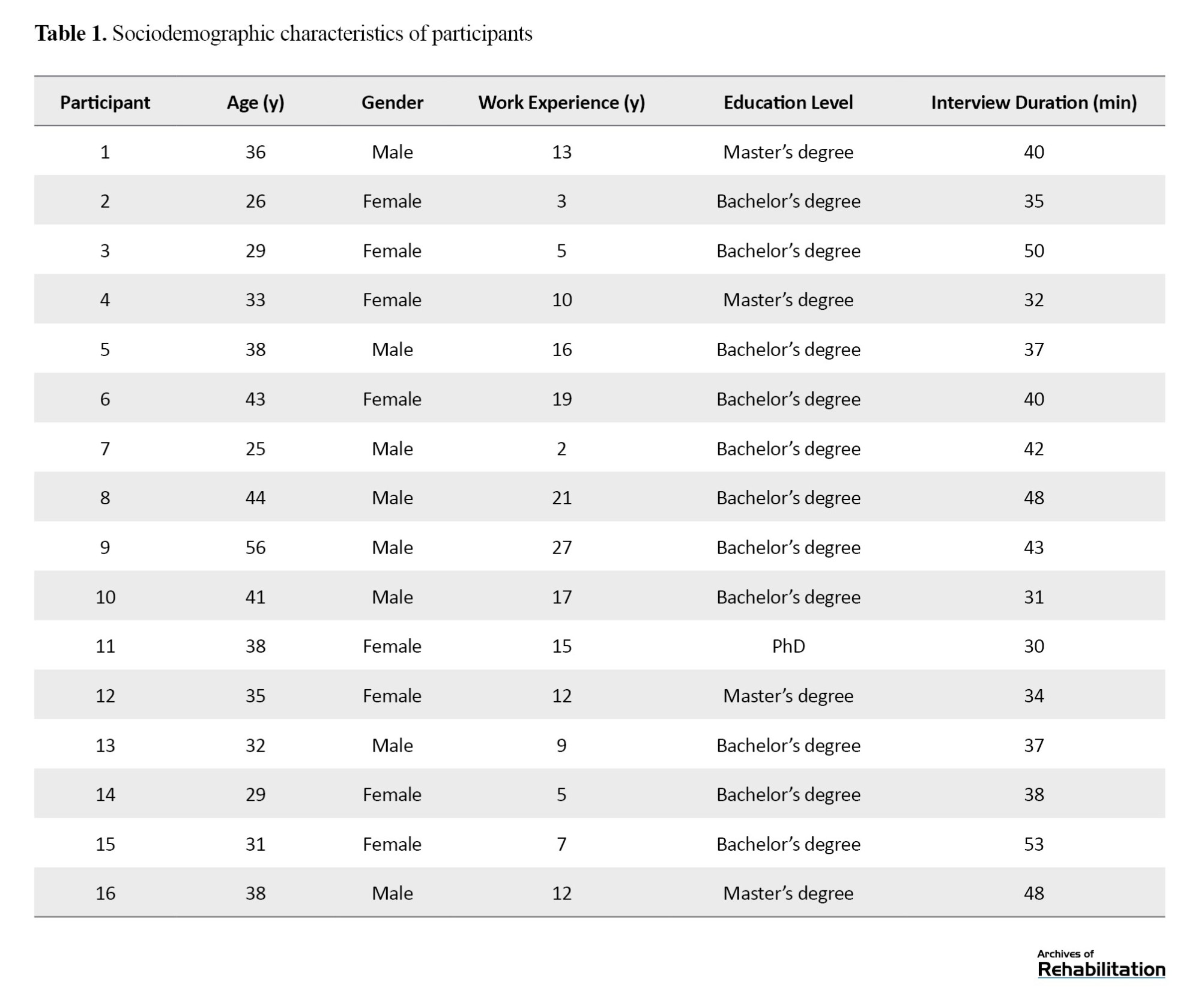
In this study, 16 nurses working in a rehabilitation hospital participated. Their sociodemographic characteristics are presented in Table 1.
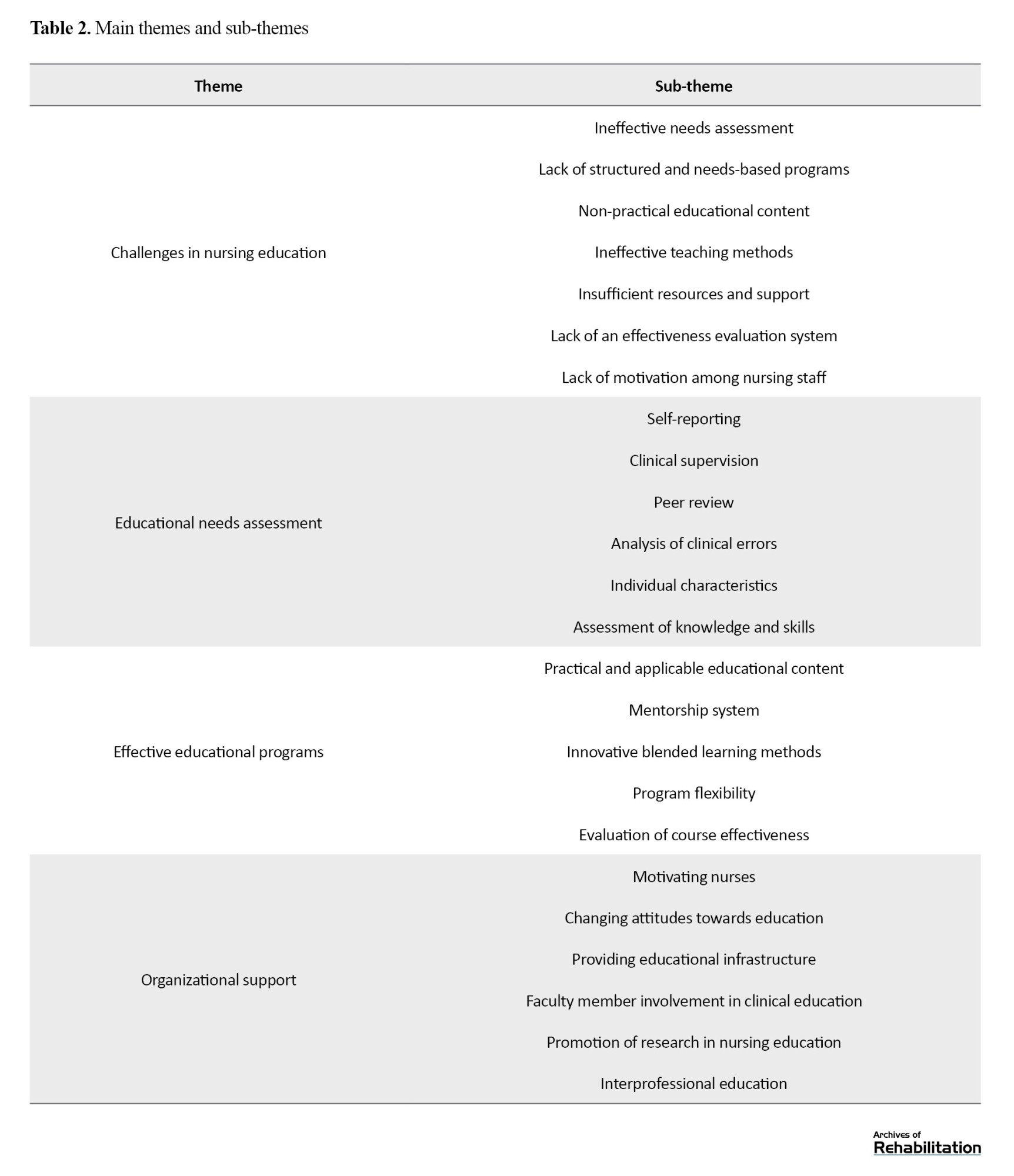
During the inductive data analysis process, 107 initial codes were extracted and grouped into 25 sub-themes and four main themes (Table 2). The main themes included “Challenges in nursing education,” “Educational needs assessment,” “Effective educational programs,” and “Organizational support.”
Nursing education challenges
The first theme that emerged was “nursing education challenges.” This theme identifies factors that impede the realization of nursing education effectiveness and the enhancement of nursing competencies in clinical settings, particularly in the rehabilitation wards. Participants perceived that the nursing education process faces shortcomings in identifying real learning needs, designing and implementing educational programs, utilizing appropriate methods and content, and receiving necessary organizational support. These factors hinder meeting the professional needs of nurses, thereby constraining their academic growth and professional development in practice.
This theme had seven sub-themes, including ineffective needs assessment, lack of structured and needs-based programs, non-practical educational content, ineffective teaching methods, insufficient resources and support, lack of an effectiveness evaluation system, and lack of motivation among nursing staff. These factors together reduce the quality and efficiency of educational programs in the rehabilitation field and weaken the professional development of nurses.
Ineffective needs assessment
Ineffective needs assessment refers to the absence of a systematic approach to identifying and prioritizing needs, where the process lacks coherence and educational priorities remain undefined, thereby failing to accurately reflect the needs of nurses in educational programs. One participant described this situation as follows: “Sometimes we [nurses] feel like attendance at educational courses is pointless, because no one really asks what skills we need or what is most important for our work. It seems that these programs are only on paper and do not take into account our real needs.” (P1). Another participant stated: “It has happened many times that training courses are held, but we do not know what their purpose is or why they are being implemented. Our training priorities are not clear, and we feel that our real needs are not being addressed.” (P12)
Lack of structured and needs-based programs
The second sub-theme, indicating the lack of structured, needs-based programs, highlighted issues such as inappropriate course scheduling and a lack of clear prioritization in training. These issues prevent nurses from attending classes and acquiring necessary skills. One participant stated: “Many times, classes or training courses are held at a time when we are on a work shift or extremely busy, so we cannot attend them or properly benefit from the training content.” (P6)
Non-practical educational content
Non-practical educational content refers to courses that are based solely on theoretical education and are not relevant to the everyday realities of the nursing profession. Such content lacks applicability in the hospital setting and is not grounded in sufficient practical or simulated experience. Therefore, it is difficult to transfer learned concepts into effective patient care and reduces the training course’s effectiveness. According to a participant: “Much of the training we receive is purely theoretical and has nothing to do with the real hospital conditions. Even if we learn something, it is difficult to implement it in daily work because of the lack of practical training or simulations.” (P2)
Ineffective teaching methods
Ineffective teaching methods are approaches that fail to actively engage nurses in the learning process, are incompatible with diverse learning styles, and limit opportunities for the practical application of skills. As a result, it becomes difficult to retain and apply what has been learned in the clinical setting. According to a participant: “The teaching methods are very ineffective and purely theoretical and do not make it easy to learn or apply in everyday work. Sometimes we really feel like our time is being wasted.” (P15)
Insufficient resources and support
The insufficiency of resources and support denotes the lack of educational infrastructure and adequate organizational support for effective nursing education. This includes a lack of training facilities (such as mannequins and practical tools), a shortage of expert instructors to teach clinical skills, and limited managerial support for course attendance. Consequently, nurses encounter difficulties in acquiring necessary skills and implementing them confidently in practice. As noted by a participant: “It often happens that there are not enough tools or mannequins to practice rehabilitation skills and there are few expert trainers. In addition, managers do not provide the necessary support for attending classes or practical training, so we cannot fully learn the skills necessary to care for patients.” (P10)
Lack of an effectiveness evaluation system
The absence of an effectiveness evaluation system indicates a lack of structured mechanisms for measuring the impact of educational courses on nurses’ knowledge and skills. This encompasses the failure to assess skills pre- and post-training, the absence of follow-up on work performance after the course, and sole reliance on attendance or theoretical exams as indicators of learning. Therefore, determining the true effectiveness of education is challenging. A participant explained: “After the courses, no one asks if our skills have really improved. There is no follow-up in daily work; only attendance or theoretical exams are recorded. We feel that what we learn is not permanent and that the training has no real impact.” (P4)
Lack of motivation among nursing staff
Lack of motivation among nurses is related to low levels of participation and interest in educational programs due to the repetitive nature of courses, the irrelevance of training to career development or the tangible benefits and mandatory nature of classes, which makes participating in training courses a mere administrative task rather than an opportunity for professional growth. A participant said: “I often feel like the courses we take are repetitive and pointless, especially when they have no impact on career development or benefits. When classes are mandatory, there is no motivation to learn or apply the skills.” (P16)
Educational needs assessment
The theme “educational needs assessment” indicates various methods that are used to identify what nurses really need to learn. These methods (as sub-themes) included self-reporting, clinical supervision, peer review, clinical error analysis, assessment of individual characteristics, and evaluation of knowledge and skills. These methods help design practical and relevant educational programs tailored to the tral needs of nurses.
Self-reporting
The sub-theme “self-reporting” indicates nurses’ efforts to identify and prioritize their own educational needs. Participants reported that by expressing their views, completing needs assessment forms, and engaging in group discussions, they strive to reflect their real needs in the educational process. They believe that such participation makes educational programs more consistent with real clinical work situations. A participant said: “When we can answer needs assessment questions ourselves or participate in interviews and discussion sessions, we really feel like we have the opportunity to say what is important to us and what skills we need to strengthen.” (P13)
Clinical supervision
Clinical supervision refers to structured observation and guidance of nurses in the workplace to assess and improve their practical skills. This includes direct observation of nursing performance in wards, use of checklists to evaluate clinical skills, provision of immediate feedback by supervisors, evaluation of rehabilitation processes, and monitoring the usage of specialized equipment. These methods enable nurses to enhance their professional competence in performing practical tasks and apply their knowledge safely and effectively. A participant believed: “When a supervisor monitors us in the wards, assesses our skills with a checklist, gives direct feedback, and checks the rehabilitation process and the use of equipment, we feel our abilities improve, and we work with more confidence.” (P9)
Peer review
The sub-theme of “Peer Review” indicates the role of peer feedback in improving performance and identifying educational needs. Participants stated that receiving opinions and evaluations from other nurses and treatment team members, especially in rehabilitation wards, helps them better recognize their strengths and weaknesses and more accurately determine their professional development path. This feedback is typically received during informal conversations, team meetings, or observation of colleagues’ performance. A participant stated: “When colleagues, physicians, physiotherapists, and occupational therapists provide feedback and share their ideas in team meetings, we better understand where we are strong and where we need to improve. This makes our skills more applicable and effective.” (P11)
Clinical error analysis
The sub-theme “clinical error analysis” indicates the nurses’ approach to using errors and adverse events as learning opportunities. Participants indicated that reviewing and discussing errors during patient care helped them recognize the causes of errors and identify educational needs related to patient safety. A participant said: “When we review reports of errors and hospital events, such as medication errors or patient complaints, we see exactly where we need to improve. This helps us care for patients with more confidence and safety next time.” (P14)
Individual characteristics
The sub-theme “individual characteristics” indicates the role of nurses’ characteristics in identifying and prioritizing educational needs. Participants stated that work experience, specialty, department, education level, and prior educational experiences influence their learning priorities. Personal interests and professional development goals make some educational topics more interesting and relevant to some people. Paying attention to these characteristics allows educational planners to design programs that meet the real needs of each nurse. As stated by participants: “When the training is aligned with our work experience and department, and even considers our personal interests and goals, we feel like the courses are truly designed for us, and learning becomes easier.” (P7). “When education aligns with our experience and personal interests and we can learn at our own pace, learning becomes easier, and the course becomes truly beneficial.” (P15)
Assessment of knowledge and skills
The final sub-theme indicated the process of assessing nurses’ knowledge and skills in the rehabilitation centers. Participants stated that these assessments include written exams to measure theoretical knowledge, practical tests such as the objective structured clinical examination (OSCE), scenario-based exercises to measure clinical skills, the functional independence measure and Barthel index to measure performance, and practical tests on working with rehabilitation equipment. These measures help the educational team ensure nurses have the necessary knowledge and skills for safe and effective care. A participant said: “When our knowledge and skills are assessed through working with rehabilitation equipment, we better see where we are strong and where we need more practice. This gives us more self-confidence in actual clinical work.” (P8)
Effective educational program
An effective educational program should have practical and applicable content tailored to each nurse’s needs, supported by a mentorship system, utilize blended learning methods, have a flexible schedule, and undergo regular evaluation to effectively enhance skills and professional performance.
Practical and applicable content
Practical and applicable educational content focuses on practical skills and applicability in real-world conditions. It should include scenario-based exercises similar to real hospital conditions, pay attention to the skills required in work shifts, reduce purely theoretical discussions, use real patient cases in the rehabilitation ward, and direct practice with the available equipment. Such educational content enables nurses to immediately apply what they learn in patient care. “When training is practical and hands-on, and we practice with the equipment, it becomes easier to learn skills and apply them in daily work.” (P12)
Mentorship system
Nursing mentorship involves the relationship between less experienced and experienced nurses, facilitating the transfer of knowledge and skills and providing guidance and support. Its main components include weekly meetings, peer support systems, structured experience-sharing programs, and the use of senior nurses as clinical mentors. This process increases confidence, strengthens practical skills, and fosters professional growth in a supportive environment. “When novice nurses are paired with experienced mentors, and we have weekly meetings or share our experiences, our self-confidence builds faster, and our skills improve.” (P1)
Blended learning methods
The blended learning methods are a combination of in-person and online education, increasing mental engagement and mastery of skills. They include face-to-face sessions combined with e-learning, use of virtual reality simulators, interactive webinars, digital educational banks and mobile applications. Such education provides an engaging, flexible and modern experience. “Learning is much easier when education combines in-person and online sessions with simulations and webinars.”(P6)
Program flexibility
Flexibility refers to designing programs compatible with nurses’ schedules and work preferences, including offering courses at various times with short modular sessions, options to choose attendance times, scheduling across different shifts, and online/offline formats. This flexibility increases participation and effective learning. “When class times are flexible, learning becomes much easier for us.” (P3)
Evaluation of course effectiveness
This stage involves examining the educational course’s impact on nurses’ actual performance through post-course clinical performance assessments, evaluation of learning transfer to the workplace, use of observational checklists, periodic practical exams, and surveys of patient feedback on nursing care quality. This process ensures the achievement of educational goals and the enhancement of care quality. “After courses, when our skills are tested on real work, we better realize what we have learned.” (P5)
Organizational support
The last theme indicates that organizational support helps nurses on the path of learning and professional growth through motivating them, providing educational infrastructure, engaging faculty members in clinical education, promoting research, developing inter-professional education, and strengthening attitudes towards education.
Motivating nurses
This sub-theme refers to strategies that encourage nurses to actively participate in educational courses, including implementing a reward system, linking education with job promotion or salary increases, granting valid certificates and retraining points, introducing exemplary nurses in education, and creating healthy competition between wards. “When education is accompanied by receiving rewards, promotions, or a fair competition, we are more motivated to participate in courses.” (P9)
Changing attitudes towards education
This sub-theme indicates the use of strategies to elevate the attitude towards education among nurses and managers, such as discussing the value of continuing education in general meetings, sharing successes resulted from education, demonstrating the benefits of educational investment for management, linking education to quality care indicators, and inviting senior managers to end-of-course ceremonies. “When the importance of continuing education is brought up at meetings, educational successes are shared, and management sees how education improves care, we feel that learning really matters.” (P14)
Providing educational infrastructure
This sub-theme refers to providing the necessary resources and facilities for the effective implementation of nursing education, including allocating an annual budget, equipping skills labs with mannequins and specialized tools, providing digital libraries and up-to-date scientific resources, access to reputable scientific databases, and hiring full-time education experts. “When rehabilitation labs are equipped, and we have sufficient educational resources, learning practical care skills becomes easier.” (P 11)
Participation of faculty members in clinical education
This sub-theme refers to the active presence of university professors in clinical education and nurse empowerment. It can be done by defining mentorship roles for faculty members, their regular presence in wards, holding joint educational programs, collaboration in designing educational content and forming joint committees between nurses and professors. “When professors are present in the ward, design the training in collaboration with us, and guide us, learning becomes more real and easier.” (P8)
Promoting research in nursing education
This sub-theme refers to the strategies for promoting research that can assist in improving nursing education, including allocating research budgets, forming nurse-led research teams, supporting the presentation of findings at conferences, collaborating with academic centers, and publishing results in organizational journals. “When a group of nurses works together to improve education and learning, our work becomes more structured and the training more applicable.” (P16)
Inter-professional education
Inter-professional education emphasizes joint learning among different treatment teams to strengthen teamwork and patient care. It involves designing courses that integrate physiotherapy, occupational therapy, and medicine, holding interdisciplinary conferences, forming joint care teams for specific patients, drafting joint treatment and educational protocols, and conducting interprofessional simulation exercises. “When we have joint courses and simulation classes with physiotherapists, occupational therapists, and physicians, we learn to work better as a team, and patient care improves.” (P4)
Discussion
The findings revealed that the education of nurses employed at Rofeideh Rehabilitation Hospital faces numerous challenges and requires revision and planning based on workplace needs and clinical realities. Data analysis yielded four main themes: Nursing Education Challenges, Educational Needs Assessment, Effective Educational Program, and Organizational Support, each revealing dimensions that have received less attention.
Regarding nursing education challenges, the shortage of nurses with rehabilitation expertise has led to general nurses or those from other specialties working in rehabilitation wards, who have not received sufficient training and lack specific rehabilitation-related skills. As indicated by previous research, a primary challenge in rehabilitation care is the lack of specialized training for nurses and the low specialized knowledge in this field. This lack of knowledge and skill directly affects clinical performance, patient communication, and the rehabilitation process [25]. The gap between actual need and the implementation of standard care is a significant nursing challenge. Needs assessment is a practical tool for recognizing the nature and scope of these gaps. Precise planning based on needs can lead to the effective transfer of knowledge to clinical practice and the sustainable improvement of care quality [26].
The results of the present study showed that issues such as poor educational needs assessment, non-practical educational content, use of traditional teaching methods, and a shortage of educational resources are major obstacles to improving the quality of nursing education at Rofeideh Hospital. Consistent with a review study by Mani [27], the continued use of content-centered models and the lack of structural revision contribute to the inefficiency of nursing education. The transition to competency-based education requires redesigning programs based on the actual needs of the clinical environment, utilizing active learning methods such as simulation and case studies, and creating a multifaceted evaluation system to assess nurses’ actual performance in professional situations. Adopting this approach can increase educational effectiveness and nurse motivation, thereby improving rehabilitation services
Findings also indicated that the lack of organizational support, resource shortages, the use of unattractive teaching methods, and a lack of motivation were significant challenges for Rofeideh nurses. The study by Mlambo et al. also emphasized the role of a supportive organizational environment, appropriate budget allocation, and the design of educational programs tailored to daily clinical needs [1], which is consistent with our results. One possible reason for low motivation among rehabilitation nurses at Rofeideh Hospital is the mandatory courses with repetitive and theoretical content. Zamanzadeh et al. and Chaghari et al. reported that mandatory training unrelated to career development or clinical performance leads to low participation and a sense of course uselessness. In this regard, adopting appropriate policies, reinforcing professional values, ensuring sufficient competence and improving the social status of the nursing profession can play a significant role in education, recruitment and retention of specialized personnel [28, 29].
In the field of rehabilitation nursing education, various studies have confirmed that specialized, applied content, combined with in-person and online education, effectively addresses educational needs. Research in Portugal showed that using a combined educational program increased knowledge regarding osteoporosis and fractures among rehabilitation nurses [30]. Furthermore, a World Health Organization (WHO) report in 2021 indicated that a significant portion of medical errors stems from poor communication among healthcare staff [31]. Tiwary et al. [32] confirmed the importance of effective communication in proper patient treatment, stating that inadequate communication can lead to adverse outcomes. Hence, enhancing communication skills and interdisciplinary collaboration was identified as a primary educational need in their study. Inability to communicate with a multidisciplinary team is a common challenge among novice nurses. Consequently, strengthening collaboration among rehabilitation nurses, physiotherapists, and occupational therapists can promote team coordination, enhance the care quality, and increase the effectiveness of rehabilitation programs.
Studies have also shown that novice nurses require professional support when transitioning from the educational to the clinical setting [33]. According to Price and Reichert, novice nurses expect sufficient training to enter the workplace and opportunities for continuous professional development. Feelings of inadequacy in clinical skills, fear of making mistakes, and a lack of guidance contribute to their difficult experiences. Therefore, the presence of competent and qualified educators is essential to support novice nurses in responding to community health needs. Addressing identified learning gaps through in-service training programs can lead to increased clinical competence, improved quality of care, and patient satisfaction [34].
Finally, this study showed that faculty members’ active participation in the clinical education of rehabilitation nurses can enhance the quality of nursing education and job satisfaction. These findings are consistent with those of Shahzeydi et al. and Strandell-Laine et al., who emphasized the importance of faculty member presence during internships and their direct interaction with nurses. Effective participation by faculty members leads to increased professional autonomy, strengthened clinical skills, and a reduction in the gap between theory and practice [33, 35].
Study limitations and recommendations
One limitation of this study was that data were collected from a small number of rehabilitation nurses at one hospital. Thus, the generalizability of the results to other nursing groups or medical centers is limited. Additionally, data were collected through participants’ self-reports, which may introduce social desirability bias. Future research is recommended to examine the educational needs of rehabilitation nurses using quantitative or mixed-methods approaches. Furthermore, designing and evaluating educational interventions based on nurses’ real needs can help improve their clinical performance. Studying organizational and environmental factors that affect the training process for rehabilitation nurses can provide a pathway to developing more effective educational programs.
Conclusion
The rehabilitation nurses at Rofeideh Hospital lack documented training programs with practical content and have low motivation to participate in educational courses. Designing practical, nurse-centered, blended, and flexible educational programs, with the participation of faculty members and interaction with physiotherapists and occupational therapists, can enhance educational effectiveness for rehabilitation nurses and care quality. The findings of this study can serve as a guide for educational planners at rehabilitation hospitals in formulating targeted and effective courses. It is recommended that future studies evaluate the effectiveness of these programs in improving clinical performance and nurses’ job satisfaction.
Ethical Considerations
Compliance with ethical guidelines
All ethical principles mentioned in the Declaration of Helsinki were observed throughout the research. This study was approved by the Research Ethics Committee of the University of Social Welfare and Rehabilitation Sciences, Tehran, Iran (Code: IR.USWR.REC.1404.035). Prior to the research, the study objectives and methods were explained to the participants and written informed consent was obtained from them. Participation in the research was voluntary and participants were assured that their information would be kept confidential. They were also informed that they could withdraw from the research at any time. All ethical principles stipulated in the Declaration of Helsinki were observed throughout the research.
Funding
This research was funded by the Student Research Committee of the University of Social Welfare and Rehabilitation Sciences, Tehran, Iran.
Authors' contributions
Conceptualization and initial draft preparation: Behnaz Farahmandfard and Mahdieh Motie; Methodology and validation: All authors; Investigation and analysis: Behnaz Farahmandfard and Shima Shiravazhan; Review and editing: Mahdieh Motie and Leila Rafiei Vardanjani; Supervision and project administration: Mahdieh Motie.
Conflict of interest
The authors declare no conflict of interest.
AI tools disclosure statement
The authors used AI tools only for language editing and proofreading to improve the readability of the manuscript. All authors remain fully responsible for scientific content, interpretations, and conclusions.
Acknowledgments
The authors sincerely thank all participating nurses, as well as the staff and administration of the University of Social Welfare and Rehabilitation Sciences and Rofeideh Hospital, for their valuable support and cooperation during data collection.
Nurses are important members of the healthcare team who should have up-to-date knowledge and continuous education to deliver comprehensive and targeted patient care [1, 2]. The rising prevalence of chronic diseases necessitates specialized training for nurses [3]. To be effective patient educators, nurses should receive training tailored to the specific requirements of their profession [4]. Continuing education is a key element in the professional development of nurses [5]. In various aspects of nursing services, continuing education for nurses facilitates the delivery of cost-effective patient care and enhances nurses’ critical thinking and clinical judgment [6]. This form of professional development contributes to improved patient and family care and is essential for the sustainability of learning activities [7]. Nurses are required to initially assess the patients’ and their families’ educational needs, and subsequently prioritize, design, implement, and evaluate these needs based on health literacy, cultural background, available resources, duration of hospitalization, and patient condition [8]. Targeted educational programs enable nurses to assess patients more accurately, develop more effective care plans, implement appropriate interventions, and evaluate patient outcomes more accurately. This process ultimately helps mitigate the social and economic challenges associated with chronic diseases [4]. Patient education is a primary nursing task, encompassing the provision of health-related knowledge and guidance to patients, thereby helping them understand their health status and adopt appropriate preventive and therapeutic measures [9]. Various studies have indicated that many nurses do not participate in educational programs because these programs are not aligned with their educational needs. Consequently, opportunity for nurses’ career advancement will decrease, which in turn diminishes their job satisfaction. Furthermore, a failure to update nursing knowledge compromises patient safety and adversely affects the quality of healthcare service delivery [10].
The most critical step in educational planning is the identification and prioritization of educational needs, referred to as a “needs assessment” [11]. Needs assessment entails a systematic examination of the specific training required by individuals or groups. This process can be conducted formally or informally based on personal or organizational needs, with the primary objective of optimizing planning and enhancing the quality of educational activities. In the healthcare system, needs assessment typically plays a significant role in the continuing education of staff [12]. Given the significant role of nurses in the healthcare system, investigating and identifying their educational needs is essential for promoting their professional competence and, consequently, improving nursing practice standards [13]. Moreover, the assessment of educational needs is considered a high-priority research area in medical education development centers [2].
Concurrently, demographic shifts and changes in health status have led to a rapid increase in the number of individuals requiring rehabilitation [14]. Rehabilitation is defined as a set of interventions designed to optimize performance and reduce disability in individuals [15]. According to available statistics, the number of rehabilitation beds increased from 16,802 in 2002 to 80,814 in 2016, indicating an increase in the number of nurses employed in rehabilitation centers [14]. Since patients with disabilities may lose partial or total independence due to illness or injury, rehabilitation nurses should have communication and educational competencies in addition to technical skills [16]. The primary duty of rehabilitation nurses is to provide post-acute care to enhance the quality of life for patients with disabilities or chronic illnesses [17]. Furthermore, the core philosophy of rehabilitation nursing is grounded in the principle that individuals with disabilities have the right to play an active and specialized role in their own healthcare [18]. Results from various studies have also shown that medical staff often lack a proper understanding of the needs of patients and their families [8, 13]. Given the high cost of training, educational needs assessment offers an economic approach that fosters active nurse participation in educational programs [19].
Given the specialized nature of the rehabilitation field and the high sensitivity of care for patients with disabilities, nurses with specialized training are required, the absence of which can jeopardize the quality of patient care. Despite numerous studies on the importance of nursing education, few have examined nurses’ experiences regarding educational challenges. Accordingly, this qualitative study aimed to identify the educational needs of rehabilitation nurses at Rofeideh Hospital, Tehran, Iran. The results can serve as a basis for developing effective educational programs and improving rehabilitation services.
Materials and Methods
This is a qualitative study using content analysis based on Graneheim and Lundman’s approach. This approach enables analysis of concepts embedded in research data derived from participants’ actual workplace experiences, using their perspectives on educational challenges. Participants were nurses employed in the clinical wards of Rofeideh Rehabilitation Hospital, Tehran, Iran. They were selected via purposive sampling. This sampling method entails selecting participants who, in addition to being willing to participate, engage daily with the phenomenon under study and have relevant experience [20, 21]. Sampling continued until reaching data saturation, i.e., until no new concepts emerged from further interviews. Inclusion criteria were a degree in nursing (Bachelor’s degree or higher), employment in one of the wards of Rofeideh Rehabilitation Hospital, and at least one year of clinical work experience in rehabilitation wards. The exclusion criterion was the unwillingness to continue participation at any stage of the study.
To gain a deep understanding of the phenomenon and identify its dimensions and characteristics, in-depth, semi-structured interviews were conducted individually in a quiet room. Prior to the interviews, the study objectives, importance, and methodology were explained to the participants, and their written informed consent was obtained. All participant information remained confidential. Permission was obtained from them to audio-record the interviews.
After recording demographic data, interviews began with general questions, followed by more specific probes based on participants’ responses to achieve the main study objective. Examples of interview questions included: “In your opinion, what training do rehabilitation nurses need to perform their tasks effectively?”, “What challenges or lack of knowledge do you face when performing your daily tasks?”, “What topics do you consider essential to be included in future educational programs?” and “In your opinion, what factors can facilitate or hinder nurses’ learning in the rehabilitation wards?” A total of 16 interviews, each with an average duration of 30-55 minutes, were conducted from March to September 2025.
All interviews were recorded, transcribed verbatim, and prepared for qualitative analysis performed using conventional content analysis based on Graneheim and Lundman’s method [22]. The transcribed text was divided into condensed meaning units. Then, abstracting meaning units and selecting codes were performed. Based on continuous comparison of similarities, differences, and appropriateness, codes representing the same concept were grouped into categories and subcategories. Ambiguities and items requiring re-examination were addressed in subsequent interviews to extract abstract concepts. Concepts were evaluated based on descriptions of internal themes and in relation to the overall data. Finally, the extracted information was interpreted, and the final report was compiled [23].
To ensure the trustworthiness of the data, the criteria proposed by Lincoln and Guba (1994)—credibility, dependability, transferability, and confirmability—were applied. Credibility was enhanced through prolonged engagement in the research setting, continuous interaction with participants, member checking, and comparison of findings with existing literature. Dependability was ensured by thoroughly documenting all stages of data collection, data coding, and data analysis to allow for transparency and potential replication by other researchers. Transferability was addressed by providing detailed descriptions of participants’ demographic characteristics, the research setting, and the context of the interviews, enabling readers to assess the applicability of the findings to similar contexts. To achieve confirmability, all analytical processes and research decisions were recorded in field notes and reflexive memos, and the findings were reviewed by experts in nursing education to ensure neutrality and trustworthiness in data interpretation [24].
Results
In this study, 16 nurses working in a rehabilitation hospital participated. Their sociodemographic characteristics are presented in Table 1.
During the inductive data analysis process, 107 initial codes were extracted and grouped into 25 sub-themes and four main themes (Table 2). The main themes included “Challenges in nursing education,” “Educational needs assessment,” “Effective educational programs,” and “Organizational support.”
Nursing education challenges
The first theme that emerged was “nursing education challenges.” This theme identifies factors that impede the realization of nursing education effectiveness and the enhancement of nursing competencies in clinical settings, particularly in the rehabilitation wards. Participants perceived that the nursing education process faces shortcomings in identifying real learning needs, designing and implementing educational programs, utilizing appropriate methods and content, and receiving necessary organizational support. These factors hinder meeting the professional needs of nurses, thereby constraining their academic growth and professional development in practice.
This theme had seven sub-themes, including ineffective needs assessment, lack of structured and needs-based programs, non-practical educational content, ineffective teaching methods, insufficient resources and support, lack of an effectiveness evaluation system, and lack of motivation among nursing staff. These factors together reduce the quality and efficiency of educational programs in the rehabilitation field and weaken the professional development of nurses.
Ineffective needs assessment
Ineffective needs assessment refers to the absence of a systematic approach to identifying and prioritizing needs, where the process lacks coherence and educational priorities remain undefined, thereby failing to accurately reflect the needs of nurses in educational programs. One participant described this situation as follows: “Sometimes we [nurses] feel like attendance at educational courses is pointless, because no one really asks what skills we need or what is most important for our work. It seems that these programs are only on paper and do not take into account our real needs.” (P1). Another participant stated: “It has happened many times that training courses are held, but we do not know what their purpose is or why they are being implemented. Our training priorities are not clear, and we feel that our real needs are not being addressed.” (P12)
Lack of structured and needs-based programs
The second sub-theme, indicating the lack of structured, needs-based programs, highlighted issues such as inappropriate course scheduling and a lack of clear prioritization in training. These issues prevent nurses from attending classes and acquiring necessary skills. One participant stated: “Many times, classes or training courses are held at a time when we are on a work shift or extremely busy, so we cannot attend them or properly benefit from the training content.” (P6)
Non-practical educational content
Non-practical educational content refers to courses that are based solely on theoretical education and are not relevant to the everyday realities of the nursing profession. Such content lacks applicability in the hospital setting and is not grounded in sufficient practical or simulated experience. Therefore, it is difficult to transfer learned concepts into effective patient care and reduces the training course’s effectiveness. According to a participant: “Much of the training we receive is purely theoretical and has nothing to do with the real hospital conditions. Even if we learn something, it is difficult to implement it in daily work because of the lack of practical training or simulations.” (P2)
Ineffective teaching methods
Ineffective teaching methods are approaches that fail to actively engage nurses in the learning process, are incompatible with diverse learning styles, and limit opportunities for the practical application of skills. As a result, it becomes difficult to retain and apply what has been learned in the clinical setting. According to a participant: “The teaching methods are very ineffective and purely theoretical and do not make it easy to learn or apply in everyday work. Sometimes we really feel like our time is being wasted.” (P15)
Insufficient resources and support
The insufficiency of resources and support denotes the lack of educational infrastructure and adequate organizational support for effective nursing education. This includes a lack of training facilities (such as mannequins and practical tools), a shortage of expert instructors to teach clinical skills, and limited managerial support for course attendance. Consequently, nurses encounter difficulties in acquiring necessary skills and implementing them confidently in practice. As noted by a participant: “It often happens that there are not enough tools or mannequins to practice rehabilitation skills and there are few expert trainers. In addition, managers do not provide the necessary support for attending classes or practical training, so we cannot fully learn the skills necessary to care for patients.” (P10)
Lack of an effectiveness evaluation system
The absence of an effectiveness evaluation system indicates a lack of structured mechanisms for measuring the impact of educational courses on nurses’ knowledge and skills. This encompasses the failure to assess skills pre- and post-training, the absence of follow-up on work performance after the course, and sole reliance on attendance or theoretical exams as indicators of learning. Therefore, determining the true effectiveness of education is challenging. A participant explained: “After the courses, no one asks if our skills have really improved. There is no follow-up in daily work; only attendance or theoretical exams are recorded. We feel that what we learn is not permanent and that the training has no real impact.” (P4)
Lack of motivation among nursing staff
Lack of motivation among nurses is related to low levels of participation and interest in educational programs due to the repetitive nature of courses, the irrelevance of training to career development or the tangible benefits and mandatory nature of classes, which makes participating in training courses a mere administrative task rather than an opportunity for professional growth. A participant said: “I often feel like the courses we take are repetitive and pointless, especially when they have no impact on career development or benefits. When classes are mandatory, there is no motivation to learn or apply the skills.” (P16)
Educational needs assessment
The theme “educational needs assessment” indicates various methods that are used to identify what nurses really need to learn. These methods (as sub-themes) included self-reporting, clinical supervision, peer review, clinical error analysis, assessment of individual characteristics, and evaluation of knowledge and skills. These methods help design practical and relevant educational programs tailored to the tral needs of nurses.
Self-reporting
The sub-theme “self-reporting” indicates nurses’ efforts to identify and prioritize their own educational needs. Participants reported that by expressing their views, completing needs assessment forms, and engaging in group discussions, they strive to reflect their real needs in the educational process. They believe that such participation makes educational programs more consistent with real clinical work situations. A participant said: “When we can answer needs assessment questions ourselves or participate in interviews and discussion sessions, we really feel like we have the opportunity to say what is important to us and what skills we need to strengthen.” (P13)
Clinical supervision
Clinical supervision refers to structured observation and guidance of nurses in the workplace to assess and improve their practical skills. This includes direct observation of nursing performance in wards, use of checklists to evaluate clinical skills, provision of immediate feedback by supervisors, evaluation of rehabilitation processes, and monitoring the usage of specialized equipment. These methods enable nurses to enhance their professional competence in performing practical tasks and apply their knowledge safely and effectively. A participant believed: “When a supervisor monitors us in the wards, assesses our skills with a checklist, gives direct feedback, and checks the rehabilitation process and the use of equipment, we feel our abilities improve, and we work with more confidence.” (P9)
Peer review
The sub-theme of “Peer Review” indicates the role of peer feedback in improving performance and identifying educational needs. Participants stated that receiving opinions and evaluations from other nurses and treatment team members, especially in rehabilitation wards, helps them better recognize their strengths and weaknesses and more accurately determine their professional development path. This feedback is typically received during informal conversations, team meetings, or observation of colleagues’ performance. A participant stated: “When colleagues, physicians, physiotherapists, and occupational therapists provide feedback and share their ideas in team meetings, we better understand where we are strong and where we need to improve. This makes our skills more applicable and effective.” (P11)
Clinical error analysis
The sub-theme “clinical error analysis” indicates the nurses’ approach to using errors and adverse events as learning opportunities. Participants indicated that reviewing and discussing errors during patient care helped them recognize the causes of errors and identify educational needs related to patient safety. A participant said: “When we review reports of errors and hospital events, such as medication errors or patient complaints, we see exactly where we need to improve. This helps us care for patients with more confidence and safety next time.” (P14)
Individual characteristics
The sub-theme “individual characteristics” indicates the role of nurses’ characteristics in identifying and prioritizing educational needs. Participants stated that work experience, specialty, department, education level, and prior educational experiences influence their learning priorities. Personal interests and professional development goals make some educational topics more interesting and relevant to some people. Paying attention to these characteristics allows educational planners to design programs that meet the real needs of each nurse. As stated by participants: “When the training is aligned with our work experience and department, and even considers our personal interests and goals, we feel like the courses are truly designed for us, and learning becomes easier.” (P7). “When education aligns with our experience and personal interests and we can learn at our own pace, learning becomes easier, and the course becomes truly beneficial.” (P15)
Assessment of knowledge and skills
The final sub-theme indicated the process of assessing nurses’ knowledge and skills in the rehabilitation centers. Participants stated that these assessments include written exams to measure theoretical knowledge, practical tests such as the objective structured clinical examination (OSCE), scenario-based exercises to measure clinical skills, the functional independence measure and Barthel index to measure performance, and practical tests on working with rehabilitation equipment. These measures help the educational team ensure nurses have the necessary knowledge and skills for safe and effective care. A participant said: “When our knowledge and skills are assessed through working with rehabilitation equipment, we better see where we are strong and where we need more practice. This gives us more self-confidence in actual clinical work.” (P8)
Effective educational program
An effective educational program should have practical and applicable content tailored to each nurse’s needs, supported by a mentorship system, utilize blended learning methods, have a flexible schedule, and undergo regular evaluation to effectively enhance skills and professional performance.
Practical and applicable content
Practical and applicable educational content focuses on practical skills and applicability in real-world conditions. It should include scenario-based exercises similar to real hospital conditions, pay attention to the skills required in work shifts, reduce purely theoretical discussions, use real patient cases in the rehabilitation ward, and direct practice with the available equipment. Such educational content enables nurses to immediately apply what they learn in patient care. “When training is practical and hands-on, and we practice with the equipment, it becomes easier to learn skills and apply them in daily work.” (P12)
Mentorship system
Nursing mentorship involves the relationship between less experienced and experienced nurses, facilitating the transfer of knowledge and skills and providing guidance and support. Its main components include weekly meetings, peer support systems, structured experience-sharing programs, and the use of senior nurses as clinical mentors. This process increases confidence, strengthens practical skills, and fosters professional growth in a supportive environment. “When novice nurses are paired with experienced mentors, and we have weekly meetings or share our experiences, our self-confidence builds faster, and our skills improve.” (P1)
Blended learning methods
The blended learning methods are a combination of in-person and online education, increasing mental engagement and mastery of skills. They include face-to-face sessions combined with e-learning, use of virtual reality simulators, interactive webinars, digital educational banks and mobile applications. Such education provides an engaging, flexible and modern experience. “Learning is much easier when education combines in-person and online sessions with simulations and webinars.”(P6)
Program flexibility
Flexibility refers to designing programs compatible with nurses’ schedules and work preferences, including offering courses at various times with short modular sessions, options to choose attendance times, scheduling across different shifts, and online/offline formats. This flexibility increases participation and effective learning. “When class times are flexible, learning becomes much easier for us.” (P3)
Evaluation of course effectiveness
This stage involves examining the educational course’s impact on nurses’ actual performance through post-course clinical performance assessments, evaluation of learning transfer to the workplace, use of observational checklists, periodic practical exams, and surveys of patient feedback on nursing care quality. This process ensures the achievement of educational goals and the enhancement of care quality. “After courses, when our skills are tested on real work, we better realize what we have learned.” (P5)
Organizational support
The last theme indicates that organizational support helps nurses on the path of learning and professional growth through motivating them, providing educational infrastructure, engaging faculty members in clinical education, promoting research, developing inter-professional education, and strengthening attitudes towards education.
Motivating nurses
This sub-theme refers to strategies that encourage nurses to actively participate in educational courses, including implementing a reward system, linking education with job promotion or salary increases, granting valid certificates and retraining points, introducing exemplary nurses in education, and creating healthy competition between wards. “When education is accompanied by receiving rewards, promotions, or a fair competition, we are more motivated to participate in courses.” (P9)
Changing attitudes towards education
This sub-theme indicates the use of strategies to elevate the attitude towards education among nurses and managers, such as discussing the value of continuing education in general meetings, sharing successes resulted from education, demonstrating the benefits of educational investment for management, linking education to quality care indicators, and inviting senior managers to end-of-course ceremonies. “When the importance of continuing education is brought up at meetings, educational successes are shared, and management sees how education improves care, we feel that learning really matters.” (P14)
Providing educational infrastructure
This sub-theme refers to providing the necessary resources and facilities for the effective implementation of nursing education, including allocating an annual budget, equipping skills labs with mannequins and specialized tools, providing digital libraries and up-to-date scientific resources, access to reputable scientific databases, and hiring full-time education experts. “When rehabilitation labs are equipped, and we have sufficient educational resources, learning practical care skills becomes easier.” (P 11)
Participation of faculty members in clinical education
This sub-theme refers to the active presence of university professors in clinical education and nurse empowerment. It can be done by defining mentorship roles for faculty members, their regular presence in wards, holding joint educational programs, collaboration in designing educational content and forming joint committees between nurses and professors. “When professors are present in the ward, design the training in collaboration with us, and guide us, learning becomes more real and easier.” (P8)
Promoting research in nursing education
This sub-theme refers to the strategies for promoting research that can assist in improving nursing education, including allocating research budgets, forming nurse-led research teams, supporting the presentation of findings at conferences, collaborating with academic centers, and publishing results in organizational journals. “When a group of nurses works together to improve education and learning, our work becomes more structured and the training more applicable.” (P16)
Inter-professional education
Inter-professional education emphasizes joint learning among different treatment teams to strengthen teamwork and patient care. It involves designing courses that integrate physiotherapy, occupational therapy, and medicine, holding interdisciplinary conferences, forming joint care teams for specific patients, drafting joint treatment and educational protocols, and conducting interprofessional simulation exercises. “When we have joint courses and simulation classes with physiotherapists, occupational therapists, and physicians, we learn to work better as a team, and patient care improves.” (P4)
Discussion
The findings revealed that the education of nurses employed at Rofeideh Rehabilitation Hospital faces numerous challenges and requires revision and planning based on workplace needs and clinical realities. Data analysis yielded four main themes: Nursing Education Challenges, Educational Needs Assessment, Effective Educational Program, and Organizational Support, each revealing dimensions that have received less attention.
Regarding nursing education challenges, the shortage of nurses with rehabilitation expertise has led to general nurses or those from other specialties working in rehabilitation wards, who have not received sufficient training and lack specific rehabilitation-related skills. As indicated by previous research, a primary challenge in rehabilitation care is the lack of specialized training for nurses and the low specialized knowledge in this field. This lack of knowledge and skill directly affects clinical performance, patient communication, and the rehabilitation process [25]. The gap between actual need and the implementation of standard care is a significant nursing challenge. Needs assessment is a practical tool for recognizing the nature and scope of these gaps. Precise planning based on needs can lead to the effective transfer of knowledge to clinical practice and the sustainable improvement of care quality [26].
The results of the present study showed that issues such as poor educational needs assessment, non-practical educational content, use of traditional teaching methods, and a shortage of educational resources are major obstacles to improving the quality of nursing education at Rofeideh Hospital. Consistent with a review study by Mani [27], the continued use of content-centered models and the lack of structural revision contribute to the inefficiency of nursing education. The transition to competency-based education requires redesigning programs based on the actual needs of the clinical environment, utilizing active learning methods such as simulation and case studies, and creating a multifaceted evaluation system to assess nurses’ actual performance in professional situations. Adopting this approach can increase educational effectiveness and nurse motivation, thereby improving rehabilitation services
Findings also indicated that the lack of organizational support, resource shortages, the use of unattractive teaching methods, and a lack of motivation were significant challenges for Rofeideh nurses. The study by Mlambo et al. also emphasized the role of a supportive organizational environment, appropriate budget allocation, and the design of educational programs tailored to daily clinical needs [1], which is consistent with our results. One possible reason for low motivation among rehabilitation nurses at Rofeideh Hospital is the mandatory courses with repetitive and theoretical content. Zamanzadeh et al. and Chaghari et al. reported that mandatory training unrelated to career development or clinical performance leads to low participation and a sense of course uselessness. In this regard, adopting appropriate policies, reinforcing professional values, ensuring sufficient competence and improving the social status of the nursing profession can play a significant role in education, recruitment and retention of specialized personnel [28, 29].
In the field of rehabilitation nursing education, various studies have confirmed that specialized, applied content, combined with in-person and online education, effectively addresses educational needs. Research in Portugal showed that using a combined educational program increased knowledge regarding osteoporosis and fractures among rehabilitation nurses [30]. Furthermore, a World Health Organization (WHO) report in 2021 indicated that a significant portion of medical errors stems from poor communication among healthcare staff [31]. Tiwary et al. [32] confirmed the importance of effective communication in proper patient treatment, stating that inadequate communication can lead to adverse outcomes. Hence, enhancing communication skills and interdisciplinary collaboration was identified as a primary educational need in their study. Inability to communicate with a multidisciplinary team is a common challenge among novice nurses. Consequently, strengthening collaboration among rehabilitation nurses, physiotherapists, and occupational therapists can promote team coordination, enhance the care quality, and increase the effectiveness of rehabilitation programs.
Studies have also shown that novice nurses require professional support when transitioning from the educational to the clinical setting [33]. According to Price and Reichert, novice nurses expect sufficient training to enter the workplace and opportunities for continuous professional development. Feelings of inadequacy in clinical skills, fear of making mistakes, and a lack of guidance contribute to their difficult experiences. Therefore, the presence of competent and qualified educators is essential to support novice nurses in responding to community health needs. Addressing identified learning gaps through in-service training programs can lead to increased clinical competence, improved quality of care, and patient satisfaction [34].
Finally, this study showed that faculty members’ active participation in the clinical education of rehabilitation nurses can enhance the quality of nursing education and job satisfaction. These findings are consistent with those of Shahzeydi et al. and Strandell-Laine et al., who emphasized the importance of faculty member presence during internships and their direct interaction with nurses. Effective participation by faculty members leads to increased professional autonomy, strengthened clinical skills, and a reduction in the gap between theory and practice [33, 35].
Study limitations and recommendations
One limitation of this study was that data were collected from a small number of rehabilitation nurses at one hospital. Thus, the generalizability of the results to other nursing groups or medical centers is limited. Additionally, data were collected through participants’ self-reports, which may introduce social desirability bias. Future research is recommended to examine the educational needs of rehabilitation nurses using quantitative or mixed-methods approaches. Furthermore, designing and evaluating educational interventions based on nurses’ real needs can help improve their clinical performance. Studying organizational and environmental factors that affect the training process for rehabilitation nurses can provide a pathway to developing more effective educational programs.
Conclusion
The rehabilitation nurses at Rofeideh Hospital lack documented training programs with practical content and have low motivation to participate in educational courses. Designing practical, nurse-centered, blended, and flexible educational programs, with the participation of faculty members and interaction with physiotherapists and occupational therapists, can enhance educational effectiveness for rehabilitation nurses and care quality. The findings of this study can serve as a guide for educational planners at rehabilitation hospitals in formulating targeted and effective courses. It is recommended that future studies evaluate the effectiveness of these programs in improving clinical performance and nurses’ job satisfaction.
Ethical Considerations
Compliance with ethical guidelines
All ethical principles mentioned in the Declaration of Helsinki were observed throughout the research. This study was approved by the Research Ethics Committee of the University of Social Welfare and Rehabilitation Sciences, Tehran, Iran (Code: IR.USWR.REC.1404.035). Prior to the research, the study objectives and methods were explained to the participants and written informed consent was obtained from them. Participation in the research was voluntary and participants were assured that their information would be kept confidential. They were also informed that they could withdraw from the research at any time. All ethical principles stipulated in the Declaration of Helsinki were observed throughout the research.
Funding
This research was funded by the Student Research Committee of the University of Social Welfare and Rehabilitation Sciences, Tehran, Iran.
Authors' contributions
Conceptualization and initial draft preparation: Behnaz Farahmandfard and Mahdieh Motie; Methodology and validation: All authors; Investigation and analysis: Behnaz Farahmandfard and Shima Shiravazhan; Review and editing: Mahdieh Motie and Leila Rafiei Vardanjani; Supervision and project administration: Mahdieh Motie.
Conflict of interest
The authors declare no conflict of interest.
AI tools disclosure statement
The authors used AI tools only for language editing and proofreading to improve the readability of the manuscript. All authors remain fully responsible for scientific content, interpretations, and conclusions.
Acknowledgments
The authors sincerely thank all participating nurses, as well as the staff and administration of the University of Social Welfare and Rehabilitation Sciences and Rofeideh Hospital, for their valuable support and cooperation during data collection.
References
- Mlambo M, Silén C, McGrath C. Lifelong learning and nurses’ continuing professional development, a metasynthesis of the literature. BMC Nursing. 2021; 20(1):62. [DOI:10.1186/s12912-021-00579-2] [PMID]
- Schneider M, Good S. Meeting the challenges of nursing staff education. Nursing. 2018; 48(8):16-7. [DOI:10.1097/01.NURSE.0000541402.97845.2f] [PMID]
- Nemati H. The Need to Revise and Change the Content of Home Care in Nursing Education Curriculum. International Journal of Community based Nursing and Midwifery. 2023; 11(3):224-5. [DOI:10.30476/ijcbnm.2023.98916.2268] [PMID]
- Fontán-Vinagre G, Ruíz-Núñez C, Domínguez-Fernández S, Ayuso-Murillo D, Herrera-Peco I. Assessment of the Educational Needs of Spanish Nurses in the Care and Management of Patients with Diabetes. Healthcare (Basel). 2025; 13(5):526.[DOI:10.3390/healthcare13050526] [PMID]
- Coventry TH, Maslin-Prothero SE, Smith G. Organizational impact of nurse supply and workload on nurses continuing professional development opportunities: An integrative review. Journal of Advanced Nursing. 2015; 71(12):2715-27. [DOI:10.1111/jan.12724] [PMID]
- Lera M, Taxtsoglou K, Iliadis C, Frantzana A, Kourkouta L. Nurses’ attitudes toward lifelong learning via new technologies. Asian/Pacific Island Nursing Journal. 2020; 5(2):89-102. [DOI:10.31372/20200502.1088] [PMID]
- Attari A, Aminoroaia M, Maracy MR. Efficacy of purposeful educational workshop of medical and nonmedical interventions based on needs assessments in nurses. Journal of Education and Health Promotion. 2017; 6:18. [DOI:10.4103/2277-9531.204745] [PMID]
- Hajalizadeh A, Ahmadinejad M, Dehghan M, Arab M. The educational needs of family of patients discharged from the Intensive Care Units: The viewpoints of nurses and the patients’ families. Critical Care Research and Practice. 2021; 2021:9956023. [DOI:10.1155/2021/9956023] [PMID]
- Zhang X, Wu M, Chen Y, Su Y, Zeng T. Perceived Learning Needs of Hospitalised Cancer Patients and Nurses. Nursing Open. 2025; 12(2):e70163. [DOI:10.1002/nop2.70163] [PMID]
- Mamba WM, Dludlu MS. Exploring Barriers to Continuing Nursing Education Among Nurses: A Descriptive Qualitative Study. Nursing Science and Clinical Practice. 2025; 1(3):9-18. [DOI:10.64229/00q2wd35]
- Hosseini Alimardani F, Moradi Manesh F. [Assessment training needs of Psychiatric Ward Nurses in Educational Hospitals at Ahwaz University of Medical Sciences. (Persian)]. Educational Development of Judishapur. 2019; 9(4):217-28. [Link]
- Pilcher J. Learning Needs Assessment: Not Only for Continuing Education. Journal for Nurses in Professional Development. 2016; 32(4):122-9. [DOI:10.1097/NND.0000000000000245] [PMID]
- Mahdizadeh AH, Taheri Z. [Educational Needs Assessment of Nurses Working In Hospitals of Tehran University (Persian)]. Journal of Nursing Education. 2016; 5(3):1-9. [DOI:10.21859/jne-05031]
- Taylor R, Zwisler AD, Uddin J. Global health-care systems must prioritise rehabilitation. Lancet. 2021; 396(10267):1946-7. [DOI:10.1016/S0140-6736(20)32533-2] [PMID]
- Yamaguchi T, Sakai I. The unlearning process of senior clinical nurses in rehabilitation wards. Journal of Advanced Nursing. 2019; 75(11):2659-72. [DOI:10.1111/jan.14050] [PMID]
- Vatani J, Arami M, Khanikosarkhizi Z, Shahabi Rabori MA, Khandan M, Dehghan N, et al. Safety climate and related factors in rehabilitation nurses of hospitals in Iran. Work. 2021; 68(1):189-96. [DOI:10.3233/WOR-203368] [PMID]
- Mitro JP, Pomeroy JML, Osman S, Matta V, Cai C, Garfinkel S, et al. Access, Utilization, and Implementation of Research Among Rehabilitation Nurses: A Qualitative Study. Rehabilitation Nursing. 2022; 47(3):99-108. [DOI:10.1097/RNJ.0000000000000367] [PMID]
- Jesus TS, Papadimitriou C, Bright FA, Kayes NM, Pinho CS, Cott CA. Person-Centered Rehabilitation Model: Framing the Concept and Practice of Person-Centered Adult Physical Rehabilitation Based on a Scoping Review and Thematic Analysis of the Literature. Archives of Physical Medicine and Rehabilitation. 2022; 103(1):106-20. [DOI:10.1016/j.apmr.2021.05.005] [PMID]
- Harb A, Al Ateeq E, Barshaid A. Meeting Nursing Staff Education through Learning Need Assessment. Journal of Nursing & Healthcare. 2020; 5(2):1-9. [DOI:10.33140/JNH.05.02.05]
- Palinkas LA, Horwitz SM, Green CA, Wisdom JP, Duan N, Hoagwood K. Purposeful Sampling for Qualitative Data Collection and Analysis in Mixed Method Implementation Research. Administration and Policy in Mental Health. 2015; 42(5):533-44. [DOI:10.1007/s10488-013-0528-y] [PMID]
- Whitehead D, LoBiondo-Wood G, Haber J. Nursing and midwifery research: Methods and appraisal for evidence based practice. Amsterdam: Elsevier Health Sciences; 2016. [Link]
- Graneheim UH, Lundman B. Qualitative content analysis in nursing research: Concepts, procedures and measures to achieve trustworthiness. Nurse Education Today. 2004; 24(2):105-12. [DOI:10.1016/j.nedt.2003.10.001] [PMID]
- Graneheim UH, Lindgren BM, Lundman B. Methodological challenges in qualitative content analysis: A discussion paper. Nurse Education Today. 2017; 56:29-34. [DOI:10.1016/j.nedt.2017.06.002] [PMID]
- Lincoln YS, Guba EG. Criteria for Assessing Naturalistic Inquiries as Reports. Paper presented at: Annual Meeting of the American Educational Research Association. 5-9 April 1988; New Orleans, LA. [Link]
- Shirozhan S, Arsalani N, Seyed Bagher Maddah S, Mohammadi-Shahboulaghi F. Barriers and facilitators of rehabilitation nursing care for patients with disability in the rehabilitation hospital: A qualitative study. Frontiers in Public Health. 2022; 10:931287. [DOI:10.3389/fpubh.2022.931287] [PMID]
- Graham ND, Graham ID, Vanderspank-Wright B, Nadalin-Penno L, Fergusson DA, Squires JE. Planning for implementation success: insights from conducting an implementation needs assessment. JBI Evidence Implementation. 2025; 23(1):90-102. [DOI:10.1097/XEB.0000000000000458] [PMID]
- Mani ZA. Transitioning to competency-based education in nursing: a scoping review of curriculum review and revision strategies. BMC Nursing. 2025; 24(1):1111. [DOI:10.1186/s12912-025-03319-y] [PMID]
- Chaghari M, Ebadi A, Ameryoun A, Safari M. An attempt for empowering education: A qualitative study of in-service training of nursing personnel. Iranian Journal of Nursing and Midwifery Research. 2016; 21(5):498-503. [DOI:10.4103/1735-9066.193404] [PMID]
- Zamanzadeh V, Valizadeh L, Neshat H. Challenges of human resources management in nursing in Iran: A qualitative content analysis. Nursing Open. 2020; 7(1):319-25. [DOI:10.1002/nop2.393] [PMID]
- Pimentel G, Cruz A, Lavareda Baixinho C, Loureiro M, Fernandes S, Ferreira RJO, et al. Assessment of rehabilitation nurses’ knowledge and results of nurse educational programme (C2F) regarding osteoporosis and fragility fractures. International Journal of Orthopaedic and Trauma Nursing. 2024; 54:101120. [DOI:10.1016/j.ijotn.2024.101120] [PMID]
- Matlhaba KL, Nkoane NL. Understanding the learning needs to enhance clinical competence of new professional nurses in public hospitals of South Africa: A qualitative study. Belitung Nursing Journal. 2022; 8(5):414-21. [DOI:10.33546/bnj.2180] [PMID]
- Tiwary A, Rimal A, Paudyal B, Sigdel KR, Basnyat B. Poor communication by health care professionals may lead to life-threatening complications: Examples from two case reports. Wellcome Open Research. 2019; 4:7. [DOI:10.12688/wellcomeopenres.15042.1] [PMID]
- Strandell-Laine C, Salminen L, Blöndal K, Fuster P, Hourican S, Koskinen S, et al. The nurse teacher’s pedagogical cooperation with students, the clinical learning environment and supervision in clinical practicum: A European cross-sectional study of graduating nursing students. BMC Medical Education. 2022; 22(1):509. [DOI:10.1186/s12909-022-03445-0] [PMID]
- Price S, Reichert C. The importance of continuing professional development to career satisfaction and patient care: Meeting the needs of novice to mid-to late-career nurses throughout their career span. Administrative Sciences. 2017; 7(2):17. [DOI:10.3390/admsci7020017]
- Shahzeydi A, Taleghani F, Moghimian M, Farzi S, Yazdannik A, Farzi K. Exploring nursing faculty, managers, newly graduated nurses, and students’ experiences of nursing internship program implementation in Iran: A descriptive qualitative study. BMC Nursing. 2022; 21(1):371. [DOI:10.1186/s12912-022-01159-8] [PMID]
Send email to the article author
| Rights and permissions | |
 |
This work is licensed under a Creative Commons Attribution-NonCommercial 4.0 International License. |

Copyright © The Author(s);
This is an open access article distributed under the terms of the Creative Commons Attribution-NonCommercial 4.0 (CC-By-NC 4.0), which permits use, distribution, and reproduction in any medium, provided the original work is properly cited and is not used for commercial purposes.
Contact Information
This is an open access article distributed under the terms of the Creative Commons Attribution-NonCommercial 4.0 (CC-By-NC 4.0), which permits use, distribution, and reproduction in any medium, provided the original work is properly cited and is not used for commercial purposes.
Contact Information